📋 Summary
- The Lexus LFA took roughly a decade to develop, from an early-2000s starting point to its final production version revealed in 2009
- Its naturally aspirated 4.8-liter V10, co-developed with Yamaha, produces 553 hp and revs to a screaming 9,000rpm – one of the most emotionally engaging engines ever fitted to a production car
- Only 500 units were ever built, hand-assembled at a rate of roughly 20 per month, with each car carrying a numbered plaque signed by the technician who built it
- This is not a car you shop for casually – global supply is fixed forever, and every purchase decision should be treated with the seriousness that scarcity demands
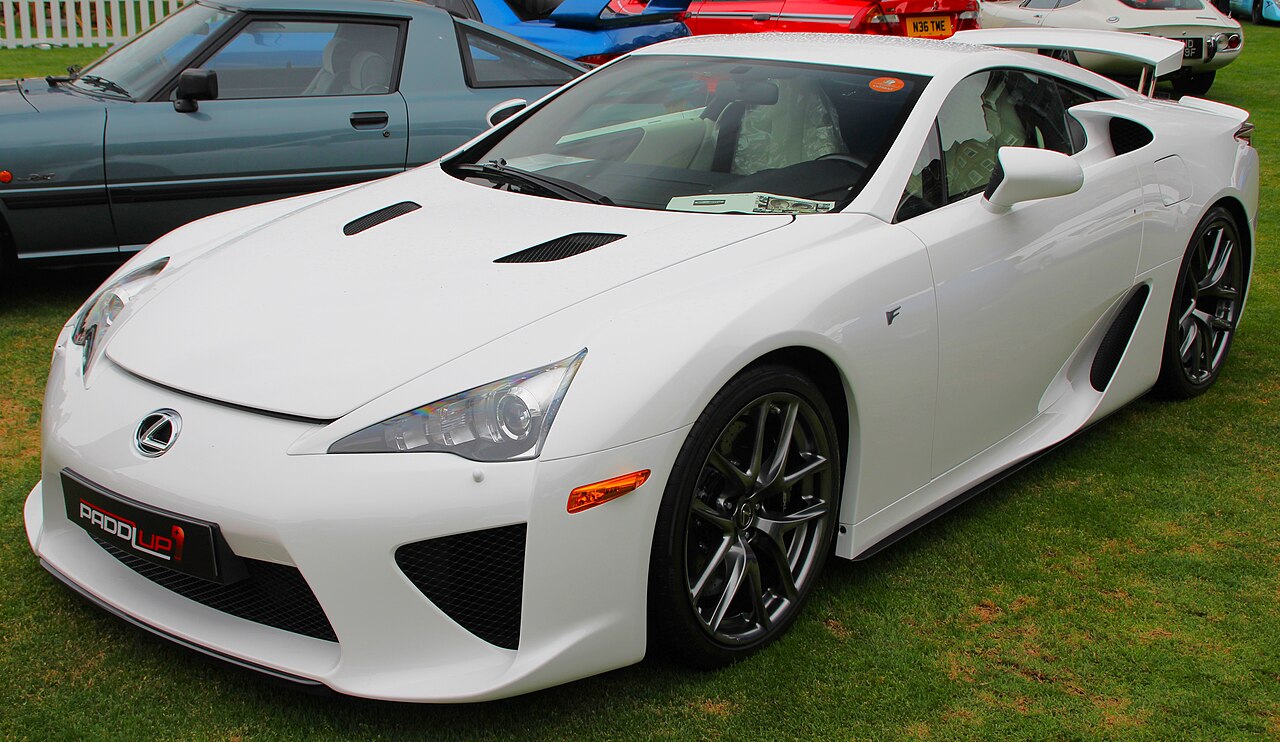
Most cars on this site are approachable, attainable classics – cars enthusiasts can realistically hope to own with patience and careful shopping. The Lexus LFA is a different kind of subject entirely. It is Lexus’s only true supercar, built in numbers so small and with an engineering story so obsessive that it occupies a category closer to fine art than transportation. Understanding why makes it easier to appreciate exactly what a buyer is looking at if an LFA ever comes up for sale.
A Decade in the Making
Development of the LFA began in the early 2000s, with the first running prototype completed in 2003 and regular development testing at the Nürburgring’s Nordschleife starting in 2004 – the beginning of a relationship between Lexus and that legendary circuit that would come to define much of the car’s development story. Over the following years, Lexus showed a series of concept versions at major motor shows, refining aerodynamics, chassis construction, and design language, before the final production version was revealed at the Tokyo Motor Show in October 2009, timed to mark Lexus’s 20th anniversary as a brand.
Official production began in December 2010, nearly a decade after development started – an extraordinarily long gestation period even by supercar standards, reflecting just how much engineering Lexus was determined to get exactly right before building a single customer car.
The V10 That Justifies the Entire Car
At the center of the LFA is its 4.8-liter naturally aspirated V10, internally designated 1LR-GUE and co-developed with Yamaha – the same partner that helped Lexus’s parent company Toyota develop high-performance engines going back decades. This engine produces 553 hp at a screaming 8,700rpm, with a redline reaching 9,000rpm, and it achieves something genuinely remarkable in packaging terms: despite having ten cylinders, extensive use of aluminum, magnesium, and titanium components keeps it roughly the same physical size as a V8 and the same weight as a V6.
The result is an engine that revs with the urgency and throttle response of a much smaller unit while delivering the smoothness and sound of a V10 – widely regarded by those who have driven the car as one of the most genuinely thrilling naturally aspirated engines ever fitted to a road car. Power reaches the rear wheels through a rear-mounted Aisin six-speed automated manual gearbox, a layout chosen specifically to improve weight distribution.
💡 Tip: The Nürburgring Package Is a Genuinely Distinct, More Valuable Variant
Of the 500 total LFAs built, 64 were finished as the Nürburgring Package – a harder-edged variant with additional power, a fixed rear wing, and chassis refinements developed directly from Lexus’s years of Nordschleife testing, including a pre-production LFA prototype’s third-place finish in the 2010 24 Hours of Nürburgring race. If you are researching or shopping for an LFA, confirm immediately whether a given car is a standard model or a Nürburgring Package variant, since the two carry meaningfully different performance credentials, rarity, and market value.
Just 500 Cars, Ever
Lexus built exactly 500 LFAs between 2010 and 2012: 436 standard models and 64 Nürburgring Package cars. That is the entire global supply, forever – Lexus has never built another LFA, and given the car’s status as a deliberate, once-in-a-generation engineering statement rather than an ongoing model line, there is no indication that will ever change. Of that total, 190 were allocated to the US market, with the remainder distributed across other global markets including Japan and Europe.
Production itself reflected the same obsessive approach as the car’s decade-long development: each LFA was hand-built at a rate of only around 20 units per month, and every completed car carries a numbered plaque signed by the specific technician who assembled it – a level of individual accountability and craftsmanship closer to how a luxury watchmaker might describe their process than how a mainstream automaker typically builds cars.
What Ownership Actually Looks Like
Because so few LFAs exist, and because each one represents such a significant financial and cultural investment, ownership comes with a different set of considerations than a typical classic or performance car purchase.
- Verify the exact specification and history through Lexus records where possible: Given the numbered, individually documented nature of LFA production, dealers and specialists can often verify a specific car’s build details, original specification, and Nürburgring Package status directly.
- Understand that this is a car built around a specific, unrepeatable engineering philosophy: The naturally aspirated V10, the carbon-fiber-intensive construction, and the manual-feeling automated gearbox all reflect a particular moment in performance-car engineering that later turbocharged, electrified supercars have largely moved away from. That is central to the LFA’s appeal, not an outdated limitation.
- Factor in specialist maintenance requirements: With such a low production run, LFA-specific service expertise is concentrated among a small number of specialist technicians, often connected directly to Lexus’s own network given the car’s flagship status. Routine maintenance costs and parts lead times should be budgeted accordingly.
- Consider usage patterns carefully: Given the car’s rarity and value, many surviving LFAs see very limited annual mileage, which affects everything from tire and fluid condition to the overall character of a specific example. Ask detailed questions about how a car has actually been used and stored.
⚠️ Caution: This Is Not a Casual Purchase Decision
With a fixed global supply of 500 cars that will never increase, the LFA occupies rarified territory shared with only a handful of other limited-production supercars from any manufacturer. Any purchase at this level should involve careful verification of provenance, condition, and specification through recognized specialists, ideally with direct manufacturer-adjacent expertise given the car’s flagship status within the Lexus and broader Toyota organization. This is squarely the territory of professional pre-purchase inspection and expert consultation, not a car to evaluate casually from listing photos alone.
Carbon Fiber Construction Ahead of Its Time
Beyond the engine, the LFA’s structure itself was a major engineering undertaking. The car makes extensive use of carbon fiber reinforced polymer throughout its monocoque construction, at a time when carbon fiber chassis technology was still largely confined to far more expensive, lower-volume exotic manufacturers. Lexus reportedly developed proprietary carbon fiber weaving and construction techniques specifically for the LFA program, reflecting the same “build it properly or not at all” philosophy that shaped every other aspect of the car’s decade-long development. That commitment to advanced materials, developed in-house rather than outsourced, is part of why the LFA is remembered as a genuine engineering achievement rather than simply a fast, expensive halo car.
Why the LFA Matters Beyond Its Rarity
It would be easy to reduce the LFA’s story to scarcity alone, but that misses what makes the car genuinely significant. It represents Lexus, a brand built largely on refinement, reliability, and quiet luxury, making an uncompromising statement that it could also build one of the most emotionally engaging performance cars of its era, developed with the same painstaking, decade-long patience that defines the best of Japanese engineering culture. In an industry increasingly dominated by turbocharging and electrification, the LFA stands as a deliberate, fully realized expression of a naturally aspirated performance philosophy that may never be repeated at this level of ambition by any Japanese manufacturer again.
Frequently Asked Questions
Q: How many Lexus LFAs were built?
A: Exactly 500 units between 2010 and 2012 – 436 standard models and 64 Nürburgring Package variants. Production has never resumed and there are no plans to build more.
Q: What makes the LFA’s engine special?
A: Its 4.8-liter naturally aspirated V10, co-developed with Yamaha, produces 553 hp and revs to 9,000rpm while weighing about the same as a V6 and taking up roughly the same space as a V8, thanks to extensive use of lightweight aluminum, magnesium, and titanium components.
Q: What is the difference between a standard LFA and the Nürburgring Package?
A: The Nürburgring Package, of which only 64 were built, adds additional power, a fixed rear wing, and chassis refinements developed from Lexus’s Nordschleife testing program, making it a rarer and generally more valuable variant than the 436 standard cars.
Q: Can I still buy a new LFA from Lexus?
A: No. Production ended in 2012 with exactly 500 units built, and Lexus has not indicated any plans to revive the model. Every LFA on the market today is a used car changing hands between private owners or through specialist dealers.
Q: Is the LFA difficult to maintain?
A: It requires specialist expertise given its low production numbers and bespoke engineering, though its close relationship to Lexus’s flagship engineering program means qualified specialists and manufacturer-adjacent support are generally more accessible than for many other rare, limited-production supercars.
This article is for general informational purposes. Specifications and production figures are based on widely cited sources and may vary slightly between references. Always consult a qualified specialist before purchasing a rare, high-value collector vehicle.
Image credit: 2011 Lexus LFA White by MrWalkr, CC BY-SA 4.0, via Wikimedia Commons
コメント