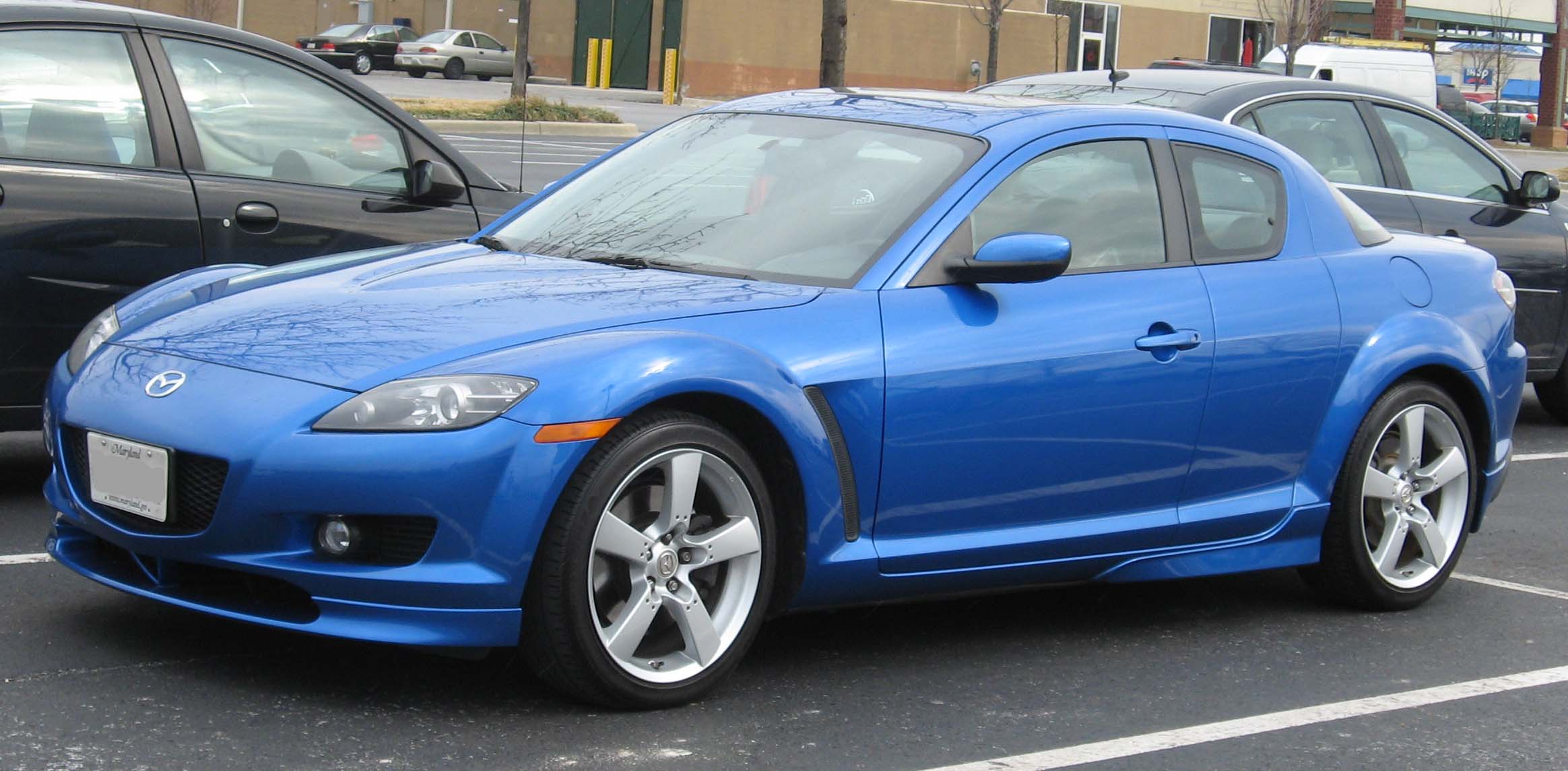
The Mazda RX-8 solved two genuine engineering puzzles that most sports cars never even attempt simultaneously: how to fit a practical four-seat cabin with real rear-door access into a genuine sports car silhouette, and how to keep Mazda’s rotary engine tradition alive with a design that finally addressed the emissions and efficiency criticisms that had dogged earlier rotary Mazdas. Both solutions — the distinctive “freestyle” rear-hinged door system and the RENESIS rotary engine — remain genuinely clever engineering, but both also come with specific ownership realities every buyer needs to understand. This guide covers them.
📋 What You’ll Learn in This Guide
- How the RENESIS rotary engine differs from Mazda’s earlier rotary designs
- Why apex seal wear and compression are the single most important pre-purchase checks
- How the freestyle rear-hinged door system actually works without a B-pillar
- Why flooding and carbon buildup are genuine, common rotary-specific issues
- Realistic engine longevity expectations with proper maintenance
- The RENESIS: A Genuinely Different Rotary
- Apex Seals: The Single Most Important Pre-Purchase Check
- Flooding and Carbon Buildup: Genuine Rotary-Specific Concerns
- Realistic Longevity Expectations
- The Freestyle Door System Explained
- A Genuine Four-Seat Sports Car
- Fuel Economy and Oil Consumption: Setting Realistic Expectations
- Frequently Asked Questions
- Final Thoughts
The RENESIS: A Genuinely Different Rotary
The RX-8 is powered by the 13B-MSP RENESIS, a naturally aspirated rotary engine that represented a genuine redesign of Mazda’s rotary architecture rather than a simple carryover from earlier rotary-powered Mazdas like the RX-7. Like all rotary engines, the RENESIS relies on spinning triangular rotors moving within a specially shaped housing to generate combustion, rather than the reciprocating pistons and cylinders that define conventional engines — a fundamentally different mechanical approach that gives rotary engines their genuinely distinctive smooth, high-revving character, but also their own specific set of maintenance considerations unrelated to conventional piston engine wear patterns.
Apex Seals: The Single Most Important Pre-Purchase Check
Apex seal wear is the most well-documented and consequential issue facing any RX-8 buyer — thin steel seals running along the edges of each rotor, sealing against the housing to maintain proper compression, that wear over time and use. As these seals wear, compression drops, producing genuinely recognizable symptoms including difficult hot starts, rough idling, sluggish acceleration, and noticeable power loss compared to a healthy engine. A proper compression test is genuinely essential before any purchase decision — readings below roughly 7.0 kgf/cm² on any single rotor face are a strong indicator the engine is failing or has already failed, and this test should be treated as a mandatory, non-negotiable step rather than an optional nicety for any serious RX-8 purchase consideration.
💡 Tip
Never purchase an RX-8 without a proper compression test performed by someone genuinely knowledgeable about rotary engines specifically, ideally using a gauge and testing procedure appropriate to rotary architecture rather than assuming standard piston-engine compression testing knowledge transfers directly. If a seller resists or discourages this test, treat that reluctance as a serious warning sign rather than simply proceeding on the basis of a smooth-sounding idle or an otherwise clean-looking car.
Flooding and Carbon Buildup: Genuine Rotary-Specific Concerns
Beyond apex seal wear, flooding is another genuinely common RENESIS issue, particularly pronounced in colder climates where the engine’s rotary-specific cold-start characteristics create real practical challenges compared to conventional piston engines. Rotary engines are also genuinely more prone to carbon buildup on rotors, housing surfaces, and spark plugs than piston engines, and this buildup can produce reduced performance, rough idling, and in more serious cases contribute to broader engine failure if left unaddressed. Both issues are worth asking directly about with any prospective purchase, and evidence of a seller’s genuine understanding of these rotary-specific maintenance points is a meaningfully positive signal about overall care.
Realistic Longevity Expectations
A properly maintained RENESIS engine can often reach somewhere in the range of 80,000 to 120,000 miles before requiring a genuine rebuild, though this figure depends enormously on maintenance discipline and driving habits — somewhat counterintuitively, rotary engines specifically benefit from being revved regularly and driven with some enthusiasm rather than being babied with exclusively short trips and conservative, low-rpm driving, since gentle short-trip use combined with infrequent oil changes accelerates exactly the kind of seal wear and carbon buildup covered above. This is genuinely different guidance than most conventional piston-engine cars, where gentle driving is generally assumed to be inherently easier on the engine, and it’s worth understanding clearly before assuming standard piston-engine maintenance wisdom applies directly to rotary ownership.
⚠️ Caution
Be genuinely wary of any RX-8 that’s spent significant time driven exclusively on short trips with predominantly gentle, low-rpm use, even if the seller frames this as evidence of careful, conservative ownership. Given the RENESIS’s specific need for regular higher-rpm operation to manage carbon buildup and maintain seal health, this use pattern is a real risk factor for accelerated wear rather than the reassuring sign of gentle care it might represent on a conventional piston-engine car.
The Freestyle Door System Explained
Beyond its rotary engine, the RX-8’s other genuinely distinctive engineering feature is its “freestyle” door system — rear-hinged half-doors providing access to the rear seats, engineered without any conventional B-pillar between the front and rear doors. This is possible because the extended edge of the rear door itself functions as a “virtual pillar,” contributing the structural rigidity a conventional B-pillar would normally provide, while the overlapping door design means the rear doors can only be opened once the front doors are already open, a deliberate sequencing that maintains both structural integrity and a clean, pillarless appearance when all doors are closed. The front doors open to roughly 67 degrees and the rear doors to a notably wider 80 degrees, nearly perpendicular to the car, genuinely easing entry and exit to the rear seats in a way few sports cars with any form of rear seating manage.
A Genuine Four-Seat Sports Car
This door system enabled Mazda to build the RX-8 as a genuine four-seat car rather than the more common 2+2 configuration many sports cars settle for, where rear seating is technically present but genuinely impractical for real adult passengers on anything beyond very short trips. While the RX-8’s rear cabin space is by no means expansive, it was genuinely designed and engineered to accommodate four adults for real use, giving the car a meaningfully different practical value proposition than a purely two-seat sports car — a real consideration for buyers who want authentic sports car driving dynamics without completely sacrificing the ability to bring passengers along.
Fuel Economy and Oil Consumption: Setting Realistic Expectations
Beyond the specific mechanical failure points already covered, prospective RX-8 owners should set realistic baseline expectations for two characteristics inherent to rotary engine design generally, not just this specific engine’s failure modes: meaningfully lower fuel economy than a comparable piston-engine sports car of similar performance, and a genuine, expected need for periodic oil top-ups between changes, since rotary engines are designed to consume a controlled, intentional amount of oil as part of normal operation (used partly for rotor housing lubrication) rather than this necessarily indicating a problem the way oil consumption would on a conventional piston engine. Understanding these as normal, expected characteristics of rotary ownership, rather than symptoms of a fault, helps set the right expectations from the outset.
Frequently Asked Questions
Q: Is buying an RX-8 with unknown maintenance history a bad idea given the rotary engine’s specific risks?
A: It’s genuinely riskier than buying a well-documented example, given how much apex seal health and overall engine condition depend on maintenance discipline and driving habits that aren’t visible from a purely cosmetic inspection. A proper compression test becomes even more essential when documented history isn’t available, and budgeting mentally for the possibility of near-term engine work is a sensible precaution in this scenario.
Q: Do the freestyle rear doors create any structural safety concerns compared to a conventional B-pillar design?
A: Mazda engineered the extended rear door edge specifically to provide the structural function a B-pillar would normally serve, and the car was developed and certified to meet applicable safety standards with this design. That said, understanding that this represents a genuinely different structural approach than a conventional B-pillar design is worth being aware of as a point of engineering interest, even though it was engineered to meet safety requirements.
Q: Can the RENESIS engine be rebuilt, and is this a common, well-supported service?
A: Yes — rotary engine rebuilds are a well-established, genuinely mature service within the broader rotary enthusiast and specialist repair community, though finding a shop with genuine RENESIS-specific expertise (rather than only experience with earlier rotary generations) matters for getting a properly executed rebuild. Budget for this as a real, meaningful expense rather than a minor service item if you’re purchasing a car with uncertain engine health.
Final Thoughts
The Mazda RX-8 remains a genuinely unique proposition in the sports car world — a practical four-seat cabin with real rear-door access, wrapped around a distinctive rotary engine offering a driving character no conventional piston engine can replicate. Both of its defining engineering features reward informed buyers who understand their specific maintenance realities, and punish those who approach the car with conventional piston-engine assumptions; a proper compression test and genuine rotary-aware maintenance history are the two things worth prioritizing above nearly everything else in your search.
Image credit: Mazda RX-8 (Public domain), via Wikimedia Commons
コメント