📋 Summary
- Calsonic Kansei was a major Nissan-affiliated Japanese Tier 1 supplier formed in 2000 through the merger of Calsonic Corporation (climate control, heat exchangers) and Kansei Corporation (instrument gauges), both with roots in the Nissan supplier keiretsu
- The company’s core products included automotive HVAC systems, radiators and heat exchangers, exhaust systems, and instrument clusters, a genuinely broad product range for a single Tier 1 supplier
- In 2017, private equity firm KKR acquired Calsonic Kansei for approximately $4.5 billion; in 2019 it merged with Fiat Chrysler’s Magneti Marelli to form Marelli Holdings
- Marelli Holdings filed for Chapter 11 bankruptcy protection in June 2025 with approximately $4.9 billion in debt, a significant recent development that must be understood as current status, not assumed to still be a stable, independent company
The instrument gauges and climate control components in many Nissan-lineage JDM vehicles trace back to Calsonic Kansei, a company whose more recent corporate history, private equity acquisition, international merger, and 2025 bankruptcy filing, is a genuinely instructive cautionary tale about consolidation in the global auto supplier industry.
A Merger of Two Nissan-Keiretsu Suppliers
Calsonic Kansei was formed in 2000 through the merger of Calsonic Corporation, a maker of automotive climate control systems and heat exchangers, and Kansei Corporation, a maker of instrument gauges, both companies with roots in the Nissan supplier keiretsu, according to corporate history sources. The combined company built a genuinely broad product portfolio spanning HVAC systems, radiators and heat exchangers, exhaust systems, and instrument clusters, supplying Nissan and other automakers as a significant Japanese Tier 1 supplier for roughly two decades under this name.
💡 Tip: Understanding Calsonic Kansei’s Product Range Helps When Researching Older Nissan-Lineage Parts
If you’re researching the original supplier behind an HVAC component, radiator, exhaust part, or instrument cluster on an older Nissan-lineage JDM vehicle, Calsonic Kansei is a genuinely likely candidate, worth knowing given the company’s broad product range across exactly these categories during its two decades operating under this name.
From KKR Acquisition to the Marelli Merger to 2025 Bankruptcy
It’s important to be direct about Calsonic Kansei’s current status, since presenting the company as it existed in, say, 2015 would genuinely mislead a reader researching it today. In 2017, private equity firm KKR acquired Calsonic Kansei for approximately $4.5 billion. In 2019, the company merged with Fiat Chrysler’s Magneti Marelli to form Marelli Holdings, a considerably larger global automotive supplier combining the Japanese and Italian companies’ product lines. Then, in June 2025, Marelli Holdings filed for Chapter 11 bankruptcy protection in the United States, carrying approximately $4.9 billion in debt, according to widely reported industry sources. This progression, independent Japanese Tier 1 supplier, to private-equity-owned, to internationally merged, to bankruptcy filing, is a genuinely significant and recent corporate history that any current research into the company needs to reflect accurately.
Kansei’s Own Origin Traces Back to a Nissan Spin-Off
Genuinely worth knowing: Kansei Corporation, the instrument-gauge half of the eventual Calsonic Kansei merger, was itself established on October 25, 1956, as Kanto Seiki Company, Ltd., founded as a direct spin-off from Nissan Motor with instrument clusters as its core product from the very beginning. This means the instrument cluster and gauge lineage running through Calsonic Kansei, and now through Marelli Holdings, traces in an unbroken line back to Nissan’s own internal engineering roughly seven decades ago, a genuinely deep institutional connection that predates the 2000 Calsonic merger by more than four decades. The combined company’s broader “cockpit module” products, integrated assemblies combining instrument clusters, HVAC controls, and related dashboard components into a single unit, reflect this original instrument-gauge specialization scaled up into a more comprehensive dashboard-systems business.
Why This Corporate History Matters Beyond Just One Company
Calsonic Kansei’s trajectory is a useful, concrete illustration of a broader pattern reshaping the global automotive supplier industry: private-equity-driven consolidation, cross-border mergers, and the genuine financial fragility that can follow heavy acquisition debt. For JDM enthusiasts and owners, understanding that a familiar OEM parts supplier’s name may now sit under a very different, and financially troubled, corporate structure is genuinely useful context, both for sourcing genuine OEM-equivalent parts and for understanding the broader supplier landscape.
⚠️ Caution: Don’t Assume a Familiar Supplier Name Reflects Current Corporate Reality
As Calsonic Kansei’s history genuinely demonstrates, a familiar automotive supplier name can undergo significant, even destabilizing, corporate changes over time, private equity acquisition, international merger, or bankruptcy. When researching parts sourcing or supplier reliability for an older vehicle, verify a supplier’s current corporate status rather than assuming it matches an older, more familiar narrative.
Frequently Asked Questions
Q: Does Calsonic Kansei still exist as an independent company?
A: No. It was acquired by KKR in 2017, merged with Magneti Marelli in 2019 to form Marelli Holdings, and Marelli Holdings filed for Chapter 11 bankruptcy in June 2025.
Q: What did Calsonic Kansei make?
A: HVAC systems, radiators and heat exchangers, exhaust systems, and instrument clusters, primarily for Nissan and other automakers.
Q: When was Calsonic Kansei formed?
A: In 2000, through the merger of Calsonic Corporation and Kansei Corporation, both companies with roots in the Nissan supplier keiretsu.
Q: What is Marelli Holdings?
A: The company formed by Calsonic Kansei’s 2019 merger with Fiat Chrysler’s Magneti Marelli, which filed for Chapter 11 bankruptcy protection in June 2025.
This article is for general informational purposes based on publicly available sources, reflecting the company’s status as of publication; bankruptcy proceedings may continue to evolve.
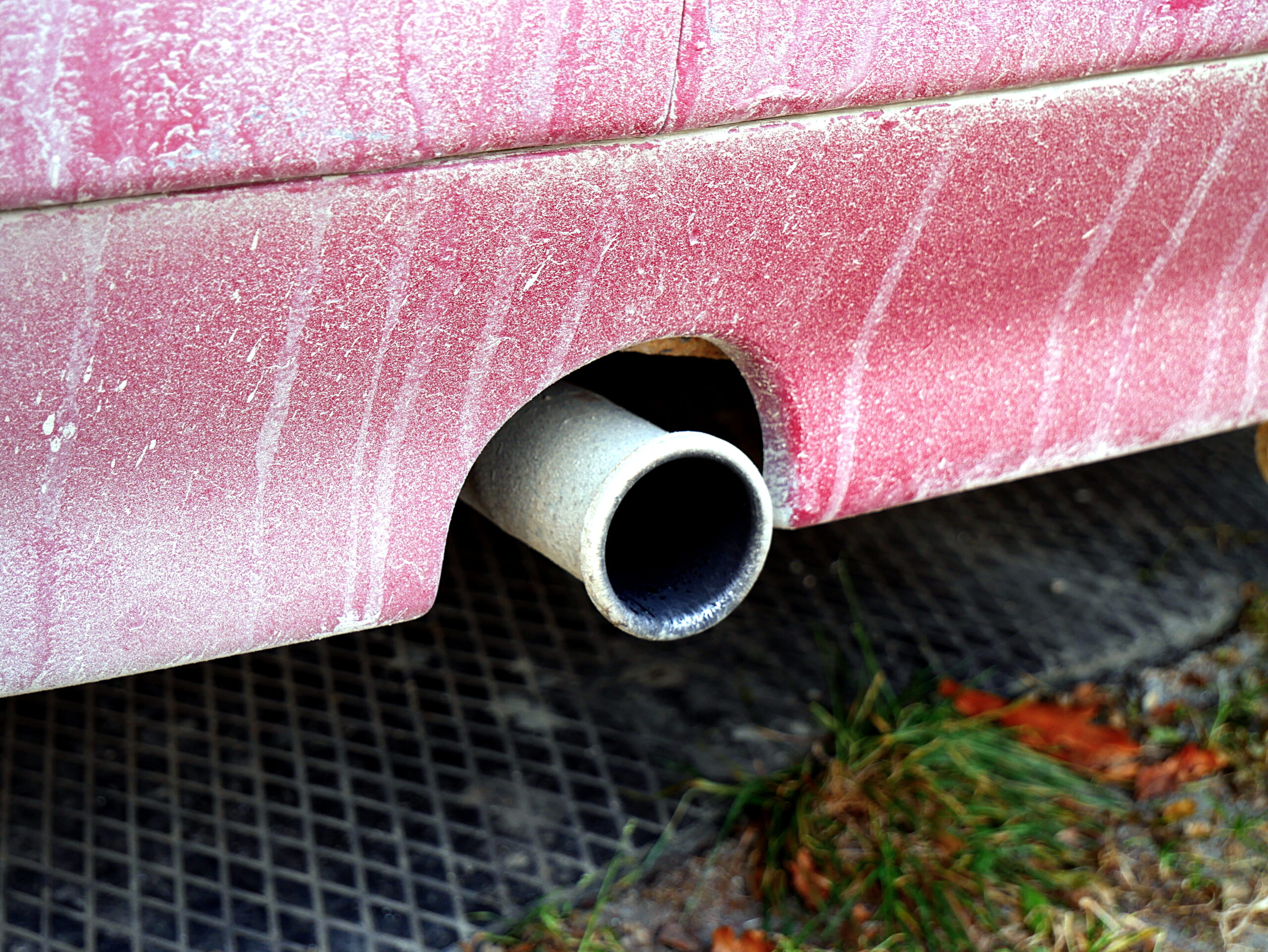
Image credit: Car exhaust pipe by Santeri Viinamäki, CC BY-SA 4.0, via Wikimedia Commons
コメント