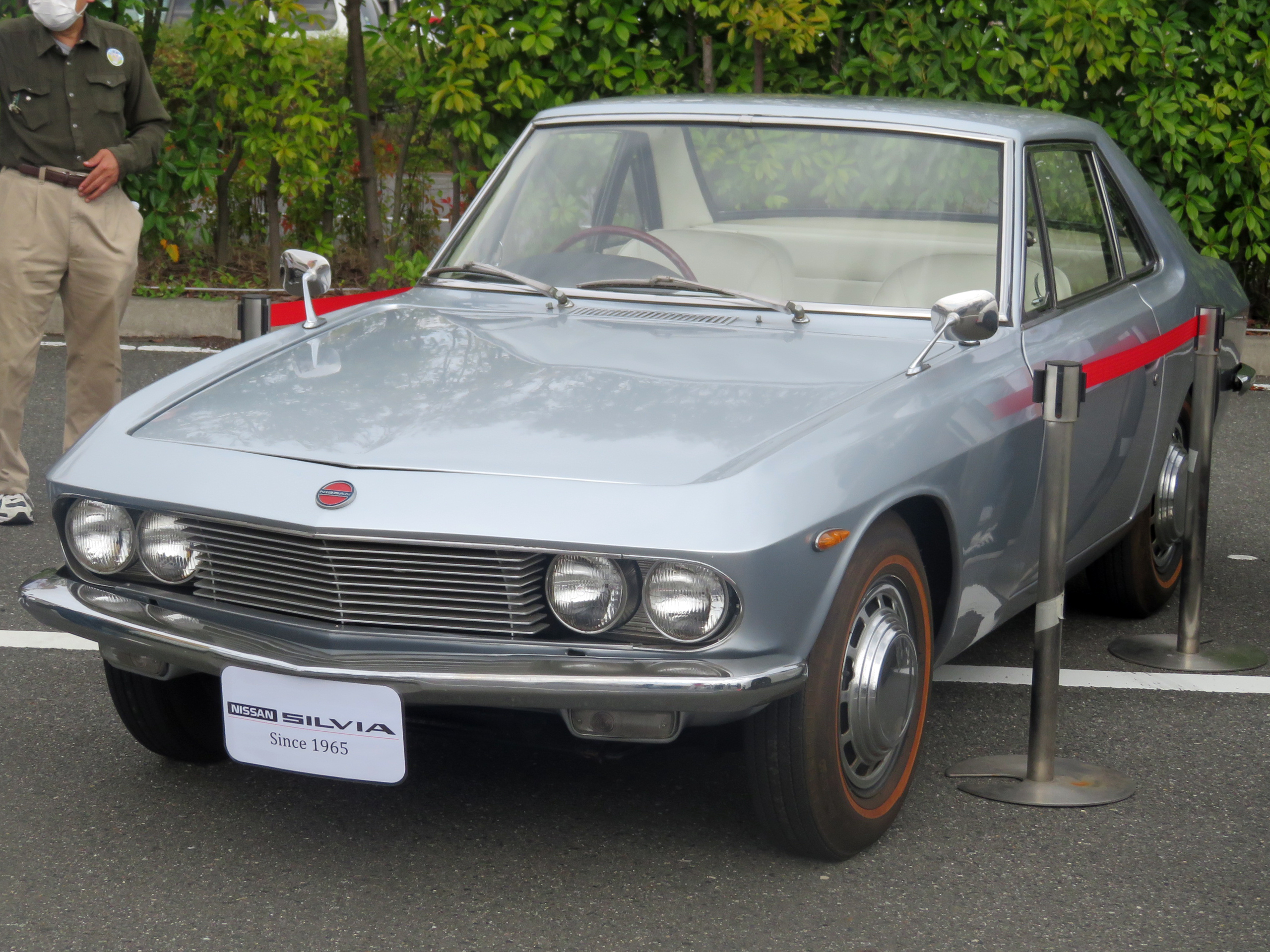
📋 Summary
- The CSP311 is the very first car to wear the Silvia name, decades before the S13-S15 drift icons most enthusiasts know today
- Introduced in 1965, it was essentially hand-built – Nissan workers shaped many body panels by hand rather than using mass-production stamping
- Only about 554 units were ever built over roughly three years of production, making it one of the rarest classic Japanese cars in existence
- It has almost no mechanical or stylistic relationship to the later turbocharged Silvia generations, and should be understood as a completely separate car that just happens to share a name
Say “Silvia” to most car enthusiasts outside Japan and they will picture the S13 or S14 – a rear-wheel-drive, turbocharged coupe that became a cornerstone of drift culture. But the very first car to wear the Silvia name looked, drove, and was built in an almost completely different way from anything that followed. The CSP311, sold from 1965 to 1968, is one of the rarest and least understood classic Japanese cars on the market, and it deserves to be judged entirely on its own terms.
A Hand-Built Halo Car From a Different Era of Nissan
The car that would become the Silvia was first shown to the public at the Tokyo Motor Show in September 1964, badged as the “Datsun Coupe 1500.” By the time production cars actually reached customers in the spring of 1965, the project had evolved into the Nissan Silvia 1600, riding on a shortened version of the Fairlady roadster’s platform. The design work built on Nissan’s earlier collaboration with German-American industrial designer Albrecht Goertz, whose relationship with the company had ended by the time the final production design was finalized in-house.
What set the CSP311 apart from virtually every other production car of its era, in Japan or anywhere else, was how it was built. Nissan described the car as almost entirely hand-assembled, with workers hand-shaping body panels rather than relying purely on stamping presses – a level of craftsmanship far closer to a coachbuilt European grand tourer than a mainstream Japanese production car. This was, in effect, Nissan’s statement piece: proof that the company could build something refined, low-volume, and aspirational, not just practical family sedans and commercial vehicles.
Under the Skin: A Modest but Willing Engine
Power came from Nissan’s R-series engine, a 1.6-liter OHV four-cylinder tuned with twin SU carburetors to produce around 96PS. That is a modest figure by any later performance-car standard, and even by the standards of some contemporaries, but the CSP311 was never intended to be a straight-line performance machine. It was a boutique, low-volume grand tourer – a car meant to showcase style, refinement, and craftsmanship rather than outright speed.
The CSP311 was offered as both a coupe and a rare convertible variant. The coupe accounts for the large majority of surviving cars; the convertible is significantly scarcer still. Given the extremely limited overall production run, both body styles are exceptionally hard to find today, and neither should be considered a common sight even within the classic JDM community.
💡 Tip: This Car Has Nothing Mechanically in Common With the S13/S14/S15
If you already know the later turbocharged Silvia generations, it is worth resetting your expectations entirely before researching the CSP311. There is no shared platform, no shared engine family, and no shared design lineage beyond the name itself. Nissan simply reused the “Silvia” nameplate decades later for an unrelated model line. Approach the CSP311 as its own distinct car – a 1960s hand-built grand tourer – rather than as an “ancestor” of the drift-era Silvia in any mechanical sense.
Just How Rare Is It?
Production numbers for the CSP311 are strikingly small even by classic-car standards. Widely cited figures put total production at around 554 units across the full three-year run from 1965 to 1968, with the majority of those cars – more than 400 – built before 1966. Of that already tiny total, only a small fraction were convertibles, commonly cited at around 48 units. The vast majority of cars stayed in Japan, with a small number exported to markets such as Australia.
Because the manufacturing process itself was so labor-intensive, Nissan was never able to produce the CSP311 in anything resembling mass-market volumes, and the car was priced accordingly – it was a genuinely expensive, exclusive product for its era. That combination of hand-built construction, tiny production numbers, and a short production run is exactly why the CSP311 occupies such a unique position in Nissan’s history: it was never meant to be common, and more than half a century later, it certainly is not.
⚠️ Caution: Parts and Expertise Are Extremely Limited
With fewer than 600 cars ever built and nearly sixty years having passed, sourcing replacement parts for a CSP311 is a genuine challenge. Reproduction parts are far less commonly available than for more mainstream classic JDM models, and many components may need to be fabricated, sourced from parts cars, or refurbished by a specialist. Finding a mechanic familiar with this specific model – as opposed to a general classic-car specialist – can also be difficult outside of Japan. Anyone considering a purchase should factor in the likelihood of long lead times and higher costs for even routine maintenance.
What to Check Before Buying
Given the rarity and age of the CSP311, a pre-purchase inspection is not just recommended, it is essential. A few areas deserve particular attention:
- Body panel condition and originality: Because panels were hand-formed rather than stamped, panel gaps and fit can vary slightly even between original factory cars. Look for consistent, well-documented restoration work rather than crude aftermarket bodywork that departs from the original hand-built character of the car.
- Rust in structural areas: Like virtually any unibody Japanese car from the 1960s, rust in the floor pans, sills, and suspension mounting points is the single biggest threat to long-term value and safety. A thorough inspection, ideally on a lift, is essential.
- Engine and drivetrain originality: Given how few of these cars exist, an original or correctly rebuilt R-series engine adds significantly to both authenticity and value compared to a car with a non-original replacement engine.
- Documentation and provenance: With production numbers this small, a documented ownership history, factory records, or club verification (where available) can meaningfully affect both the confidence of a purchase and the car’s long-term value.
- Interior and trim completeness: Trim pieces, badging, and interior components that are specific to this model are extremely hard to replace if missing or damaged. A car with a complete, original interior is worth significantly more effort to acquire than one requiring extensive trim fabrication.
Why Collectors Value It
The CSP311’s appeal is not about outright performance – by modern standards, or even by the standards of some of its own contemporaries, it is a modest car mechanically. Its value lies in what it represents: the moment Nissan decided to build something aspirational and hand-crafted, using the exact same commitment to quality that Japanese manufacturers would later become globally famous for, but applied here in a genuinely bespoke, low-volume way that the company would rarely attempt again at this scale.
It is also historically significant simply as the first car to wear a nameplate that would go on to become one of the most recognized names in Japanese performance car history, even though the later cars that carried the name shared nothing mechanically with this original. For collectors interested in the full arc of Nissan’s history – not just the turbocharged performance era most Western enthusiasts associate with JDM culture – the CSP311 fills an important and often overlooked chapter.
Where the CSP311 Fits in the Broader Story of Japanese Sports Cars
It is easy to look at Japan’s automotive history through the lens of the cars that became globally famous – the turbocharged GT-Rs, the rotary-powered RX-7, the Supra. But those cars did not appear in a vacuum. They were built by an industry that had already spent decades learning how to build sports and performance cars, and the CSP311 is one of the clearest early markers of that learning process. It predates the Fairlady Z by several years and arrived at a time when Nissan was still working out what a “Japanese sports car” should even look like, mechanically and stylistically.
Seen in that light, the CSP311 is less a footnote and more a genuine starting point – a car built at a moment when Nissan was willing to lose money on a low-volume, hand-built product simply to prove it could compete with the design and craftsmanship standards of European coachbuilders. That willingness to build something impractical purely to make a statement is a thread that runs through much of Japan’s most celebrated automotive history, from this car all the way through to modern low-volume halo cars like the Lexus LFA.
Frequently Asked Questions
Q: Is the CSP311 related to the S13 or S14 Silvia?
A: Only in name. The CSP311 shares no platform, engine, or design lineage with the later turbocharged Silvia generations. Nissan simply reused the “Silvia” nameplate for an entirely different model line decades later.
Q: How many CSP311s were built?
A: Commonly cited figures put total production at around 554 units across the 1965-1968 production run, with only around 48 of those being convertibles. This makes it one of the rarest classic Japanese production cars.
Q: What engine does it use?
A: A 1.6-liter Nissan R-series OHV four-cylinder engine with twin SU carburetors, producing approximately 96PS – modest by later performance standards, but appropriate for the car’s role as a refined grand tourer rather than an outright performance machine.
Q: Why was it so expensive to produce?
A: Nissan built the CSP311 using largely hand-assembly methods, including hand-shaped body panels, rather than conventional mass-production stamping. This craftsmanship-focused approach limited production volume and kept the car’s original price – and its rarity today – much higher than mainstream Japanese cars of the same era.
Q: Is it difficult to maintain today?
A: Yes, relative to more common classic Japanese cars. With fewer than 600 units ever built, parts availability and specialist mechanical expertise are both limited, and owners should expect longer lead times and higher costs for restoration or repair work.
This article is for general informational purposes. Specifications and production figures are based on widely cited historical sources and may vary slightly between references. Always consult a qualified classic-car specialist before purchasing a rare collector vehicle.
Image credit: Nissan Silvia (CSP311) front.jpg by Tokumeigakarinoaoshima, CC BY-SA 4.0, via Wikimedia Commons
コメント