📋 Summary
- Australia’s “25-year rule” lets vehicles 25 years or older bypass full local compliance, while newer JDM cars generally need to qualify under the Specialist and Enthusiast Vehicle Scheme (SEVS), which is based on criteria like power-to-weight ratio rather than simple age
- A distinctly Australian hurdle: many older Japanese vehicles used asbestos in components like clutch and brake linings, and imported cars typically need to be certified asbestos-free before they can clear customs
- New Zealand has no age-based import ban at all, but every imported vehicle must pass an entry certification covering safety, emissions, and frontal impact standards before it can be registered
- Because both countries drive on the left like Japan, right-hand-drive JDM cars need no steering conversion, giving both markets a natural accessibility advantage similar to the UK’s
Australia and New Zealand share a JDM advantage that the United States does not: both drive on the left, so Japanese cars arrive ready to drive without the steering-side conversion that complicates JDM ownership in left-hand-drive countries. But the two nations have taken meaningfully different regulatory paths to managing what actually gets imported and registered, and understanding those differences matters enormously for anyone comparing the two scenes.
Australia’s Two-Track System: Age and SEVS
Australia’s import framework for used vehicles runs on two separate tracks. The first, commonly called the 25-year rule, is a concessional approval pathway under the Road Vehicle Standards Act 2018: a vehicle manufactured 25 or more years ago can generally be imported without needing to be listed on the Specialist and Enthusiast Vehicle Scheme (SEVS) register or meet full Australian Design Rule compliance, broadly similar in spirit to the American 25-year exemption, though the specific legal mechanism and administering agency are different.
The second track, SEVS, exists for vehicles under 25 years old that were never sold new in Australia. Eligibility generally depends on criteria such as a high power-to-weight ratio, low emissions, genuine rarity, or specific accessibility features, rather than age alone. Because these criteria and their exact thresholds are set by regulation and can be revised, anyone researching a specific newer JDM car’s SEVS eligibility should check the current official register rather than relying on older figures, since power-to-weight and other qualifying thresholds have changed over time as the scheme has been updated.
💡 Tip: Budget for Asbestos Certification in Australia
A hurdle that catches many first-time Australian importers off guard: many older Japanese vehicles used asbestos-containing materials in components such as clutch friction plates, brake pads, and certain gasket compounds during their production years, reflecting an industry-wide practice that was common at the time rather than something specific to any one manufacturer. Because Australia maintains strict asbestos import controls, vehicles being imported generally need to be certified asbestos-free by an accredited assessor before they can clear customs, and this inspection and any necessary remediation should be budgeted for as a real cost and time factor, not an afterthought.
New Zealand’s More Open, But Not Unregulated, Approach
New Zealand takes a notably different approach: there is no age-based import ban equivalent to Australia’s or America’s rules. In principle, JDM vehicles of nearly any age can be imported. That accessibility, however, does not mean an absence of standards. Every imported used vehicle must pass an entry certification process carried out by an approved inspection organisation, covering general safety, emissions, and frontal impact performance, before it can be issued a Warrant of Fitness and registered for road use.
Vehicles under a certain age threshold that cannot meet the standard frontal impact requirement have historically had a separate path available through New Zealand’s Special Interest Vehicle permit scheme, a limited annual allocation intended for genuinely significant or unusual vehicles rather than routine imports. Because permit numbers, thresholds, and application processes are subject to periodic policy review, anyone relying on this pathway for a specific car should confirm the current rules and remaining allocation directly with New Zealand’s transport authority rather than assuming older figures still apply.
How the Two Scenes Compare in Practice
In practice, these different frameworks have shaped somewhat different import cultures in each country. New Zealand’s lack of an age floor has historically made it an easier entry point for very fresh, low-mileage Japanese vehicles, including cars still well within their original warranty period in Japan, which has made it a significant hub for grey-market used car importing generally, not just enthusiast performance cars. Australia’s dual-track system, by contrast, tends to sort imports more clearly into two categories: genuinely classic or historically significant cars using the 25-year pathway, and specifically performance-oriented or otherwise distinctive newer cars qualifying under SEVS criteria.
Both countries have also developed active specialist import and compliance industries, businesses that handle sourcing from Japanese auctions, shipping logistics, and the compliance paperwork and physical modifications needed to pass each country’s specific entry requirements, similar in function to the specialist importers that have grown up around the UK and US markets.
⚠️ Caution: Rules and Thresholds Change – Always Verify Current Requirements
Both Australia’s SEVS eligibility criteria and New Zealand’s Special Interest Vehicle permit scheme have been revised over time, and the specific numeric thresholds, permit quotas, and administering processes described here can shift with policy updates. Before committing to importing a specific vehicle, always confirm the current requirements directly with Australia’s Road Vehicle Standards portal or New Zealand’s NZTA rather than relying on figures that may be out of date, including figures found in this article.
Why This Matters for Buyers Comparing Markets
For anyone weighing where to source or eventually register a JDM import, the practical difference between these two frameworks is significant. A car that is straightforward to import into New Zealand under its no-age-floor system might require a specific SEVS qualification pathway, or simply need to wait several more years, to be importable into Australia under the same ownership plan. Conversely, a genuinely historic Australian-eligible classic under the 25-year rule may carry compliance costs, like the asbestos certification requirement, that a New Zealand importer bringing in the same car would not necessarily face in the same form. Treating the two countries as interchangeable simply because both are right-hand-drive, left-side-driving markets close to Japan is a common mistake worth avoiding.
Shipping and Sourcing Realities
Geographically, Japan sits far closer to Australia and New Zealand than it does to the UK, US, or continental Europe, which tends to translate into shorter sea transit times and, historically, somewhat lower shipping costs relative to those more distant markets, though exact pricing fluctuates with fuel costs, shipping line capacity, and the specific route and port pair used. Most cars still travel via roll-on/roll-off or shared container shipping from a Japanese export port to major receiving ports such as Melbourne, Sydney, or Brisbane in Australia, or Auckland in New Zealand, followed by the compliance and certification steps described above before the car can be registered and driven.
Both countries have well-established specialist import agents who work directly with Japanese auction houses on a client’s behalf, using the same online bidding platforms and auction sheet grading systems familiar to Japanese domestic buyers, which has helped make the sourcing side of the process relatively transparent for buyers in both countries, even though the compliance side of the process differs meaningfully between them.
Frequently Asked Questions
Q: Is there an age limit for importing JDM cars into New Zealand?
A: No. New Zealand has no age-based import ban. Every imported vehicle still needs to pass entry certification covering safety, emissions, and frontal impact standards before registration.
Q: What is Australia’s 25-year rule?
A: A concessional import pathway allowing vehicles manufactured 25 or more years ago to be imported without needing SEVS registration or full local design rule compliance, broadly similar in spirit to the US 25-year exemption but administered under different Australian regulations.
Q: Can I import a newer JDM car into Australia if it is not yet 25 years old?
A: Potentially, through the Specialist and Enthusiast Vehicle Scheme (SEVS), which is based on criteria such as power-to-weight ratio, emissions, and rarity rather than age. Eligibility criteria and thresholds are set by regulation and can change, so always check the current official register for a specific model.
Q: Why do imported Japanese cars sometimes need asbestos certification in Australia?
A: Because many older Japanese vehicles used asbestos-containing materials in components like clutch and brake linings during their production era, an industry-wide practice at the time. Australia’s strict asbestos import controls generally require certification that a vehicle is asbestos-free before it can clear customs.
Q: Are Australia and New Zealand’s import rules basically the same since both are right-hand-drive?
A: No. While both countries share the steering-side advantage that makes JDM cars road-ready without conversion, their underlying legal frameworks for age eligibility, compliance testing, and permit allocation differ significantly, and a car straightforward to import into one country may face very different requirements in the other.
This article is for general informational purposes. Import regulations, eligibility criteria, and permit quotas change over time in both Australia and New Zealand – always verify current requirements with the relevant official transport authority before importing any vehicle.
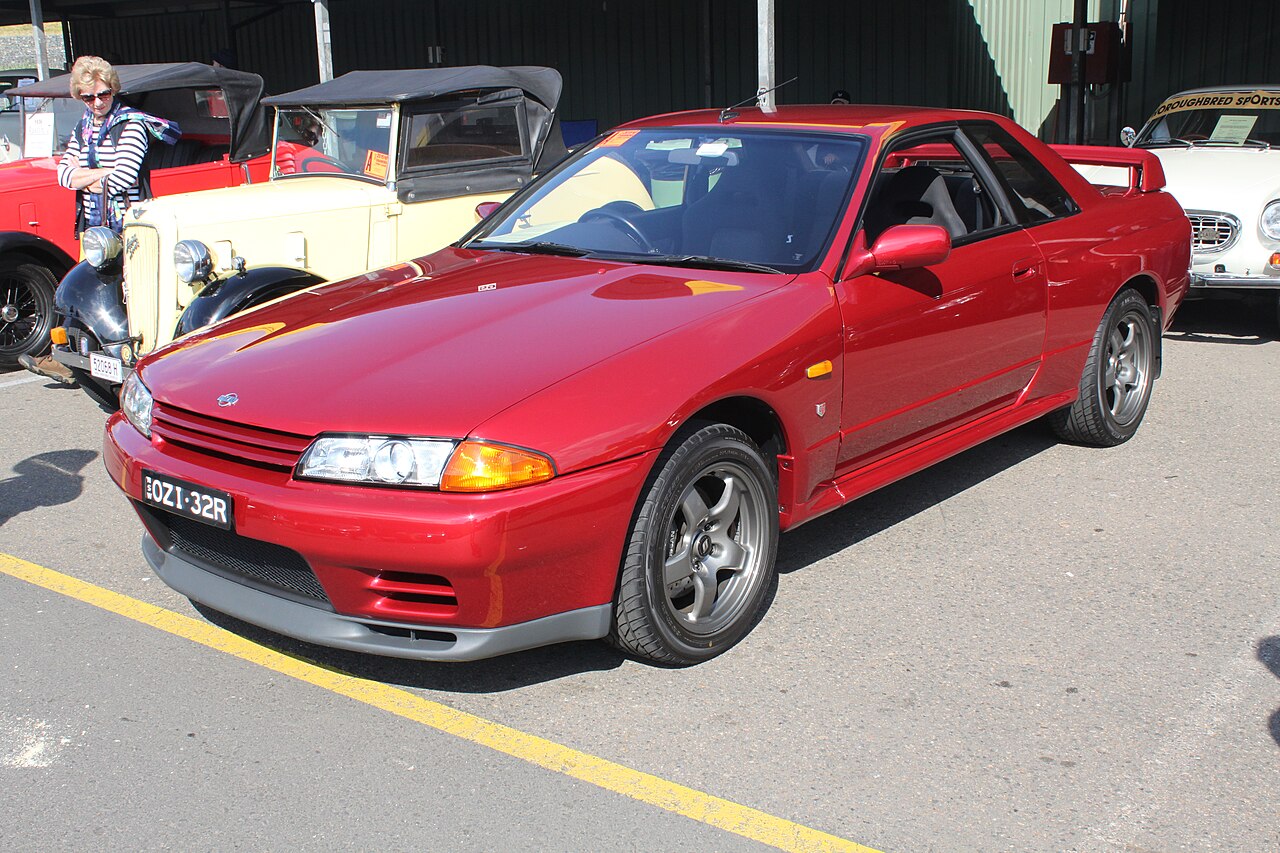
Image credit: 1991 Nissan Skyline (R32) GT-R coupe by Jeremy from Sydney, Australia, CC BY 2.0, via Wikimedia Commons
コメント