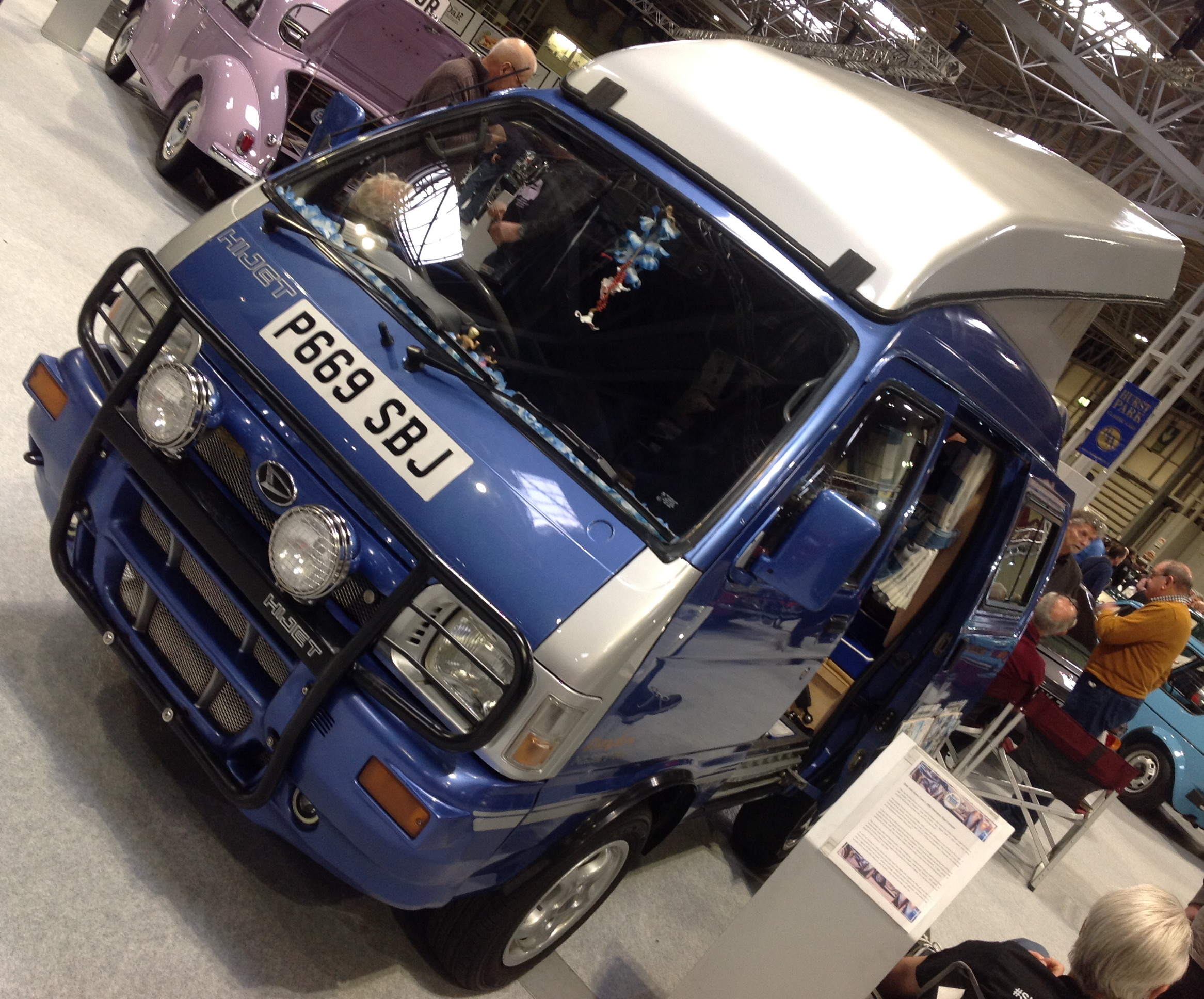
Among the more unexpected corners of the overseas kei car boom is a genuinely growing trend: converting tiny Japanese kei trucks into functional, if compact, camper vehicles. What sounds at first like an impractical mismatch — turning one of the smallest commercially produced trucks in the world into overnight sleeping accommodation — has actually become a legitimate, popular niche both within Japan and increasingly among overseas enthusiasts drawn to kei trucks for their efficiency, off-road capability, and sheer charm. This guide explains how and why kei truck camper conversions work, and what to know if you’re considering one.
📋 What You’ll Learn in This Guide
- Why kei trucks make a genuinely practical camper conversion base despite their small size
- The most common kei truck models used for camper builds
- What a typical kei truck camper conversion actually includes
- Why this trend has grown domestically in Japan before spreading overseas
- Practical considerations for importing and using a kei camper outside Japan
- Why a Tiny Truck Makes a Surprisingly Good Camper Base
- The Most Common Base Models
- What a Typical Conversion Actually Includes
- A Domestic Japanese Trend That’s Spread Overseas
- Importing a Pre-Built Kei Camper vs. Converting One Yourself
- Weight and Payload Considerations
- Solar and Off-Grid Power Options
- Frequently Asked Questions
- Final Thoughts
Why a Tiny Truck Makes a Surprisingly Good Camper Base
Kei trucks — the smallest legally defined category of Japanese commercial vehicle, built to strict size and engine displacement limits — might seem like an odd choice for camper conversion given their genuinely compact dimensions, but several of their inherent characteristics actually work in favor of the concept. Many kei trucks offer genuine 4WD capability in a package weighing well under a ton, giving surprisingly capable off-road access to remote camping spots that a larger, heavier vehicle might struggle to reach. Their compact overall footprint makes them easy to maneuver and park in tight spaces unsuitable for a full-size camper van or towed trailer, and their exceptional fuel efficiency, inherited from their kei-class engine displacement limits, keeps running costs meaningfully lower than larger camper alternatives — a genuinely appealing combination for the kind of minimalist, adventure-focused camping culture that’s grown alongside the trend.
The Most Common Base Models
The Suzuki Carry and Daihatsu Hijet are the two most commonly used kei truck platforms for camper conversions, reflecting their broad availability, well-understood mechanical reliability, and established aftermarket support, with the Subaru Sambar and Honda Acty also appearing as conversion bases though somewhat less commonly. These models typically come in either open-bed pickup configuration (requiring a more substantial custom shell or canopy build to create enclosed camper space) or as panel van variants, which already offer an enclosed rear cargo area that’s naturally easier to convert into a finished camper interior without needing to fabricate an entirely new structure.
💡 Tip
If you’re specifically interested in a kei camper rather than a general kei truck you’d convert yourself, look for panel van-based conversions (built on the enclosed van body style rather than an open pickup bed) as a starting point — the enclosed structure typically results in a more finished, weather-tight interior with less custom fabrication required, and many Japan-based specialist builders work primarily from this base for exactly that reason.
What a Typical Conversion Actually Includes
Despite the genuinely tiny overall footprint involved, well-executed kei truck and kei van camper conversions manage to pack in a surprising amount of functional camping equipment: compact sleeping platforms (commonly configured to sleep one or two adults, occasionally up to four in larger builds with clever space use), small refrigerators, basic sink and water storage setups, portable stoves or cooking provisions, and in more elaborate builds, air conditioning and finished interior paneling using genuinely nice materials — some Japanese builders have used traditional Japanese wood finishes like cypress paneling to create a distinctly cozy, cabin-like interior atmosphere that stands in appealing contrast to the utilitarian exterior. The specific combination of amenities varies enormously by builder and budget, ranging from simple DIY sleeping platform conversions to genuinely polished, professionally built micro-campers.
A Domestic Japanese Trend That’s Spread Overseas
Kei truck camping and camper conversion culture grew first and most substantially within Japan itself, driven partly by younger drivers using kei trucks for fishing, camping, and general outdoor leisure activities as an affordable, practical alternative to larger, more expensive camping vehicles. As international interest in kei trucks generally has grown — driven by their appeal for small-scale agricultural, property maintenance, and off-road recreational use in various overseas markets — the camper conversion trend has followed, with both imported pre-converted Japanese camper builds and overseas enthusiasts converting imported kei trucks themselves after arrival contributing to the trend’s international growth.
⚠️ Caution
Kei trucks are subject to the same age-based import eligibility rules and country-specific regulations covered elsewhere in this guide series, and a camper conversion doesn’t change or exempt the underlying vehicle from those rules. Additionally, confirm your destination country or state’s specific regulations around recreational vehicle registration, sleeping in a converted commercial vehicle, and any modification compliance requirements before assuming a kei camper conversion is automatically treated the same as a purpose-built RV for registration and insurance purposes.
Importing a Pre-Built Kei Camper vs. Converting One Yourself
Buyers interested in a kei camper generally choose between importing an already-converted camper build directly from Japan (where a genuine specialist conversion industry exists, offering finished builds at various price points) versus importing a standard kei truck or van and arranging or performing the conversion themselves after it arrives in their destination country. Importing a finished conversion offers convenience and typically a more polished result from an experienced builder, while converting one yourself (or through a local specialist) after import offers more control over the specific layout and features, potentially at lower total cost depending on your access to skilled labor and materials domestically. Neither approach is universally better — the right choice depends on your budget, DIY inclination, and how quickly you want a finished, usable vehicle.
Weight and Payload Considerations
Kei trucks operate under strict weight and dimension limits as part of their kei-class classification, and it’s worth understanding that adding a substantial camper conversion — sleeping platform, water tank, appliances, finished interior paneling — consumes a real portion of the vehicle’s already modest payload capacity. A poorly planned conversion that adds too much weight can meaningfully affect handling, braking performance, and fuel economy, and in more extreme cases could push a modified vehicle out of compliance with its original weight classification entirely. Reputable conversion builders account for this in their design, using lightweight materials and keeping water and equipment capacity realistic relative to the platform’s actual payload rating, which is worth asking about directly if you’re evaluating a specific conversion rather than simply assuming any build is automatically well-engineered on this front.
Solar and Off-Grid Power Options
Given their appeal for remote, off-road camping use, many kei camper conversions incorporate small solar panel setups and battery systems to power basic electronics, lighting, and small appliances without needing to run the vehicle’s engine or rely on external power hookups. This off-grid capability, scaled appropriately to the vehicle’s tiny size, extends the practical range and comfort of a kei camper for genuinely remote trips where campground electrical hookups aren’t available, reinforcing the vehicle’s overall identity as a compact, self-sufficient adventure vehicle rather than simply a scaled-down version of a conventional RV that expects campground infrastructure.
Frequently Asked Questions
Q: Can an adult comfortably sleep in a kei truck camper conversion, given how small the vehicle is?
A: Yes, though “comfortably” is relative to expectations — well-designed conversions do accommodate adult sleeping space, though the overall interior volume is genuinely limited compared to a full-size camper van, and this is a fundamentally different, more minimalist camping experience by design rather than an attempt to replicate a spacious RV in miniature.
Q: Are kei truck campers legal to sleep in overnight in public parking areas or campgrounds?
A: This follows the same general rules covered in this guide series’ car camping etiquette article for Japan specifically, and follows your destination country’s own local rules for any other market — there’s no special exemption or restriction specific to kei camper conversions distinct from car camping rules generally.
Q: Do kei truck camper conversions retain their off-road 4WD capability after conversion?
A: Generally yes, provided the conversion doesn’t add excessive weight or compromise ground clearance and suspension geometry — well-executed conversions are typically designed with this in mind, but it’s worth confirming specifically with any builder or seller whether the conversion has meaningfully affected the vehicle’s original off-road capability.
Final Thoughts
Kei truck camper conversions represent a genuinely charming, practical answer to a question most Western camping culture never really asked — what if your camper could be tiny, fuel-efficient, and capable of reaching places a full-size RV simply can’t? Whether you’re drawn to the concept for its practicality, its aesthetic, or simply its novelty, the growing availability of both finished conversions and conversion-ready kei trucks means this once purely domestic Japanese trend is now genuinely accessible to overseas enthusiasts.
Image credit: Daihatsu Hijet Camper (1997) by andreboeni (CC BY 2.0), via Wikimedia Commons

.jpg)
コメント