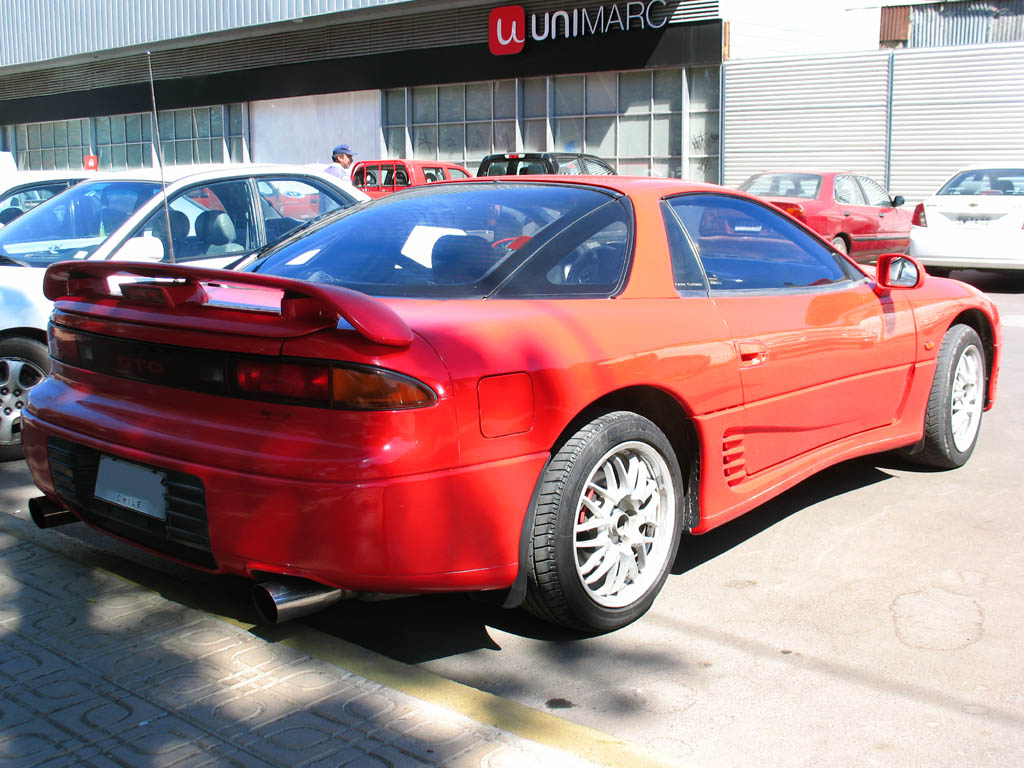
Among the great underappreciated stories of 1990s JDM performance cars is the Mitsubishi GTO, a genuine technology showcase that packed twin-turbocharged all-wheel drive, four-wheel steering, and automatically deploying active aerodynamics into a single production coupe — yet has spent three decades trading at a real discount relative to contemporaries like the Supra and Skyline despite arguably offering more advanced engineering than either. Sold internationally as the 3000GT (and badge-engineered by Chrysler as the Dodge Stealth), the GTO deserves serious consideration from any buyer drawn to genuinely ambitious 1990s Japanese engineering. This guide covers what makes it tick.
📋 What You’ll Learn in This Guide
- Why the GTO packed such an unusually advanced technology suite for its era
- The 6G72 twin-turbo V6 and its sequential turbocharger configuration
- What the “Gentlemen’s Agreement” meant for JDM power output figures
- The genuine feature differences between JDM and US-market examples
- Why later, simplified examples might actually be the smarter ownership choice
- A Genuine Technology Showcase
- The 6G72 Twin-Turbo V6
- The “Gentlemen’s Agreement” and Power Output
- Real Feature Differences Between JDM and Export Markets
- Why Later, Simplified Examples Might Be the Smarter Buy
- Value Relative to Contemporaries
- Weight: The Genuine Trade-Off for All That Technology
- Frequently Asked Questions
- Final Thoughts
A Genuine Technology Showcase
Produced from 1990 to 2000 across three chassis codes (Z16A, Z15A, and Z15AM), the GTO launched with a genuinely remarkable technology package for a production coupe of its era: a 3.0-liter twin-turbocharged V6 paired with all-wheel drive, four-wheel steering (marketed as AWS), electronically controlled suspension (ECS), and an active aerodynamics system that automatically deployed additional bodywork elements above roughly 50 mph to improve high-speed stability. This wasn’t marketing exaggeration or a limited halo trim — this technology suite was genuinely fitted to the range-topping Twin Turbo VR-4 variant most enthusiasts specifically seek out today, representing a level of engineering ambition that arguably exceeded what most contemporary rivals, including the Supra and Skyline GT-R covered elsewhere in this guide series, offered in the same era.
The 6G72 Twin-Turbo V6
At the heart of the VR-4 sits the 6G72, a 3.0-liter DOHC 24-valve V6 fitted with twin Mitsubishi TD04 turbochargers arranged in a sequential configuration — meaning the two turbochargers activate progressively rather than both spooling simultaneously from idle, a genuinely sophisticated approach designed to minimize turbo lag at low engine speeds while still delivering strong peak power once both turbochargers are fully active. This sequential twin-turbo V6 architecture was a real engineering differentiator from the inline-six turbo layouts more commonly associated with contemporary JDM performance icons, giving the GTO a genuinely distinct powertrain character within the broader 1990s Japanese performance car landscape.
💡 Tip
Given the GTO’s genuinely advanced technology suite, prioritize sellers and specialists with real, specific experience maintaining these systems rather than a generalist mechanic unfamiliar with the platform’s particular quirks. The active aero, four-wheel steering, and electronically controlled suspension systems, while genuinely impressive when functioning correctly, represent real diagnostic and repair complexity that a shop without specific GTO/3000GT experience may struggle to properly service.
The “Gentlemen’s Agreement” and Power Output
JDM performance cars of this era, including the GTO, operated under Japan’s informal “Gentlemen’s Agreement” among domestic manufacturers, which capped advertised power output at 280 PS regardless of a given car’s actual output potential — a voluntary industry arrangement rather than a strict legal mandate, but one that major manufacturers generally observed throughout the 1990s. Notably, the US-market 3000GT VR-4, built on essentially the same hardware, was officially rated at 300 horsepower, illustrating how this JDM-specific power-figure ceiling reflected market-specific marketing and regulatory convention rather than any genuine underlying mechanical difference between the JDM and export versions of the same fundamental engine.
Real Feature Differences Between JDM and Export Markets
Beyond the power figure discrepancy, genuine equipment differences separate JDM GTO examples from their US-market 3000GT VR-4 counterparts: JDM cars received the active aerodynamics system, active suspension, and active exhaust as standard equipment on most twin-turbo trims, none of which were offered on the US-market 3000GT VR-4 at all, alongside additional JDM-specific comfort and convenience features like electric mirrors, factory-fitted navigation, and rear bucket seats in place of the bench-style rear seating common on export models. For buyers specifically importing a genuine JDM GTO rather than considering a domestically available 3000GT VR-4 in a market where it was originally sold, these are genuine, meaningful equipment differences worth confirming are actually present and functional on any specific example.
⚠️ Caution
The same technological complexity that made the GTO such a genuine showcase of 1990s engineering ambition is also its biggest practical ownership liability today — the active aero, suspension, and steering systems can be genuinely expensive and difficult to properly diagnose and repair when something malfunctions, and parts for these more exotic systems specifically can be genuinely scarce compared to parts for simpler, more conventional performance cars of the same era. Budget realistically for this complexity, and treat a fully functional example of these advanced systems as a genuinely valuable find rather than an assumed baseline.
Why Later, Simplified Examples Might Be the Smarter Buy
As GTO production continued through the 1990s, Mitsubishi progressively simplified some of the model’s more advanced systems specifically to reduce production complexity and cost — a pattern that, somewhat counterintuitively, can make later production examples a genuinely more sensible ownership prospect for buyers prioritizing long-term reliability and maintenance simplicity over having every single original advanced feature intact and functional. This is worth weighing honestly against your own priorities: an early example with the full, original technology suite offers the most complete and historically authentic experience, but a later, simplified car may offer a meaningfully easier and less expensive ownership experience for buyers who value that more than technological completeness.
Value Relative to Contemporaries
Despite its genuine engineering ambition, the GTO has consistently traded at a real discount relative to contemporaries like the Supra and Skyline GT-R throughout its collector-market history, a gap that reflects factors including its less prominent motorsport pedigree, its genuinely intimidating maintenance complexity relative to simpler rivals, and simply less concentrated enthusiast mindshare compared to those more culturally dominant nameplates. For buyers specifically prioritizing genuine technological sophistication and relative value over brand prestige or motorsport heritage, this pricing gap can represent a genuinely compelling opportunity, provided you go in with realistic expectations about the ownership complexity involved.
Weight: The Genuine Trade-Off for All That Technology
All this advanced technology came at a real, unavoidable physical cost: the GTO is a genuinely heavy car for its class, with the full complement of all-wheel drive hardware, four-wheel steering mechanisms, active suspension components, and active aero hardware all adding real mass that a simpler, lighter rival wouldn’t carry. This weight is worth understanding honestly as a genuine trade-off rather than a flaw to be dismissed — the GTO’s driving character reflects a grand-touring-oriented approach prioritizing all-weather capability, stability, and technological sophistication over the razor-edge lightness and agility some contemporary rivals prioritized instead. Buyers specifically seeking the lightest, most agile possible driving experience within this era of JDM performance cars should weigh this honestly against the GTO’s other genuine strengths before committing.
Frequently Asked Questions
Q: Is the GTO the same car as the Dodge Stealth sold in North America?
A: The Dodge Stealth was a genuine badge-engineered variant of the same fundamental platform, produced through a Mitsubishi-Chrysler collaboration, sharing substantial mechanical commonality with the 3000GT/GTO though with some trim and market-specific differences. It’s a related but distinct model from the JDM GTO covered in this guide.
Q: Do all GTO trim levels include the twin-turbo engine and active technology suite?
A: No — the GTO was offered across multiple trim levels including naturally aspirated variants without the advanced active aero, suspension, and four-wheel steering systems, which were specifically associated with the range-topping Twin Turbo VR-4 trim that most enthusiasts specifically seek out. Confirm the exact trim and equipment level of any specific car rather than assuming all GTOs share the same technology suite.
Q: Is finding a mechanic experienced with the GTO’s advanced systems difficult outside Japan?
A: This varies considerably by region — areas with an established JDM enthusiast community and specialist import shops tend to have meaningfully better access to GTO-experienced mechanics than areas without such a community, though the model’s genuine rarity relative to more common JDM icons means finding true specialist expertise anywhere requires more effort than for a more mainstream performance car.
Final Thoughts
The Mitsubishi GTO represents a genuinely remarkable piece of 1990s Japanese engineering ambition that’s never quite received the recognition or collector-market pricing its technological sophistication might seem to warrant, making it a compelling option for buyers specifically drawn to advanced engineering and willing to accept the genuine maintenance complexity that comes with it. Understanding the real differences between JDM and export-market examples, and honestly weighing full technological completeness against long-term ownership simplicity, will help you find the specific GTO that actually suits your priorities.
Image credit: Mitsubishi GTO VR4 by RL GNZLZ (CC BY-SA 2.0), via Wikimedia Commons
.jpg)
コメント