📋 Summary
- Gran Turismo, first released in Japan in December 1997 by creator Kazunori Yamauchi, grew directly out of Japan’s own car culture and introduced millions of international players to a huge roster of JDM cars they had never seen in real life
- Automakers themselves have credited Gran Turismo with real-world business decisions, including Mitsubishi’s launch of the Lancer Evolution in the United States and Nissan’s eventual global rollout of the R35 GT-R
- Forza Motorsport, launched by Microsoft’s Turn 10 Studios in 2005 as Gran Turismo’s console rival, brought its own detailed take on JDM cars and tuning to an Xbox audience, deepening the genre’s overall influence
- Both franchises functioned as an accessible, low-cost gateway to cars most players could never afford or import, building brand familiarity and desire years before many of those same players became real-world buyers
Long before online parts catalogs and import specialists made JDM ownership genuinely accessible outside Japan, an entire generation of enthusiasts first encountered cars like the Skyline GT-R, Lancer Evolution, and RX-7 through a video game controller rather than a driveway. Gran Turismo and Forza Motorsport did not just simulate these cars, they introduced them to millions of players who had no other realistic way to experience them, and in doing so, meaningfully shaped how JDM culture spread internationally.
- Gran Turismo: Born From Japan’s Own Car Culture
- Forza Motorsport: The Xbox Rival That Deepened the Genre
- A Shared Effect: Building Desire Long Before Ownership Was Possible
- Licensing, Tuning Culture, and Community Impact
- GT Academy: When Virtual Skill Became a Real Racing Career
- Frequently Asked Questions
Gran Turismo: Born From Japan’s Own Car Culture
Gran Turismo was created by Kazunori Yamauchi, with development beginning in the early 1990s and the first game releasing in Japan in December 1997, followed by international releases in 1998. Yamauchi has spoken openly about how the series grew directly out of his own upbringing surrounded by Japanese car culture and automotive media, and that personal grounding shows clearly in the game’s design: the original Gran Turismo leaned heavily on Japanese manufacturers and JDM performance cars, giving international players their first detailed, drivable exposure to models that were, at the time, practically unobtainable outside Japan.
As the series continued through numerous sequels, it broadened to include a more even mix of Japanese and international manufacturers, but its foundational identity as a showcase for Japanese car culture, and specifically JDM performance cars, remained a defining characteristic that set it apart from other racing franchises of the era.
💡 Tip: These Games Genuinely Influenced Real Automaker Decisions
It is easy to dismiss racing games as pure entertainment with no real-world impact, but Gran Turismo’s influence on actual automaker strategy is well documented and worth understanding. Mitsubishi executive Takashi Kiuchi directly credited the game with influencing the company’s decision to launch the Lancer Evolution in the United States market, and industry observers have similarly pointed to Gran Turismo’s popularization of the Skyline GT-R as a meaningful factor in Nissan’s eventual decision to sell the R35 GT-R as a global model rather than keeping it Japan-only, as earlier Skyline generations had been.
Forza Motorsport: The Xbox Rival That Deepened the Genre
Forza Motorsport arrived several years after Gran Turismo’s debut, developed by Turn 10 Studios, a team established by Microsoft in 2001 specifically to build a competitive racing simulation franchise for the Xbox platform. The original Forza Motorsport released in May 2005, featuring over 200 cars, and was well received as a serious rival to Gran Turismo, offering its own detailed physics model and, notably, one of the first mainstream console implementations of deep vehicle customization and livery editing tools.
Forza’s JDM roster grew significantly across its sequels, and the franchise split into two distinct series over time, Forza Motorsport, focused on circuit racing and simulation accuracy, and Forza Horizon, an open-world arcade-style series that has become particularly well known for its festival atmosphere and its own substantial JDM car culture representation, including tuning, drifting, and car meet-style events built directly into the game world.
A Shared Effect: Building Desire Long Before Ownership Was Possible
What made both franchises so influential on real-world JDM culture was less about any single feature and more about timing and accessibility. Throughout the 1990s and 2000s, most of the JDM performance cars featured prominently in these games, cars like the Skyline GT-R, Supra, RX-7, and Silvia, were either not legally importable in markets like the United States due to age restrictions, or simply unaffordable and hard to locate for younger players. Gran Turismo and Forza let an entire generation drive, tune, and race these cars in detailed, realistic form years, sometimes over a decade, before many of those same players would become old enough, and have the means, to import or buy one for real.
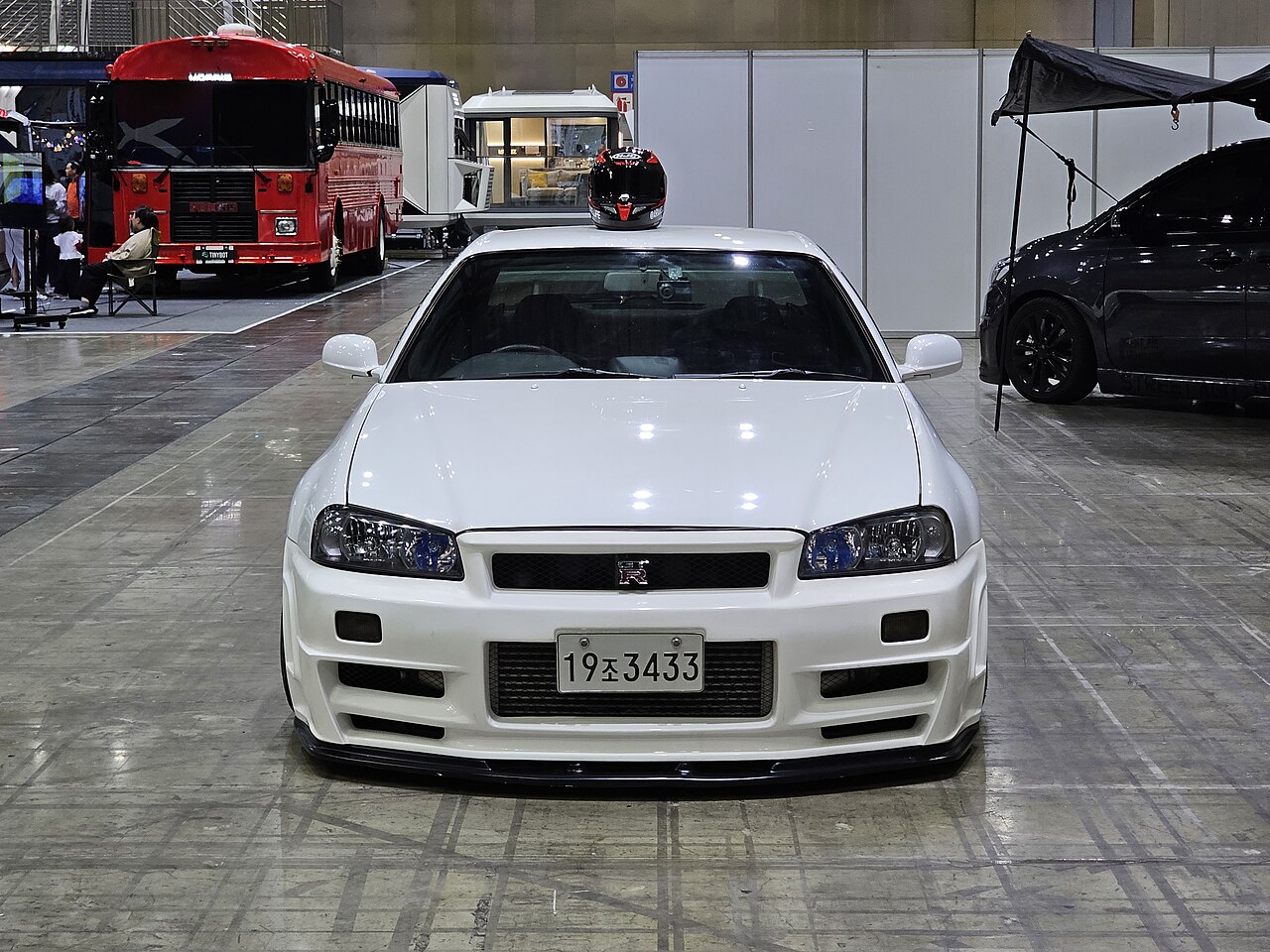
That gap between virtual familiarity and real-world accessibility is widely credited with building enormous pent-up demand. By the time cars like the R32, R33, and R34 GT-R began crossing the 25-year import threshold in various countries during the 2010s and 2020s, many buyers were enthusiasts who had already spent hundreds of hours virtually driving those exact cars, arriving at the real-world purchase with detailed knowledge of specs, tuning options, and driving characteristics learned entirely from gaming.
⚠️ Caution: Game Physics and Real-World Driving Are Not the Same
While both franchises are genuinely praised for their driving physics and attention to detail, and Gran Turismo in particular is sometimes described within the industry as a useful tool for developing real-world car intuition, neither game fully replicates the actual physical risks, mechanical feel, or consequences of driving a real high-performance car. Enthusiasts who transition from years of virtual experience to actually owning a genuine JDM performance car should still approach real-world high-performance driving cautiously, ideally through proper instruction and on a closed circuit rather than assuming game-honed reflexes translate directly and safely to the street.
Licensing, Tuning Culture, and Community Impact
Beyond simply featuring these cars, both franchises played a significant role in teaching mainstream gaming audiences the vocabulary and mechanics of real JDM tuning culture. Concepts like boost pressure, turbo lag, weight reduction, and specific aftermarket brand names, some of them the very same specialist tuning shops covered elsewhere in JDM culture discussions, were built directly into gameplay systems, giving millions of players a working, if simplified, understanding of real tuning concepts long before they might encounter them in an actual garage or forum.
Both series have also maintained active online communities built around sharing tuned setups, custom liveries, and race replays, creating an ongoing, self-sustaining culture of engagement with JDM-inspired content that has persisted and evolved across console generations, well beyond what either franchise’s marketing alone could have sustained.
GT Academy: When Virtual Skill Became a Real Racing Career
Perhaps the single most striking example of Gran Turismo’s real-world influence is GT Academy, a competition run in partnership with Nissan that used the game itself as a talent search, taking top-performing players through a selection process and real-world driver training program with the goal of turning virtual skill into an actual professional racing career. The program’s most famous graduate, Jann Mardenborough, went from competing in Gran Turismo to racing professionally, including entries in international GT and open-wheel racing series, a career path that would have been essentially unimaginable from a racing video game before Gran Turismo demonstrated it was possible.
While GT Academy itself eventually concluded, its existence served as a powerful demonstration of just how seriously Gran Turismo’s driving physics were regarded within the real motorsport industry, reinforcing the game’s credibility among enthusiasts who might otherwise have dismissed console racing games as unrelated to genuine driving skill.
Frequently Asked Questions
Q: When did Gran Turismo and Forza Motorsport first release?
A: Gran Turismo first released in Japan in December 1997, with international releases following in 1998. Forza Motorsport, developed by Microsoft’s Turn 10 Studios, released in May 2005 for Xbox.
Q: Did Gran Turismo really influence real automaker decisions?
A: Yes. Mitsubishi executive Takashi Kiuchi has directly credited Gran Turismo with influencing the company’s decision to launch the Lancer Evolution in the United States, and the game’s popularization of the Skyline GT-R is widely cited as a factor in Nissan’s decision to eventually sell the R35 GT-R globally.
Q: What’s the difference between Forza Motorsport and Forza Horizon?
A: Forza Motorsport is the original, simulation-focused circuit racing series. Forza Horizon is a separate, open-world arcade-style spinoff series known for its festival setting and strong representation of JDM tuning and car meet culture within the game world.
Q: Why were these games so important for JDM culture specifically?
A: They gave international players detailed, drivable access to JDM performance cars that were often not legally importable or affordable in their home countries at the time, building brand familiarity and enthusiasm years before many players could actually own these cars in real life.
Q: Can game experience actually help with real-world driving?
A: Both franchises are praised for realistic physics, and some players do develop useful car control intuition, but neither fully replicates real-world risk and mechanical feel. Real high-performance driving should still be learned properly, ideally on a closed circuit with proper instruction.
This article is for general informational purposes and reflects widely reported history about these video game franchises and their cultural impact. Specific historical claims and executive statements are as reported in industry coverage.
Image credit: Nissan Skyline R34 GT-R GF-BNR34 White (1) by Damian B Oh, CC BY-SA 4.0, via Wikimedia Commons
コメント