📋 Summary
- Ashimori Industry Co., Ltd. is a Japanese seatbelt specialist with roots tracing back to 1878 in Osaka, founded as a cotton and linen textile trading firm, before pivoting into seatbelt webbing manufacturing in 1962
- The company developed Japan’s first JIS-approved seatbelt in 1967 under the “Auto Friend” brand, later gaining US FMVSS approval in 1968 and EC approval in 1976, a genuinely significant early safety-standards track record
- Ashimori’s specific specialization is seatbelt webbing and restraint systems, genuinely distinct from Toyoda Gosei, covered in a separate article in this series, whose primary focus is airbags rather than seatbelt webbing
- Important current-status disclosure: Toyoda Gosei completed a tender offer for Ashimori in October 2025, taking full ownership by March 2026 — Ashimori is now a Toyoda Gosei subsidiary rather than an independent company, a very recent change worth understanding rather than assuming outdated independence
The seatbelt holding you securely in place in many JDM vehicles has a genuine chance of tracing back to Ashimori Industry, a Japanese specialist whose more than 140-year history began not in automotive engineering at all, but in Osaka’s cotton and linen textile trade.
From an 1878 Osaka Textile Trading House to Japan’s First JIS-Approved Seatbelt
Ashimori Industry’s roots trace back to 1878 in Osaka, according to the company’s own corporate history, founded as a cotton and linen textile trading firm. The company pivoted specifically into seatbelt webbing manufacturing in 1962, anticipating Japan’s move toward mandatory seatbelts following a similar shift already underway in the United States. This pivot proved genuinely prescient: Ashimori developed Japan’s first JIS-approved seatbelt in 1967, under the “Auto Friend” brand, and went on to gain US FMVSS approval in 1968 and EC approval in 1976, a track record of early, internationally recognized safety-standards compliance that reflects the company’s genuine specialization in restraint-system webbing.
💡 Tip: Ashimori Is Genuinely Distinct From Toyoda Gosei’s Airbag Focus
Ashimori’s specific historical specialization is seatbelt webbing and restraint-system engineering, a genuinely distinct product category from Toyoda Gosei, covered in a separate article in this series, whose primary focus is airbags. Worth knowing if you’re researching the specific seatbelt webbing supplier behind a JDM vehicle rather than assuming a single restraint-system maker covers both categories.
A Very Recent Ownership Change: Now a Toyoda Gosei Subsidiary
It’s essential to disclose a genuinely recent and significant change to Ashimori’s corporate status: Toyoda Gosei completed a tender offer for Ashimori in October 2025, taking full ownership by March 2026, according to reporting on the transaction. This means Ashimori, despite its long independent history, is now a Toyoda Gosei subsidiary rather than an independent company, a change recent enough that older sources describing Ashimori as independent no longer reflect its current corporate structure.
How a Pretensioner and Load Limiter Actually Work Together
It’s genuinely worth understanding the two distinct safety mechanisms built into a modern seatbelt, since they work in careful sequence during a crash. The instant a collision is detected, a pyrotechnic or mechanical pretensioner fires to instantly remove any slack from the webbing, pulling the occupant firmly and snugly against the seat before the vehicle’s deceleration forces fully develop, eliminating the small amount of “give” that would otherwise let an occupant move forward before the belt engages. Immediately afterward, a load limiter allows the webbing to pay out a small, carefully calibrated amount under controlled resistance, reducing the peak force the belt applies to the occupant’s chest and shoulder, since restraining a body with zero give whatsoever can itself cause injury. Ashimori operates polyester webbing weaving facilities in Japan with production capacity exceeding 15,000 metric tons annually, and maintains manufacturing and sales operations across seven countries, reflecting a genuinely industrial scale behind a component most owners never think about beyond buckling it.
Why Seatbelt Condition Is Genuinely Non-Negotiable
A seatbelt is one of the single most important safety systems in any vehicle, and issues like fraying webbing, a buckle that doesn’t latch securely, or a retractor that doesn’t lock properly under sudden tension are genuinely serious concerns, not something to defer. Understanding that a major, established specialist like Ashimori likely engineered your vehicle’s original seatbelt webbing provides useful context when inspecting an older JDM import’s restraint system.
⚠️ Caution: Never Continue Driving With a Damaged or Malfunctioning Seatbelt
Fraying webbing, a buckle that won’t latch securely, or a retractor that fails to lock under sudden tension are genuinely serious safety defects, not minor issues to defer. Have any suspected seatbelt damage or malfunction inspected and repaired by a qualified professional immediately, and never drive with a compromised seatbelt.
Frequently Asked Questions
Q: What does Ashimori Industry make?
A: Seatbelts and restraint-system webbing; the company also entered airbag manufacturing in 1989.
Q: Is Ashimori Industry still independent?
A: No, Toyoda Gosei completed a tender offer for Ashimori in October 2025, taking full ownership by March 2026, making Ashimori a Toyoda Gosei subsidiary.
Q: Is Ashimori the same as Toyoda Gosei?
A: Historically separate companies with different specializations, seatbelt webbing versus airbags respectively, though Ashimori became a Toyoda Gosei subsidiary as of the October 2025 acquisition.
Q: When did Ashimori develop Japan’s first JIS-approved seatbelt?
A: 1967, under the “Auto Friend” brand, followed by US FMVSS approval in 1968 and EC approval in 1976.
This article is for general informational purposes based on publicly available company sources. Never continue driving with a damaged or malfunctioning seatbelt – have it inspected and repaired by a qualified professional immediately.
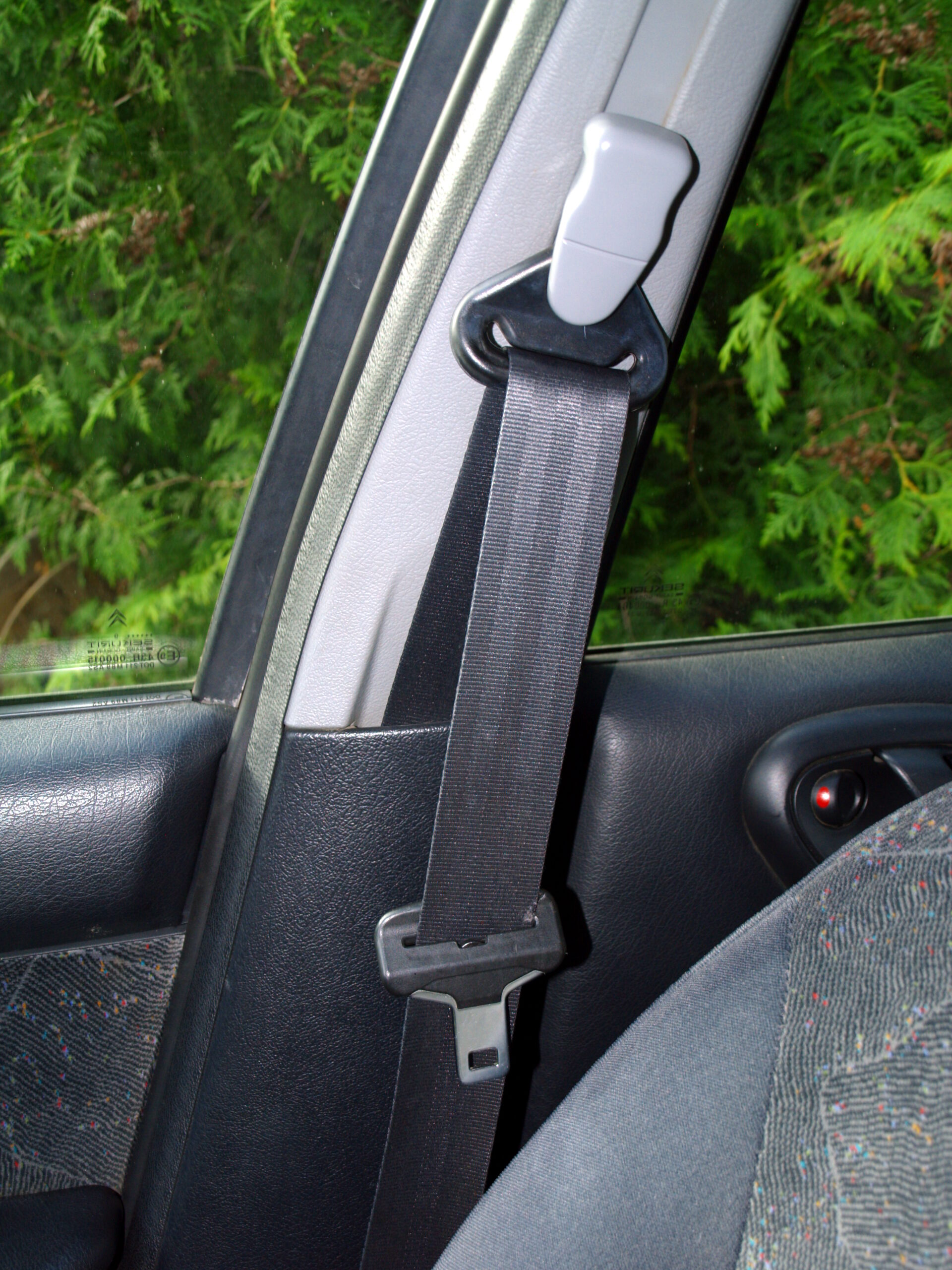
Image credit: Car seat belt by Santeri Viinamäki, CC BY-SA 4.0, via Wikimedia Commons
コメント