📋 Summary
- Koito Manufacturing Co., Ltd. is the world’s largest automotive lighting manufacturer, founded in 1915 in Tokyo originally as a railway-signal-lamp lens maker, incorporated in 1936
- Koito supplied headlights for the Toyota AA in the 1930s and pioneered Japan’s first mass-produced all-glass sealed-beam headlamps in 1957, building a genuinely dominant position in automotive lighting over subsequent decades
- In 1989, US corporate raider T. Boone Pickens accumulated a 26.2% stake in Koito, becoming its largest shareholder and demanding board seats and higher dividends, a genuinely landmark early case in Japanese corporate-governance history that was ultimately rebuffed through cross-shareholding defenses
- Koito remains independent and publicly listed, with Toyota holding a significant cross-shareholding stake of roughly 20 percent, a close but operationally autonomous relationship rather than outright ownership
The headlights illuminating the road ahead of your JDM vehicle at night have a genuinely strong chance of being Koito products, the world’s largest automotive lighting manufacturer, whose history includes a landmark 1989 confrontation with one of America’s most famous corporate raiders.
From Railway Signal Lenses to the World’s Largest Automotive Lighting Maker
Koito Manufacturing was founded in 1915 in Tokyo, originally as a maker of railway signal-lamp lenses, according to the company’s own corporate history, before incorporating as Koito Seisakusho in 1936. The company moved into automotive lighting early, supplying headlights for the Toyota AA in the 1930s, and reached a genuinely significant milestone in 1957 by producing Japan’s first mass-produced all-glass sealed-beam headlamps. Over subsequent decades, Koito grew into the world’s largest automotive lighting manufacturer, a position it continues to hold.
💡 Tip: Koito’s 1989 Confrontation With T. Boone Pickens Is a Landmark Corporate History Case
In 1989, American corporate raider T. Boone Pickens accumulated a 26.2 percent stake in Koito, becoming its largest shareholder and demanding board representation and higher dividends. Koito’s board rebuffed the demands, relying on Japan’s traditional cross-shareholding structure, a genuinely significant, widely studied early case of the tension between foreign shareholder activism and traditional Japanese corporate governance.
An Independent Company With Close Toyota Group Ties
Koito remains independently listed on the Tokyo Stock Exchange today. Toyota holds a significant cross-shareholding stake of roughly 20 percent, reflecting a close relationship within the broader Toyota Group ecosystem, though Koito continues to operate with genuine operational autonomy rather than as a captive division. This structure, a close but non-controlling cross-shareholding relationship, is a genuinely common pattern among established Japanese Tier 1 suppliers worth understanding rather than assuming outright ownership.
BladeScan: Koito’s Genuinely Ingenious Adaptive Headlight Technology
Koito’s BladeScan Adaptive Driving Beam (ADB) system is worth understanding as a concrete example of the company’s continued technical leadership. Rather than using hundreds of individually controlled LEDs, as some competing adaptive-beam systems do, BladeScan projects light from just 12 LEDs onto a rapidly rotating blade-shaped mirror; by precisely switching those 12 LEDs on and off in sync with the mirror’s rotation and exploiting the human eye’s persistence-of-vision effect, the system achieves light-distribution resolution genuinely equivalent to roughly 300 individually controlled LEDs, while using far fewer components. Paired with a forward-facing camera, BladeScan can shade specific portions of the high beam to avoid dazzling oncoming drivers while keeping full illumination on pedestrians or other objects elsewhere in the beam, reportedly recognizing pedestrians at roughly 56 meters, compared to about 32 meters for more conventional adaptive systems, and the technology is fitted to the Lexus RX among other premium Toyota and Lexus models. Koito also has a genuine claim to a world first: the company’s LED headlamp, offering improved photometric performance and heat dissipation, was fitted to the Lexus LS 600h in May 2007, the world’s first LED headlamp to reach production.
Why Headlight Quality and Condition Genuinely Matter
A vehicle’s headlights are genuinely essential to safe nighttime driving, and issues like cloudy or yellowed headlight lenses, moisture intrusion, or a failing headlight unit are common on aging JDM imports, worth taking seriously rather than dismissing as cosmetic. Understanding that a major, established specialist like Koito likely engineered your vehicle’s headlights provides useful context when diagnosing lighting issues or researching genuine OEM-equivalent replacement units.
⚠️ Caution: Don’t Delay Repairing Degraded or Malfunctioning Headlights
Cloudy, yellowed, or malfunctioning headlights genuinely reduce nighttime visibility and driving safety, a real risk rather than a purely cosmetic issue. Have any suspected headlight degradation or malfunction addressed by a qualified professional promptly, rather than continuing to drive with genuinely compromised night visibility.
Frequently Asked Questions
Q: What does Koito make?
A: Automotive lighting, primarily headlamps, as the world’s largest automotive lighting manufacturer.
Q: Is Koito owned by Toyota?
A: No, Koito is independently listed, though Toyota holds a significant cross-shareholding stake of roughly 20 percent as part of a close but non-controlling relationship.
Q: What happened with T. Boone Pickens and Koito?
A: In 1989, Pickens accumulated a 26.2 percent stake and demanded board seats and higher dividends; Koito’s board rebuffed the demands using Japan’s cross-shareholding defenses, a landmark early corporate-governance case.
Q: When was Koito founded?
A: 1915, in Tokyo, originally as a railway signal-lamp lens maker, incorporated as a company in 1936.
This article is for general informational purposes based on publicly available company sources. Always have suspected headlight degradation or malfunction diagnosed and repaired by a qualified professional promptly.
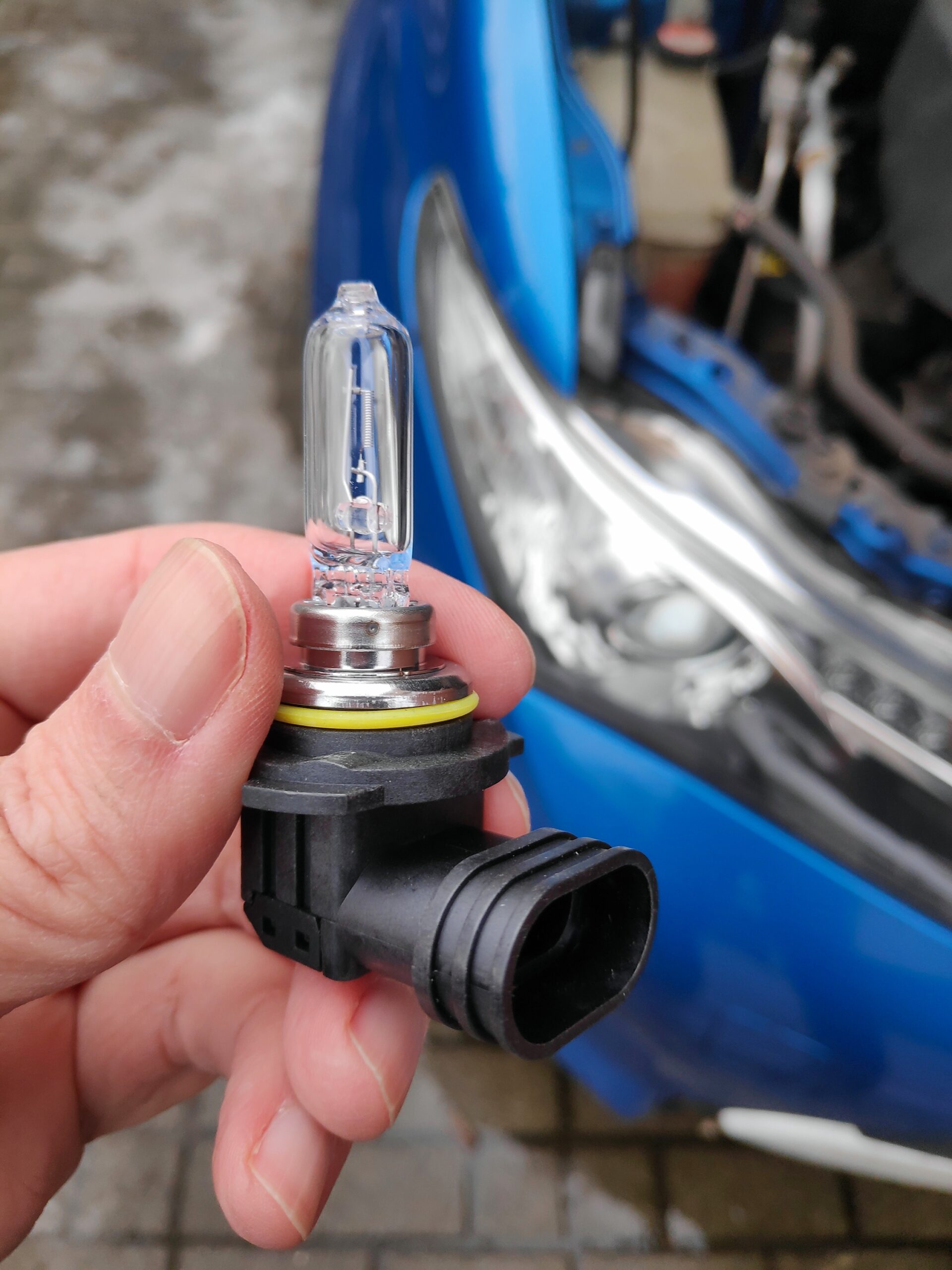
Image credit: Replacing car headlight bulb for Toyota Auris by Marek Ślusarczyk (Tupungato), CC BY 3.0, via Wikimedia Commons
コメント