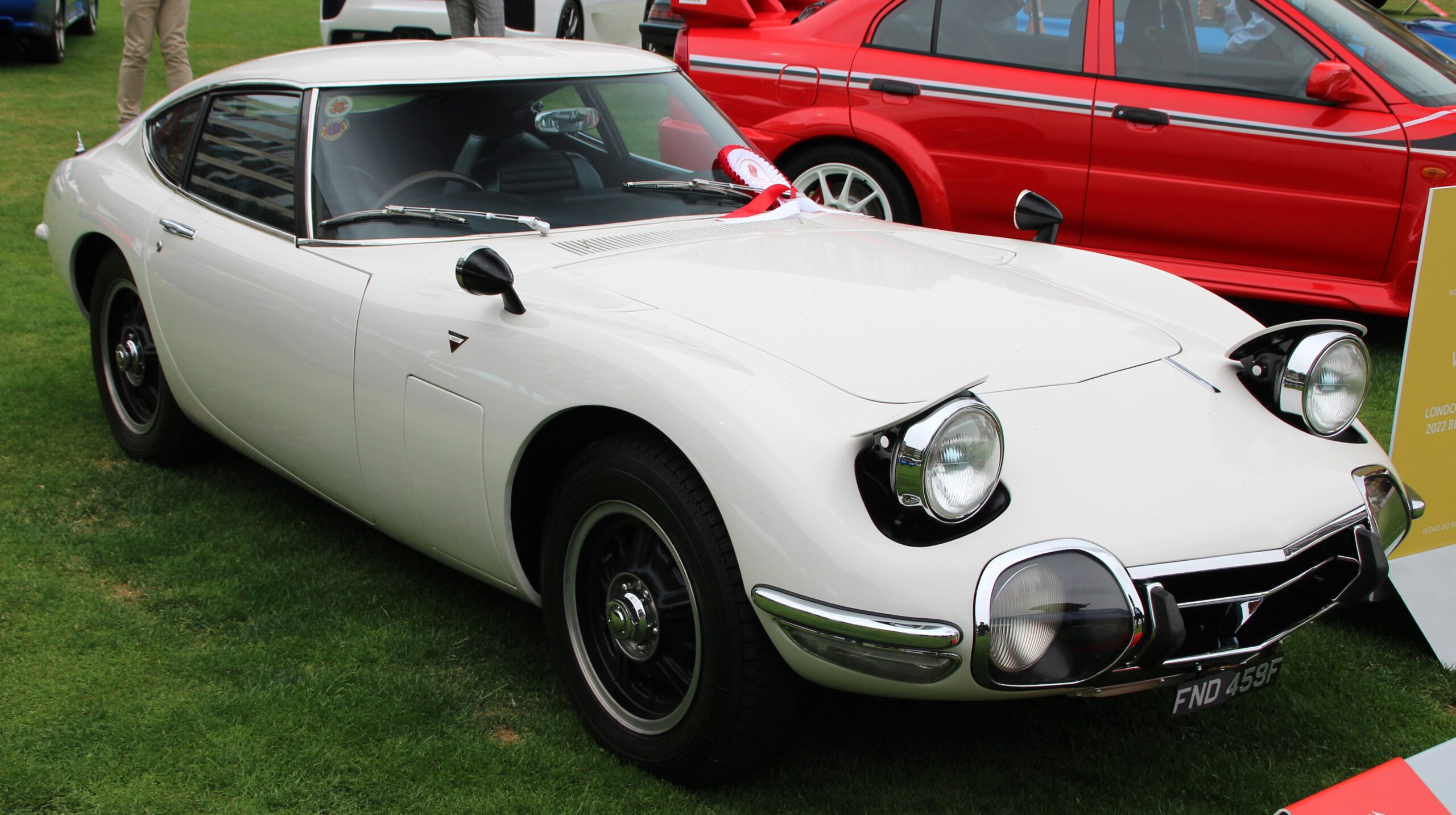
No car did more to establish Japan’s automotive engineering credibility on the world stage than the Toyota 2000GT — a genuinely hand-built, low-volume grand tourer produced in collaboration with Yamaha, whose international fame was cemented forever when it appeared as a bespoke James Bond roadster in 1967’s “You Only Live Twice.” With only 351 units ever produced, the 2000GT remains one of the rarest, most historically significant Japanese cars ever built. This guide covers its complete story.
📋 What You’ll Learn in This Guide
- Why Yamaha’s involvement was essential to the 2000GT’s engineering
- The 3M engine’s genuine technical sophistication for its era
- How Sean Connery’s height led to the creation of two unique roadster variants
- The 2000GT’s remarkably small total production run
- Why authentication matters enormously given the car’s extreme rarity and value
- A Genuine Toyota-Yamaha Engineering Collaboration
- The 3M Engine: Sophisticated Engineering From Humble Roots
- The James Bond Connection and the Roadster Variants
- A Remarkably Small Total Production Run
- Why the 2000GT Matters Beyond Its Own Story
- Collector Market Realities
- Design and Body Construction
- Racing History and Motorsport Credibility
- Frequently Asked Questions
- Final Thoughts
A Genuine Toyota-Yamaha Engineering Collaboration
Unveiled at the Tokyo Motor Show in October 1965 and manufactured under contract by Yamaha from 1967 to 1970, the 2000GT represented a genuine, deep engineering collaboration rather than Toyota simply outsourcing assembly work. Yamaha’s involvement proved essential specifically because the motorcycle manufacturer possessed sophisticated mechanical engineering expertise and manufacturing precision that Toyota’s engineers wanted to draw on directly for this halo project, resulting in a car built to a genuinely different, more meticulous standard than Toyota’s mainstream production vehicles of the same era.
The 3M Engine: Sophisticated Engineering From Humble Roots
The 2000GT’s engine, designated 3M, began life based on Toyota’s Crown sedan inline-six architecture, but Yamaha’s engineers transformed it into something genuinely sophisticated by developing a custom double-overhead-camshaft cylinder head controlling two valves per cylinder — a meaningfully more advanced valvetrain configuration than what the donor Crown engine ever featured. The resulting 1,988cc engine, fed by three Mikuni-Solex two-barrel carburetors and running a deliberately conservative 8.4:1 compression ratio, produced 150 horsepower at 6,600 rpm and 130 lb-ft of torque at 5,000 rpm — genuinely strong, sophisticated output for a Japanese production engine of this era, reflecting the same kind of ambitious engineering collaboration that defined the entire 2000GT project.
💡 Tip
Understanding the 3M engine’s Crown-sedan origins isn’t a criticism of the 2000GT’s engineering credibility — quite the opposite. It demonstrates genuinely resourceful, sophisticated engineering: taking an existing, proven engine architecture and transforming it through Yamaha’s advanced valvetrain development into something capable of powering a genuine world-class grand tourer, rather than requiring an entirely bespoke engine developed from a completely blank sheet. This kind of practical engineering ambition is worth appreciating as a real strength of the project, not a shortcut.
The James Bond Connection and the Roadster Variants
The 2000GT’s appearance in 1967’s “You Only Live Twice,” driven by Japanese secret service operative Aki, cemented the car’s international fame in a way few other vehicles from any manufacturer have ever achieved through film alone. The production created a genuine engineering complication, though: Sean Connery, at roughly six feet tall, simply couldn’t fit inside the standard 2000GT’s low, compact coupe cabin. Rather than compromise the filming, Toyota built two bespoke open-top roadster variants specifically to accommodate the production’s needs — these two cars remain the only officially produced open-top 2000GTs ever built, making them an almost impossibly rare sub-variant within an already extremely limited production run.
A Remarkably Small Total Production Run
Across its entire 1967-to-1970 production period, Toyota built only 351 examples of the 2000GT in total, including racing and film-specific variants, with roughly 150 of these units shipped outside Japan to international markets. Every single standard production 2000GT was a hardtop coupe — the two James Bond roadster variants covered above were genuinely one-off, non-standard-production builds created specifically for the film, meaning any 2000GT roadster you might encounter claiming standard production status should be treated with immediate, serious skepticism.
⚠️ Caution
Given the 2000GT’s extreme rarity (351 total units) and correspondingly serious collector-market values, often reaching well into six or seven figures at auction, authentication is absolutely essential before any purchase consideration — verify chassis numbers, engine numbers, and complete documented provenance against known factory records with the direct involvement of a specialist genuinely experienced in 2000GT authentication. The financial incentive for misrepresentation or outright fraud is genuinely significant given the car’s value, and this isn’t a purchase to approach through standard used-car verification methods alone.
Why the 2000GT Matters Beyond Its Own Story
Beyond its own considerable merits as a genuinely sophisticated, beautifully engineered grand tourer, the 2000GT holds real historical significance as the car that first demonstrated to international audiences and the broader automotive press that Japanese manufacturers were capable of producing genuinely world-class performance cars, not merely reliable, practical economy vehicles. This credibility-establishing role, achieved years before the JDM performance icons of the 1980s and 1990s covered extensively elsewhere in this guide series, makes the 2000GT a genuine foundational moment in the broader story of Japanese automotive engineering ambition on the world stage.
Collector Market Realities
Given the combination of extreme production rarity, genuine engineering and design significance, and the added cultural cachet of the James Bond connection, the 2000GT has firmly established itself among the most valuable and sought-after Japanese collector cars in existence, with values reflecting genuine blue-chip classic car market status rather than simply strong JDM enthusiast interest. This places the 2000GT in a genuinely different collector-market category than even the most celebrated 1990s JDM performance icons covered elsewhere in this guide series — it competes for buyer attention and auction results against genuine international classic car icons from any country of origin, not merely against other Japanese collector vehicles.
Design and Body Construction
Beyond its engineering, the 2000GT’s design deserves genuine appreciation in its own right — a low, sleek, aluminum-bodied grand tourer silhouette that drew favorable comparisons to contemporary European sports cars from marques with far longer sports car pedigrees, a genuinely notable achievement for a Japanese manufacturer at a time when Japan’s automotive industry hadn’t yet established international design credibility to match its growing manufacturing reputation. The car’s compact overall dimensions and low roofline, part of what created the packaging challenge for Sean Connery’s filming needs, were entirely deliberate design choices aimed at achieving genuine grand tourer proportions and visual drama rather than an oversight Toyota simply hadn’t considered.
Racing History and Motorsport Credibility
Beyond its road car and film fame, the 2000GT also built genuine racing credentials during its production era, including documented speed record runs and competition entries that further reinforced the model’s legitimate performance credibility beyond what its road-going specification and James Bond association alone might suggest. This racing dimension, while less internationally famous than the film connection, adds real substance to the 2000GT’s broader case as a genuinely accomplished performance car rather than one whose reputation rests purely on rarity and cultural association.
Frequently Asked Questions
Q: Are any genuine 2000GT roadsters from the James Bond film still known to exist?
A: The specific history and current whereabouts of both original film-spec roadsters is a subject of genuine documented automotive history interest, and dedicated research exists tracing their specific fates. Given their status as the only two officially produced open-top 2000GTs ever built, any claimed example should be verified with extreme care against known documented history.
Q: Is it realistic for an average JDM enthusiast to ever own a 2000GT?
A: Given the combination of extreme rarity and blue-chip collector-market values, genuine 2000GT ownership sits well outside typical JDM enthusiast budget territory and functions more as a serious classic car investment-grade purchase than an accessible enthusiast car purchase. This is worth understanding realistically rather than approaching the model with typical JDM buying-guide expectations.
Q: Did the 2000GT influence any later Toyota performance models?
A: The 2000GT’s demonstrated engineering ambition and international credibility-building helped establish Toyota’s broader capability and reputation for producing genuine performance vehicles, indirectly supporting the case for later performance-focused models even without a direct mechanical lineage connecting them.
Final Thoughts
The Toyota 2000GT stands apart from every other car covered in this guide series as a genuine, foundational moment in Japanese automotive history — the car that first proved to the world Japan could build genuinely world-class performance vehicles, cemented by an unforgettable James Bond appearance and an almost impossibly small total production run. Whether your interest is purely historical appreciation or genuine serious collector consideration, understanding the full depth of the 2000GT’s engineering collaboration, rarity, and cultural significance is essential to appreciating why this remains one of the most important cars Japan has ever produced.
Image credit: 1968 Toyota 2000GT by MrWalkr (CC BY-SA 4.0), via Wikimedia Commons

コメント