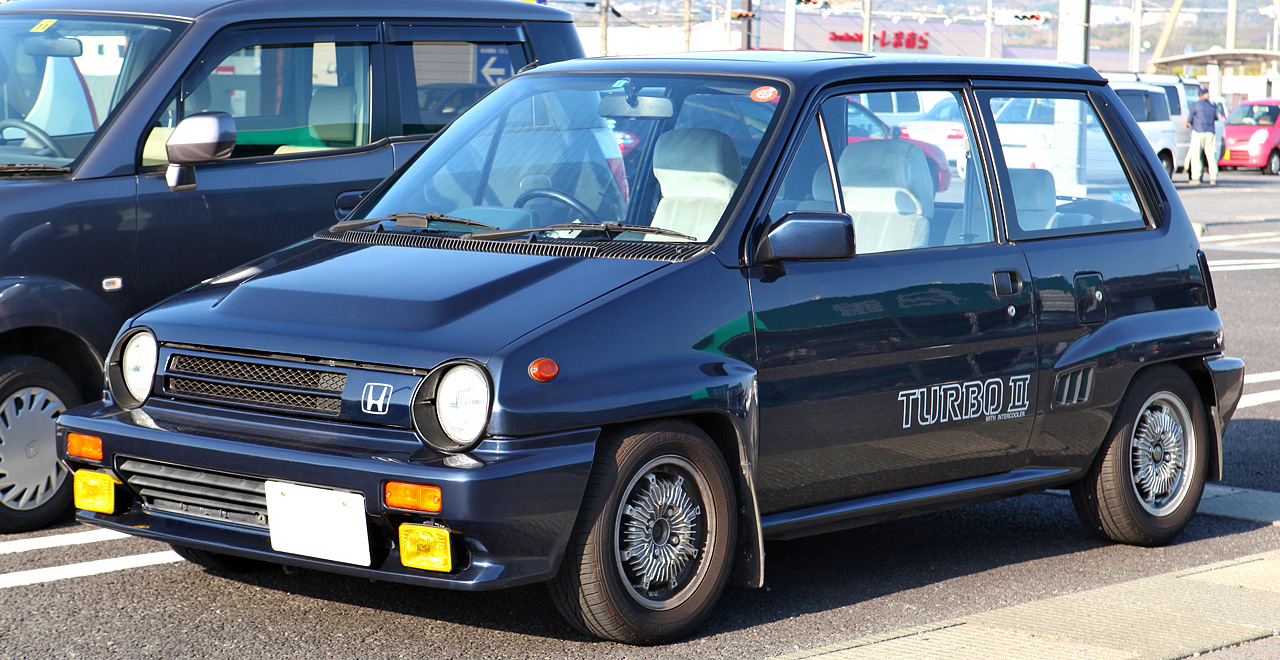
Few pairings capture Honda’s early-1980s engineering playfulness quite like the City Turbo and its optional companion, the Motocompo — a folding scooter designed specifically to fit in the City’s trunk. The original Honda City, launched in 1981, was a genuinely plain “box on wheels” hatchback making just 44 to 55 horsepower depending on spec. Honda then turned it into something else entirely: the City Turbo, debuted at the October 1982 Tokyo Motor Show, boosted the 1.2-liter CVCC engine to 99 horsepower in a car weighing barely 1,650 pounds. This guide covers what separates the Turbo from the more aggressive Turbo II, what the Motocompo pairing actually involves, and the specific, well-documented risks worth knowing before you buy either one.
📋 What You’ll Learn in This Guide
- The real performance difference between the Turbo and Turbo II
- What the Motocompo actually is, and why it’s such an unusual companion vehicle
- A documented cooling-system risk worth specifically checking
- Why rust inspection matters even more than usual on this specific car
- The realistic state of parts availability for such a rare JDM pairing
- City Turbo vs. Turbo II: A Real Performance Step, Not Just a Styling Refresh
- The Motocompo: Honda’s Smallest-Ever Scooter, Designed to Live in a Trunk
- A Documented Cooling System Risk Worth Checking
- Rust: An Even Bigger Concern Than Usual
- What Drives Pricing Today?
- Frequently Asked Questions
- Final Thoughts
City Turbo vs. Turbo II: A Real Performance Step, Not Just a Styling Refresh
The original City Turbo used a turbocharged version of the standard City’s 1.2-liter CVCC engine to reach 99 horsepower, enough for a 0-to-62-mph time of roughly 8.6 seconds thanks largely to the car’s featherweight construction. The Turbo II, introduced in 1983, went further with a revised intake, intake manifold, intercooler, and throttle body, pushing output to 108 horsepower and 118 lb-ft of torque. It also received noticeably more aggressive styling — side skirts and flared fenders that earned it the nickname “Bulldog” among enthusiasts. The two aren’t simply a base and sport trim of the same car; the Turbo II represents a genuine mechanical step up, not just a cosmetic package.
The Motocompo: Honda’s Smallest-Ever Scooter, Designed to Live in a Trunk
The Motocompo was conceived as a “trunk bike” — a scooter small enough to fold up and stow inside the trunk of subcompact Hondas like the City, giving owners a way to complete short final-mile trips after parking. It was Honda’s smallest-ever production scooter, powered by a 49cc two-stroke engine producing roughly 2.5 horsepower, and it was only in production for three years, from 1981 to 1983. Because the Motocompo’s engine is carbureted and kick-start only, and because the whole vehicle weighs roughly 100 pounds, it’s a genuinely more finicky machine to keep running than its charming design might suggest — treat any Motocompo you’re considering as a small, aging two-stroke engine that needs specialist attention, not a simple wind-up toy.
💡 Tip
A City Turbo II sold alongside a matching Motocompo is a genuinely appealing package, but confirm the pairing is actually original to that specific car rather than two unrelated vehicles bundled together for a sale. Because both were produced in relatively small numbers and the Motocompo’s production run was so short, a verified original pairing carries real collector value beyond simply owning both vehicles separately.
A Documented Cooling System Risk Worth Checking
At least one well-documented restoration case found that a previous owner had used plain tap water instead of proper coolant in a City Turbo II, resulting in significant rust throughout the radiator, hoses, water pump, and engine block and head. This isn’t necessarily a universal problem across every surviving example, but it’s a real, documented risk on a car this old where maintenance standards over four decades have varied enormously by owner. A cooling system flush and inspection — including opening the radiator cap and checking coolant condition directly rather than trusting a dipstick-level glance — is cheap insurance relative to the cost of head or block damage.
Rust: An Even Bigger Concern Than Usual
Surface rust around fenders and body panels shows up regularly on surviving City Turbo and Turbo II examples, and given the car’s age and the fact many examples spent years as everyday transportation rather than carefully stored collector cars, a thorough rust inspection matters more here than on some later, more carefully preserved JDM classics. Budget for the likelihood that any example you’re seriously considering will need at least some rust remediation, and weigh that cost against the asking price before committing.
⚠️ Caution
Parts availability for a car this rare and this old is a genuine practical concern, not a minor inconvenience. While specialist suppliers do stock genuine and used JDM parts sourced directly from Japan for the City Turbo II specifically, sourcing times and costs can be significant compared to more common JDM classics — factor this into your ownership expectations before you buy, especially for body panels and interior trim.
What Drives Pricing Today?
Turbo II examples generally command more interest than the original Turbo given their stronger performance and more distinctive styling, and a documented, matching Motocompo adds real value beyond the car alone. Rust-free bodies and evidence of proper cooling system maintenance meaningfully separate the best examples from cars that look charming in photos but carry hidden repair costs.
Frequently Asked Questions
Q: Is the Motocompo actually usable as regular transportation today?
A: It can be, but treat it as a delicate, aging two-stroke machine rather than a practical daily scooter — its small size, kick-start operation, and now-scarce specific parts make it better suited to occasional, careful use than heavy regular riding.
Q: Is the City Turbo II worth buying without a matching Motocompo?
A: Absolutely — the car stands on its own merits as a genuinely quick, lightweight, and historically interesting hot hatch. The Motocompo pairing is a wonderful bonus for collectors specifically chasing that combination, not a requirement for the City Turbo II to be a worthwhile buy.
Final Thoughts
The City Turbo II and Motocompo represent Honda at its most inventive — a genuinely quick, lightweight hot hatch paired with one of the strangest and most charming vehicles the company ever built. Both demand careful inspection given their age and rarity: check the cooling system history on the City Turbo II specifically, budget realistically for rust remediation, and treat any Motocompo as a specialist restoration project rather than a simple accessory. Get that right, and you’ll own one of the more genuinely unusual and delightful pairings in JDM history.
Image credit: Honda City Turbo II, via Wikimedia Commons (CC BY-SA 3.0)

コメント