📋 Summary
- Arai and Shoei are the two dominant Japanese motorcycle and racing helmet manufacturers, both globally respected across motorsport disciplines
- Arai traces its origins to Hirotake Arai, who began making motorcycle helmets for local racer friends after WWII, selling its first fiberglass-shell helmet in 1952; the company remains family-run across three generations
- Shoei was founded by Eitaro Kamata, starting with construction-industry helmets in 1954 before launching Shoei Kako Co., Ltd. in 1959 specifically for multipurpose helmet production
- A common point of confusion worth clarifying: Valentino Rossi has worn AGV (an Italian brand) throughout his career, not Shoei, despite Shoei’s own strong association with other top-tier riders like Marc Márquez
For anyone building a JDM project car with genuine track ambitions, or simply riding a Japanese motorcycle, Arai and Shoei are the two names that come up more than any other in helmet discussions. Both are Japanese companies with genuinely deep manufacturing histories, distinct from the more marketing-driven approach of some Western helmet brands.
Arai: Three Generations of Family-Run Helmet Craftsmanship
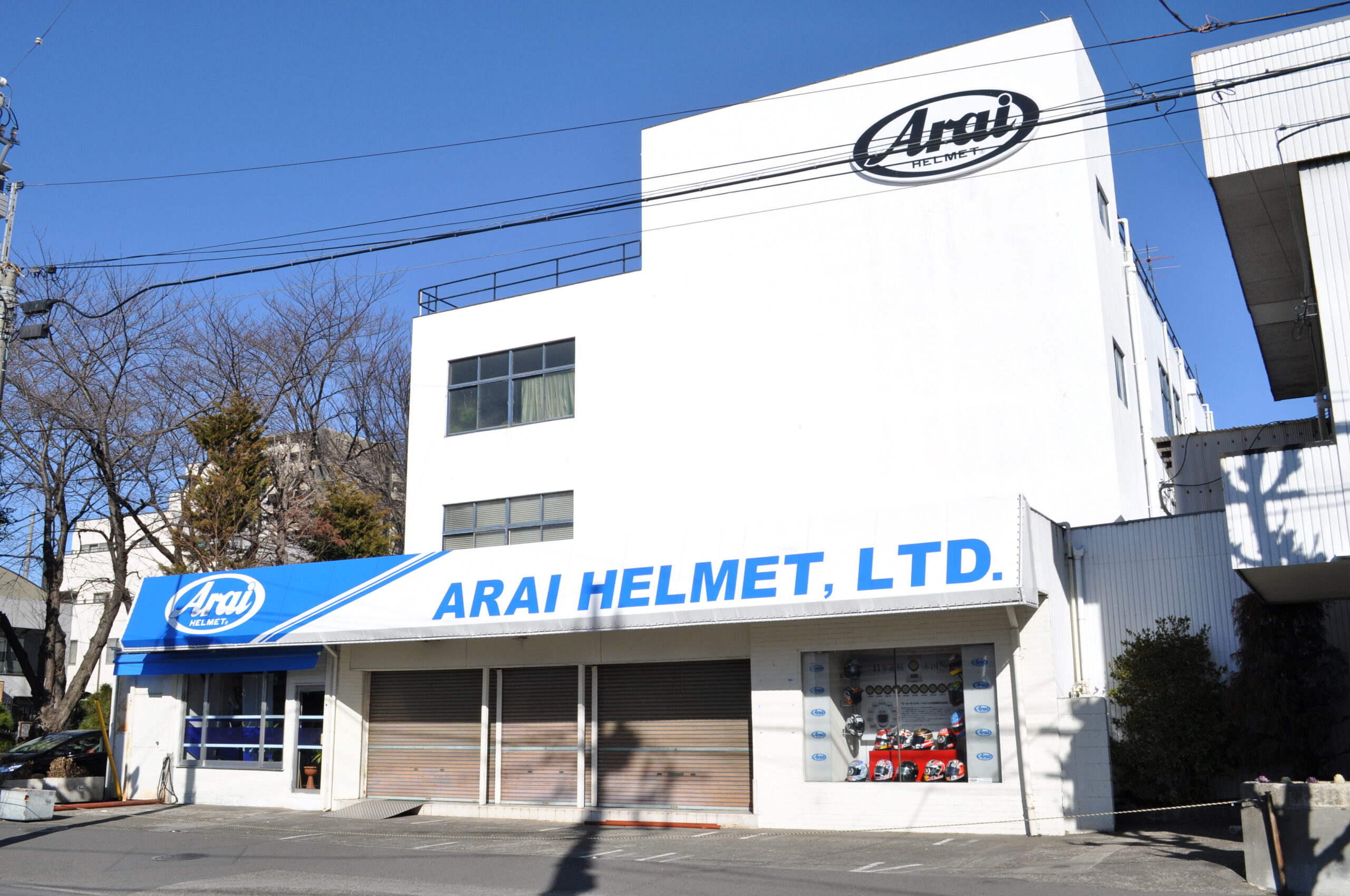
Arai Helmet traces its roots to Hirotake Arai, born in Tokyo in 1905, the eldest son of a family that made headgear for government and official use. Arai established a headgear and textile factory in Saitama in the late 1930s, and after World War II, the company began making construction-worker helmets before Hirotake started producing motorcycle helmets for local racetrack friends using fiberglass, resin, and EPS foam construction, effectively helping launch Japan’s motorcycle-helmet industry. The company sold its first fiberglass-shell helmet in 1952, and remains headquartered in Ōmiya-ku, Saitama Prefecture, to this day. Arai has stayed a family business across three generations, from Hirotake to his son Michio and grandson Akihito, with a consistent emphasis on hand-craftsmanship and continuous shell research rather than rapid model turnover. Under Michio’s direction, Arai produced its first Snell-certified helmet in 1963, according to multiple secondary sources.
💡 Tip: Both Brands Are Used Across Multiple Racing Disciplines
According to Arai’s own racing materials, its helmets appear across MotoGP, F1, NASCAR, IndyCar, and IMSA competition. Rather than assuming a specific current star rider wears one brand or the other based on memory, it’s worth checking current sponsorship information directly, as rider-brand relationships change over time.
Shoei: From Construction Helmets to Honda’s Official Supplier
Shoei’s founder, Eitaro Kamata, started the predecessor company “Kamata Polyester Co.” in 1954, initially making helmets for the construction industry. In 1959, Kamata launched a new company, Shoei Kako Co., Ltd., specifically for multipurpose helmet manufacturing, and by 1960 the company’s Tokyo factory was producing motorcycle helmets meeting Japan’s JIS (Japanese Industrial Standard). One frequently cited detail, worth flagging as sourced from secondary accounts rather than confirmed directly on Shoei’s own official materials here, is that the name “Shoei” combines “Sho” from the Sōwa era (Japan’s reigning era name in 1959) with “ei” from founder Eitaro’s own name. A genuinely notable milestone came in 1965, when Honda Motor Co. adopted Shoei as its official, or “genuine,” helmet supplier, a meaningful early endorsement from one of Japan’s largest automakers. Shoei Safety Helmet Corp. was formally established in 1968, alongside a new factory in Ibaraki Prefecture.
DOT, ECE, and Snell: Genuinely Different Testing Philosophies
Since both Arai and Shoei helmets carry multiple safety certifications depending on market, it’s genuinely useful to understand how these standards actually differ rather than assuming one sticker simply means “safe” and another doesn’t. DOT (the US federal standard) relies on manufacturer self-certification with no mandatory independent third-party lab testing, and notably doesn’t test for rotational impact, a factor increasingly recognized as important for brain injury prevention. ECE 22.05, used across more than 50 countries, requires every certified helmet model to actually be independently lab-tested before sale, and evaluates a broader set of factors including face-shield optical quality and shell rigidity, using a smooth “curbstone” anvil that delivers a different, generally lower-energy impact than DOT or Snell testing. Snell, a voluntary US standard maintained by the Snell Memorial Foundation, tests prototype helmets rather than only finished production units, and uses a harder hemispherical anvil for a more severe impact test; genuinely, a Snell-certified helmet will also pass DOT and ECE requirements, but the reverse isn’t automatically true. This is worth understanding precisely because a specific Arai or Shoei model’s actual certification, not just the brand name, is what determines which specific testing philosophy that helmet was actually built and validated against.
A Common Mix-Up Worth Clearing Up: Rossi Wears AGV, Not Shoei
It’s an easy assumption to make given Shoei’s prominence in MotoGP-adjacent product lines, but Valentino Rossi, one of the most recognizable names in motorcycle racing, has worn helmets from AGV, an Italian brand, throughout his entire career, not Shoei. Shoei’s own strong current racing association is instead with riders like Marc Márquez, reflected clearly in Shoei’s replica helmet product lines, though the exact contractual nature of that relationship wasn’t independently confirmed through an explicit official sponsorship statement in available sources. This distinction matters if you’re researching a specific replica helmet design and want to buy the version actually associated with a rider you follow.
⚠️ Caution: Helmet Fit and Certification Matter More Than Brand Name
Even a genuinely well-regarded brand like Arai or Shoei can offer poor protection if a helmet doesn’t fit properly or lacks the correct safety certification (such as Snell or DOT) for your region and use case. Getting properly fitted in person, and verifying the specific certification a given model carries, is worth prioritizing over brand reputation alone.
Frequently Asked Questions
Q: Are Arai and Shoei both Japanese companies?
A: Yes, Arai was founded by Hirotake Arai (first fiberglass helmet sold 1952) and Shoei by Eitaro Kamata (multipurpose helmet company launched 1959).
Q: Does Valentino Rossi wear a Shoei helmet?
A: No. Rossi has worn AGV, an Italian brand, throughout his career. Shoei’s own prominent current racing association is with other top riders, such as Marc Márquez.
Q: Is Arai still a family-run company?
A: Yes, according to multiple sources, Arai has remained family-run across three generations, from founder Hirotake Arai to his son Michio and grandson Akihito.
Q: When did Honda start using Shoei as its official helmet supplier?
A: 1965, according to secondary sources documenting Shoei’s corporate history.
This article is for general informational purposes based on publicly available company history sources; some specific dates and details are drawn from secondary sources rather than independently verified primary company pages, as noted above. Always verify helmet fit and certification requirements directly with the manufacturer or a qualified retailer before purchasing safety equipment.
Image credit: Arai Helmet Headquarters, Omiya-ku, Saitama by Ocdp, CC0, via Wikimedia Commons
コメント