📋 Summary
- KYB Corporation, formerly Kayaba Industry Co., Ltd., is a major Japanese hydraulic component manufacturer, founded in 1919 in Tokyo by Shiro Kayaba, taking its current name in October 2015
- KYB’s core automotive products are hydraulic shock absorbers and dampers and power-steering hydraulics, and the company is one of the world’s largest hydraulic-component makers, operating in roughly 89 countries
- In 2018, KYB and a subsidiary admitted to falsifying safety-test data on building seismic-isolation “oil dampers,” the same core hydraulic engineering as automotive shock absorbers, dating back to 2003 and affecting roughly 1,000 buildings
- Separately, KYB pleaded guilty in a US Department of Justice price-fixing case involving shock absorbers, paying a $62 million criminal fine, a genuinely significant compliance history worth knowing when researching the company
The shock absorbers controlling your JDM vehicle’s ride and handling have a genuine chance of being KYB products, one of the world’s largest hydraulic-component makers, with a corporate history that includes both a century of engineering credibility and some genuinely serious compliance failures worth understanding.
From Shiro Kayaba’s 1919 Research Center to a Global Hydraulics Leader
KYB Corporation was founded in 1919 in Tokyo by Shiro Kayaba as the Kayaba Research Center, according to the company’s own corporate history, later becoming Kayaba Manufacturing in 1935 and rebranding to its current name, KYB Corporation, in October 2015. The company’s core automotive products are hydraulic shock absorbers and dampers and power-steering hydraulics, and KYB has grown into one of the world’s largest hydraulic-component makers, with operations spanning roughly 89 countries and applications extending beyond automobiles into motorcycles, industrial equipment, and aircraft.
💡 Tip: KYB’s Hydraulic Expertise Extends Well Beyond Automotive Shock Absorbers
KYB’s core hydraulic engineering expertise applies across automotive shock absorbers, motorcycle suspension, industrial equipment, and aircraft components, a genuinely broad application of the same underlying technology, worth knowing if you encounter the KYB name in a context beyond just car parts.
A Significant Compliance History Worth Knowing
It’s important to be direct about two genuinely serious compliance failures in KYB’s more recent history. In 2018, KYB and a subsidiary admitted to falsifying safety-test data on building seismic-isolation “oil dampers,” essentially the same core hydraulic damper technology used in automotive applications, with the falsification dating back to 2003 and affecting roughly 1,000 buildings, according to widely reported sources. Separately, KYB pleaded guilty in a US Department of Justice price-fixing case involving automotive shock absorbers, paying a $62 million criminal fine. These are genuinely significant events in the company’s history, not minor footnotes, and worth understanding alongside KYB’s long engineering track record.
Twin-Tube vs. Monotube: Understanding KYB’s Core Shock Absorber Designs
It’s genuinely useful to understand the fundamental difference between the two main shock absorber architectures KYB produces, since the distinction directly affects real-world performance. A traditional twin-tube shock mixes hydraulic fluid and gas within its working chamber, and under aggressive driving, hard cornering, or repeated impacts, that rapid piston movement can cause the fluid to aerate, or foam, which temporarily reduces damping control, a phenomenon known as shock fade. KYB’s monotube designs, marketed under names like Gas-a-Just, instead physically separate an air-free hydraulic piston chamber from a second, high-pressure nitrogen gas chamber using a floating piston, eliminating fluid aeration entirely and allowing genuinely faster, more consistent damping response, KYB states up to roughly 25 percent more damping force than a comparable OE twin-tube design, and up to 40 percent more in the company’s heavier-duty MonoMax line for trucks and SUVs. This is genuinely why monotube shocks are generally favored for performance driving and heavier vehicles with a higher center of gravity, while twin-tube designs remain common as cost-effective factory equipment on ordinary passenger cars.
Why Shock Absorber Condition Genuinely Matters
Worn shock absorbers or dampers genuinely degrade a vehicle’s handling, braking distance, and ride comfort over time, often gradually enough that the change isn’t immediately obvious to the driver. Understanding that a major, established specialist like KYB likely engineered your vehicle’s original shock absorbers, or produces a genuine aftermarket replacement, provides useful context when researching suspension maintenance or replacement parts for an aging JDM import.
⚠️ Caution: Don’t Ignore Signs of Worn Shock Absorbers
Worn shock absorbers can genuinely increase stopping distance and reduce vehicle stability, particularly during emergency maneuvers, a real safety concern rather than just a comfort issue. Have suspected worn shock absorbers or dampers inspected and replaced by a qualified professional promptly.
Frequently Asked Questions
Q: What does KYB make?
A: Hydraulic shock absorbers and dampers and power-steering hydraulics for automobiles, alongside motorcycle, industrial, and aircraft hydraulic components.
Q: Was KYB always called KYB?
A: No, the company was founded in 1919 as Kayaba Industry Co., Ltd. and took its current name, KYB Corporation, in October 2015.
Q: What was the 2018 KYB scandal about?
A: KYB and a subsidiary admitted to falsifying safety-test data on building seismic-isolation oil dampers, affecting roughly 1,000 buildings, dating back to 2003.
Q: Was KYB involved in any other legal issues?
A: Yes, KYB pleaded guilty in a US Department of Justice price-fixing case involving automotive shock absorbers, paying a $62 million criminal fine.
This article is for general informational purposes based on publicly available company sources. Have suspected worn shock absorbers inspected and replaced by a qualified professional promptly.
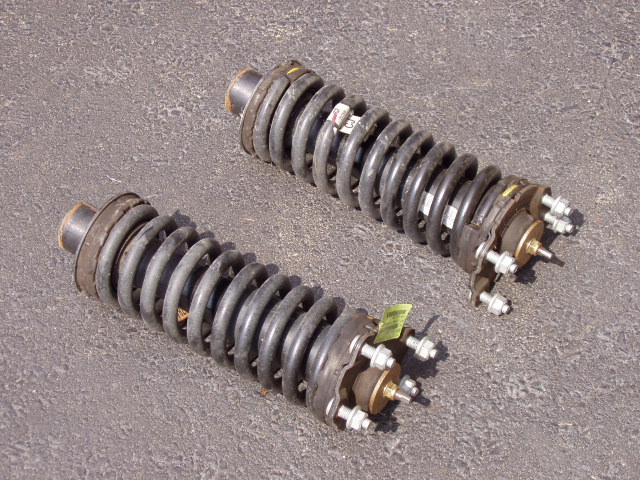
Image credit: Jeep Liberty Coilovers 2005 by Michael Robinson (unixxx), CC BY-SA 3.0, via Wikimedia Commons
コメント