📋 Summary
- Nissin Kogyo and Akebono Brake are two Japanese brake system manufacturers, but with a genuinely different business model from the aftermarket racing brake pad brands (Project Mu, Endless, DIXCEL) covered in a separate article: both primarily supply original equipment (OEM) brake systems directly to automakers
- Nissin Kogyo, reportedly founded in 1953 and historically headquartered in Ueda City, Nagano, no longer exists as an independent company: it merged into Hitachi Astemo (renamed simply Astemo, Ltd. in April 2025) effective January 1, 2021, following Honda’s 2019 tender offer to take Nissin Kogyo, Keihin, and Showa private
- The NISSIN brand continues today under Astemo, particularly for motorcycle brake components supplied to Honda, Yamaha, Kawasaki, Suzuki, and MV Agusta
- Akebono Brake, founded January 27, 1929 and headquartered in Hanyu, Saitama, remains an independent, separately operating company and is known for pioneering ceramic brake pad technology
Unlike the aftermarket racing brake pad brands covered elsewhere in this series, Nissin Kogyo and Akebono Brake represent a genuinely different corner of the Japanese brake industry: original equipment suppliers whose components are already on your car before you ever consider an upgrade.
Nissin Kogyo: A Legacy Brand Now Under Astemo
Nissin Kogyo was reportedly founded in 1953 and historically headquartered in Ueda City, Nagano Prefecture, according to industry-reference sources (this specific founding detail wasn’t independently confirmed against a primary company history page for this article). The company built a genuinely significant position in brake manufacturing, reportedly holding the world’s largest share of motorcycle brake systems at points in its history, supplying both Honda Group companies and other automakers. Here’s the important part: Nissin Kogyo no longer exists as an independent company. Following Honda’s October 2019 tender offer to take Nissin Kogyo, Keihin, and Showa private, Nissin Kogyo merged into Hitachi Automotive Systems effective January 1, 2021, forming what was then called Hitachi Astemo (renamed simply Astemo, Ltd. in April 2025), according to Astemo’s own official corporate history page. The NISSIN brand itself continues today under Astemo, particularly for motorcycle brake components including pads, discs, calipers, hoses, and master cylinders, supplied to Honda, Yamaha, Kawasaki, Suzuki, and MV Agusta.
💡 Tip: The NISSIN Brand Survived Even Though the Company Didn’t
If you’re researching NISSIN-branded brake parts, particularly for motorcycles, it’s worth knowing the brand is genuinely still active and current, manufactured today under Astemo rather than an independent Nissin Kogyo corporate entity.
Akebono Brake: An Independent Company Since 1929
Akebono Brake Industry Co., Ltd. was founded January 27, 1929, and is headquartered in Hanyu, Saitama Prefecture, according to the company’s own investor relations materials. Unlike Nissin Kogyo, Akebono remains an independent, separately operating company, with no merger or acquisition into a larger supplier group found in available sources. Akebono has historically supplied OEM brake components to a genuinely wide range of automakers, including Nissan, Toyota, Honda, GM, Isuzu, Mitsubishi, Ford, Chrysler, Mazda, Audi, and Volkswagen, according to company materials (though the most specific supply figures available date to around 2012-2013 and should be understood as historical rather than necessarily current). Akebono describes itself as an originator of ceramic brake pad technology, and its ProACT line markets low-dust ceramic pads specifically, though this positioning comes from the company’s own consumer marketing materials rather than an independently verified technical filing, worth treating as the company’s own characterization of its history.
Ceramic vs. Semi-Metallic: What Akebono’s Signature Technology Actually Trades Off
Since Akebono specifically positions itself around ceramic brake pad technology, it’s genuinely useful to understand what that material choice actually trades off against the semi-metallic pads still common as OEM equipment on many vehicles. Ceramic pads are built from dense ceramic fibers combined with copper fibers for heat management, producing genuinely quieter, smoother everyday braking with noticeably less brake dust and gentler wear on the rotors themselves, well-suited to typical daily driving. Semi-metallic pads, by contrast, use a mix of steel, iron, and copper, roughly 30-70% metal content bound with resin and graphite lubricant, and while they’re louder and more abrasive on rotors over time, they generally deliver stronger stopping power and better resistance to brake fade under sustained heavy loads, towing, or aggressive driving. Neither composition is universally superior, it’s genuinely a trade-off between daily-driving comfort and dust (ceramic’s strength) versus maximum stopping performance under demanding conditions (semi-metallic’s strength), which is exactly why OEM manufacturers like Nissin/Astemo and Akebono typically offer both types across different vehicle applications rather than standardizing on one.
Why OEM Suppliers Are Worth Knowing About Separately From Aftermarket Brands
The brake pads originally fitted to your JDM vehicle, before any aftermarket upgrade, were very likely made by a company like Nissin Kogyo (now Astemo) or Akebono, rather than by Project Mu, Endless, or DIXCEL, which focus specifically on the racing and performance aftermarket. Understanding this distinction is genuinely useful context: an OEM brake system is engineered around broad reliability and compliance requirements across a manufacturer’s full lineup, while aftermarket racing brands optimize more narrowly for track or performance use cases.
⚠️ Caution: Verify Current Brand Ownership Before Sourcing OEM Replacement Parts
Given Nissin Kogyo’s 2021 absorption into Astemo, sourcing genuine replacement parts may mean looking for Astemo or NISSIN-branded components rather than an independent “Nissin Kogyo” entity. Confirm current sourcing channels directly with an authorized parts supplier rather than assuming older company information is still accurate.
Frequently Asked Questions
Q: Is Nissin Kogyo still an independent company?
A: No. It merged into Hitachi Astemo (now Astemo, Ltd.) effective January 1, 2021, following Honda’s 2019 tender offer. The NISSIN brand continues under Astemo.
Q: Is Akebono Brake still independent?
A: Yes, Akebono remains an independent, separately operating company, founded in 1929 and headquartered in Saitama.
Q: Are Nissin and Akebono the same as Project Mu, Endless, or DIXCEL?
A: No, they’re genuinely different businesses. Nissin and Akebono primarily supply OEM brake systems to automakers, while Project Mu, Endless, and DIXCEL focus on the aftermarket racing and performance brake pad market.
Q: What is Akebono particularly known for?
A: The company describes itself as an originator of ceramic brake pad technology, with its ProACT line marketed around low-dust ceramic pad performance.
This article is for general informational purposes based on publicly available company and industry sources; Nissin Kogyo’s founding date is sourced from secondary industry references, and some Akebono OEM supply figures date to approximately 2012-2013 and should be treated as historical rather than necessarily current. Always verify current details directly with the brand or a qualified professional before purchasing or installing brake components.
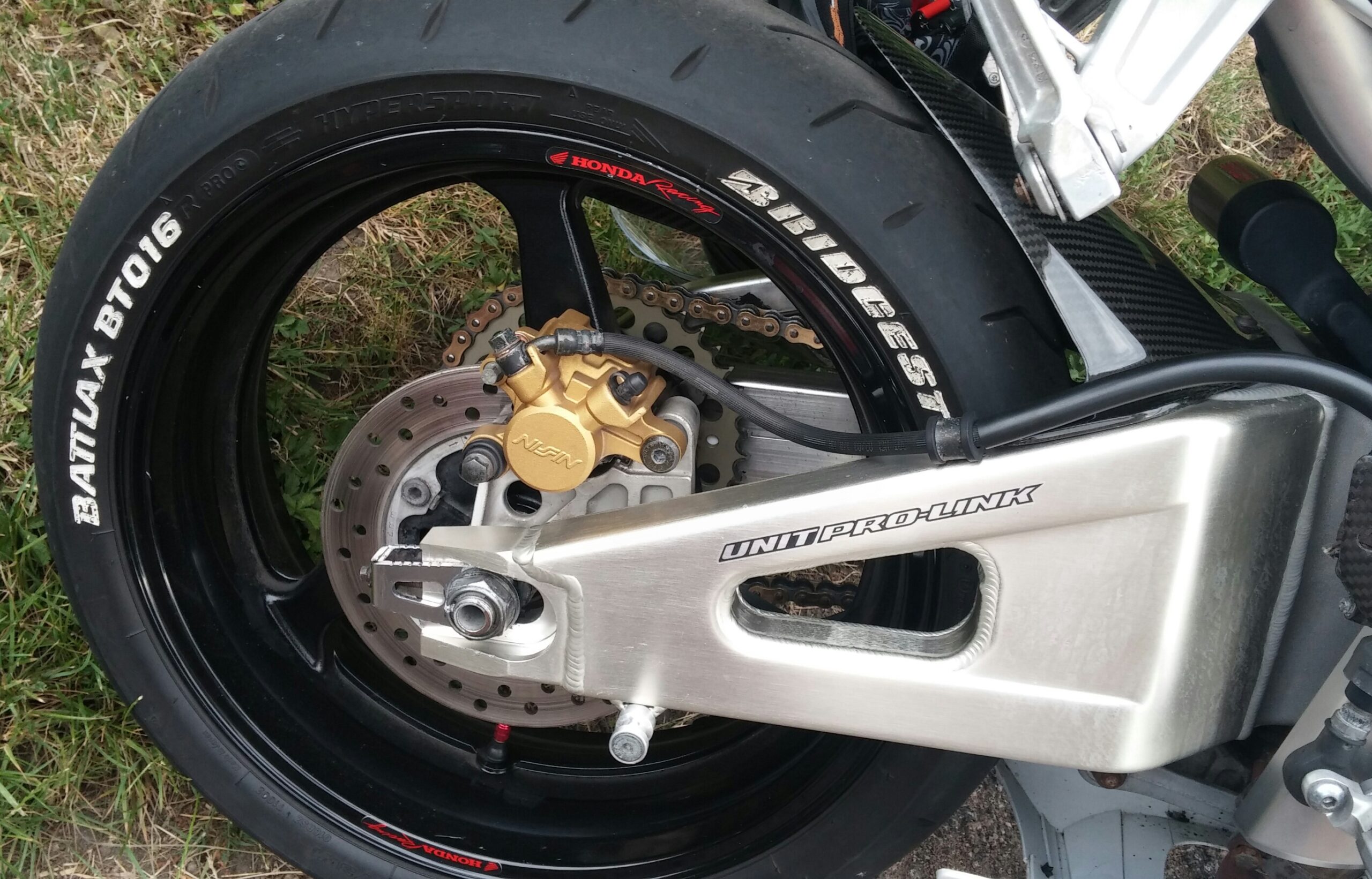
Image credit: Motorcycle Rear Brake Caliper by MAbbey, CC BY-SA 4.0, via Wikimedia Commons

コメント