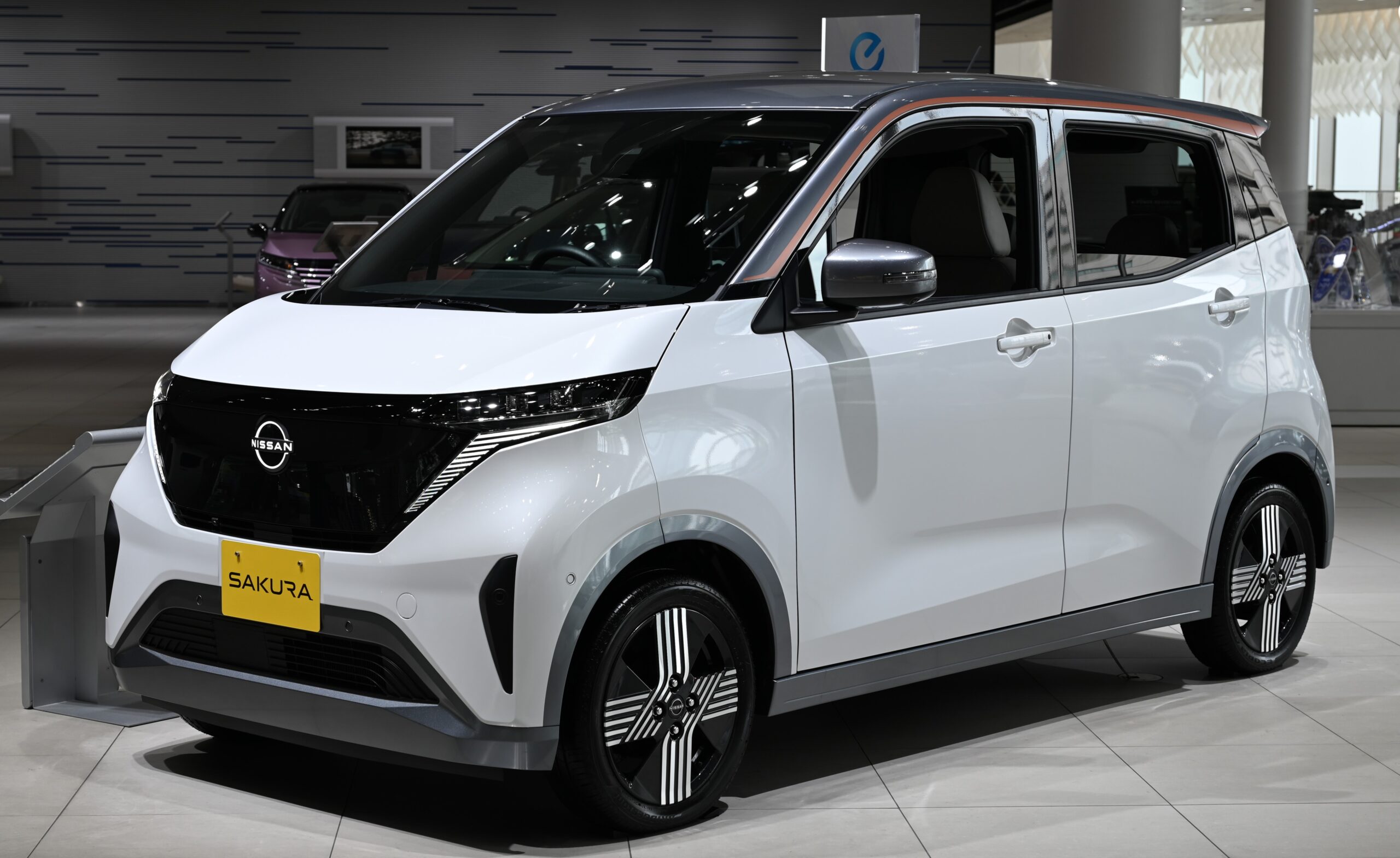
Japan pioneered mass-produced hybrid technology in the 1990s (a history covered in detail elsewhere on this site), but its relationship with fully electric vehicles has followed a genuinely distinct path from what many overseas observers expect. Rather than a straightforward march toward large, long-range battery EVs, Japan’s actual market has taken a somewhat different, more pragmatic route — one shaped heavily by a surprising champion: a tiny, affordable electric kei car. This guide covers what’s actually available in Japan’s EV and hybrid market today, what’s coming, and why the country’s electrification path looks different from what you might expect.
📋 What You’ll Learn in This Guide
- Why a tiny kei car, not a Tesla rival, dominates Japan’s EV sales
- What full battery-electric models major manufacturers currently offer
- Why hybrids still outsell pure EVs by a wide margin in Japan
- What’s coming from Toyota, Nissan, and Honda in the near future
- How Japan’s CEV subsidy affects real purchase prices
- The Surprising EV Champion: The Nissan Sakura
- What Full Battery-Electric Models Are Currently Available
- Why Hybrids Still Outsell Pure EVs by a Wide Margin
- What’s Coming: Expanded EV Lineups Ahead
- How Japan’s CEV Subsidy Affects Real Purchase Prices
- Plug-In Hybrids: The Middle Ground
- Frequently Asked Questions
- Final Thoughts
The Surprising EV Champion: The Nissan Sakura
If you assumed Japan’s best-selling electric vehicle would be a sleek Tesla rival or a flagship sedan, the actual answer is genuinely surprising: it’s the Nissan Sakura, a compact electric kei car that’s held the title of Japan’s best-selling EV for multiple consecutive years since its 2022 launch, at times accounting for close to 40 percent of the entire country’s battery-electric vehicle market on its own. The Sakura’s appeal comes down to a straightforward, practical value proposition: a genuinely affordable starting price that, combined with Japan’s national CEV (Clean Energy Vehicle) subsidy, can bring the effective purchase price down to a genuinely accessible level, paired with a real-world range that comfortably covers the daily driving patterns of most Japanese kei car owners, who statistically drive fairly short daily distances well within what the Sakura’s battery can handle. It’s a genuinely instructive case study in how EV adoption can succeed by matching a vehicle precisely to actual local usage patterns, rather than chasing maximum range and size as the default strategy.
What Full Battery-Electric Models Are Currently Available
Beyond the Sakura, Japan’s major manufacturers each maintain a battery-electric presence, though generally with less aggressive lineups than you’d find from these same companies in markets like Europe or China. Nissan’s Leaf remains a longtime standard-bearer, having recently undergone a significant redesign shifting toward a more crossover-oriented body style with meaningfully extended range compared to earlier generations. Toyota offers the bZ4X as its primary current battery-electric SUV offering, notable among other things for carrying an unusually long battery warranty reflecting Toyota’s characteristically conservative, reliability-focused approach to newer technology. Honda’s electric offerings have been comparatively more modest in Japan to date, with the company signaling more ambitious next-generation electric models still to come rather than an extensive current lineup.
💡 Tip
If you’re researching Japan’s EV market as a potential import buyer or simply out of curiosity, don’t assume Japan’s EV lineup mirrors what’s available in your own country. Some models sold as EVs in Europe or China aren’t offered in right-hand-drive JDM form at all, and conversely, kei-class EVs like the Sakura have no real direct equivalent in most Western markets, since few other countries have a comparable ultra-compact vehicle category with matching tax and subsidy incentives.
Why Hybrids Still Outsell Pure EVs by a Wide Margin
Despite the Sakura’s genuine EV sales success, it’s important to keep perspective: hybrid vehicles still substantially outsell full battery-electric vehicles across Japan’s overall new car market, commonly representing well over a third of total new vehicle sales compared to a considerably smaller pure-EV share. This reflects several compounding factors covered in more depth elsewhere on this site: Japan’s deep, decades-long hybrid engineering head start and manufacturing scale, genuine consumer comfort and trust built up over nearly three decades of hybrid reliability, and practical infrastructure realities — charging network density, while growing, still lags what’s available in some EV-focused markets, making a hybrid’s no-plug-required flexibility a genuinely compelling practical advantage for many Japanese buyers, particularly those without convenient home charging access in dense urban housing.
What’s Coming: Expanded EV Lineups Ahead
Japan’s major manufacturers have signaled meaningfully expanded electric lineups over the next several years, suggesting the current relatively modest EV presence reflects an earlier stage of a longer transition rather than a permanent ceiling. Toyota has publicly discussed plans to substantially broaden its battery-electric offerings across multiple new models in the coming years, moving beyond the bZ4X as its sole mainstream EV entry. Honda has discussed a more radically redesigned next-generation electric platform intended to represent a meaningfully more ambitious electric vehicle push than its current, comparatively limited Japanese EV lineup. Nissan, having already established real EV credibility through both the Leaf and the Sakura’s genuine sales success, appears positioned to continue building on that foundation with further model expansion and range improvements in upcoming vehicle generations.
⚠️ Caution
Automaker product roadmaps, especially for future EV models still years from launch, change frequently in response to market conditions, technology developments, and shifting regulatory requirements. Treat any specific future model timeline or feature claim, including from official manufacturer statements, as subject to change rather than a firm guarantee, and check for the most current manufacturer announcements directly if a specific upcoming model matters to your own purchase or import planning.
How Japan’s CEV Subsidy Affects Real Purchase Prices
Japan’s national Clean Energy Vehicle (CEV) subsidy program meaningfully reduces the effective purchase price of qualifying electric and plug-in hybrid vehicles, and it’s a significant factor in why vehicles like the Sakura have achieved genuinely strong sales volume despite pure EVs still trailing hybrids overall. The subsidy amount varies by vehicle and battery specifications rather than applying as a single flat figure across every eligible model, and it’s applied on top of whatever local municipal-level EV incentives may also be available in certain regions, meaning the real effective price a Japanese buyer pays can differ substantially from a vehicle’s headline manufacturer suggested retail price. Anyone researching Japan’s EV market from an affordability perspective should factor in these subsidy programs rather than comparing raw sticker prices alone, since the subsidized price is what’s actually driving much of the country’s current EV purchasing behavior.
Plug-In Hybrids: The Middle Ground
Alongside pure hybrids and battery EVs, plug-in hybrid vehicles (PHEVs) occupy a genuinely significant middle ground in Japan’s current market, offering meaningful electric-only range for short trips while retaining a conventional engine for longer journeys without range anxiety or dependence on charging infrastructure. Toyota, in particular, has offered PHEV variants across several of its most popular models, giving buyers a practical bridge option between conventional hybrids and full battery EVs. This middle path has genuine appeal for Japanese buyers who want meaningfully reduced fuel consumption and some electric-only driving capability, but who aren’t yet ready to fully commit to a pure EV’s charging-dependent lifestyle, particularly in regions of Japan where home charging access remains limited. PHEVs also generally qualify for their own tier of the CEV subsidy, distinct from the full subsidy amount available to pure battery EVs, adding another layer to the overall cost calculation buyers weigh when choosing between these options.
Frequently Asked Questions
Q: Can I import a Nissan Sakura or other Japan-market EV to my own country?
A: This depends heavily on your specific country’s import age requirements and EV-specific import regulations, which vary considerably; the Sakura is quite new, so it won’t be eligible under age-based import exemptions like the US 25-year rule for a very long time, and separate battery and electrical safety certification requirements may apply to EV imports specifically in ways that don’t affect conventional gasoline JDM imports.
Q: Are Japan’s EV charging standards compatible with chargers in other countries?
A: Not necessarily — Japan primarily uses the CHAdeMO fast-charging standard, which differs from the CCS standard now dominant in North America and Europe, meaning a Japan-market EV imported elsewhere may require a charging adapter or may have more limited fast-charging compatibility depending on your local charging infrastructure.
Q: Is Japan’s EV adoption rate falling behind other major markets?
A: Japan’s pure battery-EV adoption rate does trail some other major markets like China and parts of Europe in relative terms, but this comparison alone somewhat understates the bigger picture, since Japan’s combined hybrid-plus-EV electrified vehicle share is genuinely very high by global standards — the country has simply prioritized hybrid technology more heavily as its primary electrification pathway rather than moving as aggressively toward pure battery EVs specifically.
Final Thoughts
Japan’s electric and hybrid vehicle landscape looks genuinely different from what many outside observers expect, defined less by a race toward long-range luxury EVs and more by a pragmatic, usage-matched approach where an affordable electric kei car has become the country’s actual best-selling EV, while hybrids continue carrying the bulk of Japan’s broader electrification story. Understanding this distinctive market shape — rather than assuming Japan’s EV landscape simply mirrors trends from other major markets — will give you a considerably more accurate picture of where Japanese electrification actually stands today, and where it’s realistically headed next.


コメント