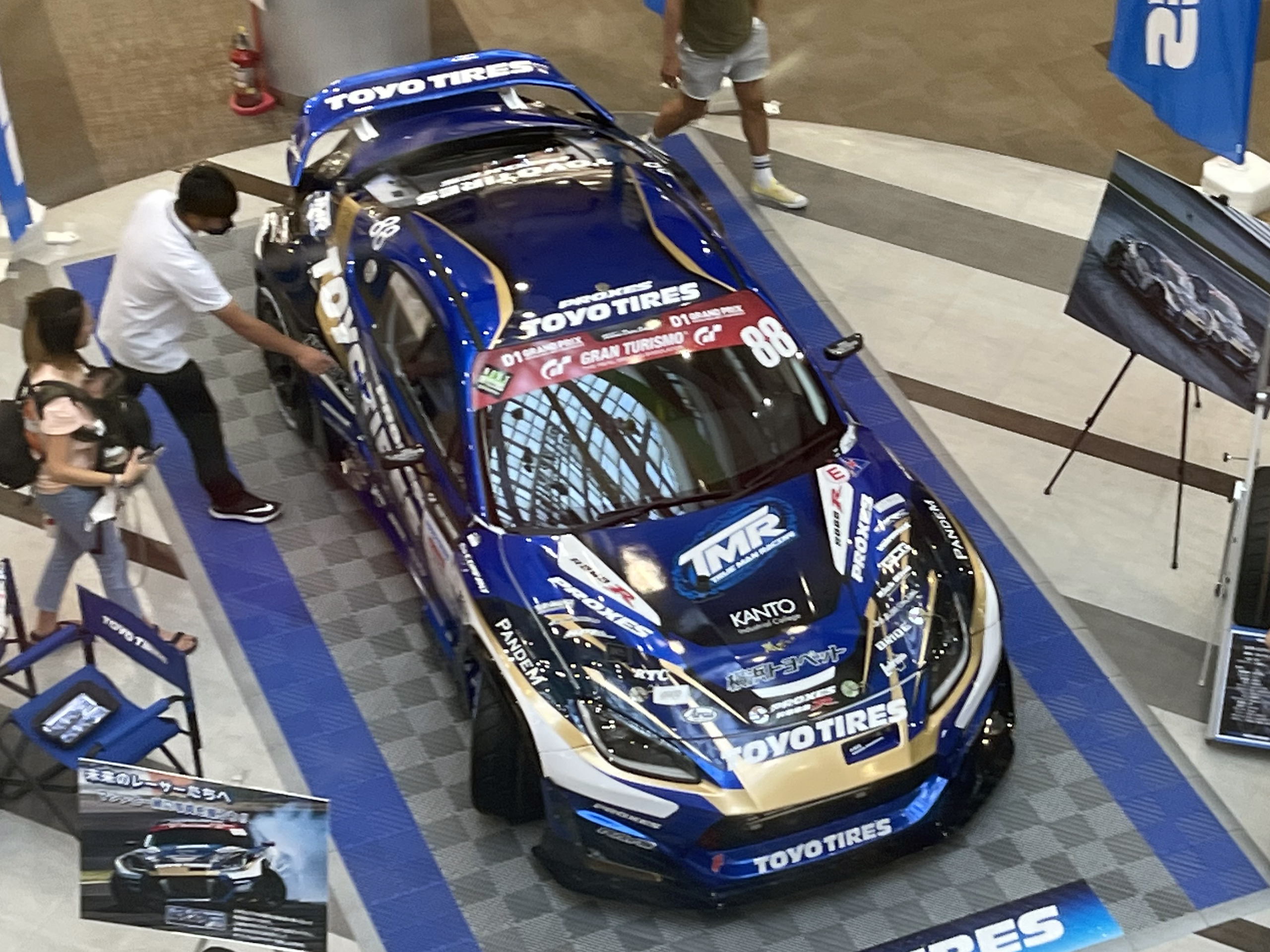
Drifting — deliberately sliding a car through a corner with the rear wheels losing traction while the driver maintains control — has become one of Japan’s most globally recognized automotive exports, influencing everything from video games to Hollywood films to competitive series held on nearly every continent. But the sport’s roots are distinctly Japanese, growing out of mountain pass driving culture in the 1970s and 1980s before a small group of enthusiasts formalized it into the organized competition now known worldwide as D1 Grand Prix. This guide traces that history and explains how the sport’s premier Japanese series actually works.
📋 What You’ll Learn in This Guide
- How drifting evolved from mountain pass driving into organized competition
- Keiichi Tsuchiya’s role as the sport’s foundational figure
- How and when D1 Grand Prix was founded
- How D1GP judging and battle format actually work
- Why the sport spread so successfully beyond Japan
From Mountain Passes to Magazine Pages
Drifting’s origins trace back to Japan’s touge (mountain pass) driving culture, where drivers navigating tight, technical switchback roads discovered that intentionally sliding a car through corners — rather than fighting to maintain maximum grip through every turn — could be both a genuinely effective way to carry speed on certain roads and a distinctive, visually striking driving style in its own right. Keiichi Tsuchiya, who would eventually earn the nickname “Drift King,” began as a street racer on these mountain roads in the late 1970s and early 1980s, and his increasingly refined drifting technique caught the attention of Japan’s car culture media at a time when tuning and performance magazines were becoming a genuine cultural force in their own right.
The First Organized Events
The transition from informal mountain road driving to organized competition began in 1986, when Carboy magazine staged what’s generally credited as the first dedicated drift event. This was followed in 1988 by Ikaten, a further sanctioned drift competition created through a collaboration between Tsuchiya and Daijiro Inada — the influential figure who founded Option magazine and, notably, also went on to found the Tokyo Auto Salon covered elsewhere in this guide series. These early events were essentially amateur showcases, but they established the basic format that would eventually evolve into professional competition: drivers demonstrating drift technique for judges and spectators rather than racing purely for fastest lap time in the conventional sense.
💡 Tip
Keiichi Tsuchiya’s influence on drift culture extends well beyond competition organizing — his 1987 direct-to-video film “Pluspy,” documenting drift technique and mountain pass driving, is widely credited as a foundational piece of media that helped popularize the sport within Japan well before D1 Grand Prix existed. Enthusiasts interested in the sport’s roots often seek this out as essential viewing alongside more modern competition footage.
The Founding of D1 Grand Prix
After several years of running amateur-level contests, Inada and Tsuchiya organized professional-level drifting competitions in 1999 and 2000, before formally reorganizing the concept as a structured, five-round championship series in October 2000 — the birth of D1 Grand Prix as a proper professional series rather than a series of standalone exhibition events. This formalization gave drifting a genuine competitive structure with a season-long points championship, professional-level judging criteria, and enough organizational consistency to attract serious sponsorship and driver commitment, setting the template that would eventually be adapted by drift series in other countries, most notably Formula Drift in the United States.
How D1GP Judging Actually Works
Unlike conventional racing, where the fastest car to complete a course wins, D1GP competition is judged on a combination of technical and stylistic factors evaluated by a panel of experienced referees, typically assisted by objective measurement systems for factors like angle and speed. The core judging criteria include: speed (maintaining a fast pace through the course while drifting, rather than simply sliding slowly), line (how precisely the driver follows the marked ideal path, including hitting designated clipping points), angle (how extreme a drift angle the driver can achieve and control throughout the run), and style (a more subjective assessment covering smoothness, transitions, engine sound, and overall visual impact). Competitions typically begin with solo qualifying runs to set the initial bracket, before advancing to tandem “tsuiso” battles — head-to-head pairs where a chasing driver attempts to mirror the leading driver’s line and angle as closely as possible without contact, in a single-elimination tournament format that determines the event’s ultimate winner.
⚠️ Caution
Don’t confuse D1GP-style competitive drifting, which takes place on closed courses under controlled conditions with professional safety measures, with the informal touge street driving culture that inspired it. Attempting to replicate competition-level drift techniques on public mountain roads is illegal in most jurisdictions, genuinely dangerous given the presence of other traffic and pedestrians, and directly contrary to the respectful driving etiquette that legitimate touge culture actually emphasizes, as covered in more detail elsewhere in this guide series.
A Controversial Beginning
The Pluspy video’s impact wasn’t entirely positive for Tsuchiya’s own career in the short term — the footage, showing him drifting his Toyota Corolla Levin AE86 on a public mountain pass, ended up getting him suspended from professional racing, since it documented what was, strictly speaking, illegal street driving. This tension between drift culture’s public-road origins and its eventual evolution into a controlled, sanctioned professional sport is worth understanding as genuine historical context — the sport’s founders were navigating real legal and reputational risk in its earliest days, and the eventual creation of closed-course, professionally judged competition through D1 Grand Prix was in part a direct response to the need to channel that raw enthusiasm into something legal, safe, and sustainable rather than something confined to illegal mountain road exhibitions.
Drifting’s Crossover into Global Pop Culture
Beyond D1GP itself, drift culture’s international spread owes an enormous amount to its adoption across video games, film, and broader media. Racing game franchises built entire gameplay mechanics around drift technique, introducing the concept to millions of players who might never otherwise have encountered Japanese car culture at all. Films built around drift culture, most famously entries in the “Fast & Furious” franchise, introduced the visual spectacle and basic vocabulary of drifting to mainstream audiences with no prior connection to motorsport or JDM culture whatsoever. This layered cultural spread — from mountain pass, to specialist Japanese car magazines, to D1GP competition, to global gaming and film — is a large part of why drift terminology and Japanese car culture more broadly became so globally recognized in a relatively compressed span of time compared to how automotive subcultures have traditionally spread.
Why Drift Culture Spread So Successfully Beyond Japan
Several factors combined to help drifting become one of Japan’s most successful automotive cultural exports. The sport translates unusually well to video and photography — the visual spectacle of a car sliding sideways at speed, smoke pouring from the tires, communicates instantly even to viewers with no technical racing knowledge, which made it a natural fit for the video game and film industries as global interest in Japanese car culture grew through the 1990s and 2000s. The relative affordability of entry-level drift builds compared to many other forms of motorsport also lowered the barrier for grassroots participation internationally, and the platform cars most associated with drifting — the Nissan Silvia and 180SX, among others covered elsewhere in this guide series — became globally recognized icons partly because of their drift heritage specifically.
Frequently Asked Questions
Q: Is D1 Grand Prix still active today?
A: The series has continued to operate, though its scale, format details, and competitive landscape (including competition from other drift series both in Japan and internationally) have evolved since its early-2000s peak. Check current official D1GP channels for up-to-date schedule and format information rather than relying on historical descriptions alone.
Q: Do I need a modified car to try drifting myself?
A: Competitive drifting typically requires significant chassis and drivetrain preparation, but many drift schools and closed-course practice days accommodate a range of vehicle preparation levels for beginners genuinely interested in learning the technique safely and legally, rather than requiring competition-spec machinery from day one.
Q: Is Formula Drift the same as D1 Grand Prix?
A: No — Formula Drift is a separate, US-based series that drew direct inspiration from D1GP’s format and judging philosophy but operates independently with its own drivers, events, and organizational structure. The two series share conceptual DNA but aren’t the same organization.
Final Thoughts
Drift culture’s journey from informal mountain pass driving to a globally recognized competitive sport is a genuinely unusual story in motorsport history — few disciplines have traveled so directly from street culture to professional competition to worldwide cultural phenomenon in the span of a few decades. Understanding D1 Grand Prix’s judging criteria and format gives real context to why the sport looks and feels so different from conventional racing, and why it’s earned such a devoted following among JDM enthusiasts worldwide.
Image credit: Team Toyo Tires Drift GR86, 2022 D1GP International Drift Championship by Tokumeigakarinoaoshima (CC BY-SA 4.0), via Wikimedia Commons

コメント