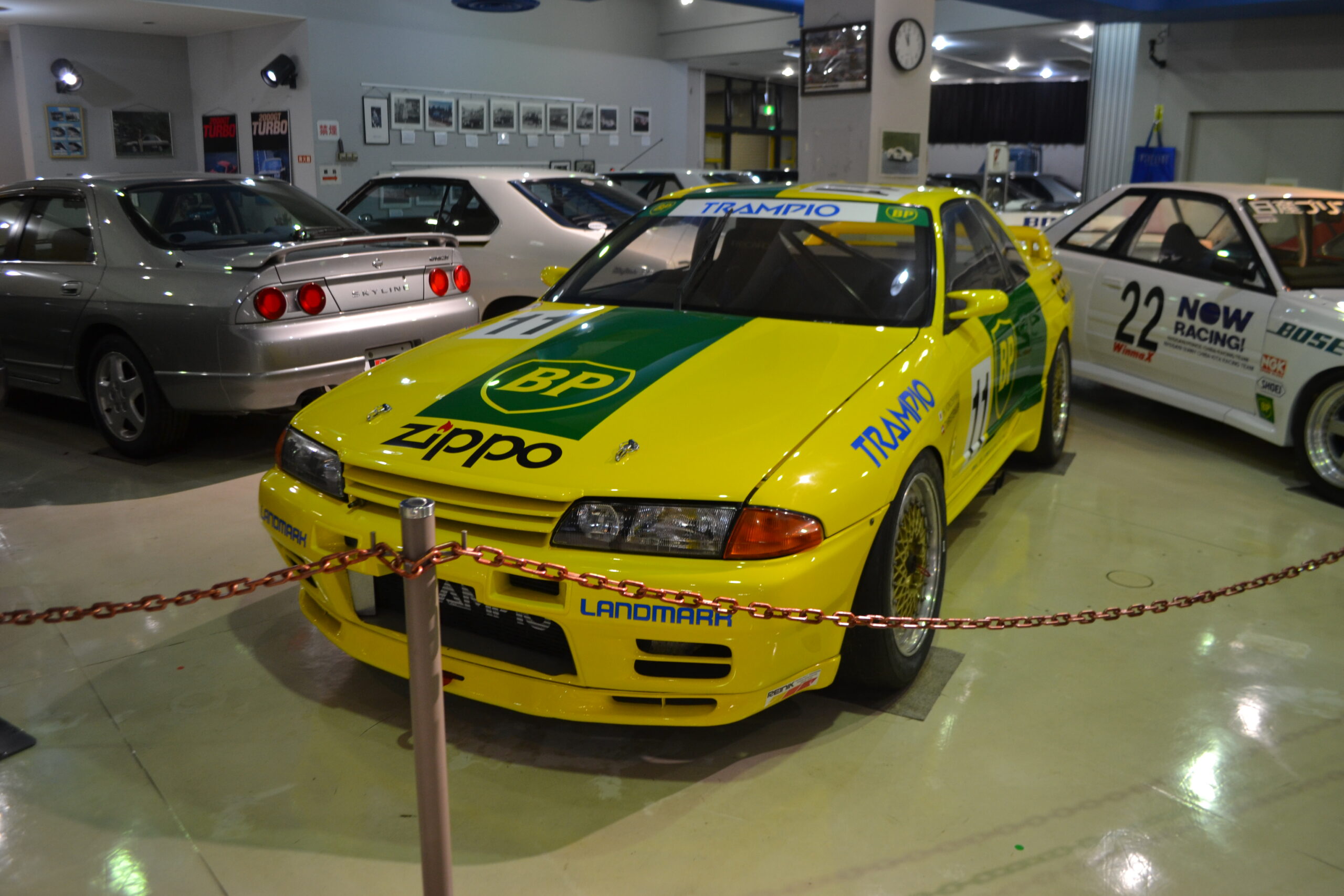
The late 1980s and early 1990s produced two genuinely spectacular parallel racing eras in Japan — Group A touring car competition, which turned the Nissan Skyline GT-R into a legend through one of the most dominant championship runs in touring car history, and Group C sports prototype racing, where Toyota and Nissan built genuinely extreme, purpose-built endurance racers producing well over 900 horsepower in pursuit of overall victory at Le Mans and beyond. This guide covers both eras and how they shaped Japan’s performance car legacy.
📋 What You’ll Learn in This Guide
- How NISMO’s 1985 motorsport entry set up both Group A and Group C programs
- The R32 GT-R’s genuinely unprecedented Group A championship dominance
- How Toyota and Nissan’s Group C prototypes differed in engineering approach
- Why Group C engineering pushed genuinely extreme horsepower figures
- How these racing eras directly shaped road-going JDM performance cars
- NISMO’s 1985 Dual-Category Entry
- The R32 GT-R: Unprecedented Group A Dominance
- Toyota’s Group C Program: The 88C Through 89C-V
- Nissan’s Group C Program: The R89C Through R90C
- Why Group C Pushed Such Extreme Horsepower Figures
- How These Programs Shaped Road-Going JDM Legends
- The Broader Competitive Landscape
- Why This History Matters for Today’s Enthusiasts
- Frequently Asked Questions
- Final Thoughts
NISMO’s 1985 Dual-Category Entry
Nissan’s dedicated motorsport division NISMO began serious competitive racing in 1985 across two genuinely distinct categories simultaneously: Group C sports prototype racing in the All-Japan Endurance Championship, and Group A touring car racing in the All-Japan Touring Car Championship, initially campaigning the Nissan Skyline R30 RS Turbo covered elsewhere in this guide series as its Group A entry of choice. This dual-category commitment from the outset reflects how seriously Nissan approached motorsport as a genuine engineering and brand-building priority, rather than treating either category as a peripheral or secondary racing effort.
The R32 GT-R: Unprecedented Group A Dominance
When NISMO homologated the R32-generation Skyline GT-R for FIA Group A competition in 1990, it set in motion one of the most genuinely dominant runs in touring car racing history — the R32 GT-R won every single Japanese Touring Car Championship Group A race across the 1990, 1991, 1992, and 1993 seasons, a complete sweep of all 29 events run during that period without a single loss to any competitor. This wasn’t merely strong performance; it was a genuinely unprecedented level of sustained competitive dominance that earned the R32 its enduring international nickname “Godzilla” among racing journalists and enthusiasts, a reputation built directly on this real, documented racing record rather than marketing embellishment.
💡 Tip
The R32 GT-R’s competitive dominance extended genuinely beyond Japan’s domestic championship — it claimed overall victory at the 1991 Spa 24 Hours in Europe and won the Australian Touring Car Championship in both 1991 and 1992, including Bathurst 1000 victories both years. Understanding this genuinely international competitive record, not just the domestic Japanese championship sweep, gives real context for why the R32’s racing legend extends so far beyond Japan’s own enthusiast community.
Toyota’s Group C Program: The 88C Through 89C-V
Toyota’s Group C sports prototype program, developed in partnership with constructor Dome, evolved through several distinct chassis generations pursuing genuine competitiveness against dominant European manufacturers like Porsche. The Toyota 88C, campaigned in the 1988 All Japan Sports Prototype Championship by Toyota Team Tom’s, achieved modest results relative to established competition, but the program’s subsequent evolution into the 89C-V brought genuinely serious performance: a turbocharged 3.2-liter Toyota R32 V8 engine producing approximately 800 horsepower, contesting the World Sportscar Championship, the 24 Hours of Le Mans, and the domestic All-Japan Sports-Prototype Championship simultaneously, and securing genuine race wins and pole positions against world-class international competition.
Nissan’s Group C Program: The R89C Through R90C
Nissan’s parallel Group C effort produced the R89C, built around a genuinely extreme new twin-turbocharged VRH35 3.5-liter V8 engine mounted as a stressed chassis member for improved structural rigidity, producing output reported as high as 950 horsepower — a genuinely staggering figure reflecting just how far manufacturers were willing to push Group C engineering in pursuit of outright competitiveness. Despite this raw power, the R89C struggled to match the era’s most developed Porsche and Toyota competitors in the All Japan Sports Prototype Championship, finishing third in that season’s standings. The subsequent R90C represented real, substantive development progress, going on to win three Japanese Sports Prototype Championship titles and several significant endurance races during its competitive career.
⚠️ Caution
Don’t confuse Group A touring car racing with Group C sports prototype racing as though they represented the same basic competitive category with different rules — they were genuinely distinct racing formats built around fundamentally different vehicle types (modified production-based touring cars versus purpose-built, ground-up prototype racers) with different technical regulations, different competitive fields, and different specific engineering priorities. Understanding this distinction matters for accurately appreciating what each program actually achieved and how.
Why Group C Pushed Such Extreme Horsepower Figures
The remarkable horsepower figures produced by Group C-era prototypes — routinely exceeding 800 and in some cases approaching or exceeding 1,000 horsepower — reflected the category’s specific technical regulations, which imposed fuel consumption limits rather than direct power restrictions, incentivizing manufacturers to extract maximum power from whatever fuel allowance the regulations permitted rather than optimizing purely for outright efficiency. This regulatory structure genuinely encouraged the kind of extreme turbocharged engineering both Toyota and Nissan pursued, producing some of the most powerful purpose-built racing engines of their era specifically because the rules rewarded that particular engineering approach over alternative strategies a differently structured regulation might have incentivized instead.
How These Programs Shaped Road-Going JDM Legends
Both racing programs directly informed the road-going performance cars that would define JDM enthusiast culture for decades afterward — the R32 GT-R’s Group A homologation requirements directly shaped the road car’s genuine engineering specification rather than merely lending it a racing-inspired badge, while the broader engineering knowledge and turbocharged development experience gained through Group C prototype racing informed Nissan and Toyota’s broader performance engineering capability across their wider model ranges. Understanding this direct connection between competitive racing programs and the road cars covered extensively elsewhere in this guide series gives genuine additional depth to appreciating why these specific models earned such lasting enthusiast reverence.
The Broader Competitive Landscape
While this guide focuses specifically on Toyota and Nissan’s programs given their outsized influence on the JDM performance cars covered throughout this guide series, it’s worth noting that Japan’s Group A and Group C eras featured genuine competition from other constructors and teams as well, including independent chassis builders like Dome (which built Toyota’s Group C chassis) contributing meaningful engineering expertise to the broader domestic prototype racing scene. This wasn’t a two-manufacturer show performed in isolation — it was a genuinely competitive, technically sophisticated racing ecosystem involving multiple teams, constructors, and manufacturers all pushing each other toward greater performance across both categories simultaneously.
Why This History Matters for Today’s Enthusiasts
For contemporary JDM enthusiasts and collectors, understanding this racing history adds genuine, substantive context to models like the R32 GT-R that goes well beyond simply appreciating a fast, well-engineered road car — it explains specifically why certain engineering decisions were made, why particular chassis codes and homologation-era details carry such collector significance, and why the broader JDM performance car mythology developed the specific shape it did. A road car’s reputation built on genuine, documented racing achievement carries a different, more substantive kind of credibility than one built purely on road-going performance figures alone, and this history is precisely where that substantive credibility for cars like the R32 actually comes from.
Frequently Asked Questions
Q: Is the road-going R32 GT-R mechanically identical to the Group A race cars?
A: No — while the road car shared genuine core architecture and homologation-driven specification with the racing version, actual competition cars received further specialized racing preparation, safety equipment, and tuning beyond what any road-legal production car could include. The road car represents the homologated foundation, not an exact replica of the race car.
Q: Why did Group C racing eventually end as a major category?
A: Group C’s regulatory framework and the broader international sports car racing landscape evolved significantly through the 1990s, with rule changes and shifting manufacturer priorities eventually leading to the category’s decline as the dominant global sports prototype racing format, a broader motorsport regulatory evolution beyond any single manufacturer’s individual program.
Q: Are surviving Group C prototype cars from this era still actively raced today?
A: Yes — dedicated historic racing series and events specifically for Group C-era prototypes exist, allowing preserved examples of cars like the Toyota 89C-V and Nissan R90C to continue competing in a historic racing context, giving contemporary audiences genuine opportunity to witness these remarkable machines in actual competitive action.
Final Thoughts
Japan’s parallel Group A and Group C racing eras produced two genuinely distinct but equally significant motorsport legacies — the R32 GT-R’s unmatched touring car championship dominance, and Toyota and Nissan’s extreme, purpose-built Group C prototypes pushing the absolute limits of turbocharged engineering. Together, these programs did more than win races; they directly shaped the engineering DNA and cultural mythology behind some of the most celebrated JDM performance cars ever built.
Image credit: Nissan Skyline GT-R (BNR32) Group A race car (CC0), via Wikimedia Commons
コメント