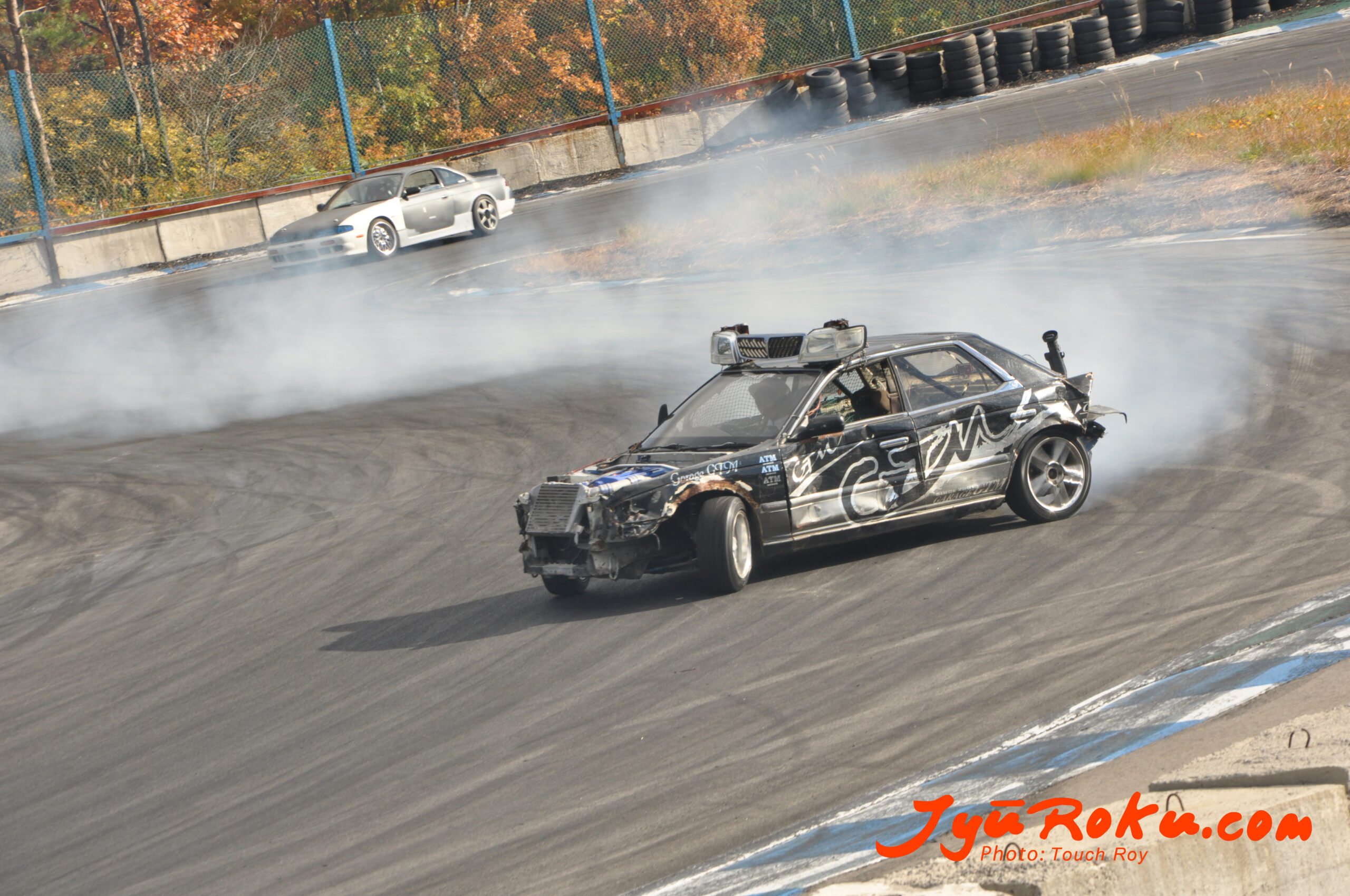
Tucked into the Fukushima countryside, on land that once belonged to a single drift racer’s family, sits what may be the single most internationally recognized drift venue on the planet — Ebisu Circuit. What began as one man’s private track has grown into a genuine multi-course drift complex hosting international students, major competitive drift series, and thrice-yearly festivals that draw enthusiasts from around the world specifically to experience Japan’s drift culture at its literal source. This guide explains how this happened and what Ebisu actually offers visitors today.
📋 What You’ll Learn in This Guide
- How Ebisu Circuit began as drift racer Nobushige Kumakubo’s family land
- Why the complex actually contains seven distinct tracks, not just one
- The Minami (South) course’s specific role as D1 Grand Prix’s most-used venue
- What the Ebisu Drift Festival actually involves
- Why Ebisu specifically became drifting’s international pilgrimage site
- From Family Land to International Drift Destination
- Not One Track, But Seven
- The Minami Course: D1 Grand Prix’s Most-Used Venue
- The Ebisu Drift Festival
- Why Ebisu Specifically Became Drifting’s International Pilgrimage Site
- Planning a Visit
- How Ebisu Compares to Other Japanese Circuits
- The International Community Ebisu Has Fostered
- Frequently Asked Questions
- Final Thoughts
From Family Land to International Drift Destination
Ebisu Circuit opened in 1986 in Nihonmatsu, Fukushima Prefecture, built on land belonging to the family of Nobushige Kumakubo, a genuine competitive drift racer whose personal connection to the property gave the venue an authenticity and grassroots origin story that few other major motorsport facilities can claim. What began as essentially a personal or locally-oriented racing facility gradually transformed into something considerably larger and more internationally significant, as Kumakubo’s own drifting reputation and skill began attracting genuine international students and fans specifically seeking to visit and learn from him at the circuit he’d built on his own family’s property.
Not One Track, But Seven
A common misconception about Ebisu is that it’s a single circuit — in reality, the complex encompasses seven genuinely distinct individual tracks plus two dedicated skid pad-style circuits, including courses known as Nishi (West), Kita (North), Higashi (East), Minami (South), a dedicated area called Drift Land, a School Course specifically designed for driver instruction, and a Touge (mountain pass) course replicating the kind of technical mountain road driving covered in detail elsewhere in this guide series. This genuinely extensive multi-course layout gives Ebisu a level of variety and total facility scale that most single-purpose drift venues simply can’t match, accommodating everything from beginner instruction to the most demanding competitive drift events within the same overall complex.
💡 Tip
If you’re planning a visit specifically to drive or drift at Ebisu rather than simply spectate, research which of the seven distinct courses actually suits your skill level and specific interest before arriving — a beginner drawn purely by Ebisu’s international drift-mecca reputation could easily find themselves on a course layout genuinely unsuited to their current experience level if they don’t confirm this in advance, given how much the complex’s courses vary in technical difficulty and intended purpose.
The Minami Course: D1 Grand Prix’s Most-Used Venue
Among Ebisu’s seven courses, the Minami (South) circuit, also referred to as Drift Stadium, holds particular competitive significance as the venue that hosted the most rounds of D1 Grand Prix — the premier Japanese competitive drift series covered in detail elsewhere in this guide series — across a sustained run from 2001 through 2021. This two-decade run as D1GP’s most frequently used venue reflects genuine, sustained competitive trust in the Minami course’s specific layout and facilities, cementing Ebisu’s position not merely as a popular grassroots drift destination but as a genuinely significant venue within Japan’s actual competitive drift racing infrastructure.
The Ebisu Drift Festival
Ebisu hosts its own dedicated event, commonly known as the Ebisu Drift Festival or Ebisu Drift Matsuri, held three times annually across spring, summer, and autumn as a genuine two-day drift extravaganza distinct from the more competitively structured D1 Grand Prix events also held at the venue. These festival events draw a genuinely broad mix of participants and spectators, from serious competitive drifters to enthusiasts simply attending to watch, socialize, and experience the concentrated drift culture atmosphere that’s made Ebisu such an internationally recognized pilgrimage destination for JDM and drift enthusiasts specifically.
⚠️ Caution
If you’re planning to actually drive at Ebisu rather than simply spectate, understand that drift-specific driving carries genuine safety risk even on a purpose-built facility with appropriate safety infrastructure, and this is meaningfully different from ordinary road driving regardless of your general driving experience. Take advantage of the venue’s dedicated School Course and any available instruction if you’re newer to drift technique specifically, rather than assuming general driving skill translates automatically to safe, competent drift driving on unfamiliar courses.
Why Ebisu Specifically Became Drifting’s International Pilgrimage Site
Ebisu’s rise to genuine international drift-mecca status reflects a combination of factors that reinforced each other over time: Kumakubo’s own authentic competitive drifting reputation and willingness to teach international visitors directly, the venue’s genuinely extensive multi-course facility scale accommodating everything from instruction to top-level competition, and its sustained role as D1 Grand Prix’s most-used venue giving it real, ongoing competitive significance rather than purely historical or nostalgic appeal. This combination of authentic grassroots origin story, genuine facility scale, and sustained competitive relevance is a large part of why Ebisu specifically, among Japan’s various drift-capable venues, achieved such outsized international recognition compared to other facilities that might offer broadly comparable drifting opportunities.
Planning a Visit
For overseas enthusiasts specifically planning a visit to experience Ebisu directly, understanding the venue’s location in Fukushima Prefecture — a genuine regional destination rather than something conveniently located within central Tokyo — and researching current event calendars, course availability, and any rental or instruction options specifically available to visitors is worth doing well in advance of any planned trip. Given Ebisu’s status as a working, actively used competitive and instructional facility rather than purely a tourist attraction, confirming what’s actually accessible to a visiting enthusiast on any specific date matters considerably more than it would for a purely spectator-oriented destination.
How Ebisu Compares to Other Japanese Circuits
Unlike major, internationally famous circuits such as Suzuka or Fuji Speedway covered elsewhere in this guide series, which primarily serve conventional circuit racing across multiple disciplines and host globally televised events like Formula 1, Ebisu occupies a genuinely distinct niche built specifically around drift culture rather than broader motorsport generally. This specialization is precisely the point rather than a limitation — Ebisu never needed to be a conventional multi-purpose racing facility to earn its international reputation, because its entire identity and infrastructure developed specifically around serving drift culture’s particular needs, from beginner instruction through elite competitive events, in a way a more generalist circuit simply wasn’t built to prioritize.
The International Community Ebisu Has Fostered
Beyond its physical facilities and event calendar, Ebisu’s most distinctive legacy may be the genuine international drift community it’s helped cultivate over decades — overseas enthusiasts who’ve made the pilgrimage to train, compete, or simply spectate at Ebisu often describe a genuine sense of connecting directly with drift culture’s origins in a way that watching competition footage or driving a similar course elsewhere simply can’t replicate. This community-building function, alongside its purely technical and competitive significance, is a large part of why Ebisu continues drawing visitors specifically seeking an authentic, direct connection to drift culture’s roots rather than simply the most technically demanding or well-appointed course available.
Frequently Asked Questions
Q: Do I need my own car to experience Ebisu Circuit, or are rentals available?
A: Availability of rental vehicles or drift-specific car access for visitors varies and should be confirmed directly with the venue or through a specialized tour operator ahead of any visit, since this isn’t a universal, guaranteed service across every course and event at the complex.
Q: Is Nobushige Kumakubo still actively involved with the circuit today?
A: Kumakubo’s specific ongoing involvement and current activities should be confirmed through current sources rather than assumed to remain unchanged from the circuit’s founding era, given how much time has passed since Ebisu’s 1986 opening and the venue’s subsequent institutional growth beyond a single individual’s direct personal operation.
Q: Is D1 Grand Prix still held at Ebisu’s Minami course today?
A: Venue selection for D1GP rounds can and does change over time as the series’ own calendar and venue relationships evolve, so confirming the current season’s specific venue schedule directly through official D1GP sources is more reliable than assuming any historical pattern continues unchanged indefinitely.
Final Thoughts
Ebisu Circuit’s transformation from one drift racer’s family land into a genuine international drift pilgrimage destination, encompassing seven distinct courses and sustained competitive significance as D1 Grand Prix’s most-used venue for two decades, represents one of the more remarkable grassroots-to-institutional growth stories in Japanese motorsport. Whether you’re drawn by its authentic origin story, its genuine facility scale, or its thrice-yearly Drift Festival atmosphere, Ebisu remains the single most concentrated, accessible way for an overseas enthusiast to directly experience Japan’s drift culture at what many consider its literal source.
Image credit: Drifting at Ebisu Circuit by Chad MacLean (CC BY 2.0), via Wikimedia Commons

コメント