📋 Summary
- Central Glass Co., Ltd. is a Japanese automotive glass manufacturer, founded in 1936 in Ube City, Yamaguchi Prefecture, originally as Ube Soda Industry Co., Ltd., a chemical company
- The company entered the glass business in 1958, using its own soda ash chemical output as raw material, a genuinely unusual chemicals-to-glass pivot rather than a glass-first origin, and took its current name, Central Glass, in 1963
- Central Glass is Japan’s third major automotive glass maker, genuinely distinct from AGC and NSG, both covered in a separate article in this series, though the company’s business also spans architectural glass, chemicals, and fluorochemicals beyond automotive applications
- Central Glass remains independently publicly listed on the Tokyo Stock Exchange, with no verified recent merger or foreign acquisition affecting its automotive glass business
The windshield and tempered glass windows on many JDM vehicles have a genuine chance of being Central Glass products, Japan’s third major automotive glass maker, with a genuinely unusual origin story rooted in industrial chemistry rather than glassmaking itself.
From a Soda Ash Chemical Company to an Automotive Glass Maker
Central Glass was founded in 1936 in Ube City, Yamaguchi Prefecture, originally as Ube Soda Industry Co., Ltd., a chemical company producing soda ash, according to the company’s own corporate history. In a genuinely distinctive pivot, the company entered the glass business in 1958, using its own soda ash chemical output as a raw material for glass production, a chemicals-to-glass path rather than the more typical glass-first origin seen elsewhere in the industry. The company took its current name, Central Glass, in 1963, and its business today spans automotive and architectural glass alongside chemicals and fluorochemicals.
💡 Tip: Central Glass Is Genuinely Distinct From AGC and NSG
Central Glass is Japan’s third major automotive glass maker, alongside AGC and NSG, both covered in a separate article in this series. Worth knowing if you’re researching the specific glass supplier behind a JDM vehicle’s windshield or windows rather than assuming only two major Japanese automotive glass makers exist.
An Independent, Publicly Listed Company
Central Glass remains independently listed on the Tokyo Stock Exchange, with no verified recent merger, foreign acquisition, or ownership change affecting its automotive glass business, according to available sources. This is a useful point of clarity given how many companies covered elsewhere in this series have undergone significant recent ownership changes.
Why Your Windshield and Side Windows Aren’t the Same Type of Glass
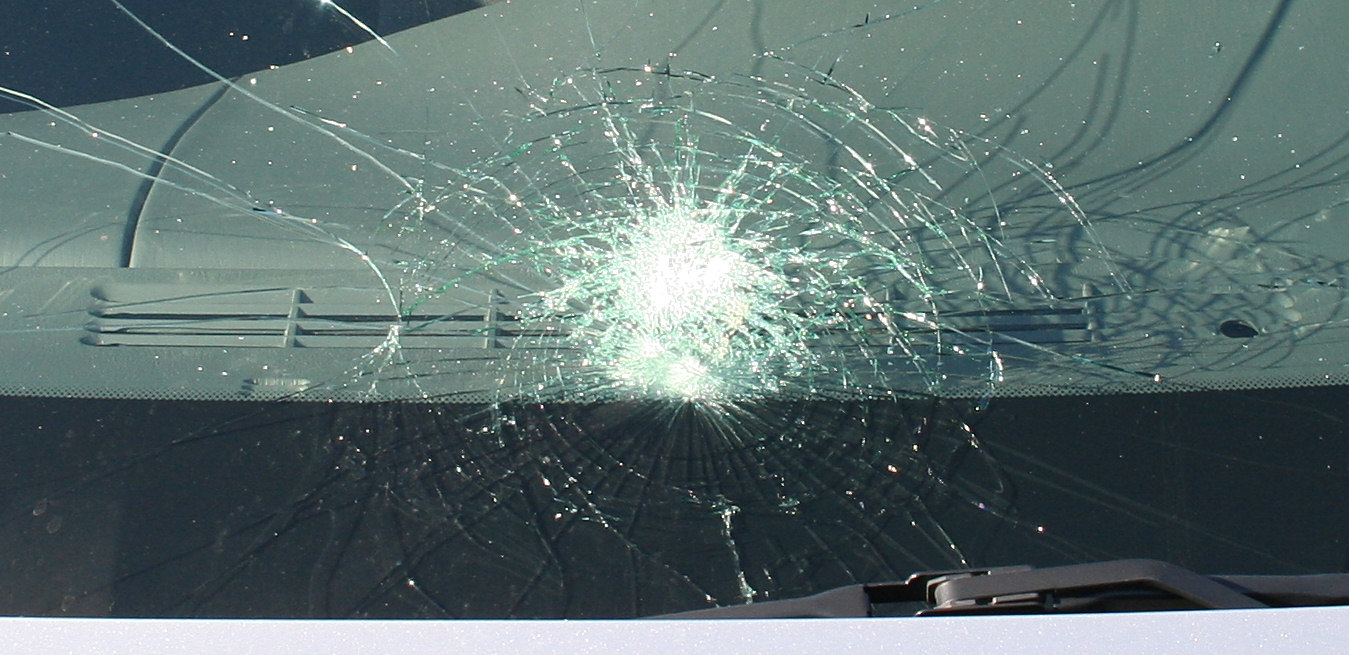
It’s genuinely worth understanding why a windshield and a side window shatter completely differently, since this reflects a deliberate safety engineering choice rather than an inconsistency. Side and rear windows use tempered glass, which is rapidly heated and then cooled during manufacturing to build internal stress; when it breaks, that stress causes the entire pane to crumble into small, relatively blunt pebbles rather than sharp shards, reducing laceration risk. A windshield instead uses laminated glass, two glass layers bonded around a plastic PVB (polyvinyl butyral) interlayer, specifically so the windshield cracks but stays largely intact as a single sheet on impact, keeping occupants inside the vehicle and preventing road debris from passing through. On vehicles equipped with a head-up display, the windshield’s PVB interlayer is genuinely more specialized still, manufactured with a wedge-shaped cross section specifically to prevent the double-image ghosting that a uniform-thickness interlayer would otherwise cause when projecting speed or navigation information onto the glass.
Why Windshield Condition and Correct Replacement Genuinely Matter
A vehicle’s windshield plays a genuinely significant structural role beyond simply providing visibility, contributing to the vehicle’s overall crash structure and, on many modern vehicles, supporting advanced driver-assistance system cameras and sensors. A chipped or cracked windshield, or an improperly installed replacement, can genuinely compromise both visibility and structural integrity. Understanding that a major, established specialist like Central Glass may have produced your vehicle’s original glass provides useful context when researching genuine OEM-equivalent windshield replacement.
⚠️ Caution: Don’t Delay Repairing a Chipped or Cracked Windshield
A small windshield chip can genuinely spread into a larger crack over time, particularly with temperature changes or road vibration, and a sufficiently damaged windshield can compromise both visibility and the vehicle’s structural safety. Have any windshield damage inspected and repaired or replaced by a qualified professional promptly, rather than delaying.
Frequently Asked Questions
Q: What does Central Glass make?
A: Automotive glass, including windshields and tempered and laminated glass, alongside architectural glass, chemicals, and fluorochemicals.
Q: Is Central Glass the same as AGC or NSG?
A: No, they’re separate companies. Central Glass is Japan’s third major automotive glass maker, distinct from AGC and NSG.
Q: Did Central Glass always make glass?
A: No, the company was founded in 1936 as a soda ash chemical company and entered the glass business in 1958, using its own chemical output as raw material.
Q: Is Central Glass an independent company?
A: Yes, Central Glass remains independently publicly listed on the Tokyo Stock Exchange, with no verified recent merger or foreign acquisition.
This article is for general informational purposes based on publicly available company sources. Have any windshield damage inspected and repaired or replaced by a qualified professional promptly.
Image credit: Windshield-spiderweb by Tysto, Public Domain, via Wikimedia Commons
コメント