📋 Summary
- Panasonic and GS Yuasa are the two Japanese names most commonly found under the hood of JDM vehicles when it comes to car batteries
- GS Yuasa was formed in 2004 through the merger of Japan Storage Battery Co. (the “GS” brand) and Yuasa Corporation, two companies with roots going back to 1917 and 1918 respectively
- The “GS” name itself traces to Genzo Shimadzu Jr., who built Japan’s first industrially manufactured lead-acid battery in 1897 and launched the GS brand in 1908
- Panasonic’s automotive battery history includes supplying Japan’s first maintenance-free lead-acid battery, fitted to Nissan vehicles bound for the U.S. market starting in 1974
Car batteries rarely get enthusiast attention until one fails at the worst possible moment, but two Japanese manufacturers, Panasonic and GS Yuasa, have supplied a genuinely enormous share of the batteries found in Japanese vehicles for decades, both as OEM equipment and aftermarket replacements.
GS Yuasa: A 2004 Merger With Roots Back to 1897
GS Yuasa Corporation was formed in 2004 through the merger of two long-running Japanese battery manufacturers: Japan Storage Battery Co. (maker of the “GS” brand) and Yuasa Corporation. According to GS Yuasa’s own official corporate history, a basic merger agreement was signed in July 2003, and the joint holding company was listed on the Tokyo and Osaka stock exchanges in April 2004. The “GS” name itself has a genuinely interesting origin: it comes from the initials of Genzo Shimadzu Jr., son of Shimadzu Corporation’s founder, who built Japan’s first industrially manufactured lead-acid battery in 1897 and launched the GS brand in 1908. Japan Storage Battery Co. was established as an independent company in 1917, while Yuasa Corporation was founded a year later, in 1918, by Shichizaemon Yuasa.
💡 Tip: GS Yuasa’s Hybrid Battery Work Goes Beyond Standard Car Batteries
GS Yuasa’s joint venture with Honda, called Blue Energy, has supplied more than 1.4 million hybrid vehicle battery systems since 2009, according to official company announcements, with a further lithium-ion battery collaboration announced in January 2023. This is a genuinely different product category from the standard 12V lead-acid starting battery most owners think of when buying a replacement.
Panasonic: Japan’s First Maintenance-Free Car Battery
Panasonic’s automotive battery history dates back to around 1970, when Matsushita Electric (Panasonic’s former corporate name) began developing MF (maintenance-free) lead-acid automotive batteries, according to Panasonic’s own corporate history materials. The first shipment of its “CAREC” batteries, a name combining “car” and “electric,” went out in the fall of 1973, and starting in 1974, Panasonic’s maintenance-free battery was installed as Japan’s first such battery in Nissan vehicles bound for the U.S. market, a genuinely notable early OEM relationship. Today, Panasonic’s flagship automotive battery line is marketed under the “CAOS” name, positioned specifically for the higher electrical demands of modern, electronics-heavy vehicles.
Why a Modern JDM Vehicle Might Need an AGM Battery, Not a Standard One
It’s genuinely important to understand a real technology distinction that didn’t matter as much on older vehicles: many modern JDM cars with idle-stop (start-stop) systems, which automatically shut the engine off at stoplights and restart it when the driver releases the brake, require a specifically designed battery rather than a conventional one, and both Panasonic and GS Yuasa manufacture these dedicated types. EFB (Enhanced Flooded Battery) technology improves on a traditional flooded lead-acid design specifically for the frequent restart cycling idle-stop demands, offering roughly 50% more cycling capacity than a standard battery, and suits smaller to mid-range idle-stop vehicles with more modest energy demands. AGM (Absorbent Glass Mat) technology goes further, absorbing the electrolyte into a fiberglass mat separator rather than leaving it as free liquid, and is built for vehicles with genuinely higher energy requirements, including those with brake-energy regeneration systems recapturing power during deceleration. Installing a conventional flooded battery in a vehicle originally fitted with an EFB or AGM unit can result in premature battery failure or unreliable idle-stop function, since the system simply wasn’t engineered around a standard battery’s more limited cycling capability, making this genuinely one of the more consequential specification details to get right on a modern JDM replacement.
Why OEM History Matters When Choosing a Replacement Battery
For overseas JDM owners specifically, understanding which battery brand originally supplied a given vehicle can be a useful starting point when sourcing a replacement, even though most vehicles can accept batteries from either manufacturer (or other brands entirely) as long as the specifications, size, terminal layout, and cold-cranking amps, are correctly matched. Given both companies’ decades-long OEM relationships with Japanese automakers, genuine OEM-spec replacements from either brand are widely available through both Japanese and international parts channels.
⚠️ Caution: Battery Specifications Must Match Your Vehicle Exactly
Installing a car battery with the wrong specifications, incorrect physical size, insufficient cold-cranking amps, or a mismatched terminal configuration, can cause fitment problems or inadequate starting power, particularly in modern vehicles with extensive electronics and idle-stop systems. Always confirm the exact battery specification required for your specific vehicle, year, and trim before purchasing a replacement, rather than assuming any similarly sized battery will work.
Frequently Asked Questions
Q: Are Panasonic and GS Yuasa both Japanese companies?
A: Yes. GS Yuasa was formed in 2004 from the merger of Japan Storage Battery Co. and Yuasa Corporation, both with roots dating to 1917-1918. Panasonic’s automotive battery work dates to around 1970.
Q: What does “GS” stand for?
A: The initials of Genzo Shimadzu Jr., who built Japan’s first industrially manufactured lead-acid battery in 1897 and launched the GS brand in 1908.
Q: Does GS Yuasa only make standard car batteries?
A: No. Beyond standard 12V lead-acid batteries, GS Yuasa also produces hybrid vehicle battery systems through its Blue Energy joint venture with Honda.
Q: Can I use either brand as a replacement battery regardless of my car’s original equipment?
A: Generally yes, as long as the replacement battery’s specifications, size, terminal layout, and cold-cranking amps, correctly match your vehicle’s requirements.
This article is for general informational purposes based on publicly available company history sources. Battery specifications and product lineups change over time – always verify the correct battery specification for your specific vehicle directly with the manufacturer or a qualified professional before purchasing.
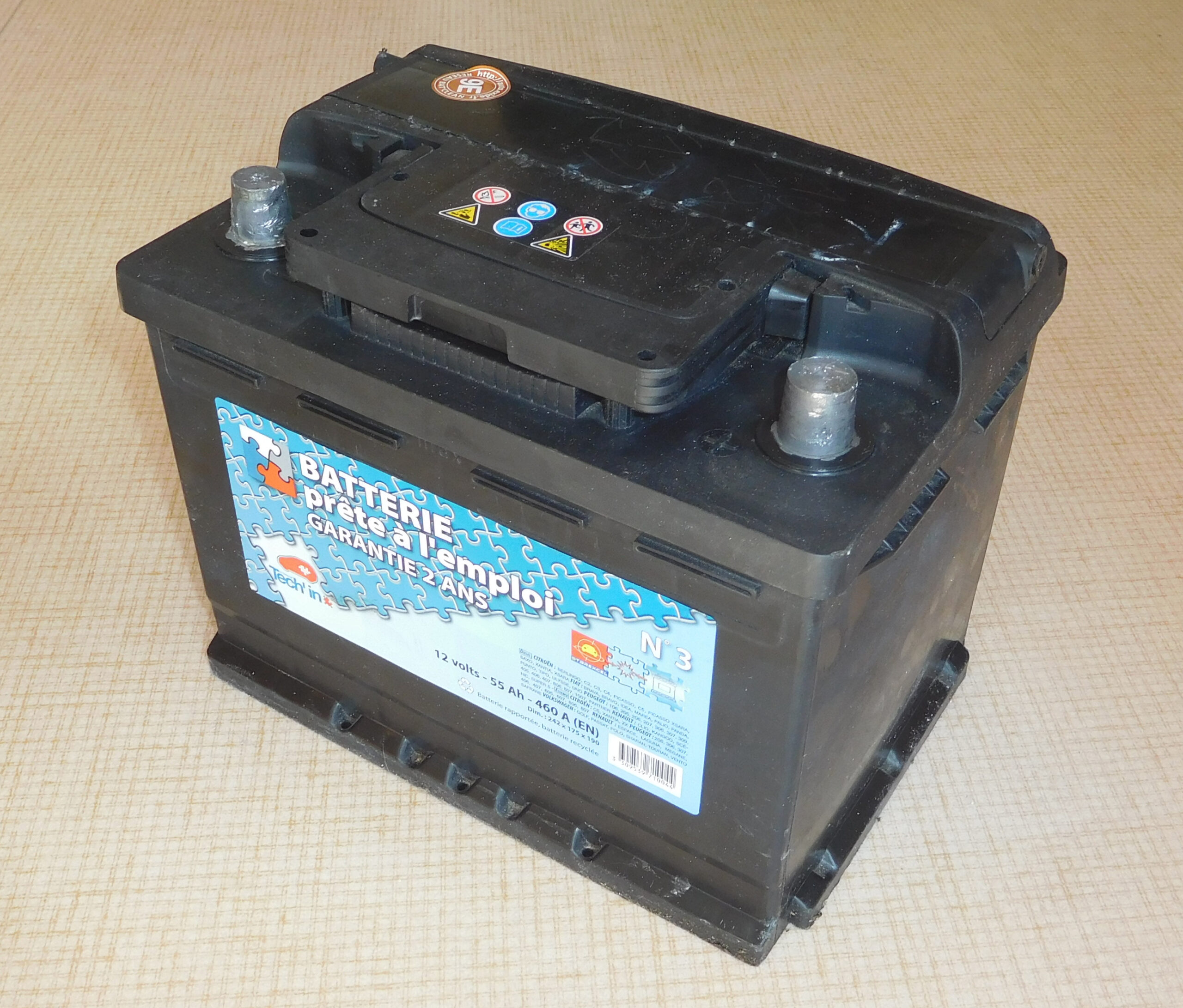
Image credit: Lead-Acid Automotive Battery by Cjp24, CC BY-SA 4.0, via Wikimedia Commons
コメント