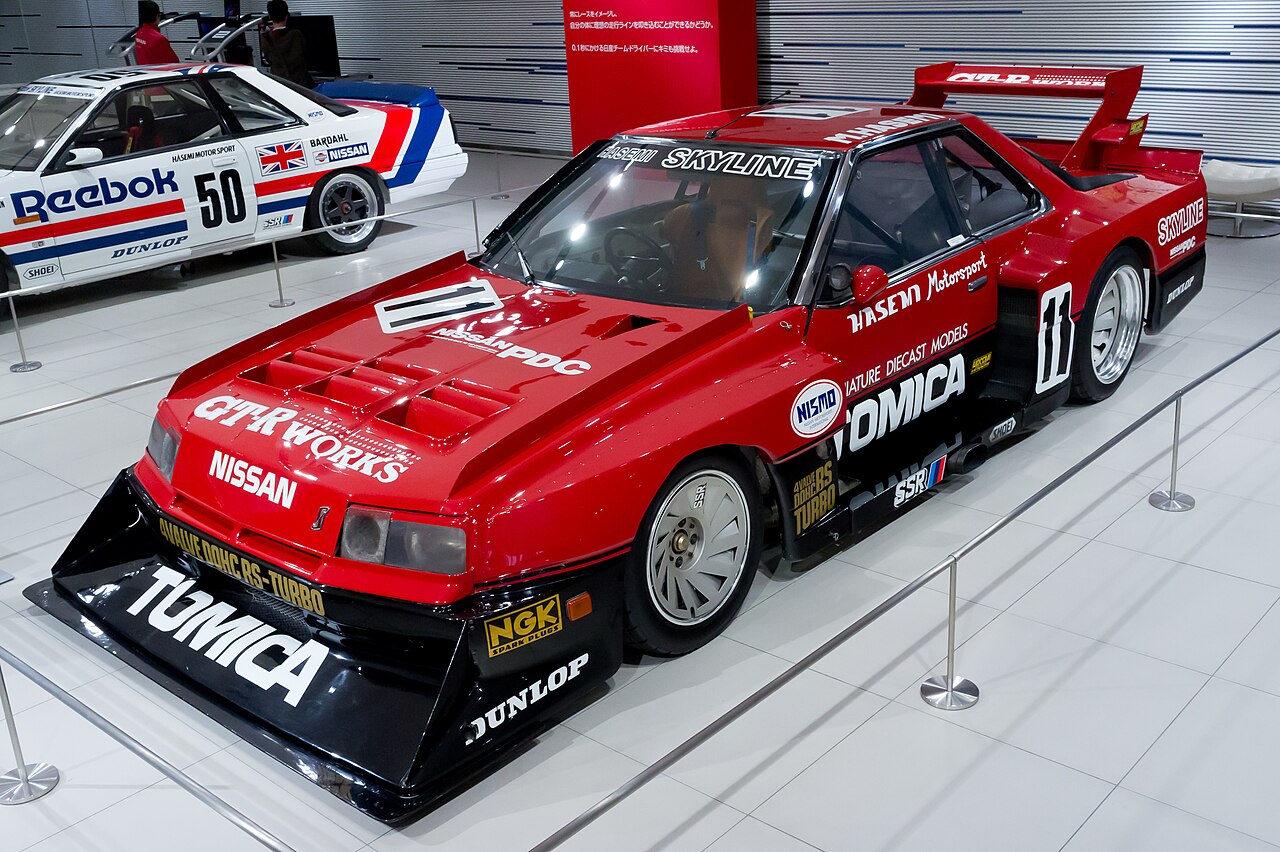
Long before internet car culture made every subculture globally visible overnight, a generation of Japanese street enthusiasts was building something genuinely wild in home garages: road cars transformed into replicas of the outrageous, fender-busting Super Silhouette race cars tearing up Fuji Speedway. This is kaido racer style — a genuinely distinctive branch of Japanese car culture built entirely around one simple, extreme premise: what if your daily driver looked like it belonged on a professional racing grid?
📋 What You’ll Learn in This Guide
- How kaido racer style emerged in mid-1970s Japan
- The Super Silhouette racing series’ direct influence on the look
- The core visual elements: wings, flares, splitters, and deep-dish wheels
- How magazines like Holiday Auto helped spread the style nationwide
- How kaido racer style differs from bosozoku, VIP style, and shakotan
- Origins in Mid-1970s Japan
- The Super Silhouette Connection
- The Core Visual Elements
- Spreading the Look: Holiday Auto and Magazine Culture
- Kaido Racer Versus Bosozoku
- A Style Rediscovered
- The Craft Behind the Extremity
- Real Silhouette Racing Cars Versus Street Replicas
- Frequently Asked Questions
- Final Thoughts
Origins in Mid-1970s Japan
Kaido racer style traces its beginnings to mid-1970s Japan, when young car enthusiasts began physically modifying their street cars to visually resemble the professional racing machines competing at circuits like Fuji Speedway. By 1974, cars styled in this manner had begun appearing across the country, sparking what genuinely became a nationwide styling boom over the following years. The name itself reflects the style’s core concept directly — “kaido” translates roughly to “highway” or “public road,” meaning kaido racers are, at their heart, race car replicas built specifically to be driven on ordinary public streets rather than any actual circuit.
The Super Silhouette Connection
Kaido racer style’s specific visual language draws most directly from Japan’s Super Silhouette racing series, which ran from 1979 to 1984 and featured genuinely extreme bodywork under rules that required only the roofline to remain stock, leaving nearly everything else open to dramatic modification. This regulatory quirk produced race cars with enormous flared fenders, towering rear wings, aggressive front splitters, and external oil coolers — a genuinely radical silhouette that inspired the exact vocabulary of modifications kaido racer builders would apply to their own street cars, effectively translating a professional racing aesthetic directly onto everyday Japanese sedans and coupes.
💡 Tip
Understanding the Super Silhouette series’ specific rule — that only the roofline needed to stay stock — genuinely explains why kaido racer bodywork looks so dramatically different from the factory car underneath. Builders replicating this look on street cars pushed the same principle to its logical extreme: keep the fundamental shape and roofline recognizable, but transform virtually everything else into something that looks like it just rolled off a professional racing grid.
The Core Visual Elements
A genuine kaido racer build centers on a specific, recognizable set of modifications: boxy, dramatically flared fender arches to accommodate wider wheels and tires, jutting front spoilers and splitters, towering rear wings mounted well above the roofline, external oil coolers mounted prominently at the front of the car, and deep-dish wheels that echo the same aesthetic found in VIP style but applied to a completely different, motorsport-inspired silhouette rather than a luxury-sedan one. Exhaust systems tend toward loud, distinctive setups that reinforce the racing-replica identity both visually and audibly, completing a build that’s meant to look — and sound — like genuine racing hardware.
Spreading the Look: Holiday Auto and Magazine Culture
Kaido racer style’s nationwide spread through 1970s and 1980s Japan owed a great deal to automotive magazine culture, particularly Holiday Auto, which featured a genuinely influential reader-submission photo column called “Oh MY! Kaido Racer!” that showcased builds from enthusiasts across the country. In an era well before internet car culture, this kind of magazine coverage functioned as the primary way builders in different regions could see, compare, and draw inspiration from each other’s work, helping kaido racer style develop into a genuinely cohesive, recognizable national movement rather than a collection of disconnected local trends.
⚠️ Caution
Don’t assume a kaido racer’s extreme bodywork modifications — dramatically flared fenders, oversized wings, aggressive splitters — are automatically road-legal in every jurisdiction, including within Japan itself under current shaken vehicle inspection standards. Extreme aerodynamic and body modifications frequently face specific legal restrictions that vary considerably by country and region, so anyone building or importing a kaido racer-style vehicle should verify current local regulations rather than assuming the style’s visual extremity was ever meant to imply universal road legality.
Kaido Racer Versus Bosozoku
Kaido racer style is often discussed alongside, and sometimes confused with, bosozoku styling, but the two represent genuinely distinct aesthetic traditions with different reference points. Where kaido racer style draws its visual language specifically from professional circuit racing — the Super Silhouette series above all — bosozoku styling draws more from a combination of exaggerated road-going custom traditions, including dramatically extended exhaust pipes, oversized paint schemes, and body modifications less directly tied to any specific racing series. Both styles share Japan’s broader 1970s-1980s enthusiasm for extreme, attention-grabbing car customization, but their underlying inspirations and typical build details genuinely diverge once you look past their shared “loud and extreme” first impression.
A Style Rediscovered
After fading from mainstream prominence through the 1990s and 2000s as Japanese car culture’s attention shifted toward other styles, kaido racer builds have experienced a genuine renewed appreciation in recent years, both within Japan and among international JDM enthusiasts who’ve discovered the style’s distinctive period look through vintage photography, dedicated online communities, and appearances at classic JDM car meets. This revival reflects a broader pattern common across many niche automotive subcultures — styles that once felt purely of their specific historical moment often gain a genuinely new appreciative audience once enough time has passed for their period-specific extremity to read as distinctive rather than simply dated.
The Craft Behind the Extremity
Despite their visually chaotic first impression, well-executed kaido racer builds actually require genuine fabrication skill, since much of the era’s flared bodywork, wing mounting, and splitter work was produced through hand-formed fiberglass and metal fabrication rather than any off-the-shelf bolt-on parts catalog, which simply didn’t exist for this kind of build at the time. This hands-on fabrication tradition remains a genuine point of pride within the current kaido racer revival scene, where builders and restorers often emphasize period-correct fabrication techniques over modern shortcuts, treating the physical craftsmanship involved as inseparable from the style’s overall authenticity.
Real Silhouette Racing Cars Versus Street Replicas
It’s worth keeping a clear distinction in mind between the actual Super Silhouette race cars that competed at circuits like Fuji Speedway and the street-legal kaido racer builds they inspired. The genuine Super Silhouette cars were purpose-built racing machines running under professional competition rules, with extreme bodywork justified by genuine aerodynamic and mechanical packaging needs specific to circuit racing. Street kaido racer builds, by contrast, are fundamentally styling exercises — a road car’s owner replicating the visual language of that racing world on a vehicle that still needs to function as ordinary transportation, without the actual competition regulations, mechanical purpose, or professional racing pedigree of the cars that inspired the look.
Frequently Asked Questions
Q: Are original 1970s-1980s kaido racer builds still around today, or is the style mostly recreated on newer cars?
A: Both genuinely exist within the current scene — some enthusiasts maintain or restore original period builds, while others construct new kaido racer-style builds on classic Japanese cars using either period-correct or modern reproduction parts, so the current scene includes a genuine mix of preserved originals and newer tribute builds.
Q: What kinds of cars are typically used as a kaido racer base?
A: Classic Japanese sedans and coupes from the 1970s and 1980s, particularly models from Toyota, Nissan, and Mazda that were contemporaries of the era’s Super Silhouette racing cars, form the most common and stylistically fitting foundation for a genuine kaido racer build.
Q: Is kaido racer style the same thing as the “Group 5” racing look sometimes referenced in car culture?
A: Group 5 was an international racing category with its own related but distinct wide-body silhouette racing tradition running parallel to Japan’s domestic Super Silhouette series; the two share genuine visual DNA and mutual influence, but kaido racer style specifically developed as a Japanese street-car phenomenon most directly tied to the domestic Super Silhouette series covered in this guide.
Final Thoughts
Kaido racer style captures something genuinely distinctive about 1970s-1980s Japanese car culture: a generation of enthusiasts who looked at the extreme, fender-busting race cars tearing around Fuji Speedway and decided their own street cars deserved to look just as dramatic. From its Super Silhouette-inspired origins through its spread via magazine culture to its genuine present-day revival among collectors and enthusiasts worldwide, kaido racer style remains one of the most visually uncompromising expressions of Japan’s rich automotive subculture landscape. For enthusiasts encountering the style today, that uncompromising quality is exactly the point — a kaido racer isn’t trying to look tasteful or restrained, it’s trying to look like it just came off a race track, and it succeeds precisely by refusing to hold anything back.
Image credit: Nissan Skyline RS Turbo Super Silhouette (KDR30) by Morio (CC BY-SA 3.0), via Wikimedia Commons
_front-left.jpg)
コメント