📋 Summary
- Osaka and the broader Kansai region are closely associated with kanjozoku, an underground street culture built around lightweight Honda Civics racing the Hanshin Expressway’s roughly 27-kilometer inner loop, and with the origins of VIP style luxury sedan customization
- Tokyo and the Kanto region lean more toward meeting, showing, and display-oriented car culture, hosting major events like Tokyo Auto Salon and generally favoring flashier, more elaborate styling than Kansai’s comparatively understated approach
- Nagoya and the surrounding Chubu region function as Japan’s automotive manufacturing heartland, home to Toyota’s headquarters in nearby Toyota City, giving the area a distinctly industrial and institutional character rather than a street culture identity
- These regional distinctions reflect genuine, community-recognized differences in car culture emphasis and styling philosophy, though individual builders and communities within any region can and do defy these broad regional characterizations
Japan’s car culture is often discussed as a single unified phenomenon internationally, but within Japan itself, distinct regional identities have developed around specific cities, each with genuinely different emphases, styling philosophies, and cultural roots. Understanding these regional distinctions, particularly between Osaka, Tokyo, and Nagoya, adds real depth to how JDM culture actually developed and continues to operate within Japan.
- Osaka and Kansai: Kanjozoku and the Birth of VIP Style
- Tokyo and Kanto: The Center of Meets, Shows, and Media
- Nagoya and Chubu: The Manufacturing Heartland
- Why These Regional Distinctions Matter for Understanding JDM Culture
- How Local Geography Shaped Each Region’s Culture
- Regional Identity in the Social Media Era
- Frequently Asked Questions
Osaka and Kansai: Kanjozoku and the Birth of VIP Style
Osaka and the broader Kansai region hold a genuinely distinct identity within Japanese car culture, most closely associated with kanjozoku, an underground street racing culture built almost entirely around small, lightweight Honda Civics, particularly the EK9-generation Civic Type R and related EG-generation models, chosen specifically for their light weight and nimble handling. The term itself connects directly to its setting: the Hanshin Expressway’s inner loop, a roughly 27-kilometer circular highway encircling downtown Osaka, provided the actual tight, technical racing ground around which this specific culture developed.
Kansai is also widely credited as the birthplace of VIP style, a distinctive customization approach applied to larger luxury sedans, commonly Toyota Crowns or Nissan Cimas, rooted partly in aesthetic traditions associated with the region’s broader street and, at times, yakuza-adjacent culture. Beyond these two specific movements, Kansai car culture more broadly is often described by enthusiasts as leaning toward building and modifying over pure display, with a generally more understated styling philosophy compared to some other regions, favoring subtlety and functional performance modification over more elaborate visual statement pieces.
💡 Tip: Understand These Distinctions as General Cultural Tendencies, Not Rigid Rules
While the regional distinctions discussed here reflect genuinely recognized patterns within Japanese enthusiast communities, it’s worth understanding them as general cultural tendencies rather than rigid, universal rules that every builder or community within a given region strictly follows. Individual builders, shops, and local scenes within any of these regions can and do produce work that defies the broader regional characterization, and Japan’s car culture overall is considerably more interconnected and cross-pollinated today, particularly through social media and national events, than these historically rooted regional identities alone might suggest.
Tokyo and Kanto: The Center of Meets, Shows, and Media
Tokyo and the surrounding Kanto region have developed a car culture identity that leans more heavily toward meeting, display, and organized show culture rather than the underground street racing roots more closely associated with Kansai. Tokyo hosts Tokyo Auto Salon, Japan’s premier tuning and customization show, and functions as a central hub for automotive media, major dealer networks, and organized car meet culture more broadly. Styling philosophy in the Kanto region has often been described by enthusiasts as leaning toward more elaborate, visually flashy execution, incorporating more aggressive body modifications and eye-catching visual details compared to Kansai’s comparatively more restrained, subtle approach to similar underlying platforms.
Nagoya and Chubu: The Manufacturing Heartland
Nagoya and the surrounding Chubu region occupy a genuinely different position within Japan’s automotive landscape entirely, functioning less as a street or show culture hub and more as the country’s actual manufacturing and institutional heart. Toyota’s headquarters sits in nearby Toyota City within Aichi Prefecture, and the broader region houses significant automotive manufacturing infrastructure and institutional heritage sites, including major automotive museums, giving Chubu a distinctly industrial and historical character rather than the grassroots street culture identity more associated with Osaka or the show and meet culture more associated with Tokyo.
This distinction matters for understanding why Nagoya, despite its genuine automotive significance, is sometimes described as overlooked by international visitors specifically focused on street culture and enthusiast meet scenes, when its actual contribution to JDM culture lies more in manufacturing heritage and institutional automotive history than in a comparable underground or show-focused street scene.
⚠️ Caution: Kanjozoku Activity Involves Genuine Legal and Safety Risk
While kanjozoku culture holds genuine historical and cultural significance within Japanese car culture, it’s important to understand that the underlying activity, unsanctioned street racing on public expressway infrastructure, is illegal and carries real safety risk both to participants and other road users. International visitors drawn to this specific culture’s aesthetic or history should understand it as a cultural phenomenon worth studying and respecting from a safe distance, not an activity to participate in directly, and should never attempt to replicate this style of driving on public roads anywhere.
Why These Regional Distinctions Matter for Understanding JDM Culture
Recognizing that Japan’s car culture isn’t a single monolithic phenomenon, but rather a collection of genuinely distinct regional identities shaped by local history, geography, and industry, adds meaningful depth to how international enthusiasts understand and engage with JDM culture more broadly. Kansai’s underground racing and VIP style roots, Kanto’s show and media-centric culture, and Chubu’s manufacturing heritage each represent a different, equally legitimate facet of what makes Japanese car culture so rich and multifaceted, rather than a single unified aesthetic or philosophy that applies uniformly across the entire country.
How Local Geography Shaped Each Region’s Culture
A genuinely important factor behind these regional differences is simple physical geography and infrastructure, rather than pure cultural preference in isolation. Osaka’s kanjozoku culture developed specifically around the unique layout of the Hanshin Expressway’s inner loop, a continuous circular route that offered a genuinely distinct kind of repeatable, technical driving challenge unlike a typical point-to-point highway. Tokyo’s enormous population density and concentration of media, retail, and event infrastructure naturally favored a culture oriented around organized shows, dealer networks, and meet culture, simply because the infrastructure and audience for that kind of activity existed at a scale unmatched elsewhere in the country. Nagoya’s position as Japan’s automotive manufacturing center, meanwhile, reflects deliberate industrial planning and historical automaker location decisions dating back decades, not an organic street culture development in the way Kansai’s or Kanto’s identities emerged.
Understanding this geographic and infrastructural grounding helps explain why these regional identities have proven so durable over time, rather than simply fading as national media and social platforms increasingly connect enthusiasts across the entire country regardless of physical location.
Regional Identity in the Social Media Era
While these regional car culture identities trace back decades, social media and national-level events have meaningfully increased cross-pollination between regions in more recent years, with builders and enthusiasts from different areas of Japan increasingly aware of, and influenced by, styling trends and cultural movements originating elsewhere in the country. A builder based in Tokyo today might genuinely draw inspiration from Kansai’s VIP style tradition, or a Kansai-based enthusiast might attend or follow Tokyo Auto Salon coverage closely, in a way that would have been considerably less common before national digital connectivity made cross-regional cultural exchange this immediate and constant.
This doesn’t mean regional identities have disappeared, local scenes, specific meet spots, and area-specific styling preferences remain genuinely distinct and recognizable, but it does mean the boundaries between these regional cultures have become somewhat more permeable than they may have been in earlier decades, when geographic distance and slower information flow kept regional scenes more genuinely isolated from one another.
Frequently Asked Questions
Q: What is kanjozoku?
A: An underground street racing culture centered on Osaka, built around lightweight Honda Civics, particularly the EK9 and EG-generation models, racing the Hanshin Expressway’s roughly 27-kilometer inner loop.
Q: Where did VIP style originate?
A: VIP style, a customization approach applied to larger luxury sedans like the Toyota Crown or Nissan Cima, is widely credited as originating in the Kansai region.
Q: How does Tokyo’s car culture differ from Osaka’s?
A: Tokyo and the Kanto region lean more toward meeting, showing, and display-oriented culture, hosting events like Tokyo Auto Salon, while Kansai is more closely associated with underground street racing roots and a generally more understated styling philosophy.
Q: What role does Nagoya play in Japanese car culture?
A: Nagoya and the Chubu region function primarily as Japan’s automotive manufacturing heartland, home to Toyota’s headquarters in nearby Toyota City, giving the area an industrial and institutional character rather than a street or show culture identity.
Q: Is it safe or legal to participate in kanjozoku-style driving?
A: No. The underlying activity is illegal unsanctioned street racing on public roads and carries genuine safety risk. It should be understood as a cultural phenomenon to study and respect, not an activity to attempt directly.
This article is for general informational purposes and reflects commonly cited perspectives on Japan’s regional car culture identities. These represent general cultural tendencies rather than rigid rules, and individual scenes and builders vary considerably within any region.
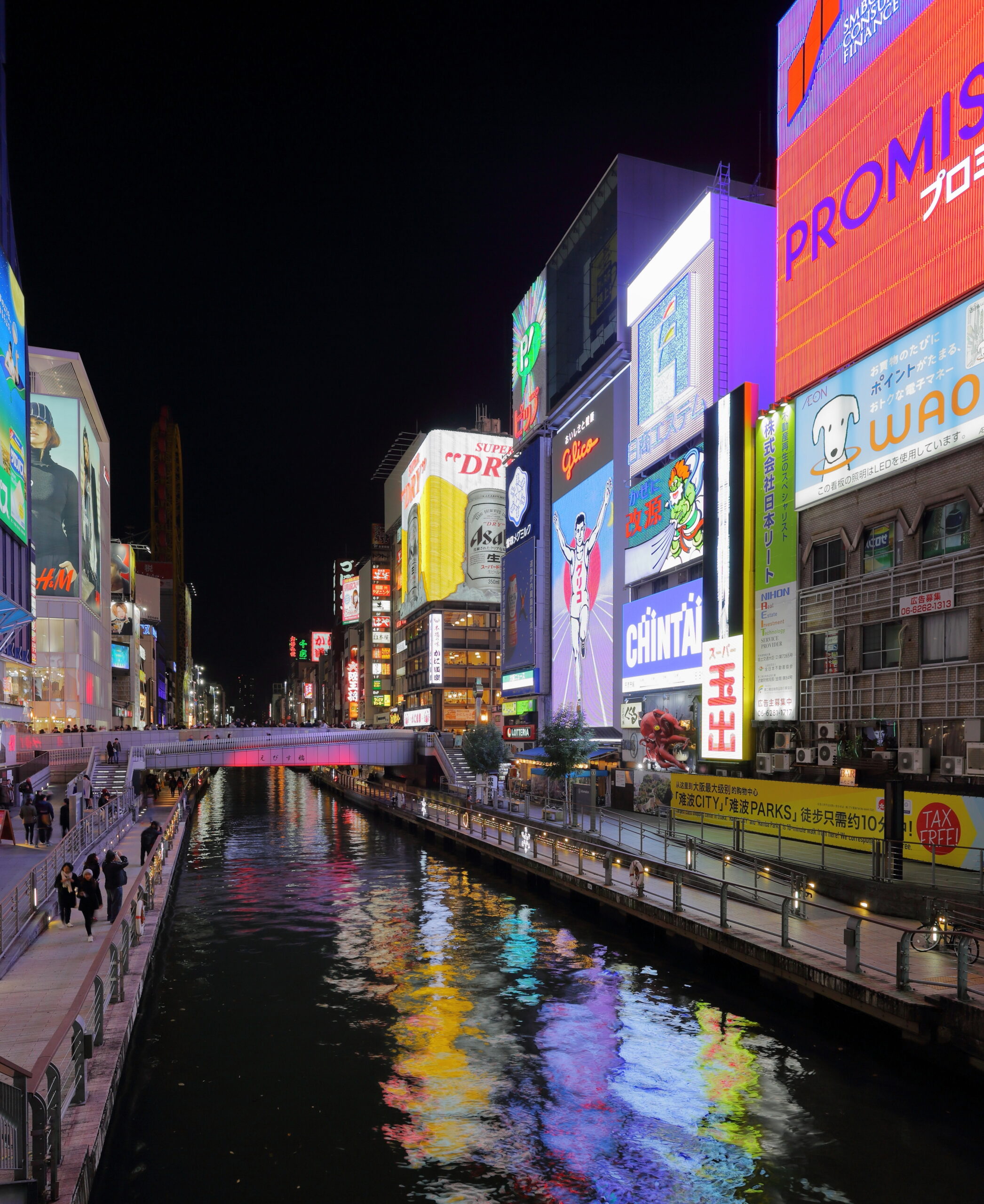
Image credit: Dotonbori, Osaka, at night, November 2016.jpg by Martin Falbisoner, CC BY-SA 4.0, via Wikimedia Commons
コメント