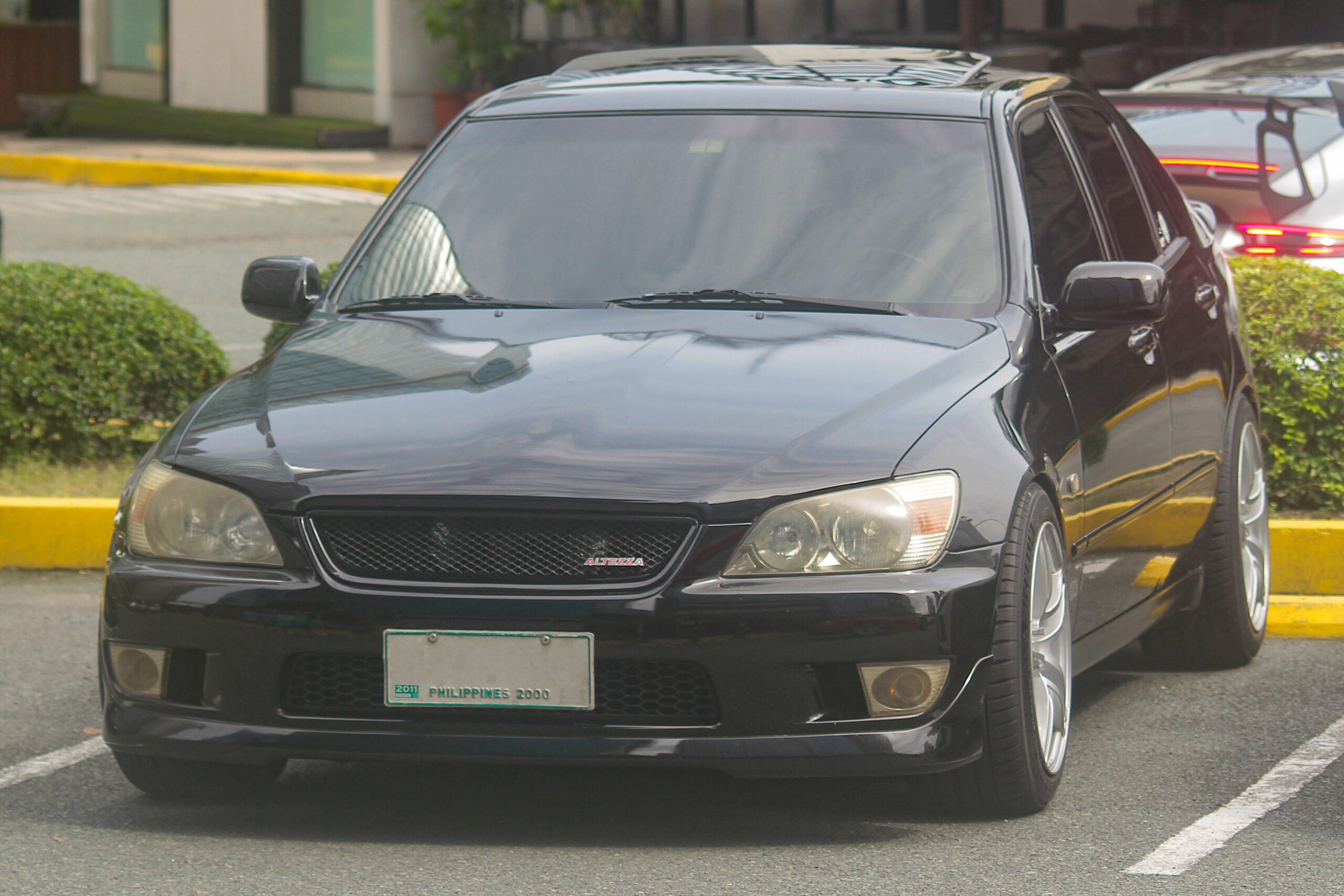
The Lexus IS badge simply didn’t exist in Japan when this car launched in October 1998 — Lexus itself had no Japanese dealer network until 2005 — so Toyota sold the same platform domestically as the Altezza (chassis code XE10). The Lexus IS200 followed in Europe in 1999, and North America got the IS300 (JCE10) in 2000. Underneath, the Altezza and IS share the same platform, general bodywork, and mechanical underpinnings, but the actual engines fitted varied significantly by market. This guide covers the difference between the RS200’s high-revving 3S-GE BEAMS engine and the AS200’s quieter inline-six, the interference-engine timing belt risk that matters enormously here, and the clutch and gearbox mount issues worth checking on manual examples.
📋 What You’ll Learn in This Guide
- Why Toyota, not Lexus, sold this car in Japan originally
- The real difference between the RS200’s BEAMS engine and the AS200’s inline-six
- Why the timing belt interval is critical on the 3S-GE
- Common clutch and gearbox mount issues on manual examples
- How the export IS300’s engine differs from anything sold as an Altezza
Same Platform, Different Badge — And a Genuine Reason Why
Unlike badge-engineering done purely for marketing segmentation, the Altezza/Lexus IS naming split had a structural reason behind it: Lexus had no dealer presence in Japan at all until 2005, so Toyota needed to sell the platform under its own established domestic dealer network. The Altezza and IS remain essentially identical in platform, general bodywork, and mechanical architecture — the real differences that matter to a buyer are in which specific engine ended up under the hood in each market, not the underlying car itself.
RS200 vs. AS200: Two Very Different Driving Characters
The RS200 trim carries the celebrated 3S-GE “BEAMS” engine (Breakthrough Engine with Advanced Mechanism System) — a 2.0-liter naturally aspirated inline-four producing 207 horsepower at a screaming 7,600 rpm and 159 lb-ft at 6,400 rpm, a genuinely high-revving, enthusiast-focused engine. The non-RS AS200 instead uses a quieter 1G-FE inline-six with less outright power, prioritizing refinement and smoothness over the RS200’s rev-happy character. These aren’t simply a base and sport trim of the same underlying setup — they represent genuinely different engineering priorities, so decide which character you actually want before shopping.
💡 Tip
Worth knowing if you’re comparing markets: the North American Lexus IS300 used an entirely different engine again — the 2JZ-GE inline-six, the same engine family found in the Toyota Supra — rather than either the RS200’s 3S-GE BEAMS or the AS200’s 1G-FE. No Altezza sold in Japan ever came with the 2JZ-GE, so don’t assume any parts or performance comparisons carry directly across markets.
The 3S-GE’s Timing Belt: A Genuine Non-Negotiable
The 3S-GE is an interference engine, meaning a broken timing belt results in piston-to-valve contact and catastrophic internal damage rather than simply stranding you. Toyota’s recommended replacement interval falls in the range of 60,000 to 90,000 miles, and verifying this service has been kept current is one of the most important things you can check before buying any RS200. Treat an unclear or undocumented timing belt history as a real financial risk, not a minor unknown to worry about later.
Clutch and Gearbox Mount Issues on Manual Examples
Clutch slave cylinder failure is a commonly reported issue on manual-transmission examples, typically presenting as difficult clutch engagement or an unusually soft pedal feel — worth testing specifically during any test drive rather than assuming clutch feel is simply “how the car is.” Gearbox mount deterioration is another common wear item, causing excessive drivetrain movement and noticeably harsh shifting as the mounts age and lose their damping properties.
⚠️ Caution
Don’t underweight the timing belt question just because the car otherwise seems mechanically sound during a test drive — an interference engine gives you no warning before a belt failure causes major damage. If documentation isn’t available, budget for an immediate timing belt and related component service rather than assuming the risk away based on how the engine currently sounds and runs.
What Drives Pricing Today?
RS200 examples with the BEAMS engine and documented timing belt service generally command more enthusiast interest than AS200 cars, given the RS200’s stronger association with the platform’s performance reputation. As broader interest in early Lexus IS/Altezza history grows among JDM enthusiasts, clean, unmodified examples of either trim are becoming increasingly desirable relative to their original, comparatively modest new pricing.
Frequently Asked Questions
Q: Is the AS200 worth considering over the more famous RS200?
A: If you prioritize refinement and a smoother inline-six character over high-rpm excitement, yes — it’s a legitimate alternative rather than simply a lesser version of the RS200, and it avoids the 3S-GE’s specific interference-engine timing belt risk.
Q: Can I use North American Lexus IS300 parts on a JDM Altezza?
A: Not for anything engine-related, given the IS300’s completely different 2JZ-GE inline-six. Body panels and some interior components may cross over given the shared platform, but always verify compatibility for any specific part rather than assuming interchangeability.
Final Thoughts
The Altezza’s origin story — sold as a Toyota simply because Lexus hadn’t yet built a Japanese dealer network — makes it a genuinely interesting piece of the IS lineage’s history, not just a badge curiosity. Confirm which engine you’re actually buying, prioritize timing belt documentation above almost everything else on RS200 examples, and check clutch and gearbox mount condition on manual cars. Get that right, and the Altezza offers a distinctly enthusiast-focused entry point into the platform that eventually became one of Lexus’s defining sports sedans.
Image credit: 1999 Toyota Altezza AS200 in Black, front left.jpg by Ethan Llamas, CC BY-SA 4.0, via Wikimedia Commons
コメント