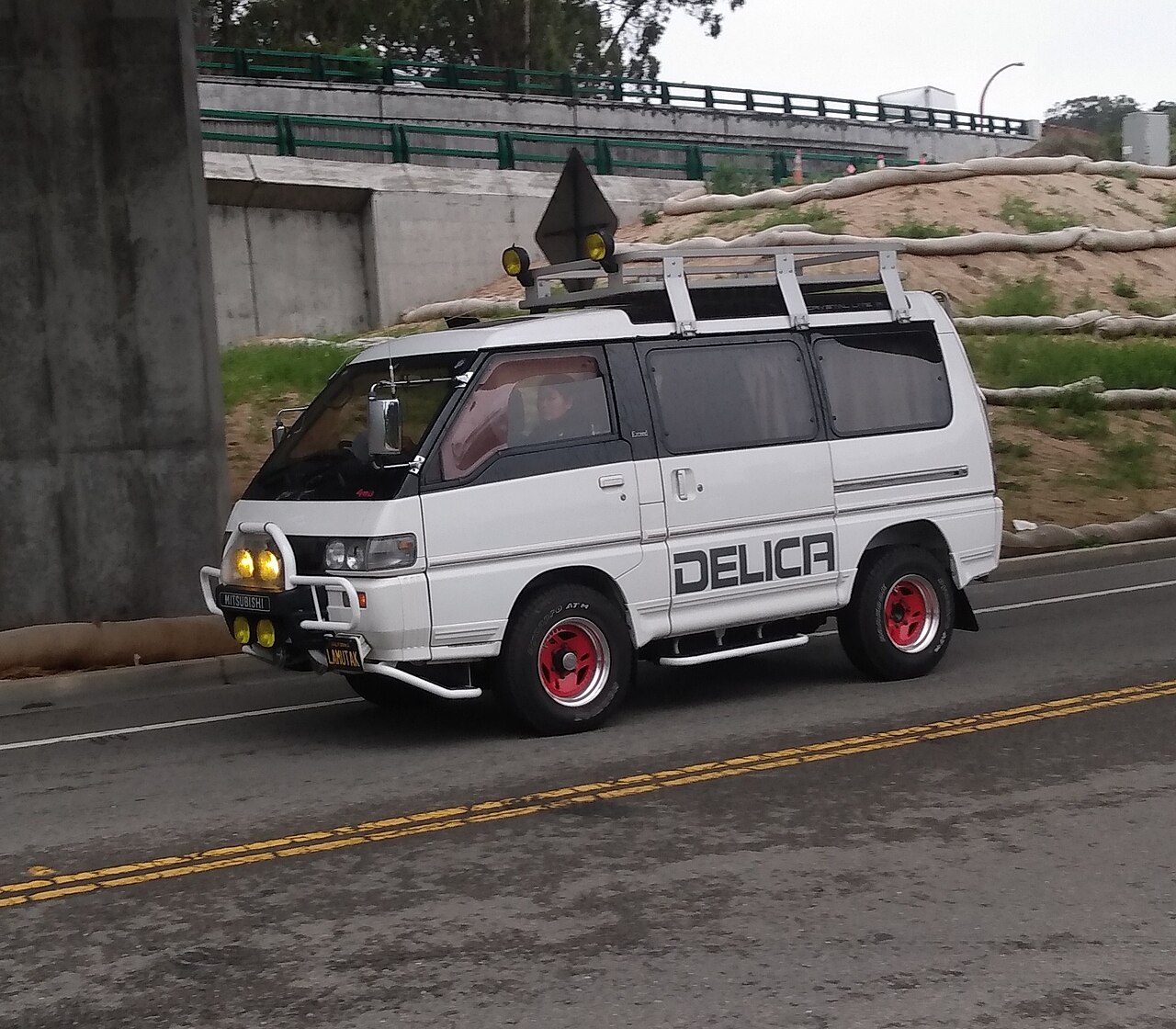
The Toyota HiAce, covered in the previous guide, isn’t the only Japanese van that’s earned genuine cult status among overlanders and adventure travelers worldwide. Mitsubishi’s Delica has arguably built an even more devoted international following, particularly across the UK and Australia, thanks to a genuinely unusual combination of quirky, boxy styling and real off-road capability rarely matched by conventional vans. This guide explains the Delica’s history and why it’s become such a beloved adventure vehicle.
📋 What You’ll Learn in This Guide
- The Delica’s 1968 debut as a straightforward delivery vehicle
- Mitsubishi’s genuinely revolutionary 1982 fusion of commercial 4WD and leisure comfort
- The specific generations import buyers most commonly seek: L300 and L400 Space Gear
- Why the Delica’s low-range transfer case sets it apart from conventional vans
- The modern Delica D:5’s role continuing this off-road-capable van tradition
- From “Delivery Car” to Cult Classic
- Mitsubishi’s Genuinely Revolutionary 1982 Innovation
- The Third-Generation Shift and Growing RV Market Appeal
- The Two Generations Import Buyers Seek Most
- A Genuinely Flexible Interior Layout
- The Modern Delica D:5: Continuing the Tradition
- Delica Versus HiAce: Two Different Overlanding Philosophies
- The Delica’s Distinctive Styling as Part of the Appeal
- Frequently Asked Questions
- Final Thoughts
From “Delivery Car” to Cult Classic
The Delica’s name is genuinely a contraction of “Delivery Car,” reflecting the model’s straightforward original purpose when it debuted in 1968 as a commercial vehicle designed to transport domestic goods across Japan. This humble, purely functional commercial origin makes the Delica’s eventual transformation into a genuinely beloved international cult vehicle among overlanders and van lifers all the more remarkable — few vehicles conceived purely for delivery duty go on to develop the kind of devoted adventure-travel enthusiast following the Delica has genuinely achieved decades later.
Mitsubishi’s Genuinely Revolutionary 1982 Innovation
In 1982, Mitsubishi made a decision that would fundamentally reshape the Delica’s identity: integrating the four-wheel-drive capability typical of a commercial vehicle with the genuine comfort and refinement expected of a leisure-oriented passenger vehicle. This particular generation offered a genuinely broad range of gas and turbo diesel engine options, paired with either a four-speed automatic or five-speed manual transmission, rear- or four-wheel drive, a two-speed transfer case, and roughly five inches of ground clearance specifically engineered to support genuine off-road capability rather than merely cosmetic rugged styling.
💡 Tip
The Delica’s specific combination of a two-speed transfer case and genuine low-range gearing is precisely what separates it mechanically from many conventional passenger vans that offer all-wheel drive purely for improved traction on paved or lightly graded surfaces — low-range gearing specifically supports the kind of steep, technical off-road climbing that genuine overlanding and adventure travel routes frequently require.
The Third-Generation Shift and Growing RV Market Appeal
The third-generation Delica, which debuted in 1986 with a unibody construction, was specifically designed to satisfy Japan’s growing domestic recreational vehicle market, alongside genuine additional appeal in markets like Australia where off-road-capable leisure vehicles held particular appeal. This generation’s design choices reflected Mitsubishi’s genuine recognition that the Delica’s off-road-capable, comfort-oriented formula had real, growing commercial appeal well beyond its original purely commercial delivery-vehicle purpose.
The Two Generations Import Buyers Seek Most
Among overseas JDM import buyers specifically, two particular Delica generations have emerged as the genuinely most sought after: the L300 (produced 1986-1999), a cab-over design powered by the 4D56 turbodiesel engine, and the L400 Space Gear (produced 1994-2007), a semi-bonneted design powered by the 4M40 turbodiesel and featuring the Super Select 4WD system shared with Mitsubishi’s own Pajero SUV. Each generation offers a genuinely somewhat different balance of cab-over space efficiency versus more conventional bonneted crash-protection characteristics, giving import buyers a real, meaningful choice depending on their specific priorities for a given build.
⚠️ Caution
Don’t assume every Delica generation and trim level offers identical off-road capability and mechanical specifications — the specific transfer case, drivetrain, and 4WD system details genuinely vary across the Delica’s production history, so confirming the exact generation and specification of a given vehicle matters considerably for anyone specifically seeking the genuine off-road capability this guide describes, rather than assuming any Delica automatically delivers the same mechanical formula regardless of year or trim.
A Genuinely Flexible Interior Layout
Beyond its off-road mechanical credentials, the Delica has earned genuine praise for an interior layout flexibility that modern purpose-built camper vans reportedly still struggle to replicate without resorting to expensive, extensive aftermarket conversion work. This inherent layout versatility — supporting a genuinely wide range of seating, sleeping, and storage configurations directly from relatively modest factory or lightly modified starting points — has been a genuinely significant contributing factor to the Delica’s specific appeal among overlanders and van lifers seeking a capable, adaptable base vehicle without necessarily committing to a full custom camper conversion build.
The Modern Delica D:5: Continuing the Tradition
The fifth-generation Delica, badged D:5, launched in 2007 and has continued the nameplate’s core formula of genuine comfort paired with real off-road and on-road versatility, updated for contemporary buyers while maintaining the fundamental character that built the Delica’s cult reputation in the first place. Mitsubishi has continued periodically updating and toughening the D:5 in subsequent years, reflecting the manufacturer’s ongoing recognition that this specific formula — quirky, capable, genuinely versatile — remains a meaningfully differentiated proposition within a broader van and minivan market increasingly dominated by more conventionally styled, road-focused offerings that rarely prioritize genuine off-road capability at all.
Image credit: 1993 Mitsubishi Delica L300 Exceed Turbo Diesel 4WD by DestinationFearFan (CC BY-SA 4.0), via Wikimedia Commons
Delica Versus HiAce: Two Different Overlanding Philosophies
Comparing the Delica against the HiAce covered in the previous guide reveals two genuinely distinct approaches to Japanese van-based overlanding that appeal to somewhat different priorities. The HiAce generally emphasizes maximum interior space efficiency and proven commercial-grade durability, while the Delica leans further into dedicated, purpose-built off-road engineering (particularly its low-range transfer case and Super Select 4WD heritage shared with the Pajero) alongside its genuinely distinctive, characterful styling. Neither approach is objectively superior — the right choice between them genuinely depends on whether a given buyer prioritizes maximum cargo and living space or more dedicated off-road technical capability for their specific intended use and travel style.
The Delica’s Distinctive Styling as Part of the Appeal
Beyond pure mechanical capability, the Delica’s genuinely distinctive, somewhat quirky boxy styling — particularly pronounced on earlier generations — has become a meaningful part of the vehicle’s broader cult appeal, standing out clearly from more conventionally styled vans and SUVs at any overlanding meetup or adventure travel gathering. This visual distinctiveness genuinely matters to many enthusiasts within the Delica community specifically, who often cite the vehicle’s unmistakable character and personality as being just as significant to their attachment to the platform as its genuine off-road capability, a combination of practical substance and genuine visual charm that’s genuinely rare to find paired together in any single vehicle.
Frequently Asked Questions
Q: Is the Delica D:5 available for purchase outside Japan through official channels?
A: Delica D:5 availability varies by specific market and region, so confirming current official Mitsubishi sales availability for a specific country is more reliable than assuming universal international availability, particularly for markets where the Delica has historically been available primarily through JDM import channels rather than official dealer sales.
Q: How does the Delica’s off-road capability genuinely compare to a dedicated body-on-frame 4WD SUV?
A: While the Delica offers genuinely real off-road capability well beyond typical passenger vans, direct capability comparisons against a dedicated body-on-frame SUV platform depend heavily on the specific generation, drivetrain configuration, and modifications involved, so research into the specific vehicles being compared is more reliable than a general capability assumption either way.
Q: Why did the Delica become specifically popular in the UK and Australia rather than more broadly worldwide?
A: The Delica’s particular popularity concentration in markets like the UK and Australia likely reflects a combination of import regulation compatibility, existing JDM import culture infrastructure, and genuine local demand for exactly this kind of compact, off-road-capable adventure vehicle in these specific markets, rather than any single universal explanation applicable to every country’s varying popularity level.
Final Thoughts
From its humble 1968 origins as a straightforward delivery vehicle to its current cult status among overlanders and van lifers worldwide, the Mitsubishi Delica’s journey reflects a genuinely rare combination: real, substantive off-road engineering credentials paired with a distinctively quirky, endearing character that’s earned it devoted fans well beyond its original commercial purpose. Understanding this history offers real insight into why so many adventure travelers specifically seek out this particular Japanese van above more conventional alternatives, and why the Delica name continues to command such genuine loyalty and enthusiasm across international overlanding communities decades after its humble delivery-vehicle beginnings.

コメント