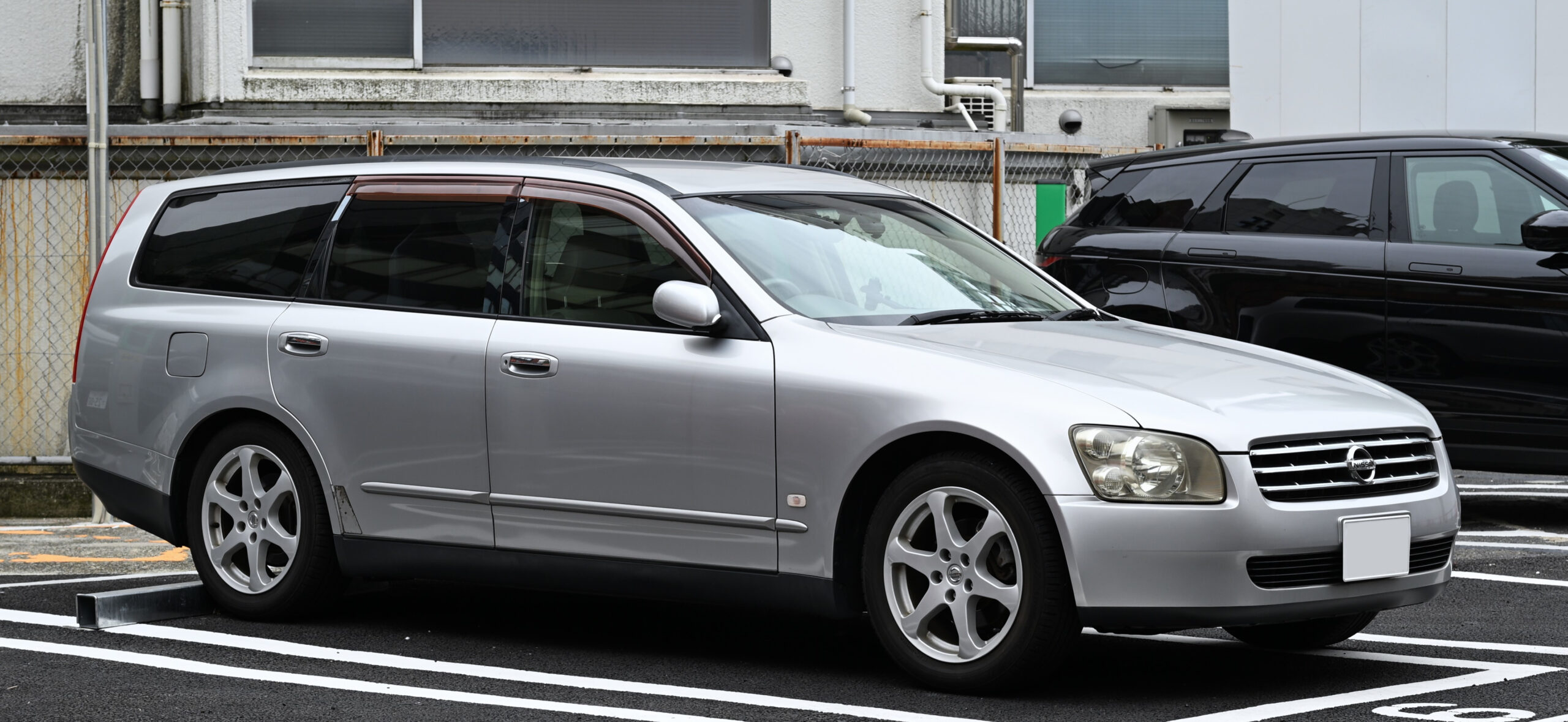
Enthusiasts often describe the first-generation Stagea (WC34) as a “Skyline estate,” and the description is more literal than marketing shorthand: built on the C34 platform from September 1996 to October 2001, it shares front and rear suspension geometry, brake hardware, and most of its drivetrain catalogue directly with the R33 Skyline sedan. In RS FOUR trim with the turbocharged RB25DET and ATTESA all-wheel drive, it’s the practical, five-door answer to “what if a Skyline could carry cargo.” This guide covers the engine lineup from base to the genuinely remarkable 260RS variant, the maintenance items the platform inherits directly from the Skyline, and what actually separates pre- and post-NEO cars.
📋 What You’ll Learn in This Guide
- Why the WC34’s Skyline-derived platform matters to how you shop it
- The engine range from RB20E up to the limited-run 260RS’s RB26DETT
- What the 1998 NEO update actually changed
- The maintenance items this platform inherits directly from the R33 Skyline
- Why the 260RS is a genuinely unique production vehicle
A Genuinely Skyline-Derived Platform, Not Just a Marketing Comparison
Most buyers specifically want the WC34 generation — RB25DET turbo power, ATTESA all-wheel drive on FOUR trims, and Skyline drivetrain hardware packaged in a practical five-door wagon body. Because the chassis genuinely shares its suspension geometry, brakes, and most of its drivetrain catalogue with the contemporary R33 Skyline sedan, shopping a Stagea means understanding it’s mechanically a Skyline underneath rather than a unique platform borrowing Skyline styling cues — which matters both for parts compatibility and for understanding its known weak points.
Engine Range: From Modest to Genuinely Remarkable
The Stagea’s engine range spans from the 2.0-liter RB20E and RB20DE at the entry level up to the 2.5-liter RB25DET turbo, rated at 235 PS in pre-NEO form and 260 PS after the 1998 NEO update. Topping the range entirely is the limited-run 1997-1998 Autech 260RS, which uses the 280 PS RB26DETT — the same engine family found in the R33 Skyline GT-R — paired with the matching ATTESA E-TS Pro all-wheel-drive hardware from the factory. This makes the 260RS the only production wagon ever built with genuine Skyline GT-R running gear, a genuinely unusual distinction worth understanding if you’re chasing that specific variant.
💡 Tip
The 1998 NEO refresh updated the RB25DE and RB25DET cylinder heads, intake manifolds, and ECU calibration, lifting output and improving emissions compliance. If output and refinement matter more to you than chasing the earliest possible example, a post-NEO RB25DET car is generally the stronger everyday choice over a pre-NEO 235 PS example.
Maintenance Items Inherited Directly From the Skyline
Because the Stagea shares its mechanical layout with the R33 Skyline, its common trouble spots follow the same pattern: RB25DET turbo seals and coilpacks age out over time and are a routine, expected maintenance item rather than a sign of unusual neglect. The ATTESA all-wheel-drive system specifically needs the correct fluid changed on a real, documented schedule — this is a genuine maintenance requirement, not a “nice to have,” since the system’s clutch packs and hydraulics depend on fluid condition to function correctly.
What to Verify Before Buying
Ask directly for documentation of ATTESA fluid service intervals, since this is easy for an inattentive owner to neglect and expensive to address after the fact if wear has already occurred. On RB25DET-powered cars, listen for smooth turbo spool without unusual noise, and check coilpack condition and spark consistency across cylinders, since aging coilpacks are a well-known wear item on this engine family.
⚠️ Caution
If you’re specifically shopping for a 260RS, verify its authenticity carefully given how limited the production run was and how visually similar a well-modified standard RS FOUR could potentially be made to look. Confirm the RB26DETT engine and ATTESA E-TS Pro hardware are genuinely factory-original to that specific chassis, not a later swap presented as an original 260RS.
What Drives Pricing Today?
Genuine 260RS examples command a significant premium given their rarity and direct GT-R mechanical connection, followed by post-NEO RB25DET RS FOUR cars with documented ATTESA maintenance. The Stagea’s practicality as a five-door wagon with genuine Skyline performance DNA gives it a distinct appeal compared to the sedan and coupe Skylines it shares its underpinnings with — a real consideration if you want Skyline character with more everyday usability.
Frequently Asked Questions
Q: Is the RS FOUR’s ATTESA AWD system expensive to maintain?
A: It’s not inherently expensive, but it is genuinely maintenance-dependent — the required fluid changes are a real, non-optional service item rather than a minor recommendation, and neglecting them can lead to costlier repairs down the line.
Q: Is a standard RS FOUR a reasonable alternative if I can’t find or afford a 260RS?
A: Absolutely — a well-maintained post-NEO RB25DET RS FOUR delivers genuine Skyline-derived performance and all-wheel-drive capability in a more practical body, at a meaningfully lower price point and with a much larger pool of available examples than the extremely limited 260RS.
Final Thoughts
The Stagea RS FOUR’s genuine mechanical connection to the Skyline lineup — right up to the 260RS’s literal GT-R running gear — makes it a distinctive choice for buyers who want that performance character in a more practical package. Prioritize documented ATTESA maintenance, verify 260RS authenticity carefully if that’s your target, and understand you’re essentially buying Skyline mechanicals with extra cargo space. Get that right, and the Stagea remains one of the more genuinely interesting practical performance wagons to come out of 1990s Japan.
コメント