Anyone who’s owned a car in more than one country quickly learns that “vehicle inspection” means wildly different things depending on where you are. A US driver in a state with no inspection requirement at all, a UK driver used to the annual MOT, a German driver navigating the notoriously thorough TÜV, and a Japanese driver dealing with shaken are all technically doing “the same thing” — proving their car is safe and legal to keep driving — but the actual experience, cost, and rigor involved can differ enormously. This guide places Japan’s shaken system (covered in full detail in our dedicated shaken guide) side by side with its rough Western equivalents, so you can understand exactly how it compares.
📋 What You’ll Learn in This Guide
- How shaken’s frequency and scope compares to the UK’s MOT and Germany’s TÜV
- Why the US has no single national standard at all
- Why shaken is widely considered one of the world’s strictest and most expensive systems
- How each system’s design shapes local used car markets differently
- What this means for a car you’re importing from Japan
Japan’s Shaken: Comprehensive and Expensive
Shaken applies to a new car for the first time three years after initial registration, then recurs every two years for the life of the vehicle. It’s a genuinely comprehensive inspection covering safety systems, emissions, and general roadworthiness, and it’s regularly cited as one of the strictest and most expensive vehicle inspection regimes anywhere in the world — the combined cost of the inspection itself, any required repairs to pass, and associated taxes and mandatory insurance renewal can easily run into several hundred dollars or more, particularly for an older vehicle needing meaningful repair work to clear the inspection. This cost structure has a direct, well-documented market effect: many Japanese owners choose to sell or trade in a vehicle rather than pay for an increasingly expensive shaken renewal on an aging car, which is a major reason the Japanese used export market stays so consistently well-stocked with relatively young, well-maintained vehicles.
The UK’s MOT: Annual, Narrower in Scope
The UK’s MOT test applies annually to most vehicles once they reach three years old, making it more frequent than shaken (every year versus every two years) but generally narrower and less expensive per test. The MOT focuses primarily on safety-critical items — brakes, tires, lights, suspension, structural corrosion, emissions — without the broader administrative bundling of taxes and comprehensive vehicle history review that characterizes the Japanese system. A typical MOT test costs a small fraction of a typical shaken renewal, though the annual frequency means the cumulative long-term cost gap between the two systems is narrower than the per-test price difference alone might suggest.
Germany’s TÜV: Thorough and Highly Regarded
Germany’s inspection system, commonly referred to by the name of the historical inspection body TÜV (though several accredited organizations now perform it), consists of two main components: the Hauptuntersuchung (HU), a general safety and roadworthiness inspection, and the Abgasuntersuchung (AU), a dedicated emissions test. Like shaken, German inspections recur every two years for most vehicles, and the system is widely regarded internationally as one of the more rigorous and technically thorough inspection regimes, with a well-earned reputation for genuinely comprehensive mechanical and safety scrutiny. Cost and strictness put it in a similar conversation to shaken, though the underlying philosophy differs somewhat — Germany’s system is built primarily around safety and environmental compliance, while Japan’s shaken bundles in a broader set of administrative and tax functions alongside the safety inspection itself.
💡 Tip
If you’re importing a car from Japan and comparing it mentally to what you’d expect from a TÜV-passed German car or a UK MOT-passed car, keep in mind that a vehicle that recently passed shaken has cleared a genuinely comprehensive, well-regarded inspection standard — this is a meaningful positive signal about the car’s baseline mechanical condition at the time of that inspection, not just paperwork. That said, always still check how much time has elapsed since the car’s last shaken pass and confirm current condition independently, since shaken status alone doesn’t tell you about wear accumulated afterward.
The United States: No Single National Standard
The US stands apart from Japan, the UK, and Germany by having no unified national vehicle inspection requirement at all — inspection rules are set state by state, and the resulting patchwork is genuinely dramatic. A meaningful number of US states have no periodic safety inspection requirement whatsoever, while others maintain their own testing programs of varying scope, frequency, and cost, and emissions testing requirements follow their own separate, equally inconsistent state-by-state pattern layered on top. This means there’s no single meaningful “shaken equivalent” figure for the US as a whole — the honest comparison depends entirely on which specific state you’re comparing against, and the range runs from essentially no periodic inspection at all in some states to programs that, while still generally less comprehensive than shaken or TÜV, approach a comparable level of scrutiny in others.
How Each System Shapes Its Local Used Car Market
These structural differences ripple outward into genuinely different used car market characteristics in each country. Japan’s expensive, comprehensive shaken creates strong financial pressure toward relatively frequent vehicle turnover, feeding a robust, well-documented used and export market of comparatively young, well-maintained cars. Countries or US states with minimal or no inspection requirements tend to see the opposite pattern — vehicles staying on the road considerably longer regardless of their actual mechanical condition, since there’s no periodic checkpoint forcing an owner to either repair a deteriorating car or give it up. This is a genuinely important underlying reason why “average vehicle age on the road” varies so much between countries, and it’s part of why Japan’s used export market has built such a strong global reputation for well-documented, relatively young, mechanically sound vehicles.
⚠️ Caution
Don’t assume that because you’re importing a car from a country with a rigorous inspection system, it will automatically pass your own country’s or state’s inspection requirements without issue. Import modifications, headlight aiming and beam pattern differences (particularly relevant for right-hand-drive vehicles), speedometer units, and specific safety equipment requirements can all differ enough between countries that a shaken-compliant Japanese vehicle may still need adjustments to pass inspection wherever you’re importing it to. Research your specific destination’s import and inspection requirements before assuming a clean shaken history guarantees smooth sailing elsewhere.
Australia, Canada, and Other Markets
Rounding out the international picture, Australia’s inspection requirements also vary meaningfully by state and territory rather than following a single national standard, somewhat similar to the US pattern, though several Australian states do require registration-linked safety inspections (often called a “roadworthy certificate” or “pink slip” depending on the state) particularly at the point of a used vehicle changing ownership. Canada similarly delegates inspection requirements to individual provinces, with some provinces requiring periodic testing and others relying primarily on point-of-sale or point-of-registration inspections rather than recurring periodic checks. This pattern — a handful of countries with strong, unified, genuinely rigorous national systems (Japan, Germany) contrasted against a larger group of countries that delegate inspection authority to states or provinces with widely varying results (the US, Canada, and to some extent Australia) — repeats itself in one form or another across much of the world, and it’s worth researching your own specific jurisdiction’s rules directly rather than assuming your country follows any one of these patterns uniformly.
Frequently Asked Questions
Q: Which inspection system is considered the strictest overall?
A: Japan’s shaken and Germany’s TÜV/HU-AU system are both frequently cited among the world’s most comprehensive and rigorous vehicle inspection regimes, with reasonable arguments for either depending on the specific criteria used for comparison; both stand well above the UK’s MOT and considerably above the more minimal inspection requirements found in many US states.
Q: Does a car that’s failed shaken mean it’s unsafe to drive at all?
A: A shaken failure means the vehicle doesn’t currently meet the inspection’s specific standards and generally cannot be legally driven on public roads until repaired and re-inspected, though the specific failed items can range from minor and easily fixed to more serious, so a failure alone doesn’t tell you the full severity without knowing the specific reason.
Q: Can I use a foreign inspection certificate in place of shaken if I import a car to Japan?
A: No — any vehicle registered in Japan, regardless of its country of origin or prior inspection history there, must pass Japan’s own shaken inspection to be legally registered and driven, since shaken evaluates the vehicle against Japan’s own specific safety and roadworthiness standards.
Final Thoughts
Vehicle inspection is one of those everyday regulatory systems that varies far more between countries than most drivers realize until they actually compare them side by side. Japan’s shaken stands out globally for combining genuine comprehensiveness with real financial weight, a combination that shapes the entire character of Japan’s used car market in ways that ultimately benefit overseas buyers seeking well-documented, relatively young vehicles. Understanding where shaken sits relative to the UK’s MOT, Germany’s TÜV, and the fragmented US state-by-state approach gives you a genuinely useful frame of reference, whether you’re importing a car from Japan or simply curious about how differently the world handles the basic question of keeping cars safe on the road.
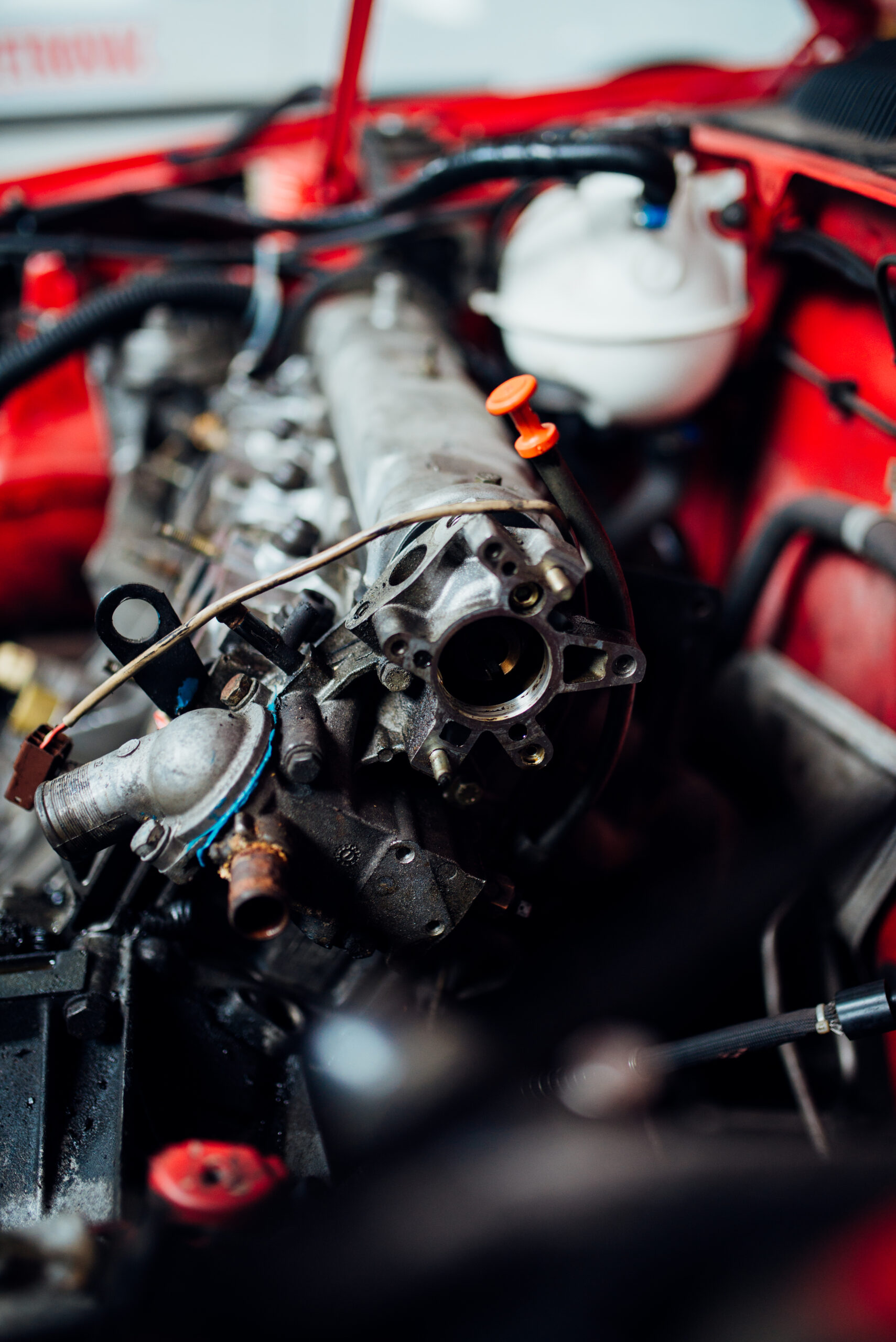
Image credit: Engine components displayed in a red car during a mechanical inspection process at a garage.jpg by Shixart1985, CC BY 2.0, via Wikimedia Commons
コメント