📋 Summary
- Mazda’s rotary engines rely on a factory oil injection system to lubricate the apex seals, and many experienced owners also add extra two-stroke oil directly to the fuel, a practice called premixing, for additional protection
- Compression testing is the standard first diagnostic step for any rotary running issue, since apex seal wear directly affects each rotor housing’s compression and is a leading indicator of an engine’s remaining service life
- The RX-8’s Renesis engine has its own specific lubrication challenges, particularly on early Series 1 cars, which lack a center oil injector on each rotor housing
- With disciplined maintenance, non-turbocharged rotary engines can commonly reach well over 100,000 miles before needing a rebuild, though turbocharged applications generally require more frequent oil changes and shorter realistic service intervals
Rotary engines operate on fundamentally different mechanical principles than the piston engines most owners are used to, and that difference extends directly into how they should actually be maintained. Understanding a few rotary-specific concepts, apex seal lubrication, compression behavior, and the particular quirks of specific engine generations, goes a long way toward keeping one of these genuinely unique engines running for the long haul.
- Apex Seals and Why Oil Injection Matters So Much
- The RX-8’s Renesis: A Different Lubrication Challenge
- Oil Changes and Realistic Service Life Expectations
- Why Understanding These Basics Matters for Buyers, Too
- Spark Plugs and Ignition Health: More Consequential Than on a Piston Engine
- Recognizing Early Warning Signs
- Frequently Asked Questions
Apex Seals and Why Oil Injection Matters So Much
At the heart of rotary maintenance sits the apex seal, a component that performs a role broadly comparable to piston rings in a conventional engine, sealing each combustion chamber as the rotor spins within its housing. Mazda’s rotary engines include a factory-designed oil injection system that continuously delivers a small, metered amount of oil directly into each combustion chamber specifically to lubricate these apex seals as they slide against the rotor housing surface. This oil serves a genuinely dual purpose: it lubricates the seal to reduce friction and wear, and it also assists with sealing itself, meaning oil delivery issues can directly affect both engine longevity and immediate compression performance.
Because this lubrication system is so central to rotary durability, many experienced rotary owners also practice premixing, adding a measured amount of two-stroke oil directly into the fuel tank at every fill-up, essentially treating the engine somewhat like a two-stroke design for additional apex seal protection beyond what the factory oil injection system alone provides. Street-driven engines commonly use a premix ratio somewhere in the range of 100:1 to 150:1, though the appropriate specific ratio can vary based on the exact engine, its condition, and how aggressively it’s driven.
💡 Tip: Compression Testing Should Be Your First Diagnostic Step
For almost any rotary engine running issue, a compression test should be the first diagnostic step, since it directly reveals apex seal condition and overall rotor housing health. Testing involves inserting a compression gauge into a leading spark plug hole and cranking the engine long enough to register at least eight compression pulses per rotor housing, since a rotary produces multiple compression events per rotation that a standard piston-engine compression test procedure doesn’t account for. Understanding your specific engine’s healthy compression range, and testing periodically even without an obvious symptom, can help catch developing apex seal wear before it becomes a more serious, expensive problem.
The RX-8’s Renesis: A Different Lubrication Challenge
The RX-8’s Renesis rotary engine introduces its own specific maintenance considerations distinct from earlier rotary designs like those found in the RX-7. Early Series 1 RX-8 engines specifically lack a center oil injector on each rotor housing, meaning the middle section of each apex seal receives comparatively less direct lubrication from the factory system than the edges do, a design characteristic widely identified as a contributing factor in earlier apex seal failures on affected engines. Cold starts, frequent short trips, and weak ignition conditions can compound this issue further through a phenomenon commonly called bore wash, where unburned fuel lingering in the combustion chamber actually washes protective oil off the seal faces rather than letting it do its job.
For RX-8 owners specifically, this makes disciplined maintenance habits, allowing the engine to properly warm up, avoiding excessive short-trip driving where possible, and maintaining a healthy ignition system, genuinely more consequential for long-term reliability than they might be on a conventional piston engine, where these same habits matter but with somewhat less dramatic consequences.
Oil Changes and Realistic Service Life Expectations
Rotary engines generally require more frequent oil changes than comparable piston engines, reflecting both the oil injection system’s continuous consumption and the engine’s overall sensitivity to oil condition. A commonly cited interval for naturally aspirated street-driven rotary engines is roughly every 2,500 to 3,000 miles or every three months, whichever comes first, considerably more frequent than typical modern piston engine recommendations.
With this level of disciplined maintenance, naturally aspirated rotary engines have commonly been reported to reach somewhere in the range of 100,000 to 200,000 miles before apex seal wear meaningfully affects compression enough to require a rebuild, while turbocharged rotary applications, which place additional thermal and mechanical stress on the same components, more commonly see realistic rebuild intervals closer to 60,000 miles or somewhat beyond, depending heavily on tuning, boost levels, and maintenance discipline.
⚠️ Caution: Don’t Assume Every Rotary Follows the Same Maintenance Rules
Rotary engine specifications, maintenance intervals, and known failure patterns vary meaningfully between different generations and specific models, including differences between naturally aspirated and turbocharged variants, and between the RX-7’s various rotary generations and the RX-8’s Renesis design specifically. Generic maintenance advice found online does not always transfer directly between these different rotary applications. Always research maintenance guidance specific to your exact engine generation and configuration, ideally from an established rotary specialist, rather than assuming all rotary engines share identical service requirements.
Why Understanding These Basics Matters for Buyers, Too
Beyond ongoing ownership, understanding these fundamental rotary maintenance concepts is genuinely important when evaluating a used rotary-powered car for purchase. A seller’s ability to produce documented, regular oil change history, honest disclosure of premixing habits, and recent compression test results can tell a prospective buyer far more about a rotary engine’s actual remaining service life than mileage alone typically would on a comparable piston-engine car, making these rotary-specific maintenance concepts just as relevant to buying decisions as to long-term ownership.
Spark Plugs and Ignition Health: More Consequential Than on a Piston Engine
Rotary engines are notably more sensitive to spark plug condition and ignition system health than typical piston engines, partly because a rotary’s unique combustion chamber shape and the presence of oil injection directly into that chamber makes plug fouling a more common and more consequential issue. Weak ignition output, worn plugs, or failing coil packs can contribute directly to the bore wash phenomenon described earlier, where incomplete combustion leaves unburned fuel that strips protective oil from the apex seal surface, compounding wear rather than simply causing a minor performance issue as it might on a conventional engine.
Many rotary owners and specialists recommend replacing spark plugs more frequently than a typical piston-engine maintenance schedule would call for, and treating any ignition-related misfire or rough idle symptom as a priority to address quickly rather than something to defer, given the more direct connection between ignition health and long-term apex seal condition in a rotary application.
Recognizing Early Warning Signs
Beyond scheduled maintenance, learning to recognize early rotary-specific warning signs can help an owner catch developing issues before they become expensive rebuilds. A gradual decline in idle quality, increased white or blue-tinted exhaust smoke beyond what’s normal for a healthy rotary’s characteristic light oil-burning smell, difficulty starting when cold, or a noticeable loss of low-end power can all indicate developing apex seal wear or compression loss in one or more rotor housings. Because rotary engines can sometimes continue running, if roughly, even with meaningfully degraded compression in one housing, these gradual symptoms are easy to normalize or dismiss rather than investigate promptly, making periodic compression testing a genuinely valuable proactive habit rather than something reserved purely for troubleshooting an active problem.
Frequently Asked Questions
Q: What is premixing, and why do rotary owners do it?
A: Premixing means adding two-stroke oil directly to the fuel tank at each fill-up, providing extra lubrication to the apex seals beyond what the factory oil injection system alone delivers. Street-driven engines commonly use a ratio somewhere between 100:1 and 150:1.
Q: Why is compression testing so important for rotary engines?
A: Compression directly reflects apex seal condition, making a compression test the standard first diagnostic step for rotary running issues and a useful periodic health check even without obvious symptoms.
Q: What lubrication issue is specific to early RX-8 engines?
A: Series 1 RX-8 Renesis engines lack a center oil injector on each rotor housing, leaving the middle of each apex seal comparatively under-lubricated, a factor widely identified in earlier apex seal failures.
Q: How often should rotary engine oil be changed?
A: A commonly cited interval for naturally aspirated street-driven rotary engines is roughly every 2,500 to 3,000 miles or every three months, more frequent than typical piston engine recommendations.
Q: How long can a rotary engine realistically last before needing a rebuild?
A: With disciplined maintenance, naturally aspirated rotary engines have commonly reached 100,000 to 200,000 miles, while turbocharged applications more commonly see realistic rebuild intervals closer to 60,000 miles or somewhat beyond, depending on tuning and maintenance.
This article is for general informational purposes and reflects commonly cited rotary maintenance practices. Specific intervals and specifications vary by engine generation and configuration – always consult a qualified rotary specialist and your specific engine’s documentation before performing maintenance.
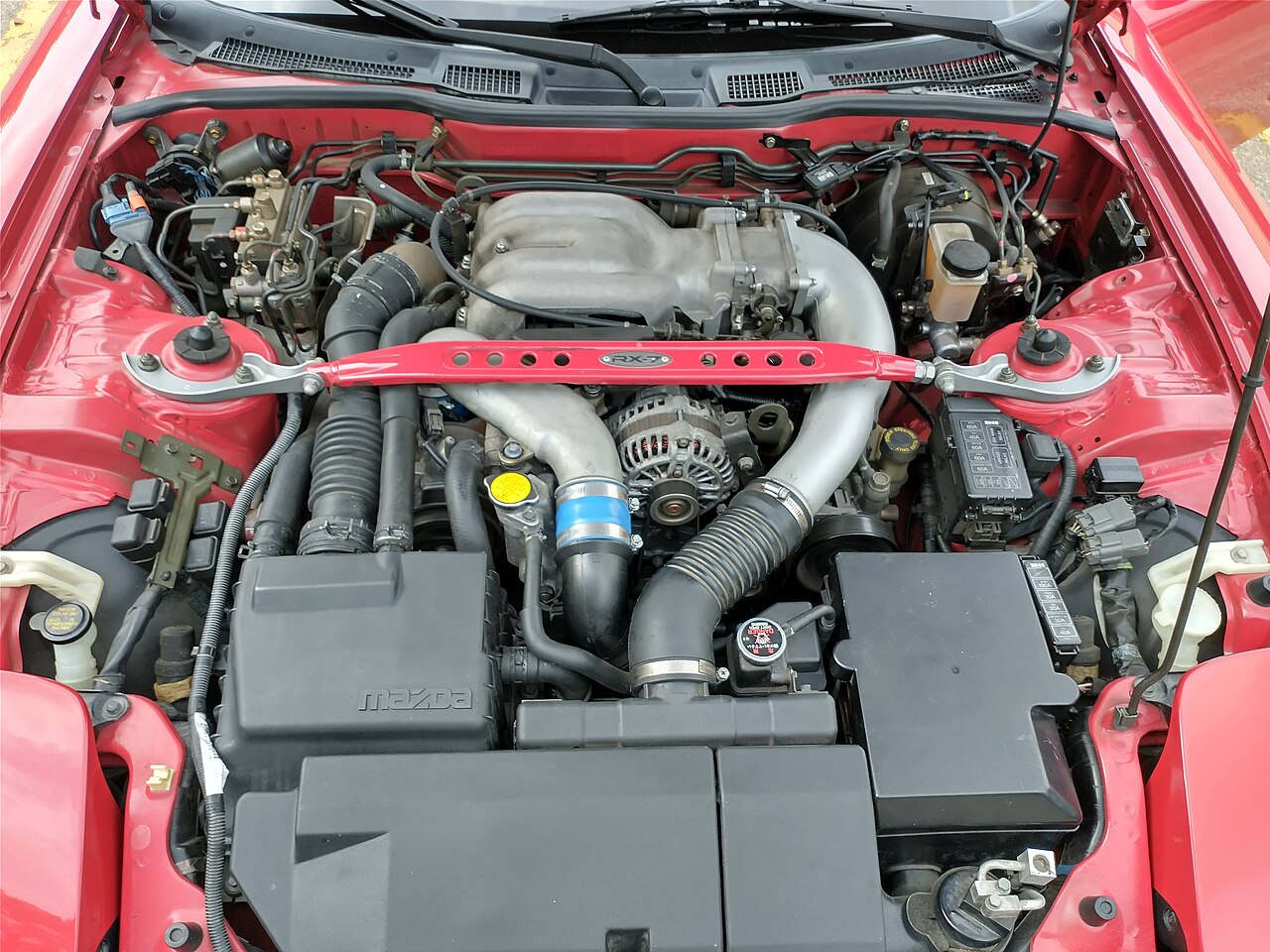
Image credit: Mazda 13B-REW rotary engine by C0rbin99, CC BY-SA 4.0, via Wikimedia Commons

コメント