Hybrid vehicles feel like a mature, unremarkable part of the automotive landscape today, but it’s worth remembering that mass-produced gasoline-electric hybrids didn’t really exist as a viable consumer product before Japanese manufacturers made them one. The hybrid concept itself is genuinely old — vehicles combining an internal combustion engine with an electric motor date back over a century — but turning that concept into something a mainstream buyer could actually purchase, service, and rely on took a specific, well-documented engineering push from Toyota and Honda in the late 1990s. This guide traces exactly how that happened, and how it reshaped the entire global auto industry.
📋 What You’ll Learn in This Guide
- Why the hybrid concept existed long before it became practical
- How Toyota’s Prius became the first mass-produced hybrid in 1997
- How Honda’s Insight raced to compete just two years later
- How the “Prius vs. Insight” rivalry played out, and why Toyota pulled ahead
- Why hybrids remain so dominant in Japan’s market today
- An Old Idea, Waiting for the Right Engineering
- Toyota’s Prius: The World’s First Mass-Produced Hybrid
- Honda’s Insight: A Fast-Following Rival
- Why the Prius Ultimately Won the Early Hybrid Race
- Why Hybrids Remain So Dominant in Japan Today
- How Hybrid Systems Have Evolved Since the Original Prius and Insight
- Frequently Asked Questions
- Final Thoughts
An Old Idea, Waiting for the Right Engineering
The basic idea of combining a combustion engine with an electric motor in a single vehicle isn’t new — early hybrid vehicles date back to around 1898, decades before anyone had solved the practical engineering problems needed to make the combination genuinely useful rather than a curiosity. Batteries, power electronics, and control systems capable of intelligently managing power flow between an engine and electric motor in real time simply weren’t mature enough for most of the 20th century to make a hybrid vehicle practical, reliable, or affordable to mass-produce. That changed in the 1990s, when a specific, deliberate Japanese engineering effort finally cracked the problem at production scale.
Toyota’s Prius: The World’s First Mass-Produced Hybrid
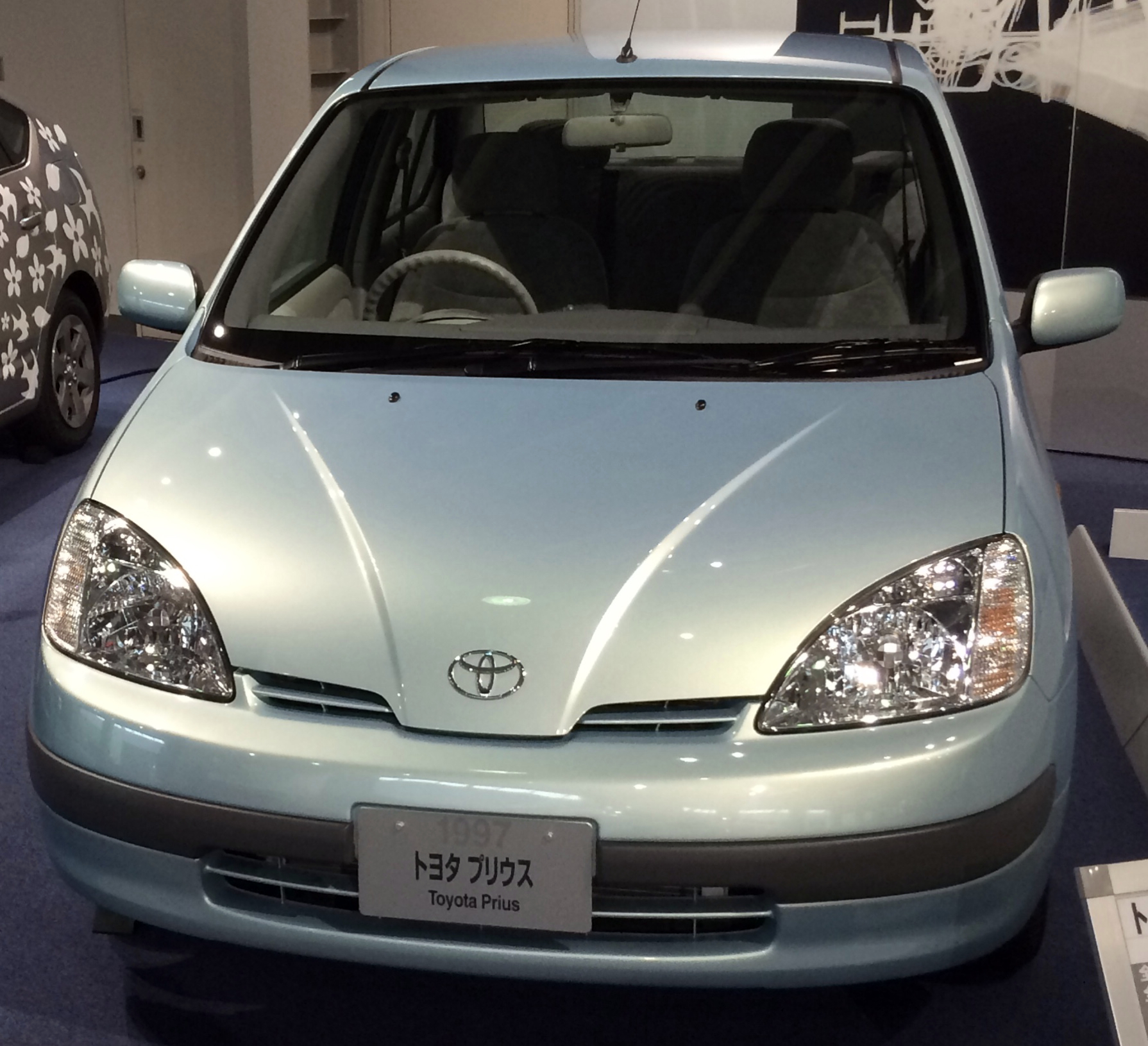
Toyota’s hybrid push began in earnest in 1993 under an internal initiative known as the G21 Project, aimed at developing a genuinely next-generation vehicle for the 21st century with dramatically improved fuel efficiency. Engineers pursued an unusually compressed development timeline of roughly four and a half years, and in March 1997 Toyota unveiled the Toyota Hybrid System (THS) — an integrated arrangement of an electric motor, generator, and power-split device that combined series and parallel hybrid operation in a single system, allowing the vehicle to intelligently blend gasoline and electric power (and recover energy during braking that would otherwise simply be lost as heat). In October 1997, this system reached the market in the first-generation Toyota Prius, launched in Japan as the world’s first mass-produced hybrid passenger vehicle — a genuine engineering milestone, not just a marketing claim, and one that’s since been formally recognized by international engineering historical bodies as a landmark achievement.
Honda’s Insight: A Fast-Following Rival
Honda wasn’t far behind. In 1999, Honda launched the Insight, built around its own Integrated Motor Assist (IMA) parallel hybrid system — a technically different approach from Toyota’s series-parallel THS, but aimed at the same fundamental goal of dramatically improved fuel efficiency through electric assistance. In a detail that genuinely surprises people today given how thoroughly the Prius came to dominate hybrid brand recognition, the Insight actually beat the Prius to the US market by several months, going on sale there in December 1999, with the Prius following roughly half a year later. The original Insight was a genuinely remarkable efficiency achievement for its era, an ultra-lightweight two-seater capable of approaching 70 miles per gallon under the right conditions.
💡 Tip
If you’re interested in hybrid history specifically rather than just buying a modern hybrid, an early Toyota Prius (first or second generation) or original Honda Insight makes for a genuinely fascinating and increasingly collectible piece of automotive history — both represent real engineering milestones rather than incremental updates, and interest in these early hybrid pioneers has grown noticeably among enthusiasts in recent years as their genuine historical significance has become more widely appreciated.
Why the Prius Ultimately Won the Early Hybrid Race
Despite Honda’s early market timing advantage and initial strong Japanese sales momentum for the Insight, the Prius ultimately pulled decisively ahead in the broader public consciousness and sales figures over the following years. Much of this came down to practicality: the original Insight was a lightweight two-seat coupe optimized heavily around efficiency, while the Prius offered a genuinely usable four-door, four-to-five-passenger sedan format with real cargo space — a far easier sell to mainstream family buyers who needed a practical daily vehicle rather than an efficiency-focused specialty car. Honda would later expand the Insight into more conventional sedan body styles in subsequent generations, but by then “Prius” had already become something close to a generic public shorthand for “hybrid car” in many markets, a branding advantage that proved difficult for any competitor, including Honda’s later, more practical hybrid offerings, to fully overcome.
Why Hybrids Remain So Dominant in Japan Today
Nearly three decades after the Prius launched, hybrid vehicles remain a genuinely dominant force in Japan’s domestic new car market in a way that’s more pronounced than in many other countries. Hybrid market share in Japan has grown substantially over the past several years, commonly representing well over a third of new vehicle sales in recent years, reflecting both the deep engineering head start Japanese manufacturers built up over decades of hybrid refinement and a Japanese consumer base that’s long been genuinely receptive to fuel-efficient technology given the country’s relatively high fuel costs and dense urban driving conditions. Toyota alone now produces well over a million hybrid vehicles annually just within Japan, with stated plans to expand that figure substantially further in the coming years — a scale of hybrid manufacturing expertise that took genuine decades to build and remains a meaningful competitive advantage for Japanese automakers globally.
⚠️ Caution
If you’re buying a used Japanese hybrid, whether domestically or as an import, always ask specifically about hybrid battery health and replacement history, since this is the one component genuinely unique to hybrid ownership that a buyer unfamiliar with the technology might overlook. Modern hybrid batteries from major Japanese manufacturers have generally proven considerably more durable than early skeptics predicted, but battery condition still meaningfully affects both performance and resale value, and it’s worth confirming rather than assuming.
How Hybrid Systems Have Evolved Since the Original Prius and Insight
The gap between a 1997 Prius and a current-generation Toyota or Honda hybrid is enormous, even though the underlying core principle — an engine and electric motor working together, intelligently managed by onboard control systems — remains conceptually the same. Modern Toyota Hybrid System generations have grown dramatically more efficient and powerful, with improvements in battery chemistry (moving from older nickel-metal hydride designs toward more advanced options in newer models), power electronics, and motor design all compounding over successive generations. Honda’s hybrid systems have similarly evolved well beyond the original IMA architecture into more sophisticated multi-motor hybrid designs used across its current lineup. What started as a genuinely experimental, first-of-its-kind production system in the late 1990s has matured into a thoroughly refined, extensively road-tested technology with literally decades of real-world reliability data behind it — a track record that arguably represents Japanese manufacturers’ most durable and defensible technical advantage in the broader shift toward vehicle electrification worldwide.
Frequently Asked Questions
Q: Did any non-Japanese manufacturer come close to matching this early hybrid push?
A: Not at comparable scale during the same period. While hybrid concepts and prototypes existed elsewhere, no other manufacturer brought a genuinely mass-produced hybrid to market at the same time or scale as Toyota and Honda did in 1997 and 1999 respectively, which is a major reason Japanese manufacturers built such a durable, lasting reputation and technical lead in hybrid engineering.
Q: Is hybrid technology considered a stepping stone to full EVs, or a separate long-term category?
A: Both, depending on the manufacturer and market. Some automakers treat hybrids primarily as a transitional bridge technology toward full electrification, while Japanese manufacturers in particular have continued investing heavily in hybrids as a genuinely long-term, standalone category, reflecting both strong ongoing consumer demand and practical advantages in markets where charging infrastructure remains less developed than in EV-focused regions.
Q: Are plug-in hybrids (PHEVs) part of this same original technology lineage?
A: Yes, broadly — plug-in hybrids build directly on the core hybrid engineering (an engine paired with an electric motor and battery) pioneered in these original systems, adding a larger battery and external charging capability on top of the same fundamental hybrid architecture Toyota and Honda established in the late 1990s.
Final Thoughts
The modern hybrid vehicle, now a completely mainstream, unremarkable part of car shopping in most of the world, exists in its current practical form because of a specific, deliberate, remarkably fast engineering push by Toyota and Honda in the late 1990s — one that turned a century-old concept into a genuinely reliable, mass-producible technology within just a few years of intense development. That pioneering effort still shapes the global auto industry today, both in the specific hybrid systems still found in millions of Japanese-market vehicles and in the broader hybrid dominance that continues to define Japan’s domestic new car market more than any other major automotive market in the world.
Image credit: 1997 Toyota Prius NHW10 at the Toyota Automobile Museum by Ghostofakina (CC BY-SA 4.0), via Wikimedia Commons


コメント