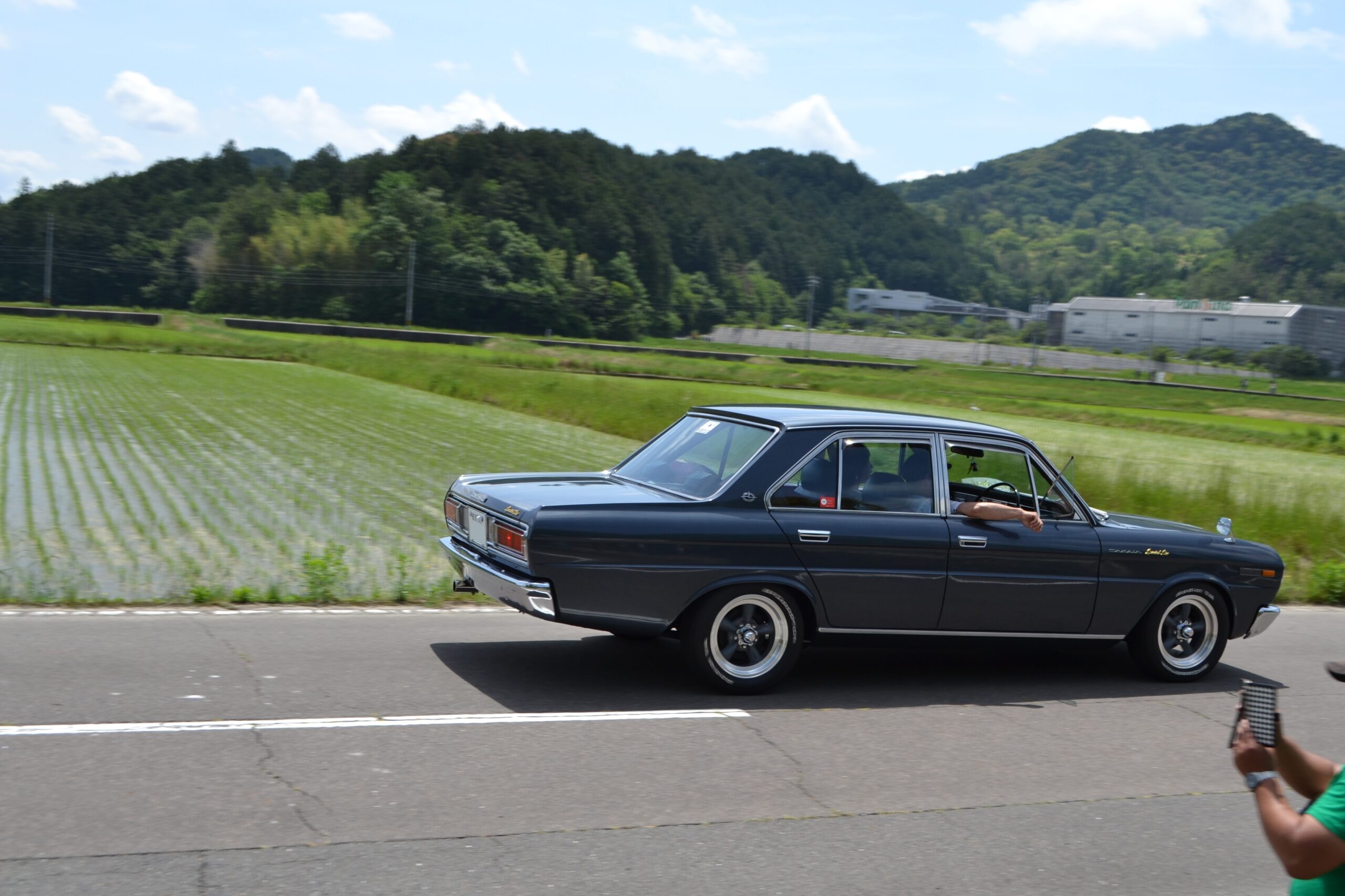
Owning a genuinely old car in Japan comes with a fundamentally different set of practical realities than owning one almost anywhere else in the world. Japan has no separate “historic vehicle” registration category that exempts older cars from standard requirements the way some countries do — every car on Japanese roads, regardless of age, must pass the same mandatory shaken inspection system, and in a somewhat counterintuitive twist, the tax system actually penalizes older vehicles rather than rewarding them. This guide explains how registration, inspection, and taxation actually work for a classic or vintage car in Japan, and what that means practically for anyone considering keeping or importing one.
📋 What You’ll Learn in This Guide
- Why Japan has no separate “classic car” registration category
- How the shaken inspection system applies equally to old and new cars
- The 13-year and 18-year tax surcharges that penalize older vehicles
- What “kyusha” culture actually means and how it differs from general JDM culture
- Practical realities of keeping an old car roadworthy long-term in Japan
No Historic Vehicle Exemption
Many countries offer some form of reduced-requirement “historic” or “classic” vehicle registration status once a car reaches a certain age, often coupled with reduced inspection frequency, tax breaks, or usage restrictions in exchange for lighter regulatory burden. Japan has no equivalent system. Every registered vehicle on Japanese public roads, regardless of how old or rare, must go through the same shaken (車検) inspection process as any ordinary daily-driven car, and there’s no legal path to keep an older car registered for road use while exempting it from this requirement — the only way to avoid shaken entirely is to keep the car permanently off public roads, such as in a private collection or museum setting, which removes it from any need for road registration in the first place.
How Shaken Applies to Old Cars
The shaken system requires passenger vehicles to pass inspection every two years (with a shorter initial period for brand-new cars), checking safety-critical systems including brakes, steering, lights, emissions, and structural condition. For a genuinely old car — one built decades before modern safety and emissions standards existed — passing this inspection can require real, ongoing mechanical investment, since the inspection standard doesn’t grade on a curve for the vehicle’s age. A well-preserved or properly restored kyusha can absolutely pass shaken without excessive difficulty, but a neglected example may require substantial mechanical work to bring back into compliance, and this reality is a major part of why serious kyusha ownership in Japan tends to be an active maintenance commitment rather than passive garage storage.
💡 Tip
If you’re seriously considering owning a kyusha in Japan, budgeting realistically for shaken-related mechanical work — not just the inspection fee itself but whatever repairs are needed to pass — is essential from the outset. Specialist shops experienced specifically with older Japanese vehicles exist precisely because general mechanics may be less familiar with decades-old parts, mechanical layouts, and known failure points than they are with modern cars, and using a shop with genuine kyusha experience is generally worth the extra cost for anything beyond routine maintenance.
The Age-Based Tax Surcharge System
Rather than offering tax relief for older vehicles, Japan’s automobile tax system does essentially the opposite: annual automobile tax and the weight tax paid at shaken time both increase once a vehicle passes certain age thresholds from its first registration. Gasoline vehicles generally see a surcharge — commonly cited in the range of roughly 10 to 15 percent higher annual tax — once they pass 13 years old (with diesel vehicles hitting a comparable surcharge slightly earlier, around 11 years), and the weight tax portion paid at shaken time increases further once a vehicle reaches 18 years old. These surcharges were originally introduced as a policy tool to discourage keeping older, less fuel-efficient vehicles on the road rather than as a deliberate penalty aimed at classic car ownership specifically, but the practical effect is the same regardless of intent: owning a kyusha in Japan costs more in ongoing tax than owning an equivalently priced newer car, which is worth factoring into any realistic long-term ownership budget.
⚠️ Caution
Exact surcharge percentages and thresholds are set by national tax policy and have been subject to periodic political debate and potential reform discussions, including proposals to scrap or restructure the age-based surcharge system entirely. Don’t treat any specific percentage figure as permanently fixed — verify current rates directly with Japan’s national tax authority or a qualified local tax professional before making ownership decisions based on assumed figures, since policy in this area can and does change.
What “Kyusha” Actually Means as a Culture
Kyusha (旧車, literally “old car”) refers both to genuinely vintage Japanese vehicles — typically predating the more internationally famous 1990s JDM performance car era by a decade or more — and the dedicated preservation-focused culture built around them. Unlike the modification-heavy ethos associated with some other corners of Japanese car culture, kyusha culture generally emphasizes originality, period-correct restoration, and preserving a specific slice of Japan’s early domestic automotive history that’s genuinely at risk of disappearing if enthusiasts don’t actively maintain surviving examples. This preservation focus, combined with the genuine mechanical and financial commitment required to keep a decades-old car roadworthy under Japan’s demanding shaken standards, tends to produce a kyusha ownership community that skews toward serious, knowledgeable enthusiasts rather than casual collectors.
Registering an Imported Classic
Bringing a classic or vintage car into Japan from overseas — the reverse direction from the export process covered elsewhere in this guide series — requires going through the same registration and shaken process as any imported vehicle, generally including compliance verification against Japanese safety and emissions standards that may differ meaningfully from the exporting country’s original standards. Older vehicles can face particular complications here, since certain modern emissions or safety requirements simply didn’t exist when the car was originally built, and bringing a genuinely old vehicle into full compliance can require specialist knowledge of exactly what modifications or documentation Japanese authorities will accept. Working with an import specialist experienced specifically in classic vehicle registration, rather than a general import agent, is generally worth the additional cost for anything beyond a straightforward, recent-model import.
Insurance Considerations for Old Cars
Insuring a genuinely old vehicle in Japan carries its own set of practical considerations beyond registration and tax. Standard market-value-based insurance calculations can undervalue a well-preserved or properly restored kyusha relative to what it would actually cost to replace or repair, since standard depreciation schedules assume an ordinary older car has little remaining value — a valuation approach that makes little sense for a genuinely collectible, appreciating classic. Specialist agreed-value insurance policies, which set a car’s insured value by mutual agreement at the time the policy is written rather than through standard depreciation formulas, exist specifically to address this mismatch and are worth investigating for any kyusha with genuine collector value rather than defaulting to standard market-value coverage designed for ordinary used cars.
Frequently Asked Questions
Q: Is there any way to legally keep an old car in Japan without going through shaken?
A: Yes, but only by keeping it permanently off public roads — a privately stored, non-road-registered vehicle (such as a museum piece or private collection car never driven on public streets) isn’t subject to shaken since that requirement applies specifically to vehicles registered for road use. The moment you want to drive it on public roads, shaken compliance becomes mandatory regardless of the car’s age.
Q: Do electric or hybrid conversions of classic cars get any tax benefit to offset the age surcharge?
A: Japan does offer various tax incentives for electric and hybrid vehicles generally, but how these interact with the age-based surcharge system for a converted older vehicle specifically is a nuanced question that depends on current policy and the specific nature of the conversion. Consult a qualified tax professional for guidance on your specific situation rather than assuming a general answer applies.
Q: Are parts for genuinely old kyusha models still available in Japan?
A: Availability varies enormously by specific model and popularity within the kyusha community — well-known, actively collected models tend to have a more developed aftermarket and specialist parts network, while rarer or less celebrated models can present genuine parts sourcing challenges. This is generally the single biggest practical variable in kyusha ownership cost and difficulty, and worth researching thoroughly for your specific model before committing to ownership.
Final Thoughts
Owning a kyusha in Japan is a genuinely different proposition than classic car ownership in countries with dedicated historic vehicle exemptions — there’s no regulatory shortcut, and the tax system actively works against long-term old-car ownership rather than rewarding it. That said, the same demanding standards that make kyusha ownership a real commitment are also part of why Japan’s surviving classic cars tend to be genuinely well-maintained rather than merely preserved in static, non-functional condition, which is arguably a meaningful trade-off in favor of the cars actually staying roadworthy rather than becoming garage ornaments.
Image credit: Nissan H130 Cedric Special Six (CC0), via Wikimedia Commons


.jpg)
コメント