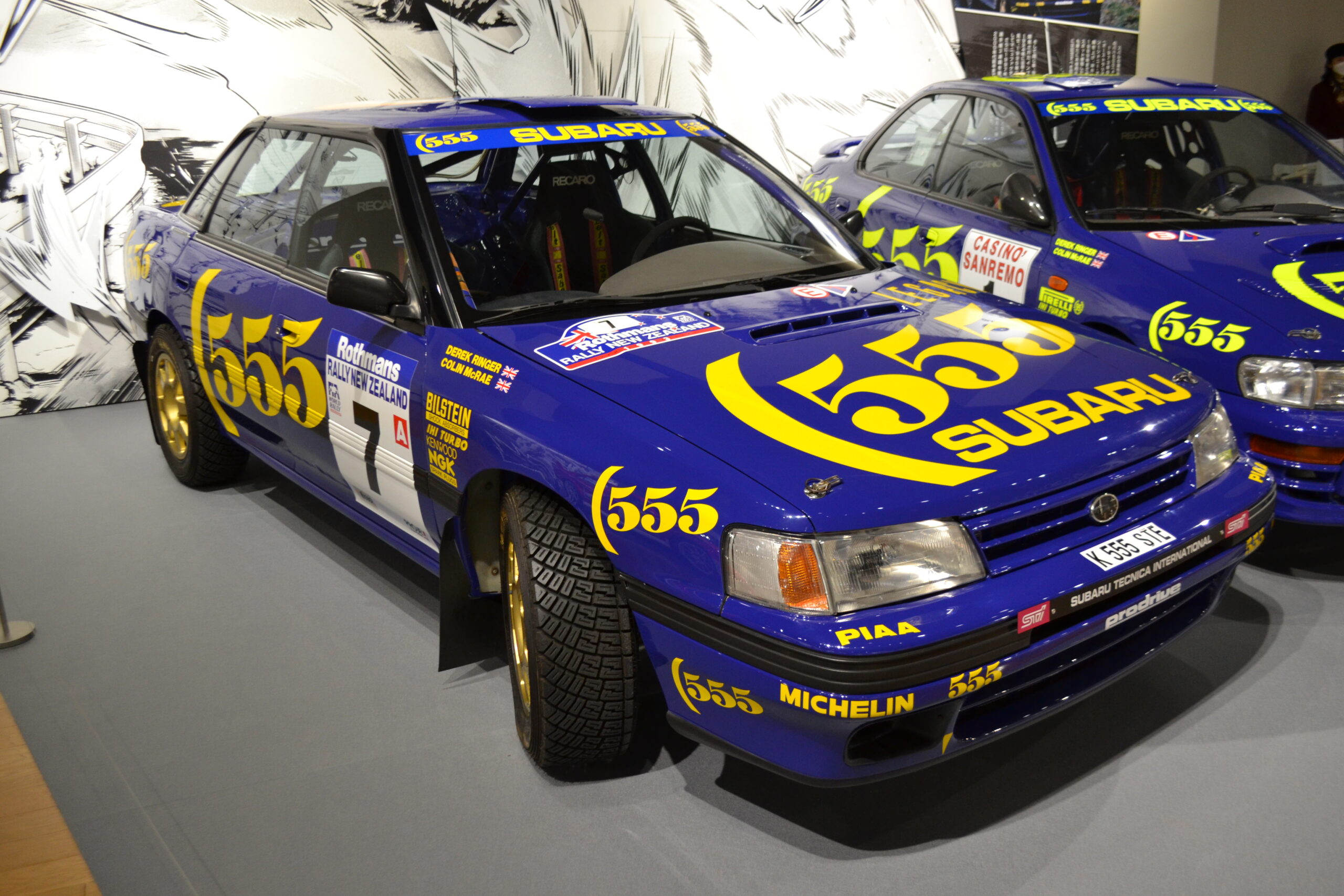
Most enthusiasts credit the Impreza WRX STI as the car that put Subaru’s motorsport division on the map, but the groundwork was actually laid earlier by the first-generation Legacy RS Turbo (chassis code BC5), sold from 1989 to 1994 with a turbocharged 220 PS EJ20G boxer engine and full-time all-wheel drive. It carried Subaru to its first World Rally Championship victory before the Impreza even existed, and the later Legacy GT-B wagons pushed the same formula into a genuinely track-focused lightweight special. This guide covers the difference between the single-turbo RS and the sequential twin-turbo GT-B, why that sequential turbo system is the single biggest thing to inspect, and what the GT-B’s weight-saving equipment deletions actually mean for a buyer.
📋 What You’ll Learn in This Guide
- Why the RS Turbo matters to Subaru’s motorsport history
- The real difference between the single-turbo RS and sequential twin-turbo GT-B
- Why sequential turbo plumbing is the GT-B’s defining maintenance risk
- What the GT-B’s equipment deletions mean for a daily-use buyer
- Where rust actually shows up on these cars
The RS Turbo: Built Before the Impreza Existed
The BC5 Legacy RS Turbo used a turbocharged 2.0-liter EJ20G flat-four rated at 220 PS, paired with full-time all-wheel drive, in a sedan and wagon platform that predates the Impreza entirely. It carried Subaru to its first World Rally Championship victory, and the motorsport program built around this car is the direct foundation that STI was created from — the Impreza WRX STI that most enthusiasts associate with Subaru’s rally pedigree today is the RS Turbo’s successor, not its origin point. Understanding this matters for buyers: the RS Turbo isn’t a budget alternative to a “real” Subaru performance car, it’s the car that made the rest of the lineup possible.
GT-B: The Sequential Twin-Turbo Wagon
The later Legacy GT wagon (chassis code BG5), built from 1993 to 1998, moved to the EJ20H, a sequential twin-turbo flat-four rated at 250 PS: a smaller primary turbo spools first to minimize lag, and a larger secondary turbo takes over at higher rpm, producing a distinct, noticeable second surge of power. The GT-B variant specifically added Bilstein dampers, larger brake calipers, and BBS wheels, while deleting airbags, cruise control, and the sunroof to reduce weight — a genuine lightweight special built with a clear performance priority rather than daily comfort.
💡 Tip
If you specifically want the GT-B’s factory equipment deletions (no airbags, no cruise control, no sunroof), confirm the car you’re looking at is actually a GT-B rather than a standard GT with GT-B styling elements added — equipment lists are an easy way to verify this beyond badging alone, since the deletions were a deliberate factory decision rather than a cosmetic package.
Sequential Turbo Plumbing: The GT-B’s Defining Weak Point
The sequential twin-turbo systems on GT-B and related B4 models are now widely known to age poorly: vacuum lines crack, the secondary turbo’s control mechanism gets sticky, and the change-over solenoids that manage the handoff between primary and secondary turbos fail over time. Because of this, many owners convert to a simpler single-turbo setup once the factory sequential system needs significant work — which isn’t necessarily a problem for a driver-focused buyer, but it does change the car’s factory character and originality. Ask directly whether the sequential system is original and functioning correctly, or whether the car has already been converted, before you factor the price into your decision.
Where Rust Actually Shows Up
These cars are now roughly three decades old, and rust on rear quarter panels and subframes is a real and fairly common finding, particularly on cars that spent time in regions using road salt. A thorough underbody inspection matters as much on a Legacy RS/GT-B as an engine bay inspection does — a car with a clean-sounding turbo but a rotten subframe is not a good buy at almost any price.
⚠️ Caution
Don’t assess turbo system health purely by how the car drives on a short test — the specific symptom of a sequential twin-turbo problem (a flat spot or delayed surge around the secondary turbo’s engagement point) can be subtle unless you know to specifically feel for it. Have a specialist familiar with the EJ20H’s sequential system inspect it directly rather than relying on a general road test alone.
What Drives Pricing Today?
Genuine GT-B examples with documented sequential turbo maintenance or a clearly disclosed single-turbo conversion, rust-free subframes, and original equipment configuration command the strongest prices. The RS Turbo’s direct connection to Subaru’s early rally history adds a layer of historical desirability beyond its raw performance figures, which are modest by modern standards but were genuinely significant for their era.
Frequently Asked Questions
Q: Is a single-turbo-converted GT-B a bad buy?
A: Not necessarily — it can be a perfectly reliable driver and may even be less maintenance-intensive than a factory sequential system nearing the end of its service life. It does reduce originality and collector value compared to a well-maintained factory sequential example, so factor that into your price expectations rather than treating it as a defect to be hidden.
Q: How does the RS Turbo compare to an early Impreza WRX in terms of performance?
A: The RS Turbo’s 220 PS is modest next to later Impreza WRX STI figures, but it should be judged in the context of its own era and its direct role in Subaru’s rally program — it’s a historically significant car in its own right, not simply a lesser predecessor to the Impreza.
Final Thoughts
The Legacy RS and GT-B occupy an unusual position in JDM history: genuinely significant to Subaru’s motorsport story, but often overlooked by buyers chasing the more famous Impreza badge. Verify the sequential turbo system’s condition and originality, inspect thoroughly for rust given the car’s age, and confirm exactly which equipment configuration you’re actually buying. Do that, and you’ll end up with a car that’s arguably more historically important than its market price currently reflects.
コメント