📋 Summary
- Trust, founded in April 1977 by Masamitsu Hayakawa, began with exhaust manifolds and mufflers before gaining wider fame through its GReddy sub-brand and TD twin-turbo kits during Japan’s 1985 street tuning boom
- Blitz, founded in June 1981, initially built its reputation distributing KKK turbochargers before developing its own extensive lineup of turbos, boost controllers, and the turbo timers the brand remains particularly well known for
- Boost controllers and turbo timers, while seemingly minor accessories compared to a full turbo kit, address genuinely important practical and mechanical concerns specific to turbocharged JDM builds
- Understanding what these devices actually do, rather than treating them as purely cosmetic gauges, helps explain why they became such enduring staples of JDM turbo culture
Turbocharging sits at the very heart of JDM performance culture, and few brand names carry as much weight within that specific niche as Trust’s GReddy and Blitz. Both companies built multi-decade reputations specifically around forced-induction tuning, and their boost controller and turbo timer products in particular became such enduring fixtures of the culture that they’re now instantly recognizable even to newcomers just beginning to explore JDM tuning.
- Trust and GReddy: From Exhausts to Twin-Turbo Fame
- Blitz: From KKK Distribution to a Full Tuning Catalog
- Understanding Boost Controllers: More Than Just “More Power”
- Why These Two Brands Remain So Closely Linked to Turbo Culture
- Gauge Culture: An Aesthetic Legacy of Turbo Monitoring
- International Expansion and Continued Relevance
- Frequently Asked Questions
Trust and GReddy: From Exhausts to Twin-Turbo Fame
Trust Co., Ltd. was founded in April 1977 by Masamitsu Hayakawa, headquartered in Chiba, Japan, initially focusing on exhaust manifolds and muffler systems built originally for friends within the racing community rather than as a large-scale commercial venture. The company’s trajectory changed significantly during Japan’s 1985 street tuning boom, when Trust’s GReddy sub-brand gained substantial popularity through its TD twin-turbo kits, seen prominently on Toyota Soarers of the era and helping establish GReddy as a genuinely recognized name within Japan’s growing performance tuning scene.
Today, GReddy remains closely associated with turbocharger systems and the electronic boost controller products, particularly the Profec series, that let owners precisely and safely manage boost pressure delivery, an application that has become one of the brand’s most recognized and widely used product categories among turbocharged JDM car owners internationally.
Blitz: From KKK Distribution to a Full Tuning Catalog
Blitz Co., Ltd. was founded in June 1981 and is headquartered in Nishitokyo, Tokyo. The company’s earliest business centered on distributing KKK turbochargers, a well-regarded German turbocharger manufacturer, within the Japanese market, before Blitz expanded into developing its own extensive product catalog spanning turbos, superchargers, exhaust systems, air intakes, intercoolers, ECUs, gauges, and boost controllers over the following decades.
Blitz has become particularly closely associated with turbo timers specifically, offering multiple product lines including both two-piece and single-unit designs, reflecting the brand’s sustained focus on this specific accessory category as a core part of its identity within JDM turbo culture, even as its broader catalog expanded to cover nearly every category of turbocharged performance tuning.
💡 Tip: A Turbo Timer Serves a Genuine Mechanical Purpose
Turbo timers, which keep an engine idling for a set period after the ignition key is turned off before automatically shutting the car down, exist to address a real mechanical concern: allowing a turbocharger, which spins at extremely high speed and reaches very high temperatures under load, to cool down gradually rather than having its oil supply cut abruptly while the turbo is still hot. Abrupt shutdown under these conditions can cause oil coking, where residual oil trapped in the hot turbo bearing housing degrades and forms deposits that can shorten turbocharger life. While modern turbo materials and factory engineering have reduced this risk somewhat compared to earlier eras, turbo timers remain a genuinely functional accessory for many owners, not merely a decorative gauge.
Understanding Boost Controllers: More Than Just “More Power”
Electronic boost controllers, a core product category for both Trust’s GReddy and Blitz, are often misunderstood by newcomers as simply a way to add power by increasing boost pressure. While boost adjustment is certainly part of their function, quality boost controllers actually serve a more nuanced purpose: precisely managing boost delivery across the rev range for smoother, more predictable power delivery, and critically, providing a genuine safety margin by preventing dangerous boost spikes that can occur with certain wastegate and turbo configurations under specific conditions.
A poorly configured or excessively aggressive boost controller setup can genuinely damage an engine through detonation or mechanical overstress, meaning these devices deserve to be understood and configured carefully by someone with genuine tuning knowledge, rather than treated as a simple power dial to be turned up without regard for the engine’s actual capability and supporting modifications.
⚠️ Caution: Boost Adjustments Require Matching Fuel and Engine Management
Increasing boost pressure through a boost controller without corresponding adjustments to fuel delivery and ignition timing, typically through proper ECU tuning, creates a genuine risk of engine damage through lean air-fuel conditions or detonation. Boost controllers should be understood as one component within a complete, properly tuned forced-induction system rather than a standalone modification. Any significant boost increase should be paired with a professional tune on an appropriate platform, ideally verified on a dynamometer, rather than adjusted by feel or guesswork alone.
Why These Two Brands Remain So Closely Linked to Turbo Culture
What distinguishes Trust’s GReddy and Blitz from many other JDM tuning brands is how thoroughly their identities became intertwined with turbocharging specifically, rather than performance tuning more broadly. Both companies built their earliest reputations directly around forced-induction hardware, GReddy through its twin-turbo kits during the 1985 boom and Blitz through its early KKK turbo distribution business, and both have maintained that turbo-centric focus as a core brand identity even while expanding into broader tuning categories over subsequent decades. That sustained specialization is a significant part of why these two names remain instantly associated with turbocharged JDM culture specifically, decades after their respective founding.
Gauge Culture: An Aesthetic Legacy of Turbo Monitoring
Beyond their functional purpose, the boost gauges, oil temperature gauges, and other monitoring instruments produced by companies like Trust’s GReddy, Blitz, and Defi have become a genuinely distinctive visual signature of JDM turbo culture in their own right. The now-iconic sight of multiple round gauges mounted in an A-pillar pod or a dedicated dashboard cluster, originally a purely practical way to monitor a turbocharged engine’s vital signs in real time, has become such a recognizable aesthetic element that it’s now widely replicated even on builds where the monitored engine may not strictly require that level of scrutiny, a genuine crossover from function into style that reflects how deeply these brands’ visual language became embedded in broader JDM aesthetic culture.
For genuinely turbocharged builds, though, these gauges retain real functional value: boost pressure, oil temperature, and air-fuel ratio monitoring all provide meaningful, real-time feedback that a driver can use to catch developing problems, like an overheating turbo or a dangerously lean fuel condition, before they escalate into serious engine damage, making gauge selection a genuinely practical consideration alongside its undeniable aesthetic appeal within the culture.
International Expansion and Continued Relevance
Both Trust’s GReddy and Blitz expanded well beyond their original Japanese domestic market over the decades following their founding, establishing distribution and, in some cases, dedicated operations in markets like the United States as international JDM enthusiasm grew, particularly from the 1990s onward as import tuning culture matured internationally. This expansion meant that international enthusiasts gained increasingly direct access to genuine parts from these brands, rather than relying purely on imported, harder-to-source Japanese-market products, a meaningful factor in how thoroughly these two brand names became embedded in international JDM tuning culture rather than remaining purely domestic Japanese phenomena.
Today, both companies continue developing new products for contemporary turbocharged platforms alongside maintaining support for the classic JDM chassis that built their original reputations, giving both brands a genuinely continuous, multi-decade presence within turbo tuning culture that few competitors can match.
Frequently Asked Questions
Q: When were Trust and Blitz founded?
A: Trust was founded in April 1977 by Masamitsu Hayakawa. Blitz was founded in June 1981, initially distributing KKK turbochargers in Japan.
Q: What is GReddy’s relationship to Trust?
A: GReddy is Trust’s sub-brand, particularly associated with turbocharger systems and boost controller products, and it gained significant popularity through TD twin-turbo kits during Japan’s 1985 street tuning boom.
Q: What does a turbo timer actually do?
A: It keeps the engine idling for a set period after the ignition is turned off, allowing a hot turbocharger to cool down gradually rather than having oil flow cut abruptly, which can help prevent oil coking damage to the turbo bearing housing.
Q: Is it safe to simply increase boost with a boost controller?
A: Not without corresponding fuel and ignition adjustments, typically through proper ECU tuning. Increasing boost without a matching tune creates a genuine risk of engine damage through lean conditions or detonation.
Q: What is Blitz particularly known for within its broader product catalog?
A: While Blitz produces a wide range of performance parts, the brand has become particularly closely associated with turbo timers specifically, alongside its boost controllers and turbocharger products.
This article is for general informational purposes and reflects widely reported history about these companies. Specific product lineups and technical recommendations change over time – always consult a qualified tuner before modifying boost or forced-induction systems.
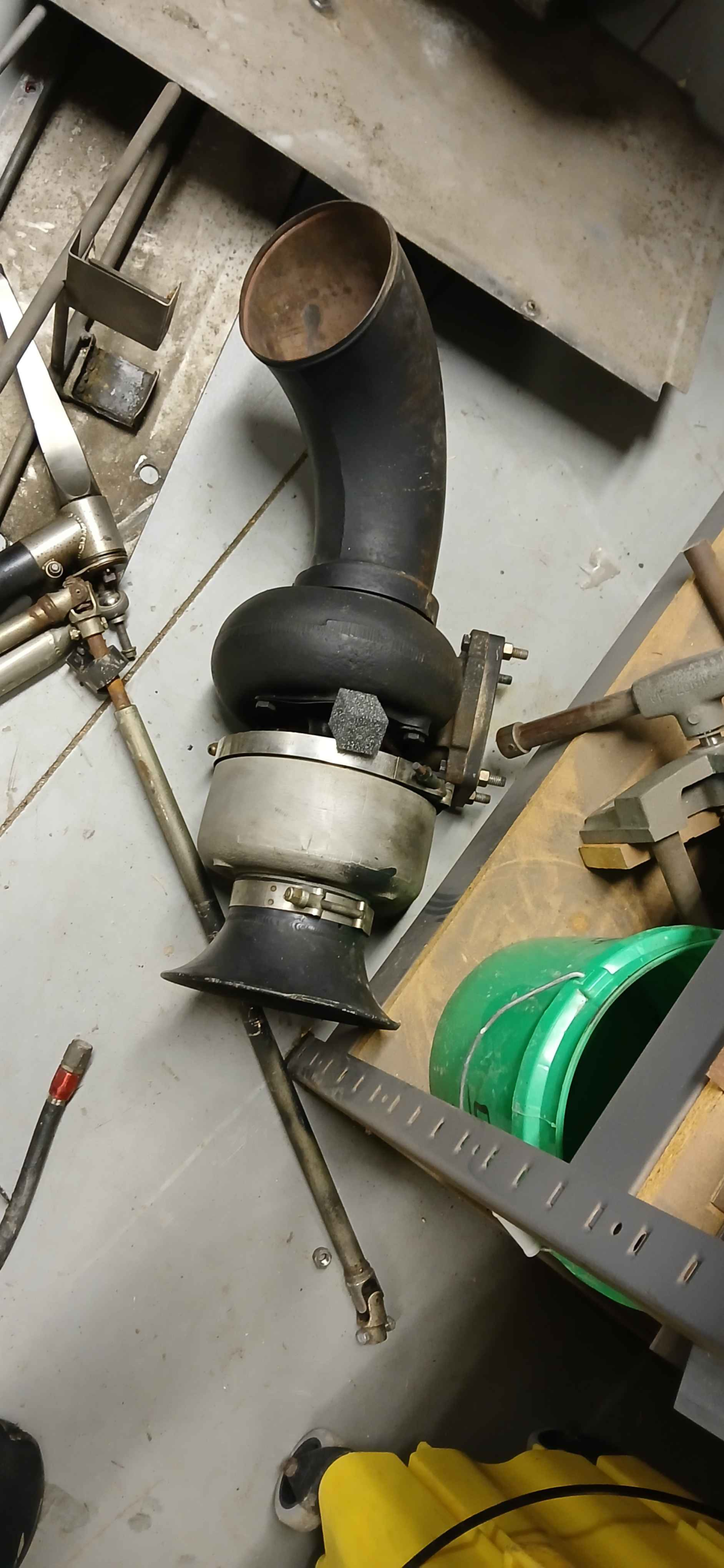
Image credit: 1978 Penske PC-6 Turbocharger.png by Penske PC-6, CC BY 4.0, via Wikimedia Commons
コメント