📋 Summary
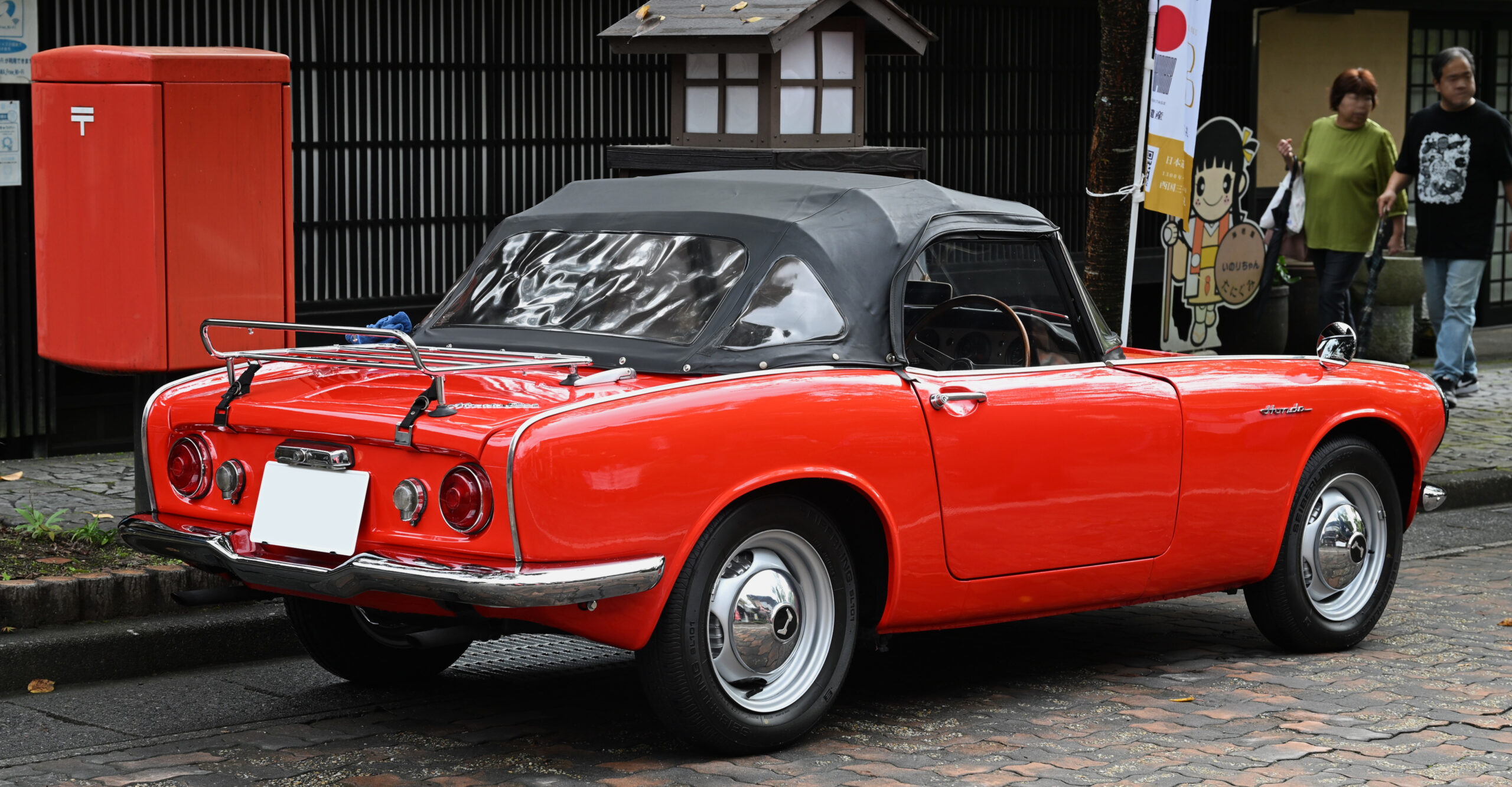
- The S500, S600, and S800 were Honda’s first production automobiles, arriving in the early 1960s when the company was still primarily known for motorcycles
- These tiny roadsters used motorcycle-inspired engineering, including chain final drive on early cars and engines that revved to 8,000-10,000rpm – astonishing figures for a road car in the 1960s
- The S800 was, for a time, described as the fastest production one-liter car in the world
- Total production across the S600 and S800 was modest by mainstream standards, and genuinely original, well-preserved examples are now scarce and require specialist knowledge to maintain
Before Honda built the NSX, before it built the S2000, and long before it became a household name in cars at all, it built a tiny, high-revving roadster that showed exactly how the company intended to approach the automobile business: not as a conventional carmaker, but as an engineering company obsessed with extracting extraordinary performance from small, efficient packages. The S600 and S800 are where that philosophy started, and they remain some of the most technically fascinating classic Japanese cars ever built.
A Motorcycle Company’s First Cars
Honda entered the automobile business relatively late compared to established Japanese manufacturers like Toyota and Nissan, and it did so from an unusual starting position: as the world’s largest motorcycle manufacturer. That background shows clearly in the S-series roadsters. The first model, the S500, arrived in 1963 in very limited numbers, followed by the S600 in March 1964 and eventually the S800, introduced at the 1965 Tokyo Motor Show as a direct successor once S600 production wound down.
These were not simply small cars with car engines shrunk down – they were engineered with genuine motorcycle thinking applied to a four-wheeled platform. That meant high-revving, small-displacement engines designed to make power through rpm rather than displacement, and in the earliest cars, a genuinely unusual feature for a production automobile: chain final drive, borrowed directly from motorcycle engineering, rather than a conventional driveshaft.
Engines That Revved Like Motorcycles
The S600 used a tiny 606cc inline-four, but the headline figure was never displacement – it was how the engine achieved its performance. Where most small car engines of the era were designed for low-rpm torque and everyday drivability, Honda’s S-series engines were tuned to rev freely to 8,000rpm and beyond, using multiple carburetors and a high-revving valvetrain more closely related to motorcycle engine design than contemporary automobile practice.
The S800, which followed, used a larger 791cc inline-four producing around 70 horsepower at a screaming 8,000rpm, with a redline that could reach as high as 10,000rpm depending on the source and tune. That combination made the S800 genuinely quick for its size and era – commonly described as Honda’s first 100-mph production car – while still returning genuinely efficient fuel economy figures, an unusual combination that highlighted exactly the kind of engineering efficiency Honda would become famous for in later decades.
💡 Tip: Know Whether You’re Looking at a Chain-Drive or Live-Axle Car
Early S800 production continued to use the S600’s motorcycle-inspired chain final drive and independent rear suspension, a configuration that is mechanically fascinating but also more specialized to maintain. Honda later switched the S800 to a more conventional driveshaft and live rear axle setup with radius rods and a Panhard rod, which is generally easier to service using more widely available parts and expertise. Neither configuration is objectively “better” – the chain-drive cars are more historically significant and mechanically unusual, while the live-axle cars are typically more practical to own – but you should know which one you are buying and price your expectations for parts and maintenance accordingly.
“Fastest Production One-Liter Car in the World”
By April 1967, the S800’s combination of a high-revving small engine and lightweight construction had earned it recognition as the fastest production one-liter car in the world at the time – a genuinely remarkable achievement for what was, on paper, a modest small roadster from a company that had only recently entered the car business. That reputation was not marketing exaggeration; it reflected real engineering achievement in extracting performance from a small-displacement engine at a time when most manufacturers were still relying on larger, lower-revving units to make comparable power.
How Rare Are These Cars Today?
Total S800 production through the end of the run in May 1970 is commonly cited at 11,536 units – modest by mainstream car standards, but not vanishingly rare compared to some other classic JDM icons. Of the earlier chain-drive configuration specifically, production is far smaller: commonly cited figures put chain-drive S800 production at 752 roadsters and 242 coupes, making the earliest, most historically distinctive version of the car considerably scarcer than the total production figure might suggest. The preceding S500, sold only briefly in 1963-1964, was built in genuinely tiny numbers – around 1,363 units – making it the rarest and most sought-after model in the lineage for serious collectors.
What to Check Before Buying
- Confirm which drivetrain configuration the car has: Chain-drive versus driveshaft/live-axle significantly affects both the car’s historical significance and its ongoing maintenance requirements. Verify this before you fall in love with a listing photo.
- Inspect the chain-drive mechanism carefully, if applicable: On chain-drive cars, the condition of the chains, sprockets, and associated hardware is a specialized area that a general classic-car mechanic may not be familiar with. Seek out someone with specific S600/S800 experience if possible.
- Check for rust in the unibody structure: As with any small Japanese car from this era, corrosion in the floor pans and structural members is the primary threat to both safety and value. A thorough inspection is essential.
- Verify the engine has not been over-revved or poorly maintained: These engines were designed to rev high as a matter of course, but that also means they demand disciplined maintenance – correct oil, valve clearances, and carburetor tuning matter more here than on a low-revving engine with a wider margin for neglect.
- Ask about parts sourcing before you commit: Many S600/S800-specific components, especially anything related to the chain-drive system, are genuinely hard to find outside of specialist suppliers, often based in Japan, the UK, or Australia, where active owners’ clubs have maintained strong parts and knowledge networks.
⚠️ Caution: These Engines Do Not Tolerate Casual Maintenance
An engine designed to rev to 8,000-10,000rpm reliably in the 1960s was built to extremely tight tolerances for its era, and that precision does not age well if the car has been neglected, run with incorrect oil, or serviced by someone unfamiliar with the specific requirements of a high-revving small-displacement four-cylinder. A car that “runs fine” on a casual test drive can still be hiding wear that will surface expensively once pushed toward its intended operating range. A pre-purchase inspection from someone specifically experienced with these engines is strongly recommended, not just a general classic-car check.
Why These Cars Matter to Honda’s Story
It is genuinely difficult to overstate how important the S500/S600/S800 lineage is to understanding Honda as a company. These were not safe, conservative first efforts from a manufacturer easing cautiously into car production – they were confident, technically ambitious statements from a motorcycle company that believed it could apply the same high-revving, lightweight engineering philosophy to four wheels and beat established car manufacturers at their own game on pure engineering merit. That same philosophy, decades later, produced the NSX, the S2000, and the naturally aspirated VTEC engines that defined an entire era of Honda performance cars. The S800 is, in a very real sense, where that DNA begins.
Frequently Asked Questions
Q: What is the difference between the S600 and the S800?
A: The S600, produced from 1964 to 1966, used a 606cc engine, while the S800, which followed from 1966 to 1970, used a larger 791cc engine producing around 70 horsepower. The S800 is generally considered the more capable and complete evolution of the same basic concept.
Q: Why did early S800s use chain drive?
A: Honda carried over the motorcycle-inspired chain final drive and independent rear suspension from the S600 into early S800 production before switching to a more conventional driveshaft and live-axle setup partway through the model’s run. This reflects Honda’s motorcycle engineering background at the time.
Q: How many S800s were built?
A: Total production through 1970 is commonly cited at 11,536 units, though the earlier chain-drive configuration specifically was built in much smaller numbers – around 752 roadsters and 242 coupes.
Q: Is the S500 more valuable than the S600 or S800?
A: The S500 is generally the rarest of the three, with production commonly cited at only around 1,363 units, making it highly sought after by serious collectors, though condition, originality, and documentation matter enormously across all three models.
Q: Are these cars difficult to maintain today?
A: They require more specialized knowledge than a typical classic car, particularly regarding the high-revving engine’s tolerances and, on early cars, the chain-drive system. Owners typically rely on dedicated marque specialists and active owners’ club networks for parts and expertise.
This article is for general informational purposes. Specifications and production figures are based on widely cited historical sources and may vary slightly between references. Always consult a qualified classic-car specialist before purchasing a collector vehicle.
コメント