📋 Summary
- Enkei, founded in 1950 in Hamamatsu, is the oldest of the major Japanese wheel brands and became the first Japanese company to manufacture aluminum wheels domestically in 1967
- SSR, founded in Osaka in 1971, is often credited with producing the first three-piece wheel design with its original MK-I model
- Rays Engineering, founded in Osaka in 1973, produces the Volk Racing brand, whose TE37 design, introduced in 1996, became one of the most recognized and widely imitated wheel designs in automotive history
- Work Wheels, founded in 1977 by Takeshi Tanaka, built its reputation on three-piece wheel construction and became particularly famous for its Meister and VS lineups starting in the late 1990s
Few visual details identify a serious JDM build as quickly and clearly as its wheels. Behind the small handful of brand names that dominate enthusiast conversation, Volk Racing, Work, SSR, and Enkei, sit genuinely distinct companies with their own histories, engineering philosophies, and iconic designs, each having shaped Japanese aftermarket wheel culture in a different way.
- Enkei: The Pioneer of Japanese Aluminum Wheels
- SSR: Credited With the First Three-Piece Wheel
- Rays Engineering and Volk Racing: The TE37’s Enduring Legacy
- Work Wheels: Built on Three-Piece Craftsmanship
- Why These Four Brands Still Define the Category
- Fitment Basics: PCD, Offset, and Why They Matter
- Beyond Motorsport: Deep-Dish and Stance Culture
- Frequently Asked Questions
Enkei: The Pioneer of Japanese Aluminum Wheels
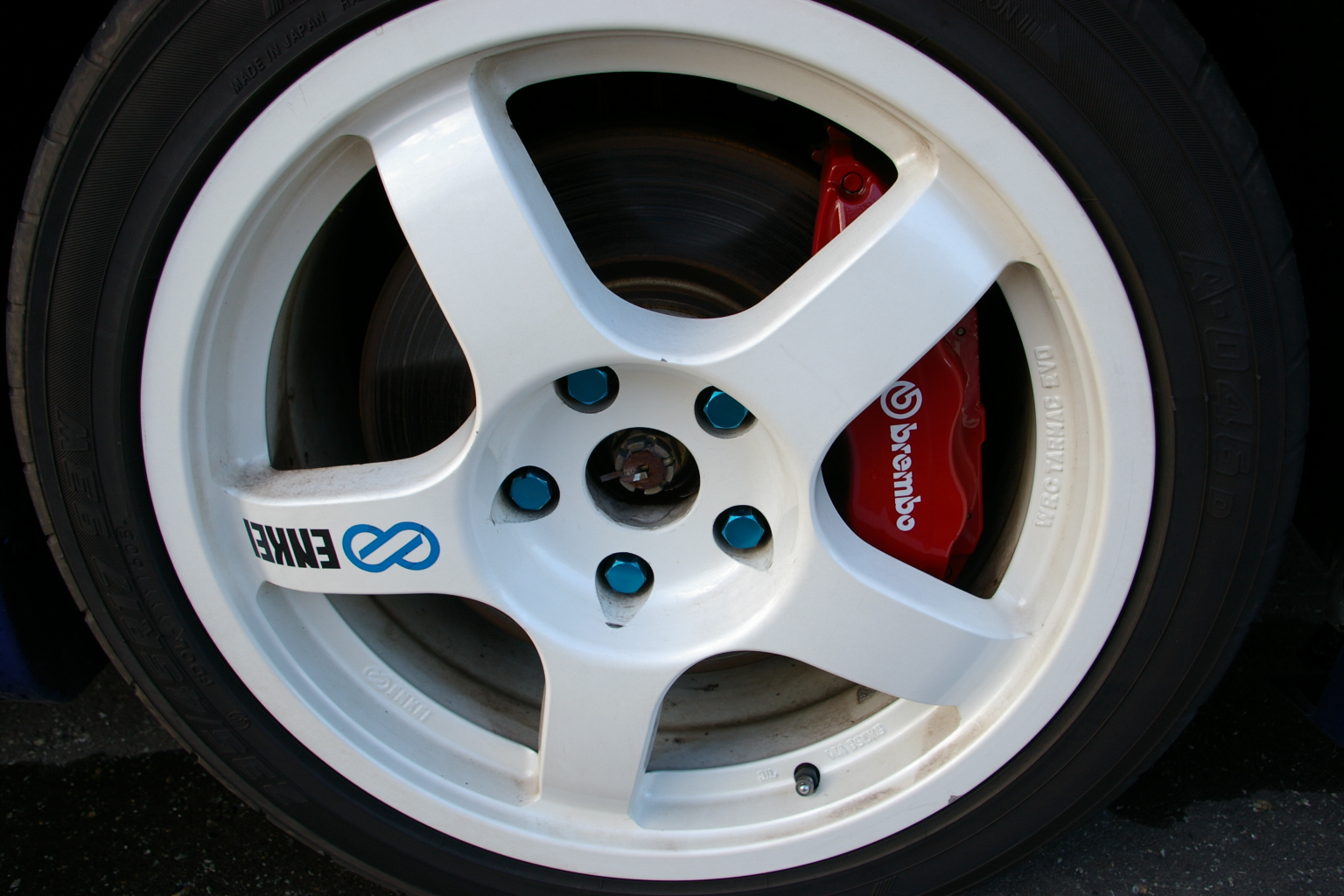
Enkei holds a genuine claim to seniority among Japan’s major wheel manufacturers, founded on October 5, 1950 in Hamamatsu as Enshu Keigokin Co., Ltd. In 1967, Enkei became the first Japanese company to manufacture aluminum wheels domestically, a genuinely significant technical milestone at a time when steel wheels remained the overwhelming standard. That early leadership in aluminum wheel manufacturing gave Enkei a substantial head start in both engineering expertise and industry relationships, and the company has maintained a strong presence in both aftermarket and original equipment wheel supply for Japanese and international automakers ever since, a dual focus that distinguishes it somewhat from the more purely aftermarket-focused brands that followed.
SSR: Credited With the First Three-Piece Wheel
SSR, short for Speed Star Racing, was founded in Osaka in 1971 and holds a widely cited claim to a genuinely significant engineering first: producing the first three-piece wheel design with its original MK-I model. Three-piece wheel construction, building a wheel from separate front and rear barrel halves bolted around a central face, allows for a level of width, offset, and design customization that single-piece cast or forged wheels of the era could not easily match, and SSR’s early leadership in this construction method helped establish an entire category of high-end, customizable aftermarket wheels that other Japanese manufacturers would later build substantial product lines around.
💡 Tip: Understand One-Piece vs. Multi-Piece Construction Before Buying
A meaningful practical distinction across these brands is wheel construction method. One-piece forged or cast wheels are generally lighter and simpler, with no seams or hardware to maintain, while two- and three-piece wheels, a specialty of brands like SSR and Work, offer more flexibility in width and offset and can sometimes be rebuilt or refinished more easily, but require periodic inspection of the hardware holding the pieces together. Neither approach is universally “better,” and the right choice depends on your specific goals, whether that’s minimizing weight for track use or achieving a very specific fitment and look.
Rays Engineering and Volk Racing: The TE37’s Enduring Legacy
Rays Engineering was founded in Osaka in 1973, during a period of rapid growth in Japanese motorsport, and its flagship Volk Racing brand has become arguably the most internationally recognized name among Japanese wheel manufacturers. Volk Racing wheels are built using a forging process the company describes as exclusive to its own manufacturing, aimed at maximizing strength while minimizing weight, a combination particularly valued in motorsport and serious performance applications where unsprung and rotational weight meaningfully affects handling and acceleration.
The company’s most famous design by a wide margin is the TE37, introduced in 1996. Its distinctive six-spoke design became so widely recognized within JDM culture that it is now considered one of the most imitated wheel designs in automotive history, with numerous other manufacturers producing visually similar six-spoke wheels clearly influenced by the TE37’s silhouette, whether as an homage or a more direct imitation, a genuine testament to how thoroughly the design shaped visual expectations for what a serious JDM performance wheel should look like.
Work Wheels: Built on Three-Piece Craftsmanship
Work Wheels was founded in 1977 by Takeshi Tanaka, with the company name reportedly inspired by a personal motto along the lines of “if you work hard, anything can be achieved.” The company opened its first dedicated three-piece wheel factory in Osaka in 1979, followed by a new headquarters the following year, and entered motorsport more directly by founding a dedicated racing team, Team Equip, in 1982. By 1983, just five years after Tanaka started the company, Work Wheels was already exporting products to the United States, reflecting rapid early growth and international ambition.
Work’s reputation reached particular heights during the late 1990s and early 2000s with its Meister and VS product lines, producing designs like the Meister S1 3-piece and the VS-XX that remain widely recognized and sought after within JDM wheel culture today, prized both for their distinctive polished multi-spoke aesthetics and their genuine three-piece construction quality.
⚠️ Caution: Counterfeit Wheels Are a Real and Serious Safety Risk
Because designs like the Volk Racing TE37 and various Work and SSR models have become so recognizable and desirable, they are also among the most heavily counterfeited aftermarket wheels in the world. Counterfeit wheels frequently use inferior materials and manufacturing processes not held to the same structural standards as genuine products, creating a real risk of wheel failure under load. Always purchase wheels claiming to be from these brands through authorized dealers, verify authenticity documentation where available, and treat prices that seem unusually low relative to genuine market rates as a serious warning sign rather than simply a good deal.
Why These Four Brands Still Define the Category
What ties Enkei, SSR, Rays Engineering’s Volk Racing, and Work together, despite their different founding dates and specialties, is a shared multi-decade track record of genuine engineering investment specifically in performance wheel design, rather than simply producing generic aftermarket wheels under a recognizable badge. Each company built its reputation through real technical contributions, aluminum wheel manufacturing, three-piece construction, advanced forging techniques, sustained over decades, which is a large part of why these specific brand names have remained the default reference point for serious JDM wheel enthusiasts even as dozens of newer, cheaper competitors have entered the market.
Fitment Basics: PCD, Offset, and Why They Matter
Choosing the right wheel from any of these brands requires understanding a handful of fitment terms that determine whether a wheel will actually work correctly on a given car. PCD, or pitch circle diameter, describes the bolt pattern the wheel must match to physically mount to the hub, and it varies by manufacturer and often by specific model generation. Offset describes how far the wheel’s mounting face sits relative to its centerline, measured in millimeters, and directly affects how far a wheel sits in or out of the fender, with lower or negative offset numbers generally pushing the wheel further outward. Getting these specifications wrong is not a minor cosmetic issue: incorrect offset can cause a wheel to rub against suspension components or bodywork, and an incorrect bolt pattern will simply prevent proper, safe mounting altogether.
Reputable sellers and manufacturer fitment guides, including those published directly by brands like Rays Engineering, Work, SSR, and Enkei, provide detailed fitment charts for specific popular chassis, and consulting these directly is far more reliable than assuming a wheel size that looked correct on one car will translate directly to a different model, even within the same general JDM performance car category.
Beyond Motorsport: Deep-Dish and Stance Culture
While all four brands built their core reputations on genuine motorsport and performance engineering, their wheels have also become central to distinct enthusiast styling subcultures that prioritize appearance and specific fitment aesthetics alongside, or sometimes instead of, pure performance. Deep-dish and “kanjo” style builds, inspired partly by Osaka’s underground highway racing culture, favor wheels with significant lip depth and specific narrow fitments, while broader “stance” culture more generally favors aggressive, flush-to-flared fitments achieved through a combination of wheel offset, width, and suspension modification. These styling movements have created dedicated secondary markets and collector interest around specific vintage wheel models from these brands, sometimes independent of the wheels’ original motorsport-focused design intent.
Frequently Asked Questions
Q: Which of these wheel brands is the oldest?
A: Enkei, founded in 1950, is the oldest of the four, followed by SSR (1971), Rays Engineering (1973), and Work Wheels (1977).
Q: What makes the Volk Racing TE37 so significant?
A: Introduced in 1996, its distinctive six-spoke design became one of the most widely recognized and imitated wheel designs in automotive history, heavily influencing the visual expectations for JDM performance wheels ever since.
Q: What is a three-piece wheel, and which brands specialize in them?
A: A three-piece wheel is built from separate front and rear barrel sections bolted around a central face, allowing greater customization of width and offset. SSR and Work Wheels are particularly known for this construction method.
Q: Is Enkei only an aftermarket brand?
A: No. Enkei maintains a significant original equipment manufacturing business supplying wheels to automakers directly, in addition to its aftermarket performance wheel lineup, distinguishing it somewhat from more purely aftermarket-focused competitors.
Q: Why should buyers be cautious about cheap TE37-style wheels?
A: Because the design is so recognizable and desirable, it is also among the most heavily counterfeited aftermarket wheels, and counterfeits often use inferior materials that create a genuine safety risk under load.
This article is for general informational purposes and reflects widely reported history about these companies. Specific founding details and historical claims may vary between sources.
Image credit: Brembo brake & ENKEI TarmacEVO wheel.jpg by 100yen, CC BY-SA 3.0, via Wikimedia Commons
コメント