📋 Summary
- The “Hakosuka” (KPGC10, 1969-1972) and “Kenmeri” (KPGC110, 1973) are the first two generations to carry the GT-R name, decades before the R32-R34 cars most Western enthusiasts know
- Both share the legendary S20 inline-six engine, a road-going version of the engine that powered Nissan’s Group 6 prototype racers
- Production was tiny by modern standards – roughly 1,945 Hakosuka GT-Rs and only 197 Kenmeri GT-Rs were ever built
- These are true blue-chip collector cars today, and the market is saturated with clones, so verification before purchase is essential
When most enthusiasts outside Japan hear “Skyline GT-R,” they picture the turbocharged R32, R33, or R34 – the cars that dominated Group A touring car racing and later became posters on bedroom walls thanks to video games and movies. But the GT-R badge is more than fifty years old, and its first two chapters are arguably more important to Nissan’s motorsport identity than anything that came after. This guide covers the KPGC10 “Hakosuka” and KPGC110 “Kenmeri” – the cars that built the GT-R legend before turbochargers ever entered the picture.
Where the GT-R Story Actually Begins
The GT-R name did not start with Nissan. It started with the Prince Motor Company, a smaller Japanese manufacturer known for building sophisticated, motorsport-focused cars. Nissan absorbed Prince in 1966, and along with the merger came Prince’s engineering talent and its racing ambitions. The C10-generation Skyline, launched in 1968, became the platform for Nissan’s first serious attempt at a homologation special built to dominate Japanese touring car racing.
The heart of the project was the S20 engine: a 2.0-liter, DOHC, 24-valve inline-six with triple Mikuni-Solex carburetors, directly descended from the GR8 engine that powered Prince’s R380 prototype racer. Officially rated at 160PS (JIS gross) at 7,000rpm, the S20 was an exotic piece of engineering for a mass-production road car in 1969 – most Japanese sedans of the era were running pushrod fours with a fraction of that specific output.
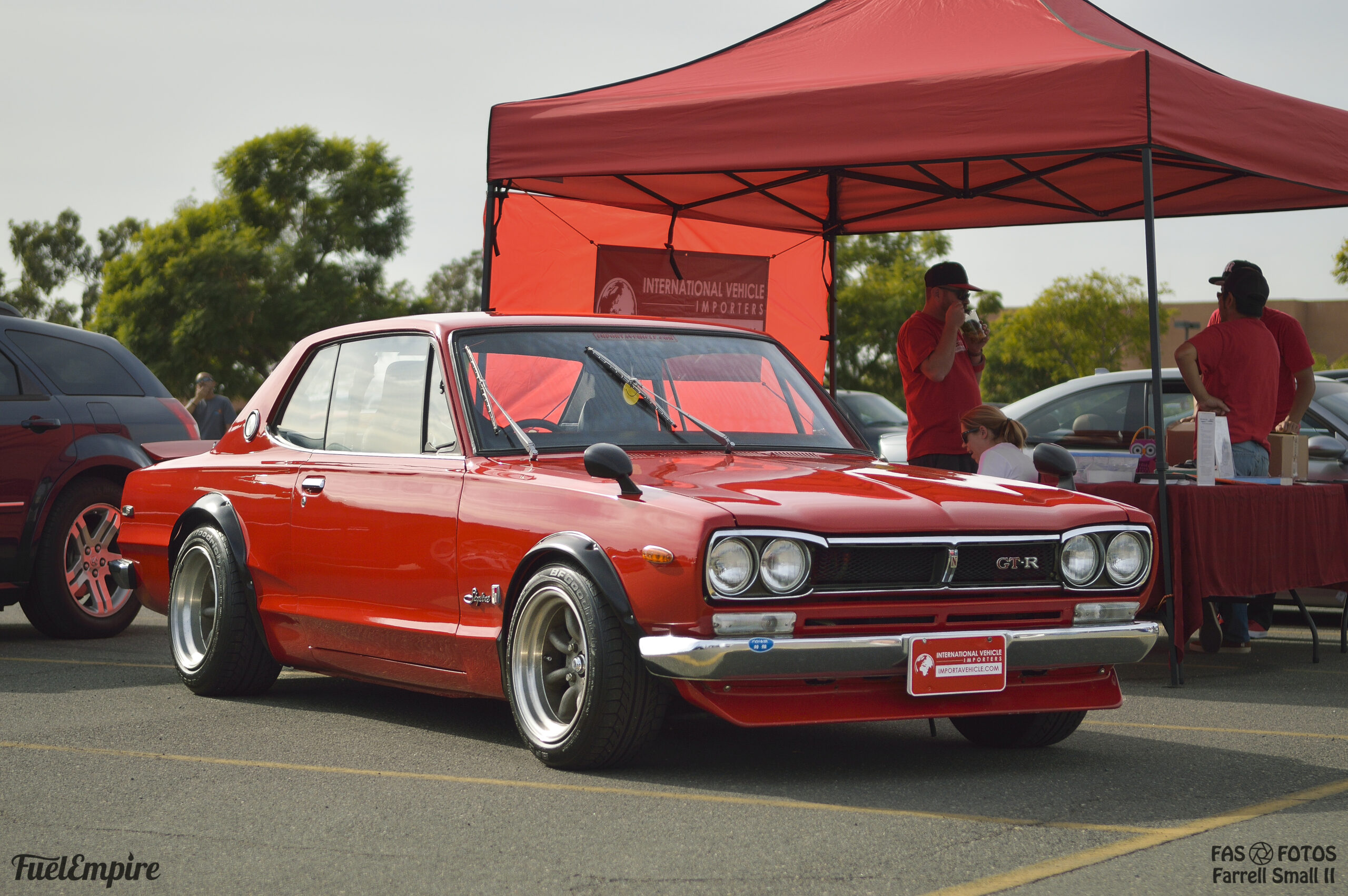
The first Skyline to wear the GT-R badge was the four-door PGC10 sedan, introduced in February 1969. It briefly held the title of Japan’s fastest four-door production car. In October 1970, Nissan introduced a two-door coupe version, the KPGC10, which is the body style most people picture when they hear “Hakosuka” today. The nickname itself is a contraction of “hako” (box, referring to the car’s boxy styling) and “suka” (a shortened form of Skyline).
The Hakosuka’s Racing Record
The Hakosuka GT-R did not just look fast – it was genuinely dominant. Across its production run, the model amassed a widely cited streak of 49 consecutive victories in Japanese touring car racing, a record that helped cement the GT-R name as shorthand for “the car that wins.” That racing pedigree, more than any single spec figure, is why the Hakosuka is treated with such reverence today. It proved on track, race after race, that the GT-R concept worked exactly as Prince’s and then Nissan’s engineers intended.
Total production of the Hakosuka GT-R, combining the four-door PGC10 and two-door KPGC10, came to roughly 1,945 units over about four years. The two-door coupe was the more common of the two by a wide margin, and it is the version almost universally sought after by collectors today. Even at the time, these were low-volume, expensive, hand-finished performance cars built in far smaller numbers than Nissan’s mainstream Skyline sedans.
The Kenmeri: A GT-R Cut Short by Circumstance
The C110-generation Skyline arrived in 1972, and with it came a new GT-R variant, the KPGC110, in January 1973. Its nickname, “Kenmeri,” comes from a popular Nissan advertising campaign built around a fictional young couple, “Ken and Mary,” used to promote the standard C110 Skyline. The nickname stuck to the GT-R variant as well, even though the GT-R itself was a much more serious machine than the lifestyle-focused ads suggested.
The Kenmeri GT-R carried over the same S20 engine from the Hakosuka, tuned to a similar output in the neighborhood of 160PS. Mechanically, it was a continuation of the same formula: a high-revving, naturally aspirated inline-six, semi-trailing arm rear suspension, and four-wheel disc brakes, wrapped in C110 sheet metal with the flared fenders and driving-light grille that make the Kenmeri GT-R instantly recognizable.
⚠️ Caution: The Kenmeri’s Production Run Was Shockingly Short
Tightening Japanese emissions regulations in the early 1970s made it impossible for Nissan to keep building a high-output, carbureted performance engine like the S20 in compliance with new standards. Combined with the fallout from the 1973 oil crisis, Nissan halted GT-R production after only a few months. Total Kenmeri GT-R production is generally put at just 197 units, making it by far the rarest GT-R generation ever built – rarer than the Hakosuka, and far rarer than any turbocharged GT-R that followed.
Why These Cars Matter More Than the Later Turbo GT-Rs
For collectors and historians, the Hakosuka and Kenmeri occupy a different category from the R32-R34 cars. The later turbocharged GT-Rs were built in far larger numbers, are mechanically more familiar to modern tuners, and remain genuinely usable daily drivers. The Hakosuka and Kenmeri, by contrast, are pre-oil-crisis artifacts: naturally aspirated, carbureted, mechanically simple by modern standards, but built in numbers so small that surviving, unmolested examples are now treated more like fine art than used cars.
They also represent a very different kind of performance philosophy. There is no turbo lag to manage, no electronic driver aids, and no all-wheel-drive system distributing power – just a free-revving six-cylinder engine, a manual gearbox, and a chassis tuned by engineers who had just come from building prototype race cars. Driving one is often described by owners as a completely different experience from a modern GT-R: lighter, more mechanical, and more directly connected to the road.
💡 Tip: Not Every “GT-R Look” Car Is a Real GT-R
Because genuine Hakosuka and Kenmeri GT-Rs are so scarce and so valuable, the market has a long-standing problem with “clones” – standard C10 or C110 Skyline models (or even other Nissan models of the era) that have been modified with GT-R-style bodywork, badges, and sometimes engine swaps to resemble the real thing. A clone can look convincing in photos but will lack the correct chassis code, the numbers-matching S20 engine, and the documented history that a genuine GT-R carries. If you are seriously considering a purchase, budget for a specialist inspection and insist on seeing the original chassis plate, registration history, and ideally documentation tracing the car back through its ownership history in Japan.
What to Look For Before Buying
Because so few of these cars exist, and because they have become extremely valuable, due diligence before purchase is not optional – it is the difference between owning a legitimate piece of automotive history and owning an expensive replica.
- Chassis code verification: The Hakosuka coupe should carry a KPGC10 chassis code; the four-door carries PGC10. The Kenmeri GT-R carries KPGC110. These codes should be stamped on the chassis plate and should match the car’s registration documents.
- Engine numbers-matching status: The S20 engine has its own serial number, which on a genuine, unmolested GT-R should correlate with factory records. A car with a non-original engine, or an engine that cannot be verified, is worth significantly less than a numbers-matching example, even if it looks identical.
- Rust and accident history: These cars are now more than fifty years old. Unibody rust, particularly around the rear suspension mounting points, floor pans, and inner fenders, is common on cars that were not stored carefully. A full rust inspection, ideally with the car on a lift, is essential.
- Restoration quality and originality: Many surviving examples have been restored at some point, sometimes multiple times. A sympathetic, well-documented restoration that preserves original components is far more desirable to serious collectors than a car that has been heavily modified or restored with incorrect parts.
- Paper trail: Japanese vehicle registration documents, historical shaken (inspection) records, and any factory or dealer documentation help establish a chain of custody that supports the car’s authenticity and can materially affect its value.
Parts, Maintenance, and Ownership Realities
Owning a Hakosuka or Kenmeri today is not like owning a modern classic. Reproduction parts exist for some wear items, and a small but dedicated network of specialists in Japan continues to service and restore these cars, but many components are simply unobtainable new and must be sourced from other cars, fabricated, or refurbished. The S20 engine in particular is a complex, high-revving unit that requires specialist knowledge to maintain properly – this is not an engine a general mechanic should be trusted to rebuild.
Anyone importing one of these cars into a country like the United States benefits from the same 25-year rolling exemption that applies to any JDM classic old enough to qualify, so age-based import restrictions are not typically the obstacle. The real obstacles are finding a genuine example in the first place, verifying it thoroughly, and budgeting realistically for the specialist care these cars require going forward.
Frequently Asked Questions
Q: What does “Hakosuka” actually mean?
A: It is a contraction of two Japanese words – “hako” (box) referring to the C10 Skyline’s boxy styling, and “suka,” a shortened form of “Skyline.” It is a fan nickname, not an official Nissan model name.
Q: Why is the Kenmeri GT-R rarer than the Hakosuka?
A: The Kenmeri GT-R was only in production for a few months in 1973 before tightening emissions regulations and the fallout from the oil crisis forced Nissan to halt production. Only around 197 were built, compared to roughly 1,945 Hakosuka GT-Rs built over about four years.
Q: Do the Hakosuka and Kenmeri share an engine?
A: Yes. Both use the S20, a 2.0-liter DOHC 24-valve inline-six descended from the engine used in Prince’s R380 racing prototype, rated at approximately 160PS (JIS gross).
Q: Is it safe to buy one without an in-person inspection?
A: Given the value of genuine examples and the well-known prevalence of clones in the market, a remote purchase without a thorough, specialist inspection is not recommended. Verified chassis numbers, numbers-matching engine status, and documented ownership history should all be confirmed before any money changes hands.
Q: Are these cars eligible for import under the 25-year rule?
A: Both generations are now well past the 25-year age threshold used in markets like the United States, so age-based import restrictions are generally not a barrier. Buyers should still confirm current requirements in their own country, since import rules can change and vary by jurisdiction.
This article is for general informational purposes. Specifications, production figures, and historical details are based on widely cited sources and may vary slightly between references. Import regulations and vehicle values change over time and differ by country – always verify current rules with official sources and consult a qualified specialist before purchasing a collector vehicle.
Image credit: Nissan Skyline Hakosuka GT-R modified.jpg by Farrell Small, CC BY 2.0, via Wikimedia Commons
コメント