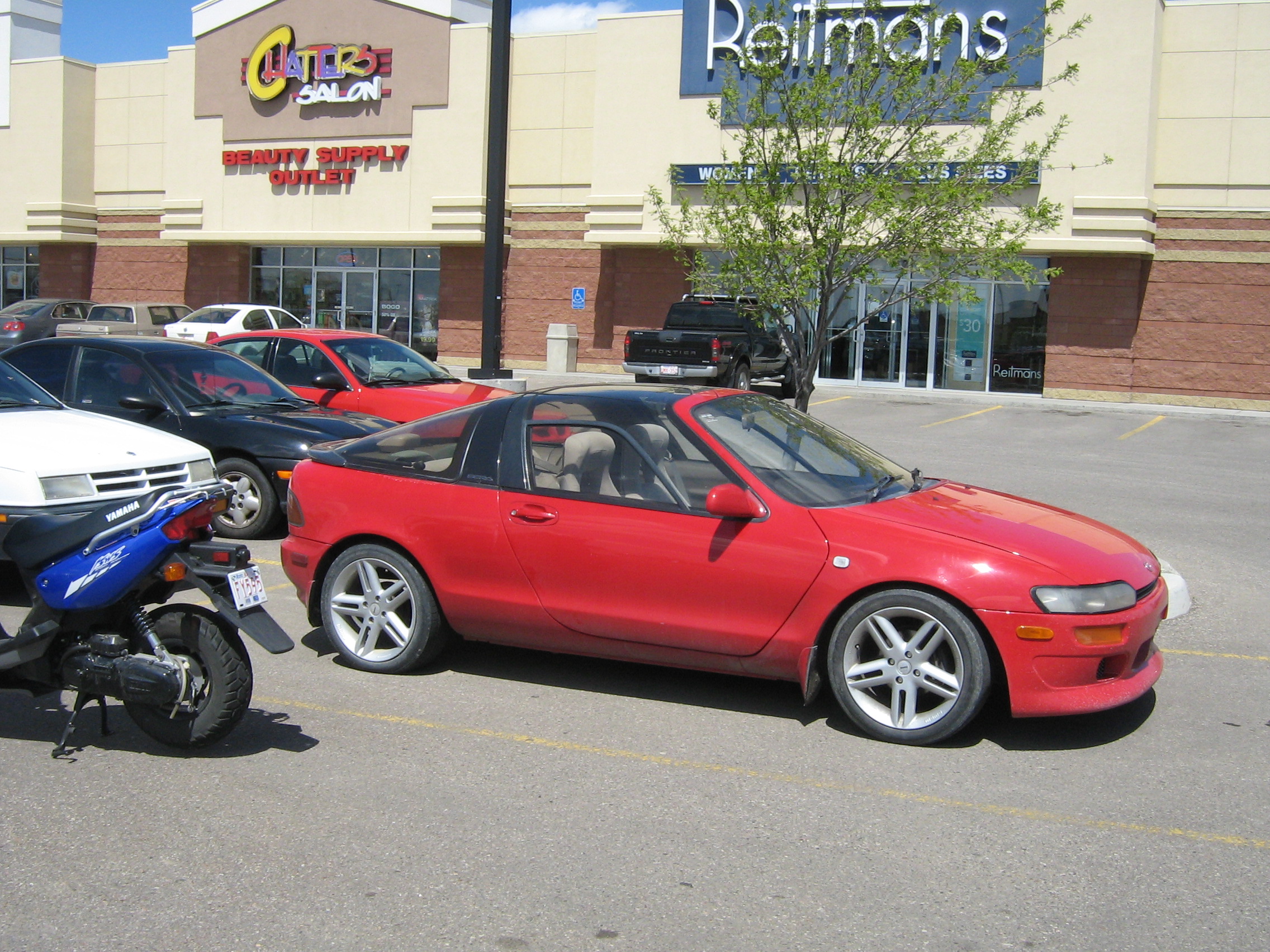
The Toyota Sera is proof that genuinely exotic design details and genuinely humble mechanicals can coexist in the same car. Its butterfly doors — hinged at the A-pillar and lifting up and out, the same fundamental mechanism later used on the McLaren F1 — are paired with the 5E-FHE, a modest 1.5-liter inline-four producing 104 horsepower and 97 lb-ft of torque, an engine also found in the far more ordinary Toyota Paseo and some Tercel models. Just 15,941 examples were built between February 1990 and December 1995, all in Japan. This guide covers why the shared engine is actually good news for ownership, the specific wear points on the distinctive door mechanism, and the glass canopy roof issues that come with a car built almost entirely around visibility.
📋 What You’ll Learn in This Guide
- Why the Sera’s humble engine is actually a practical advantage
- How the butterfly door mechanism actually works, and why it’s demanding on parts
- The specific issues affecting the glass canopy roof
- Why interior heat management matters more here than on most classics
- What genuine rarity means for parts sourcing outside Japan
An Exotic Body With Genuinely Humble, Practical Mechanicals
Under the striking bodywork, the Sera’s 5E-FHE engine is shared with the considerably more pedestrian Toyota Paseo and certain Tercel models — which sounds like a letdown until you consider what it actually means for ownership: parts availability and mechanical familiarity for the drivetrain itself are meaningfully better than you’d expect from a car this visually exotic and numerically rare. The Sera’s genuine scarcity and complexity live almost entirely in its bodywork and glass, not its engine bay, which is good news for anyone worried about basic mechanical serviceability.
The Butterfly Doors: A McLaren F1 Mechanism, Toyota-Style
The Sera’s doors are genuinely hinged at the A-pillar and lift up and out — the same fundamental butterfly-door principle later used on the McLaren F1, deployed here on a compact Japanese city car rather than a supercar. Each door relies on two separate struts to function: an external lifting strut and an internal balancer strut, and because the doors themselves are heavy, both struts live a genuinely hard working life over the car’s lifetime. Worn or failing struts are a real and expected maintenance item on an aging Sera, not a rare occurrence, so factor door strut condition into your inspection specifically rather than assuming smooth operation means the mechanism is in perfect health long-term.
💡 Tip
Test both doors multiple times during any inspection, paying attention to how smoothly and evenly they lift and how well they hold position partway open — inconsistent movement or a door that doesn’t hold its position is a sign that one or both struts on that door are nearing the end of their service life.
The Glass Canopy Roof: Beautiful, and Genuinely High-Maintenance
The Sera’s extensive glass canopy roof is central to its design identity, but it comes with real, age-related risk: UV damage and delamination at the glass edges are common findings after decades of sun exposure, and the sheer amount of glass surface area means interior heat buildup can accelerate wear on plastic trim and electronics compared to a more conventionally glazed car. A thorough inspection should specifically include checking seals, tint integrity, and any visible sign of glass separation at the edges, since these issues tend to worsen gradually and can be easy to miss on a casual walkaround.
⚠️ Caution
With only 15,941 units ever built, body-specific and glass-specific parts availability remains a genuine challenge outside Japan, even though the drivetrain itself is comparatively easy to service. If you’re importing a Sera, work with an importer genuinely experienced with this specific model and confirm your state or country’s compliance requirements before committing, since sourcing a replacement canopy panel or door strut assembly is a meaningfully harder proposition than finding a replacement engine part.
What Drives Pricing Today?
Examples with a documented, well-maintained door mechanism, a canopy roof free of delamination, and clean interior trim command the strongest prices given how much of the Sera’s appeal is tied directly to those specific, harder-to-restore components. Because the underlying drivetrain is shared with more common Toyota models, mechanical condition alone doesn’t separate good examples from great ones the way it does on more conventional JDM classics — the doors and glass are where the real value differences show up.
Frequently Asked Questions
Q: Is the Sera hard to maintain mechanically compared to other JDM classics?
A: No — because the 5E-FHE engine is shared with the Paseo and certain Tercel models, basic engine parts and general mechanical knowledge are actually more accessible than on many rarer JDM engines. The genuine challenge lies in the body-specific and glass components instead.
Q: Are the butterfly doors reliable long-term?
A: They’re a well-engineered mechanism, but the struts supporting the heavy doors do wear out over decades of use, and replacement parts for this specific mechanism are harder to source than generic mechanical parts. Budget for eventual strut replacement as a normal part of long-term ownership.
Final Thoughts
The Sera’s genuinely unique combination of exotic-feeling doors and thoroughly ordinary mechanicals makes it an unusually approachable way to own a car with real visual drama. Test the door mechanism thoroughly, inspect the glass canopy for UV damage and delamination, and go in understanding that the challenge here lives in body and glass parts sourcing rather than engine work. Get that right, and the Sera remains one of the most genuinely distinctive small cars Toyota ever put into production.
Image credit: 1990 Toyota Sera (3554673665).jpg by dave_7, CC BY 2.0, via Wikimedia Commons

コメント