📋 Summary
- Voltex and Chargespeed are two genuinely distinct Japanese aerodynamics and body kit manufacturers, separate from VeilSide and C-West covered elsewhere in this series
- Voltex, founded in Suzuka in 2003 by Akihiro Nakajima according to the company’s own materials (though some other sources cite earlier dates), is closely associated with time-attack racing and carbon-fiber aero development
- Chargespeed was founded in 1986 in Osaka, specializing in FRP (fiberglass-reinforced plastic) and carbon-fiber full body kits with in-house design and mold-making
- Both brands compete in the same general JDM aero/body-kit space as VeilSide and C-West but have entirely separate corporate origins
Aerodynamic parts and full body kits are some of the most visually distinctive JDM modifications, and while VeilSide and C-West (covered in a separate article in this series) are two of the best-known names in that space, Voltex and Chargespeed are equally significant, genuinely separate companies worth understanding on their own terms.
Voltex: Time-Attack Roots and Carbon-Fiber Aero
Voltex Racing was founded in Suzuka, Japan in 2003 by Akihiro Nakajima, according to the company’s own company-profile materials, though it’s worth noting that other secondary sources cite earlier founding years (1992 or 1995), a discrepancy that couldn’t be fully resolved through publicly available sources. According to a secondary account of Nakajima’s background, he reportedly built composite parts for Formula 3 and Formula Japan racing in Japan and worked in the UK for Crosby GRP, a composites supplier to Formula 1 and World Rally Championship teams, before founding Voltex, though this specific detail comes from a single source and is worth treating as likely but not independently cross-confirmed. Voltex built its reputation on carbon-fiber aerodynamic parts, GT wings, canards, and body panels, and is closely associated with time-attack racing culture, most notably through the widely recognized “Cyber Evo” time-attack car. The company has also conducted wind-tunnel testing in partnership with Mie University in Japan, reflecting a more engineering-driven approach to aero development than purely styling-focused body kit design.
💡 Tip: Aero Parts From Time-Attack-Focused Brands Are Function-First
Brands with genuine time-attack racing roots, like Voltex, typically design aero parts around measurable downforce and airflow performance rather than styling alone. If your build has genuine track ambitions, researching whether a given part has actual wind-tunnel or track-validated performance data behind it is worth doing, rather than assuming all “wing” or “canard” products perform similarly.
Chargespeed: Osaka-Based Full Body Kit Specialists Since 1986
Chargespeed was founded in 1986 in Osaka, Japan, under parent company Advance Staff, which remains headquartered in Osaka today, according to the brand’s own company information. Some retailer sources name individual founders informally, but full, independently verifiable names weren’t found in publicly available sources, so specific founder names are left out of this article rather than repeating an unconfirmed detail. Chargespeed specializes in FRP (fiberglass-reinforced plastic) and carbon-fiber full body kits, with in-house design and mold-making, a vertically integrated approach that many smaller body kit brands don’t maintain internally.
What a Splitter, Diffuser, and GT Wing Each Actually Do
Since Voltex specifically builds its reputation on measurable aerodynamic performance, it’s genuinely useful to understand what its core product types, splitters, diffusers, and GT wings, actually accomplish individually rather than treating them as interchangeable styling elements. A front splitter works by creating a pressure difference: it brings air above the splitter to a relative stagnation point, building high pressure there, while air forced underneath and past the splitter accelerates and drops in pressure, and that pressure differential between top and bottom generates genuine front-end downforce, improving turn-in response and braking stability. A rear diffuser works at the opposite end of the car, helping accelerate and organize airflow exiting from underneath the vehicle, which effectively lowers pressure under the rear of the car and adds rear downforce, but only functions correctly when the air reaching it from further forward under the car is already clean and undisturbed. A GT wing, mounted above the bodywork rather than integrated into it like a diffuser, generates rear downforce directly through its airfoil shape, and generally produces a stronger, more speed-dependent downforce effect than a simple rear spoiler, though that extra load only translates into genuine benefit when a car’s tires, suspension, and front-end aero balance are matched to actually use it. This is genuinely why a serious aero package, the kind Voltex’s wind-tunnel testing targets, treats these three components as a balanced system rather than independent styling add-ons.
Genuinely Separate From VeilSide and C-West
For overseas builders comparing JDM body kit and aero brands, it’s worth being explicit: Voltex and Chargespeed are entirely separate companies from VeilSide and C-West, with no evidence of shared ownership, mergers, or rebranding connecting any of these four names. They simply compete in the same general product category, full body kits and aerodynamic parts for Japanese and JDM-influenced platforms, while maintaining distinct design philosophies, manufacturing approaches, and, in Voltex’s case, a notably stronger connection to time-attack motorsport specifically.
⚠️ Caution: Full Body Kits Involve Significant Fitment and Legal Considerations
Full body kits, particularly FRP components, can require significant fitment adjustment, professional installation, and repainting, and may affect a vehicle’s roadworthiness inspection status depending on your country’s regulations (in Japan, this includes shaken inspection considerations). Researching fitment compatibility with your specific chassis and confirming local regulatory compliance before purchase is worth prioritizing over styling preference alone.
Frequently Asked Questions
Q: Are Voltex and Chargespeed the same company as VeilSide or C-West?
A: No, all four are genuinely separate, independently founded Japanese companies that happen to compete in the same body kit and aero parts category.
Q: What is Voltex best known for?
A: Carbon-fiber aerodynamic parts and a strong association with time-attack racing, notably the “Cyber Evo” time-attack car.
Q: When was Chargespeed founded?
A: 1986, in Osaka, Japan, under parent company Advance Staff.
Q: Does Voltex only make parts for time-attack racing?
A: No, while time-attack racing is closely associated with the brand’s reputation, Voltex also produces aero parts for street and general performance use across various platforms.
This article is for general informational purposes based on publicly available company sources; some founding-date and founder details show discrepancies or limited documentation across sources, as noted above. Product lineups and fitment compatibility change over time – always verify current details directly with the brand or a qualified professional before purchasing or installing body kit or aero components.
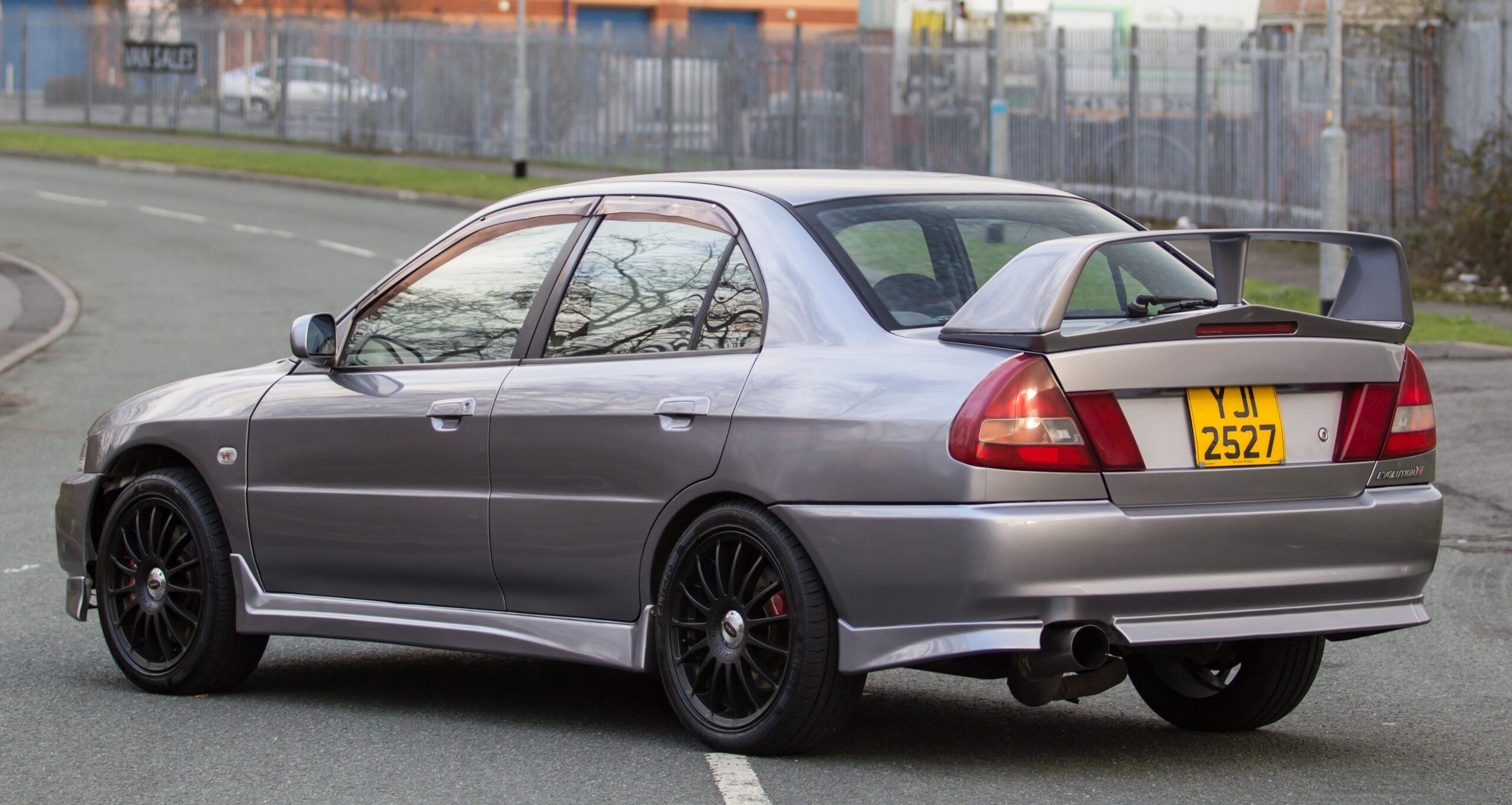
Image credit: Mitsubishi Lancer Evolution IV Rear Wing by Mathew Bedworth, CC BY 2.0, via Wikimedia Commons

コメント