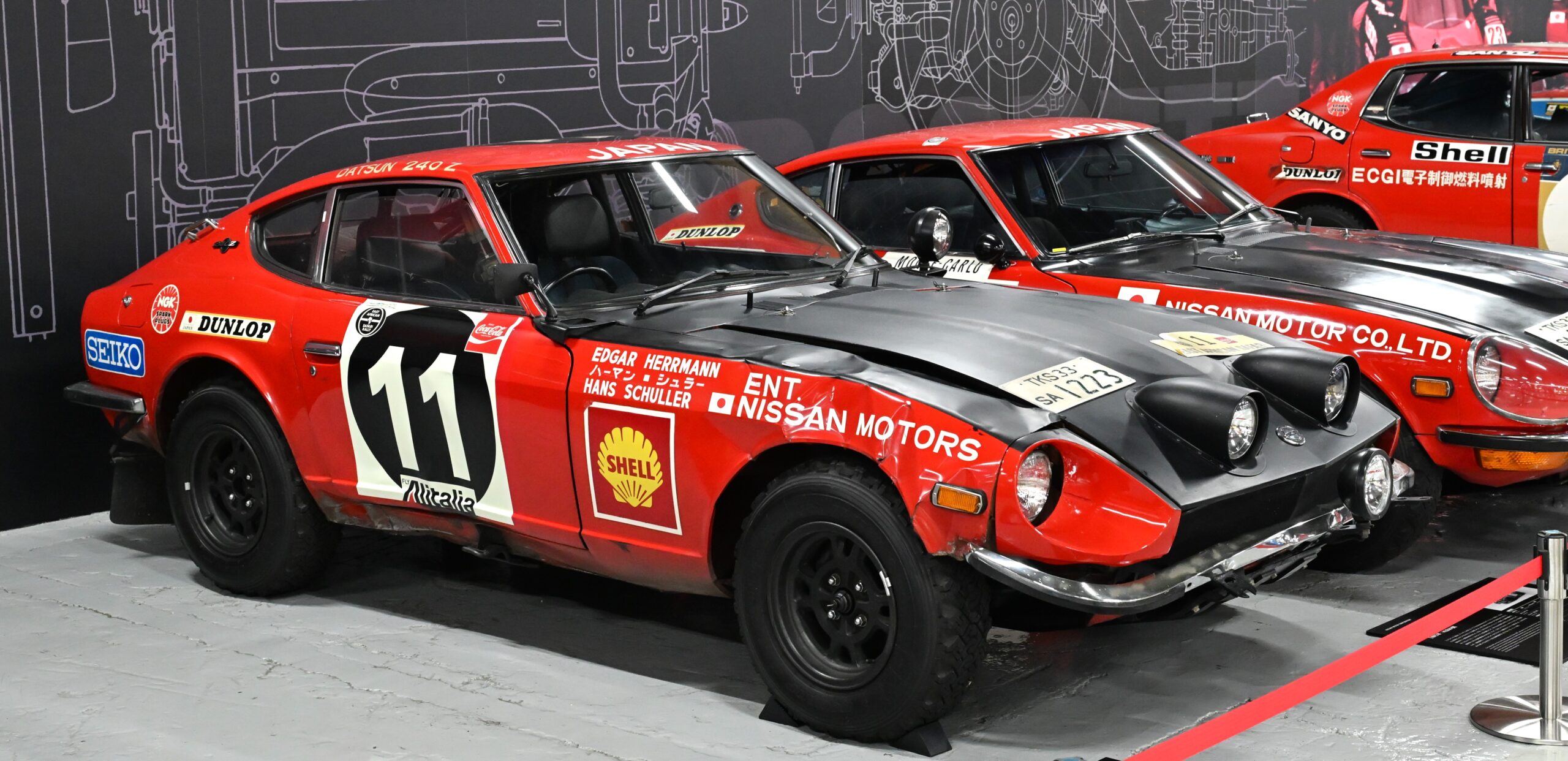
Before there was a Skyline GT-R or a Supra commanding global attention, there was the Datsun 240Z — the car widely credited with proving to the world that Japan could build a genuinely desirable sports car, not just an affordable one. Sold as the Fairlady Z in Japan and the 240Z abroad from 1969, the S30-generation Z car combined European-inspired styling, a smooth inline-six, and a price that undercut its closest rivals dramatically, and it sold in numbers that shocked the industry. Now well over fifty years old, surviving examples need careful evaluation and, in many cases, real restoration work. This guide covers what actually threatens a Z car’s long-term survival, how to approach sourcing parts, and what to expect from a restoration project.
📋 What You’ll Learn in This Guide
- Why the S30 Z car succeeded so dramatically in export markets
- The specific rust-prone areas that determine whether a shell is worth saving
- How to approach sourcing reproduction and original parts
- What a realistic full restoration process actually involves
- What to check on the L24 engine and drivetrain
- Why the 240Z Mattered
- The L24 Engine: Simple, Smooth, and Generally Robust
- Rust: The Real Determining Factor in a Z Car’s Value
- Sourcing Parts: Reproduction vs. Original
- What a Full Restoration Actually Involves
- The Fairlady Z432 and G-Nose: JDM-Only Variants Worth Knowing
- Electrical System and Interior Considerations
- What Does a 240Z/Fairlady Z Actually Cost to Import or Restore?
- Frequently Asked Questions
- Final Thoughts
Why the 240Z Mattered
The S30-generation Z car launched in Japan in late 1969 as the Fairlady Z and reached North America shortly after as the 240Z, and it succeeded on a scale that genuinely surprised even Nissan — roughly 168,000 examples were built during the core 240Z production run from 1969 to 1973, the vast majority of them exported, with the United States as the single largest market by far. It backed up its road-car credibility with real competition success: Nissan’s factory-supported S30s won the grueling East African Safari Rally outright in 1971 and again in 1973, while Brock Racing Enterprises captured back-to-back SCCA C-Production national championships in the United States in 1970 and 1971. This combination of accessible pricing, genuinely appealing styling, and real motorsport pedigree is what established Japan’s sports car credibility on the world stage well before any of the JDM legends of the 1990s existed.
The L24 Engine: Simple, Smooth, and Generally Robust
Power comes from the L24, a 2.4-liter single-overhead-cam inline-six fitted with dual Hitachi SU-type carburetors, producing around 151 horsepower in its original US-market tune. The L-series engine family has a well-earned reputation for mechanical simplicity and durability by the standards of its era — a genuine advantage for a car this old, since a straightforward, well-documented engine design is generally easier and cheaper to rebuild or maintain than something more exotic. That said, on a car now more than fifty years old, assume any example you’re considering will need at least a compression check, a review of carburetor condition and tuning, and an honest assessment of whether a full rebuild is overdue, regardless of how well it currently runs.
💡 Tip
Because the L24 and its L-series relatives were used across a wide range of Datsun and Nissan models for years, rebuild parts and specialist knowledge are more widely available than you might expect for an engine this old. This is a genuine practical advantage of buying a Z car over some rarer classic platforms where engine parts availability is a much bigger constraint.
Rust: The Real Determining Factor in a Z Car’s Value
Rust is, without question, the single biggest challenge in Z car ownership and restoration, and it’s the factor that most determines whether a specific shell is worth restoring at all versus being better used as a parts source. The most seriously affected areas typically include the sill sections, rear chassis rails, floor pan transitions, and door structures — the latter often compromised by poorly sealing window channels that let water into the door cavity over decades, silently rusting inner panels and door skins from the inside. Frame rails and floor transitions can hide serious structural rust even on a car that feels solid when you walk around it and press on visible panels, which is why a thorough rust inspection needs to go well beyond a surface-level visual check.
⚠️ Caution
Before committing to any Z car — whether you’re buying a “restored” example or a project car — have someone experienced with this specific platform inspect the frame rails, floor pans, and sill structures directly, ideally with the car up on a lift. A car that looks beautifully restored cosmetically can still be hiding serious structural rust underneath if the previous work focused on paint and trim rather than the metal underneath it.
Sourcing Parts: Reproduction vs. Original
A healthy reproduction parts industry has grown up around the Z car’s enduring popularity, and panel and trim availability is genuinely good compared to many classics of similar age — but quality and fit vary meaningfully between suppliers and even between production runs from the same supplier. Community forums dedicated specifically to Z cars are widely considered the best real-time source of intelligence on which suppliers currently produce panels that fit correctly, since this can shift over time as manufacturing runs change. As a general principle, original equipment or well-regarded reproduction parts are worth the extra cost for structural components like floor pans and sill sections, where a panel that’s even slightly out of dimension creates lasting problems — cosmetic trim pieces are generally more forgiving of minor fit variance.
What a Full Restoration Actually Involves
A genuine ground-up restoration typically follows a fairly standard sequence: complete strip-down to a bare shell, media blasting to reveal the true extent of rust and prior repair work, structural panel welding and replacement where needed, epoxy priming for corrosion protection, multi-stage paint application, and finally mechanical reassembly and detailing. This is a substantial undertaking in both time and cost, and the honest reality is that a car needing extensive structural rust repair can easily cost more to properly restore than it would to buy an already straight, rust-free example in the first place — a calculation worth doing carefully before committing to a heavily rusted project car purely because the purchase price looked like a bargain.
The Fairlady Z432 and G-Nose: JDM-Only Variants Worth Knowing
The Japanese domestic market received several variants never officially sold abroad that collectors specifically seek out. The Fairlady Z432, named for its four-valve, three-carburetor, two-cam version of a related Nissan racing engine (sharing DNA with the engine used in the Skyline GT-R of the same era), is among the rarest and most valuable S30 variants, built in very limited numbers. Perhaps more visually distinctive is the “G-nose” or ZG variant, identifiable by its extended, more aerodynamic front fender flares and a distinctive nose cone that noticeably changes the car’s front-end profile compared to a standard 240Z or Fairlady Z. If you encounter either of these variants during your search, treat any claim carefully — verify chassis numbers and documentation given how much more these command over standard cars, and be aware that G-nose styling has occasionally been replicated on standard cars, whether for legitimate cosmetic preference or to misrepresent a car’s authenticity.
Electrical System and Interior Considerations
Beyond structural rust, the S30’s original wiring harness and electrical components are now over five decades old in even the youngest examples, and deteriorating insulation, corroded connectors, and failing grounds are common sources of frustrating intermittent electrical problems. A full harness replacement — available through several specialist suppliers — is a common and worthwhile investment on a car undergoing serious restoration, even if the original harness still technically functions. Interior trim, particularly dashboard pads that can crack and fade badly after decades of sun exposure, and seat upholstery, are both areas where reproduction parts quality varies, so budget time to research current supplier reputation within the Z car community rather than assuming any listed reproduction part will be a perfect match.
What Does a 240Z/Fairlady Z Actually Cost to Import or Restore?
Prices for both ready-to-drive examples and project cars vary enormously based on rust condition, originality, and how much restoration work has already been completed and documented — a straight, rust-free shell with a clear history is worth paying a real premium for compared to a cheaper car that looks similar in photos but hides expensive structural problems. If importing from Japan, budget beyond the vehicle price for your agent’s fees, shipping, marine insurance, and your home country’s import duties and compliance costs, and get a full landed-cost estimate before setting your budget.
Frequently Asked Questions
Q: Is a heavily rusted 240Z ever worth buying as a project?
A: It can be, but only if the price reflects the true extent of the work needed — have a specialist assess the frame rails, floor pans, and sills before you buy, and compare the realistic total restoration cost against the price of an already-straight example before committing.
Q: Are later S30-generation cars (260Z, 280Z) mechanically similar to the 240Z?
A: They share the same fundamental S30 platform and family resemblance, but engine displacement, emissions equipment, and some mechanical details changed across the range as the years progressed — don’t assume every part or restoration detail from this guide applies identically to a 260Z or 280Z without confirming the specific differences for that model.
Q: How available are original Nissan factory parts today?
A: Availability varies significantly by specific part — some mechanical components remain available through Nissan’s heritage parts programs or specialist suppliers, while certain trim and body panels may only be available as reproductions of varying quality. Research the specific parts your project needs before assuming everything can be sourced easily.
Final Thoughts
The 240Z earned its place in automotive history honestly, and that historical significance is exactly why so many enthusiasts consider a proper restoration worth the effort and expense. Prioritize an honest structural assessment over cosmetic condition, budget realistically for the rust repair that virtually every surviving example needs to some degree, and lean on the strong Z car community for guidance on reputable parts suppliers. Done right, a restored 240Z remains one of the most historically important and genuinely enjoyable classic sports cars Japan has ever produced.
コメント