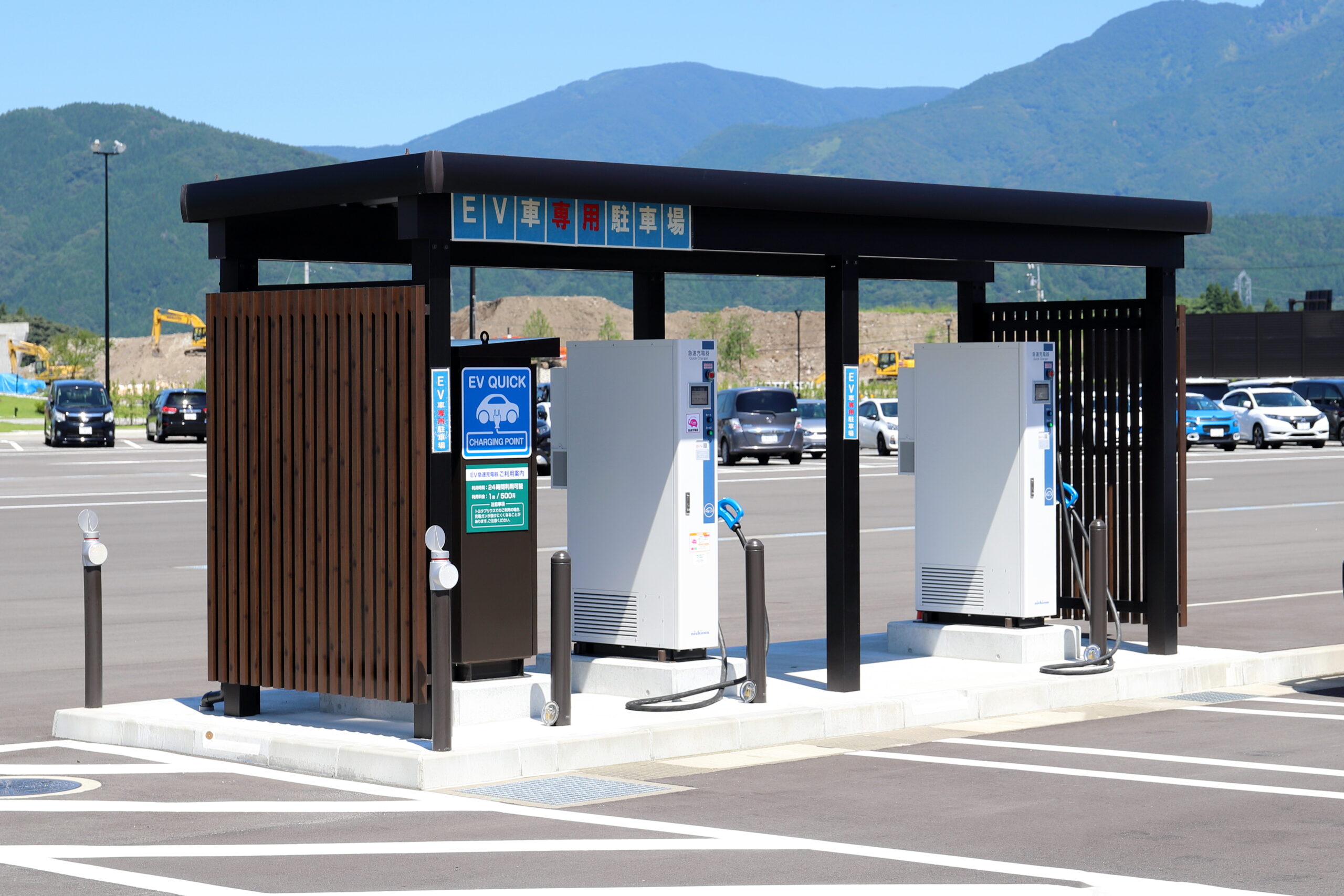
For a country that pioneered one of the world’s earliest and most widely adopted DC fast-charging standards, Japan’s EV charging landscape today presents a genuinely interesting mix of strengths and quirks worth understanding before you plan a trip or vehicle purchase around it. This guide walks through where Japan’s charging infrastructure actually stands, the technical standard you’ll encounter, where chargers are typically located, and what a visitor or new EV owner should realistically expect.
📋 What You’ll Learn in This Guide
- Why CHAdeMO, Japan’s own DC fast-charging standard, matters for compatibility
- Where charging stations are typically located across Japan
- The difference between quick chargers and standard chargers you’ll encounter
- How to actually find and use charging stations as a visitor
- Why checking current infrastructure status matters given ongoing expansion
- CHAdeMO: Japan’s Own Charging Standard
- Where You’ll Actually Find Chargers
- How to Actually Find Charging Stations
- Network Consolidation and Ongoing Expansion
- Payment and Access Methods
- Rental EVs and Charging Considerations
- Government Incentives Tied to Infrastructure Growth
- Home Charging for Residents
- Frequently Asked Questions
- Final Thoughts
CHAdeMO: Japan’s Own Charging Standard
Japan developed CHAdeMO, one of the world’s earliest DC fast-charging standards, and it remains the dominant fast-charging connector type across the country’s public charging infrastructure. This matters practically for anyone bringing or renting an EV in Japan: if you’re used to a different regional charging standard (such as the Combined Charging System common in parts of Europe and North America, or Tesla’s proprietary connector), you’ll need to confirm your specific vehicle’s compatibility with CHAdeMO connectors, or the availability of appropriate adapters, before assuming you can simply plug in at any Japanese fast charger you encounter. Most vehicles sold new within Japan’s domestic market are built with CHAdeMO compatibility as standard, but an imported or rental vehicle originally specified for a different market may present a genuine compatibility question worth confirming in advance.
Where You’ll Actually Find Chargers
Japan’s charging infrastructure spans a genuinely broad range of location types: public facility parking lots (airports, city halls, and similar government or civic buildings), large convenience store chains (a particularly convenient option given how ubiquitous convenience stores are throughout Japan), commercial facilities and shopping centers, hotels and other accommodation facilities, coin-operated parking lots, and — genuinely useful for longer road trips — roadside stations (michi-no-eki, covered in more detail elsewhere in this guide series) and highway service and parking areas along expressway routes. This broad distribution across such varied location types reflects Japan’s deliberate approach to building charging access into existing everyday infrastructure rather than relying primarily on dedicated standalone charging stations.
💡 Tip
Convenience stores, roadside stations, and highway service areas typically offer quick (DC fast) chargers suited to a relatively short charging stop during a journey, while accommodation facilities and longer-stay parking locations more commonly offer standard (Level 2-equivalent) chargers intended for slower, overnight-style charging over 8 to 14 hours. Plan your charging stops accordingly — don’t expect a hotel’s charger to top up your battery quickly during a brief stay, and don’t expect to leave a vehicle charging all day at a convenience store’s quick charger meant for brief top-up stops.
How to Actually Find Charging Stations
Several dedicated smartphone apps and online platforms help EV drivers locate charging stations throughout Japan, with services like EVsmart and PlugShare among the more commonly used options, offering searchable maps, connector type information, and often real-time availability data for specific charging locations. Given the genuinely wide distribution of chargers across many different types of everyday locations rather than one centralized network, using one of these dedicated apps rather than trying to identify charging locations ad hoc is a far more practical approach for planning any trip involving meaningful driving distance.
Network Consolidation and Ongoing Expansion
Japan’s charging infrastructure has been consolidating and expanding through coordinated efforts among charging network operators, utility companies, and local governments, working to build out a more unified, interoperable charging network rather than leaving the landscape fragmented across many disconnected individual operators. This kind of infrastructure coordination effort continues actively developing, meaning the specific number, distribution, and technical capability of available chargers should be expected to keep improving and changing over time rather than representing a fixed, finished state.
⚠️ Caution
Don’t assume charging infrastructure density in Japan is uniform nationwide — coverage in major metropolitan areas and along primary expressway corridors tends to be considerably more developed than in more remote or rural regions. If you’re planning a road trip through less densely populated areas of Japan with an EV, plan your charging stops with real care using a current app or mapping tool, rather than assuming you’ll simply find a charger when you need one the way you might with gasoline stations in a country with more mature EV infrastructure.
Payment and Access Methods
Charging station payment and access methods vary by operator and location — some require a membership card or app-based account with a specific charging network, while others accept direct payment via credit card or contactless payment at the charger itself. For visitors without an established Japanese charging network membership, confirming which payment options a specific charger actually supports before you arrive (via the charging locator apps mentioned above, which often include this detail) can save genuine frustration compared to arriving at a charger only to discover you can’t actually pay for a session without a specific membership you don’t have.
Rental EVs and Charging Considerations
Visitors specifically interested in an EV rental experience in Japan should confirm with their rental provider exactly what charging access, membership, or payment arrangement comes bundled with the rental, since this can vary meaningfully between providers and affects how straightforward actually charging the vehicle will be during your rental period. Some rental arrangements include charging network access or prepaid charging credit as part of the package, while others leave charging entirely to the renter to arrange independently — a detail worth clarifying before you’re actually on the road and need to charge.
Government Incentives Tied to Infrastructure Growth
Japan’s charging infrastructure expansion has been supported by various government subsidy and incentive programs aimed at both EV purchasers and charging infrastructure operators, reflecting broader national policy goals around vehicle electrification. These programs, covering things like purchase subsidies for EVs and installation subsidies for charging equipment at businesses and residential properties, have played a meaningful role in the pace of infrastructure buildout, though specific program details, funding levels, and eligibility criteria change relatively frequently as policy priorities and budgets shift. Anyone specifically researching incentive programs relevant to EV purchase or charging installation should check current program details directly rather than relying on potentially outdated program specifics.
Home Charging for Residents
For Japan-based EV owners rather than visitors, home charging installation is a genuinely significant consideration distinct from public charging infrastructure — but one that comes with its own practical complications in a country where a large proportion of residents live in apartments or properties without dedicated private parking and electrical infrastructure suited to home charger installation. This housing-stock reality is a genuine structural factor shaping EV adoption patterns in Japan differently than in markets with more prevalent single-family home ownership and private garage or driveway access, making public and workplace charging infrastructure correspondingly more important to the overall EV ownership experience for many Japanese residents than it might be elsewhere.
Frequently Asked Questions
Q: Is Japan’s EV charging infrastructure as developed as leading markets like Norway or parts of China?
A: This comparison shifts as all these markets continue actively expanding their infrastructure, so any specific ranking claim risks becoming outdated. Japan has genuine strengths (particularly its historical CHAdeMO fast-charging leadership and broad distribution across everyday locations) alongside real gaps in some regions, and direct comparison to other specific markets is best researched with current data rather than relying on a fixed characterization.
Q: Can I charge an EV at a standard Japanese home electrical outlet in an emergency?
A: Most EVs can technically trickle-charge from a standard household outlet, though this is a very slow charging method not intended as a primary charging strategy, and outlet compatibility and amperage considerations apply just as they would in any country. This should be treated as an emergency or backup option rather than a planned charging strategy for any meaningful driving.
Q: Do Japan’s charging stations get significantly busier during major holiday travel periods?
A: Yes — as with many countries’ charging infrastructure, demand spikes during major holiday travel periods (particularly along popular expressway routes during Golden Week, Obon, and New Year travel seasons) can lead to queuing at popular charging locations. Building extra time buffer into travel plans during these peak periods is a reasonable precaution for EV road trips specifically.
Final Thoughts
Japan’s EV charging infrastructure reflects the country’s genuine historical leadership in fast-charging technology combined with a practical, distributed approach spanning convenience stores, highway rest areas, and everyday commercial locations rather than relying on a single centralized network. Understanding the CHAdeMO standard, using a dedicated locator app, and planning charging stops with real attention to regional coverage gaps will serve any EV driver, visitor or resident, considerably better than assuming charging access will simply be as ubiquitous and effortless as it might be for gasoline refueling.
Image credit: EV quick charging point at Michi-no-Eki Ohno by Fujitani Yoshihide (CC BY-SA 4.0), via Wikimedia Commons

コメント