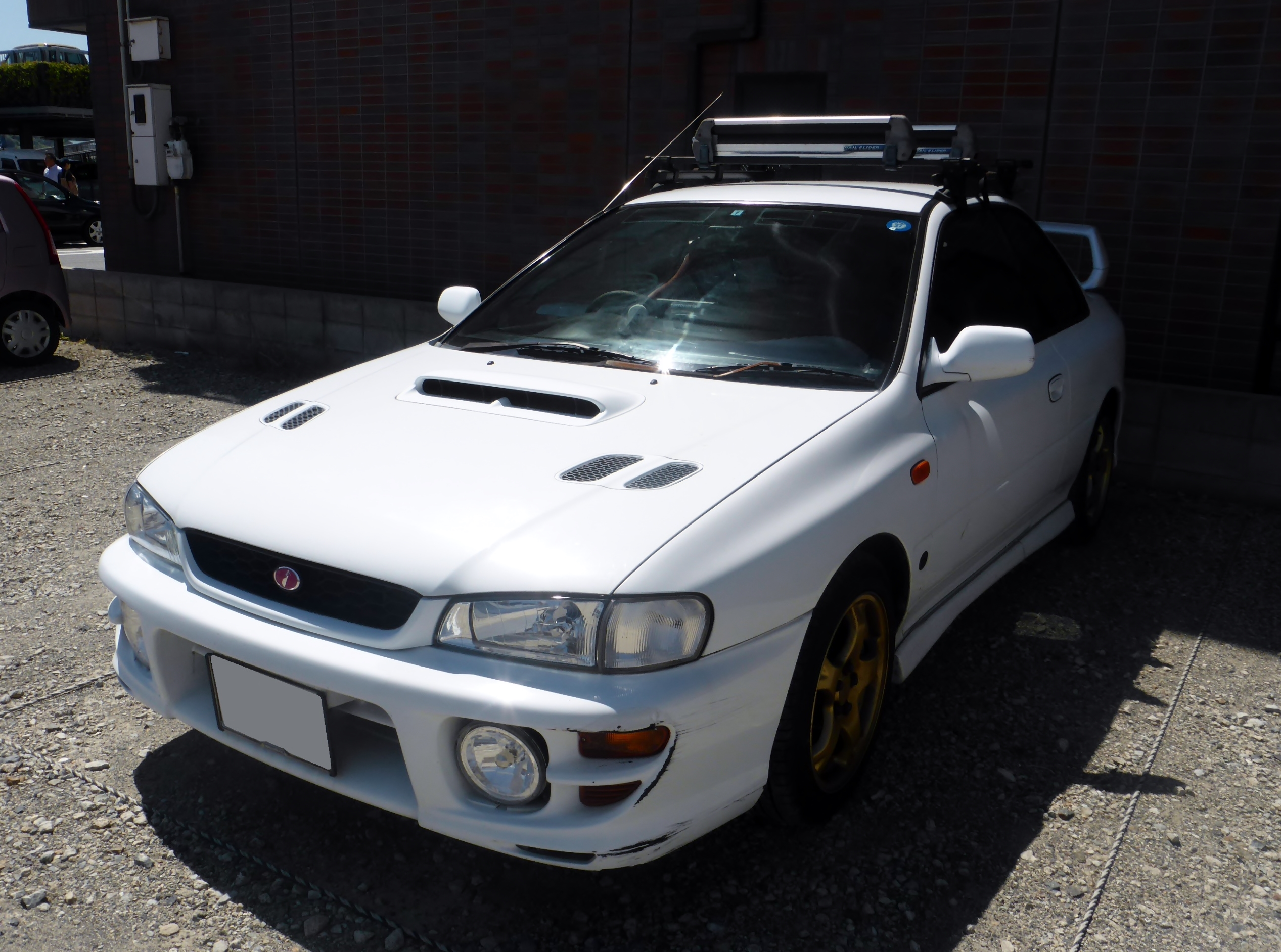
The Subaru Impreza WRX STI built its reputation the hard way — through decades of World Rally Championship competition that turned a fairly ordinary compact sedan into one of the most respected all-wheel-drive performance platforms ever built. Spanning four major chassis generations from 1992 through 2021, the WRX STI offers buyers a genuinely wide range of choices, each with its own character, strengths, and specific things to check before importing. This guide walks through the GC8, GDB, and GRB/GVB generations — the three most commonly imported — and explains what actually separates them beyond just model year.
📋 What You’ll Learn in This Guide
- The key differences between GC8, GDB, and GRB/GVB generations
- Why the JDM STI kept its 2.0-liter engine long after other markets moved to 2.5 liters
- Common EJ-series engine issues, including ringland and rod-bearing risk
- What the Driver-Controlled Center Differential (DCCD) does and why it matters
- Which generation makes the most sense for different budgets and priorities
- GC8 (1992–2000): The Original Rally Homologation Car
- GDB (2000–2007): The Value Sweet Spot
- GRB/GVB (2007–2014): Bigger, Heavier, More Modern
- Common Engine Issues Across the EJ Series
- Understanding the Driver-Controlled Center Differential (DCCD)
- Which Generation Should You Choose?
- The WRC Connection: How Rally Success Shaped the Road Car
- What Does a WRX STI Actually Cost to Import?
- Frequently Asked Questions
- Final Thoughts
GC8 (1992–2000): The Original Rally Homologation Car
The GC8 is where the WRX STI legend began, sold in Japan from late 1992 through 2000 in sedan, wagon, and — from 1998 — a widebody two-door coupe form. It’s the lightest of the major generations, typically weighing in the range of 1,235 to 1,270 kg in WRX trim, riding on a relatively short 2,520 mm wheelbase, and paired exclusively with a five-speed manual transmission throughout its production run. This combination of low weight and a compact footprint gives the GC8 a noticeably more agile, immediate feel than later, larger generations — a major reason it remains a favorite among enthusiasts who prioritize raw driving feedback over outright comfort or refinement.
A well-documented weak point on GC8-era EJ20 engines is oil leakage from aging camshaft and valve cover gaskets and seals — a maintenance item rather than a fundamental design flaw, but one that’s extremely common on cars of this age and worth checking for during any inspection.
GDB (2000–2007): The Value Sweet Spot
The GDB generation grew the Impreza platform modestly while retaining the same fundamental rally-bred formula, and it’s often described as the value sweet spot of the WRX STI lineup — later, more powerful, and more widely available than the GC8, while still well short of the size and weight of the final GRB/GVB generation. This is also the generation where JDM and export-market engine strategy diverged in an important way: the Japanese-market STI retained a 2.0-liter EJ207 engine throughout the entire GDB run (and into the GRB/GVB generation that followed), respecting the same roughly 280 PS gentleman’s agreement that capped other Japanese performance cars of the era, while markets like the United States received a larger 2.5-liter EJ257 engine rated at higher power from the factory.
💡 Tip
Don’t assume a bigger displacement number automatically means a better engine. The JDM 2.0-liter EJ207 uses a closed-deck block design that many tuners consider more robust for high-boost applications than the export-market 2.5-liter EJ257, even though the EJ257 makes more power and torque in stock form. Which one is “better” for you depends on whether you value factory power output or long-term tuning headroom more.
GRB/GVB (2007–2014): Bigger, Heavier, More Modern
The third major generation moved the WRX STI to a noticeably wider and heavier platform, with the wheelbase growing to roughly 2,620 mm and curb weight climbing toward 1,500 kg or more depending on trim — a real departure from the GC8’s compact, lightweight character. This generation was sold as a hatchback (GRB) and, from 2010, also as a sedan (GVB), and it’s notable as the only generation of Impreza-platform STI offered as a five-door hatchback in markets like the United States. The added size brought genuine improvements in refinement, stability at speed, and interior space, at the cost of some of the raw, eager feel that GC8 and early GDB enthusiasts prize.
Common Engine Issues Across the EJ Series
- Ringland failure: A well-documented risk on tuned EJ257-powered cars especially, where piston ring lands can crack under sustained high boost or an aggressive aftermarket tune — a strong argument for verifying any car’s tuning history and current boost levels before buying.
- Rod bearing wear: Related to the same high-boost, high-stress operating conditions; listen for unusual bottom-end knocking, particularly on a car with an unclear tuning history.
- Boost creep and oil starvation under high lateral G: Known EJ-series quirks under sustained hard cornering, which matters given how many WRX STIs have seen track or rally-style use.
- Valve cover and camshaft seal leaks: Common age-related maintenance items across all generations, more of an annoyance than a serious threat if caught early.
⚠️ Caution
Because the WRX STI has such a strong rally and motorsport-adjacent reputation, a meaningful share of the used market has seen hard driving, aggressive tuning, or both. A car making significantly more power than stock deserves extra scrutiny of its tuning history, supporting fuel system modifications, and engine internals — a poorly executed tune pushing stock internals well past their limits is one of the most common ways an otherwise clean-looking STI ends up needing an expensive rebuild.
Understanding the Driver-Controlled Center Differential (DCCD)
A signature STI-specific feature not found on the standard WRX is the Driver-Controlled Center Differential, which lets the driver manually adjust the front-to-rear torque split (and, on later versions, front and rear differential lock behavior) to suit different driving conditions — from slippery gravel to dry tarmac. This is a genuinely useful and enthusiast-focused piece of engineering, but it’s also a mechanically complex system with its own wear items and failure modes distinct from a standard all-wheel-drive setup. Ask specifically whether the DCCD system functions correctly across its full range when inspecting any STI, since repairs can be involved and parts aren’t always cheap.
Which Generation Should You Choose?
If you want the lightest, most immediate, and most classically “rally car” feeling STI, the GC8 is the purist’s choice, though the oldest examples require the most careful mechanical and rust inspection. If you want the strongest balance of value, power, and aftermarket support, the GDB is frequently recommended as the sweet spot of the lineup. If you prioritize a more modern, refined daily-driving experience without giving up serious performance, the GRB/GVB generation offers the most contemporary platform of the three, at the cost of some of the earlier cars’ raw character and lighter weight.
The WRC Connection: How Rally Success Shaped the Road Car
The WRX STI’s road-going character is inseparable from Subaru’s World Rally Championship program, which ran factory and semi-factory teams through the 1990s and 2000s with drivers including Colin McRae, Richard Burns, and Petter Solberg, and delivered multiple manufacturers’ and drivers’ championships. Homologation rules of the era required manufacturers to build and sell a minimum number of road-going versions of their rally cars to the public, which is a large part of why the WRX STI exists in the specific, driver-focused form it does — features like the DCCD and the emphasis on all-weather, all-surface capability trace directly back to requirements for winning rally stages on everything from tarmac to gravel to snow. Later special editions, particularly various JDM-only “spec C” and anniversary trims, leaned even further into this motorsport connection with additional weight reduction and chassis stiffening aimed squarely at driving enthusiasts rather than daily-commute comfort.
What Does a WRX STI Actually Cost to Import?
Prices vary significantly by generation, trim, documented maintenance and tuning history, and rust condition — a clean, well-documented, lightly modified or stock example will typically command a real premium over a car with an unclear history or heavy, poorly documented modifications. As with any JDM import, get a full landed-cost estimate covering the vehicle price, your agent’s fees, shipping, marine insurance, and your home country’s import duties and compliance costs before committing to a budget.
Frequently Asked Questions
Q: Is the WRX STI’s all-wheel-drive system meaningfully different from a standard WRX?
A: Yes — the STI’s all-wheel-drive hardware, including the DCCD on most trims, is more sophisticated and driver-adjustable than the standard WRX’s system, which is a major part of what justifies the STI’s price premium and its stronger motorsport pedigree.
Q: Should I worry about rust on a WRX STI?
A: Rust risk depends heavily on where a specific car spent its life before reaching the export market — cars used in colder, salted regions face more risk than those kept in milder climates. Check wheel arches, sills, and the underbody carefully regardless of the car’s apparent overall condition.
Q: How important is maintenance history on a turbocharged all-wheel-drive car like this?
A: Very important. Between the turbocharged engine, the complex all-wheel-drive and differential systems, and the fact that many examples have seen spirited or competitive use, documented maintenance history matters more on a WRX STI than on many less mechanically complex JDM classics.
Final Thoughts
The WRX STI earned its reputation through genuine motorsport success, and that engineering pedigree still shows up in how the car drives today across every generation. Match the generation to your priorities — lightweight immediacy from the GC8, value and aftermarket depth from the GDB, or modern refinement from the GRB/GVB — and insist on a thorough inspection of engine, drivetrain, and DCCD function regardless of which one you choose. Done carefully, a WRX STI remains one of the most capable and rewarding all-weather performance imports available from Japan.
コメント