Nearly every car enthusiast worldwide recognizes a kei car on sight today — tiny, boxy, unmistakably Japanese, and increasingly beloved by import fans and collectors far from Japan’s shores. But the category didn’t start as a beloved cult classic. It started as an emergency economic policy in a devastated, resource-starved postwar country, and its evolution over more than seven decades tells a genuinely fascinating story about how regulation, economics, and culture can shape an entire automotive category from the ground up. This guide traces that history from its 1949 origins to the kei cars on Japanese roads (and increasingly, driveways worldwide) today.
📋 What You’ll Learn in This Guide
- Why kei cars were created in 1949, and how restrictive the original rules were
- How the engine displacement limit grew through several distinct eras
- Which models became genuine cultural icons along the way
- How kei cars evolved from bare-bones transportation to feature-rich modern vehicles
- Why the category remains so significant in Japan today
1949: Born from Postwar Necessity
Japan’s kei car category was born directly out of the country’s devastated postwar economic reality. In July 1949, Japan’s Ministry of Transportation amended vehicle regulations to formally introduce a new category of ultra-compact automobile, hoping to encourage broader vehicle ownership at a moment when few ordinary Japanese citizens could realistically afford anything larger, and when the country’s industrial base was still rebuilding from wartime devastation. The original rules were extraordinarily restrictive by any modern standard: vehicles were limited to roughly 2.8 meters in length, about one meter in width, and an engine displacement of just 150cc for four-stroke engines — dimensions and outputs that would strike most modern drivers as closer to a motorized cart than a proper automobile.
This wasn’t an accident of overly cautious regulation — it reflected genuine, deliberate policy thinking. By keeping the category’s engineering requirements minimal, Japanese regulators hoped to allow smaller, less capitalized manufacturers to enter the auto industry without needing the scale of a major automaker, while simultaneously giving ordinary citizens a legally and financially accessible path into vehicle ownership during a period when steel, fuel, and household income were all in desperately short supply.
The 360cc Era: Kei Cars Come of Age (1960s–1975)
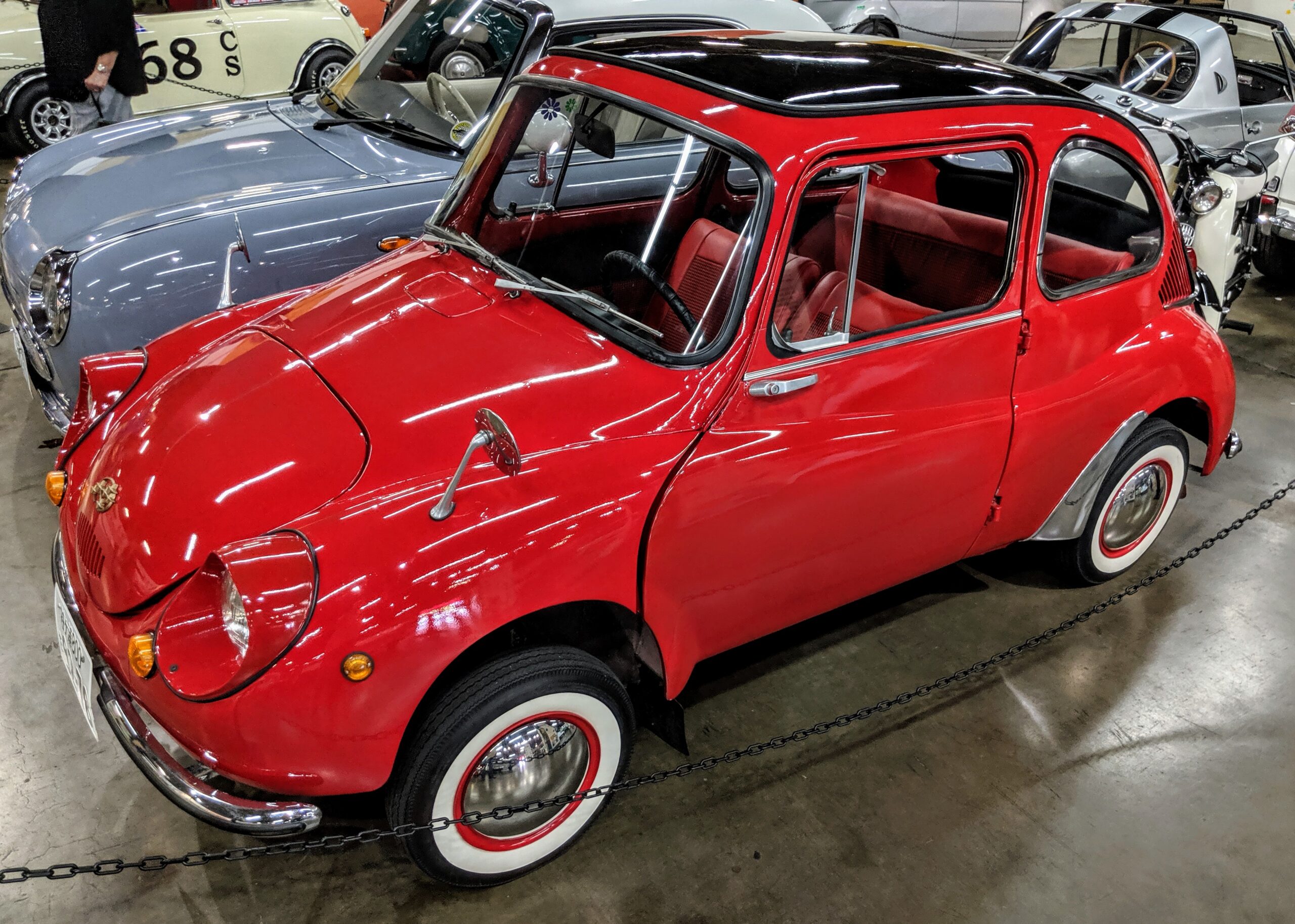
As Japan’s economy began its remarkable postwar recovery through the 1950s and into the 1960s, the kei regulations loosened accordingly, with engine displacement eventually rising to 360cc. This period produced some of the category’s most genuinely iconic and beloved early models: the Subaru 360 (affectionately nicknamed the “Lady Beetle” for its rounded shape, and one of the vehicles most credited with putting ordinary Japanese families into car ownership for the first time), the Honda N360 (Honda’s first mass-market kei car and an important stepping stone for the company’s broader automotive ambitions), and the Suzuki Fronte and Mitsubishi Minica, both of which helped establish their respective manufacturers as serious kei-class competitors. This era coincided with Japan’s broader “economic miracle” of rapid postwar growth, and kei cars became genuinely woven into that national narrative — small, efficient, unmistakably practical vehicles that matched the resourceful, efficiency-minded spirit of the era.
The 550cc Era: Modest Growth (1976–1990)
By the mid-1970s, regulators again revised the displacement limit upward, this time to 550cc, reflecting both rising Japanese living standards and a recognition that the original 360cc limit was becoming genuinely restrictive for a country whose roads, driving distances, and safety expectations had evolved considerably since 1949. This modest increase allowed manufacturers somewhat more room for performance, comfort, and safety improvements without abandoning the category’s fundamentally compact, efficient character.
💡 Tip
If you’re interested in importing a genuinely historic kei car rather than a modern one, models from the 360cc and 550cc eras (roughly 1960s through late 1980s) offer a distinctly different character than anything currently sold — smaller, simpler, and mechanically far more basic than a modern 660cc kei car, but often prized by collectors precisely for that vintage charm and historical significance. Just be aware that parts availability and specialized mechanical knowledge for these older kei models can be considerably more limited than for newer imports.
The 660cc Era: The Modern Kei Car Emerges (1990–Present)
The most significant regulatory shift in kei car history arrived in 1990, when the displacement limit rose again to its current 660cc, accompanied by a self-imposed industry power limit of roughly 64 horsepower (a limit Japanese manufacturers have generally continued to observe voluntarily even though it isn’t strictly a hard legal ceiling in the same way displacement is). This 660cc standard has now remained in place for over three decades, giving the category a genuinely stable engineering foundation from which to evolve in other directions — safety equipment, comfort features, interior packaging efficiency, and eventually electrification and driver-assistance technology, rather than continuing to chase larger engines the way the category’s earlier eras had.
This era produced the kei cars most familiar to modern audiences and overseas import enthusiasts: tall, boxy “tall wagon” kei cars like the Honda N-BOX and Daihatsu Tanto that maximize interior space within the category’s tight exterior footprint, alongside beloved kei sports cars like the Honda Beat, Suzuki Cappuccino, and Autozam AZ-1 (the so-called “ABC trio” of early-1990s kei sports cars, now genuinely sought-after collector imports) that proved the category could deliver real driving enjoyment within its strict displacement and dimensional limits.
From Necessity to Cult Status
What’s genuinely remarkable about the kei car’s evolution is the shift in cultural perception it’s undergone. A category born from postwar economic necessity — essentially the cheapest, most basic form of legal motorized transportation available to an impoverished population — has, over decades, become something closer to a beloved cultural institution and, more recently, a genuine object of enthusiast desire both within Japan and increasingly abroad. Vintage kei sports cars from the early 1990s now command real collector premiums, kei trucks have found an enthusiastic second life on American farms and small businesses (a trend covered in detail elsewhere on this site), and modern kei cars remain a dominant force in Japan’s actual new car market, regularly accounting for more than a third of all new vehicle sales nationwide — a remarkable figure for a vehicle category most other countries don’t have a real equivalent to at all.
The Kei Car’s Influence Beyond Japan
While no other country adopted anything quite as tightly integrated as Japan’s kei car system, the category’s underlying engineering philosophy — maximizing interior space and practicality within severe exterior dimensional constraints — has genuinely influenced small-car design thinking well beyond Japan’s borders. European city cars and various micro-car categories elsewhere have borrowed conceptual ideas from decades of kei car packaging refinement, even without adopting Japan’s specific regulatory framework wholesale. More directly, the recent wave of kei truck and kei car imports into the United States (made possible once individual vehicles cross the 25-year import threshold) represents kei cars genuinely exporting their influence in a very literal sense — vehicles engineered exclusively for narrow Japanese streets and postwar-era regulatory limits are now finding real second lives on American farms, in small businesses, and among enthusiasts who never could have bought one new, decades after those specific vehicles first rolled off a Japanese assembly line.
Frequently Asked Questions
Q: Why did Japan keep the kei car category instead of letting it fade out as the economy grew wealthier?
A: The category has continued serving genuine practical purposes beyond its original postwar affordability role — lower taxes, cheaper insurance, easier parking in dense urban areas, and better maneuverability on Japan’s often narrow residential streets all remain real, ongoing advantages that keep kei cars commercially relevant even in a wealthy, modern economy.
Q: Are kei car tax and insurance benefits still meaningfully different from regular cars today?
A: Yes — kei cars continue to benefit from meaningfully lower annual road tax and generally lower compulsory and voluntary insurance costs compared to standard-sized vehicles, a topic covered in more detail in our dedicated guide to kei car tax benefits.
Q: Do other countries have a genuinely equivalent vehicle category?
A: Not really in the same tightly regulated, tax-incentivized form. Some countries have informal micro-car segments or specific low-displacement vehicle classes, but Japan’s kei car system — with its specific dimensional limits, displacement cap, and dedicated tax and insurance treatment all working together as one coherent regulatory category — is genuinely distinctive on the global stage.
Final Thoughts
The kei car’s journey from a 1949 emergency measure aimed at getting a devastated postwar population into affordable transportation, to a beloved, culturally significant vehicle category that still accounts for a huge share of Japan’s new car market today, is a genuinely unique story in automotive history. Each regulatory era — the ultra-restrictive 150cc origins, the iconic 360cc golden age, the modest 550cc expansion, and the stable modern 660cc standard — left its own distinct mark on Japanese car culture, and that layered history is part of exactly why kei cars, whether a vintage Subaru 360 or a modern N-BOX, continue to fascinate enthusiasts both in Japan and increasingly around the world.
Image credit: 1970 Subaru 360 by Cullen328 (CC BY-SA 3.0), via Wikimedia Commons
コメント