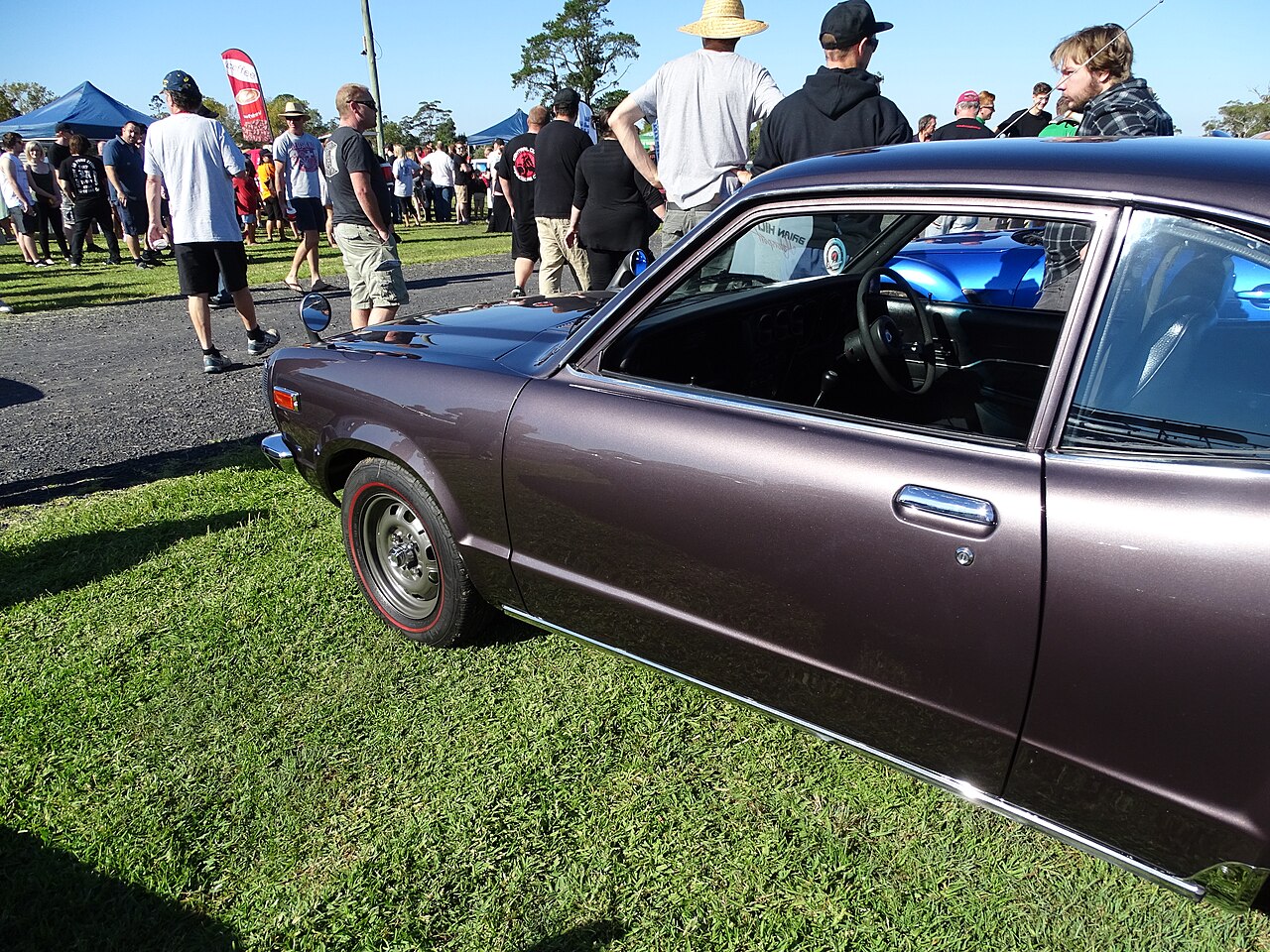
Before the RX-7 made Mazda’s rotary engine famous worldwide, the Savanna RX-3 had already made rotary history in Japan: in December 1971, it ended the Nissan Skyline GT-R’s unbeaten streak at the Fuji Tourist Trophy 500, a race the GT-R had been expected to win for a 50th consecutive time. Built from 1971 to 1978, the RX-3 combined a compact, lightweight body with Mazda’s rotary engine technology, and the rivalry it sparked with the Skyline became one of the defining stories of early-1970s Japanese motorsport. This guide covers what actually makes a good RX-3, why rotary ownership demands a different maintenance mindset than a piston engine, and how to tell an original drivetrain from a later engine swap.
📋 What You’ll Learn in This Guide
- The RX-3’s racing history and why it matters to collectors
- The difference between the original 10A and later 12A rotary engines
- Why apex seals are the single biggest thing to check before buying
- The unusual oil-consumption habits every rotary owner needs to understand
- Why finding a numbers-matching engine is harder than it sounds
The Race That Made the RX-3 Famous
The RX-3’s reputation isn’t built on marketing — it’s built on a specific, well-documented result. At the Fuji Tourist Trophy 500 in December 1971, the Savanna RX-3 beat the Skyline GT-R, ending a winning streak that had reached 49 consecutive races and denying it a 50th. RX-3s went on to take the Fuji Grand Champion touring car title in 1972, 1973, and 1975, cementing the rotary engine’s competitive credibility against Nissan’s piston-engine rival. That rivalry is a large part of why the RX-3 carries genuine historical weight beyond its modest specifications on paper.
10A vs. 12A: Know Which Engine You’re Looking At
Early RX-3s launched with the smaller 10A rotary engine, but Mazda introduced the larger, more powerful 12A in the GT model from September 1972, and it eventually became the standard engine across the range. Because both engines share a similar external appearance and swaps between rotary generations are mechanically straightforward for anyone familiar with the platform, verifying exactly which engine is actually in the car you’re looking at — and whether it’s the original unit or a later replacement — takes more than a visual glance. Ask for documentation and, where possible, cross-reference engine identification numbers rather than taking a seller’s description at face value.
💡 Tip
An original, numbers-matching engine (whether 10A or the more common 12A) is genuinely difficult to find after five decades, since many surviving RX-3s have had their original rotary replaced with a later 12A or 13B unit at some point in their life. This isn’t necessarily a dealbreaker for a driver-focused buyer, but it meaningfully affects both collector value and the car’s claim to originality — decide which matters more to you before you start shopping.
Apex Seals: The Rotary Engine’s Defining Wear Item
Unlike a piston engine, a rotary’s compression depends on apex seals running against the housing, and worn seals are the single most common serious mechanical issue on any rotary-engined car. Warning signs include thick bluish exhaust smoke, water vapor from the exhaust suggesting a coolant leak into the combustion chamber, hard cold starts, a rough or erratic idle, and noticeable power loss or misfiring under load. A compression test across all rotor faces is the most reliable way to assess seal condition, and it’s worth insisting on before you commit to any RX-3, since a full rotary rebuild is a significant expense.
Oil Consumption Is Normal — Neglect Is Not
Rotary engines are designed to consume a small amount of oil as part of normal operation, which surprises buyers coming from piston-engine backgrounds and sometimes gets mistaken for a leak or a problem. The real risk isn’t the oil consumption itself but what happens when an owner doesn’t account for it: rotary engines generally need more frequent oil changes than piston engines of the same era, and a car with sparse or inconsistent service history is a real risk regardless of how clean it looks cosmetically.
⚠️ Caution
Also inspect coolant hoses carefully. A sudden coolant loss can destroy a rotary engine far more quickly than it would a comparable piston engine, since rotary housings are highly sensitive to overheating. Deteriorated or leaking hoses on an otherwise good-looking car are a real warning sign, not a minor cosmetic issue to deal with later.
What Drives RX-3 Pricing Today?
Coupe body styles generally command more collector interest than the RX-3’s sedan and wagon variants, and cars with a verified original engine, documented maintenance history, and rust-free bodywork sit well above examples with an unclear engine history or visible corrosion. As with any car from this era, get a full landed-cost estimate — vehicle price, agent fees, shipping, insurance, and your home country’s import duties and compliance costs — before settling on a budget, since rotary-specific inspection and shipping logistics can add real cost beyond the purchase price itself.
Frequently Asked Questions
Q: Is rotary engine maintenance really that different from a normal engine?
A: Yes, in specific ways — expect more frequent oil changes, budget for eventual apex seal wear as a normal part of ownership rather than a rare failure, and find a mechanic genuinely experienced with rotary engines rather than a generalist shop, since diagnosis and repair techniques differ meaningfully from piston engines.
Q: Does it matter if the engine has been swapped for a later 12A or 13B?
A: It depends on your priorities. A swapped engine can still be a perfectly good driver and may even be easier to source parts for, but it reduces the car’s originality and collector value compared to a numbers-matching example, so be clear with yourself about which you’re actually buying before you negotiate price.
Final Thoughts
The RX-3’s place in Japanese motorsport history is real, not manufactured, and that gives it a kind of credibility that few cars from this era can claim. But rotary ownership rewards buyers who understand the engine’s specific quirks and punishes those who don’t — insist on a compression test, verify the engine’s originality if that matters to you, and find a rotary specialist before you commit. Get those fundamentals right, and the RX-3 remains one of the most historically significant lightweight coupes to come out of Japan’s early-1970s performance era.
Image credit: Mazda RX-3 Savanna Coupe, via Wikimedia Commons (CC BY 2.0)
.jpg)
コメント