📋 Summary
- Unlike the Italian-dominated steering wheel scene, Japan’s car audio industry is genuinely homegrown: Pioneer, Kenwood, Alpine, and Clarion are all Japanese companies with decades of radio and electronics heritage behind them
- Pioneer traces back to 1938 as a radio repair shop in Tokyo, later pioneering the detachable-face car stereo and the first automotive CD player
- Kenwood began in 1946 as Kasuga Radio, became Trio Corporation in 1960, and only formally adopted the Kenwood name for the whole company in 1986
- Alpine grew out of a 1967 joint venture between Alps Electric and Motorola, and the two companies eventually merged into Alps Alpine in 2019
Pop the head unit out of a genuinely well-specced JDM car and there’s a very good chance you’ll see one of four names on it: Pioneer, Kenwood, Alpine, or Clarion. Unlike some other categories covered in this series, this is one corner of JDM parts culture that’s genuinely, entirely Japanese, each of these four companies has deep domestic radio and electronics roots stretching back to the mid-20th century, well before “car audio” existed as its own product category.
- Pioneer: From Radio Repair Shop to the First Car CD Player
- Kenwood: Three Names Before Settling on One
- Alpine: Born From an Alps Electric and Motorola Partnership
- 1-DIN vs. 2-DIN: A Genuinely Practical Sizing Detail Worth Knowing
- Clarion: An Eight-Decade Journey Through Corporate Ownership
- Frequently Asked Questions
Pioneer: From Radio Repair Shop to the First Car CD Player
Pioneer Corporation’s history stretches back to January 1, 1938, when Nozomu Matsumoto founded Fukuin Shokai Denki Seisakusho, a Tokyo radio and speaker repair shop, according to the company’s own corporate history. From that repair-shop origin, Pioneer went on to pioneer several genuinely significant car audio firsts, including the detachable-face car stereo (a theft-deterrent design where the control panel itself could be removed and carried away) and the first automotive CD player. Within Japan specifically, Pioneer also operates Carrozzeria, a premium car audio sub-brand exclusive to the domestic JDM market; sources are somewhat inconsistent on the brand’s exact launch date, with Pioneer’s own 1999 press materials referencing that year specifically, so that’s the safer date to cite rather than earlier unconfirmed references.
💡 Tip: Carrozzeria Is a JDM-Exclusive Sub-Brand Worth Knowing
If browsing Japanese car audio listings, seeing the Carrozzeria name doesn’t indicate a separate manufacturer, it’s Pioneer’s own premium domestic-market line, named after the Italian word for coachbuilder. It generally won’t appear on Pioneer products sold outside Japan.
Kenwood: Three Names Before Settling on One
Kenwood’s corporate history is genuinely more winding than its current single-name branding suggests. According to company history sources, it began in 1946 as Kasuga Radio Co., Ltd. in Nagano Prefecture, was renamed Trio Corporation in 1960, and only introduced the “Kenwood” brand specifically for the US export market in 1964. It wasn’t until 1986 that the company formally renamed itself Kenwood Corporation across the board, meaning for a genuinely significant stretch of its history, the company operated under the Trio name domestically while selling as Kenwood abroad.
Alpine: Born From an Alps Electric and Motorola Partnership
Alpine Electronics traces its specific car audio origins to 1967, when it was formed as a joint venture between Alps Electric and Motorola, originally under the name Alps Motorola Company, Ltd., beginning car radio production in 1969. Alps Electric itself, the Japanese parent in that partnership, traces back further still, to Kataoka Electric Co., founded November 1, 1948 in Tokyo, which was renamed Alps Electric in December 1964. In a full-circle corporate development, Alps Electric and Alpine Electronics eventually merged into a single company, Alps Alpine, in 2019.
1-DIN vs. 2-DIN: A Genuinely Practical Sizing Detail Worth Knowing
Before choosing between a Pioneer, Kenwood, Alpine, or Clarion head unit, it’s genuinely useful to understand the DIN sizing standard that determines whether a given unit will physically fit a specific dashboard opening at all. DIN, named for the German standards body that established it (Deutsches Institut für Normung), defines two common head unit heights sharing the same 180mm width: a single-DIN opening measures roughly 180 x 50mm, while a double-DIN opening is twice as tall at roughly 180 x 100mm. This matters well beyond simple physical fitment: single-DIN units, being physically smaller, generally lack the display area for a proper touchscreen (a small fold-out screen exists but remains comparatively rare and costly), while double-DIN units provide enough face area to comfortably house a full touchscreen interface capable of running Apple CarPlay or Android Auto, features increasingly expected on a modern head unit. As a practical rule, a dashboard opening large enough for double-DIN will always accommodate a single-DIN unit as well (typically with a trim panel or mounting kit to fill the gap), but the reverse isn’t true, making this dimension the very first specification to confirm before shopping any of these four brands’ current touchscreen-capable lineups for a specific JDM dashboard.
Clarion: An Eight-Decade Journey Through Corporate Ownership
Clarion’s roots go back to December 18, 1940, when it was founded as Hakuson Wireless Electric Company, later adopting the Clarion name at the end of 1970. Its more recent corporate history involves several ownership changes worth knowing about: Clarion became part of the Hitachi group in December 2006, and was later acquired by French auto parts manufacturer Faurecia in 2019. That kind of ownership evolution is genuinely common across Japan’s electronics sector broadly, and doesn’t diminish Clarion’s eight-decade history in car audio specifically.
⚠️ Caution: JDM-Market Head Units May Differ From Export Versions
Head units sold specifically within the Japanese domestic market, including Carrozzeria-branded Pioneer units, may use different connector standards, regional navigation data, or lack certain export-market certifications compared to units sold overseas. If planning to source a genuine JDM head unit for an import build, researching compatibility with your specific vehicle and region beforehand is worth the effort.
Frequently Asked Questions
Q: Are Pioneer, Kenwood, Alpine, and Clarion all Japanese companies?
A: Yes, all four have Japanese origins dating back to the 1930s-1940s, well before car audio existed as a distinct product category.
Q: What is Carrozzeria?
A: Pioneer’s premium car audio sub-brand exclusive to the Japanese domestic market.
Q: Was Kenwood always called Kenwood?
A: No. The company began as Kasuga Radio in 1946, became Trio Corporation in 1960, introduced “Kenwood” as an export brand in 1964, and only formally renamed the whole company Kenwood Corporation in 1986.
Q: Is Clarion still an independent Japanese company?
A: No longer independently. It became part of the Hitachi group in 2006 and was acquired by French company Faurecia in 2019, though it retains its own brand identity.
This article is for general informational purposes based on publicly available company history sources. Company histories, ownership structures, and product lineups change over time – always verify current details directly with the brand before purchasing.
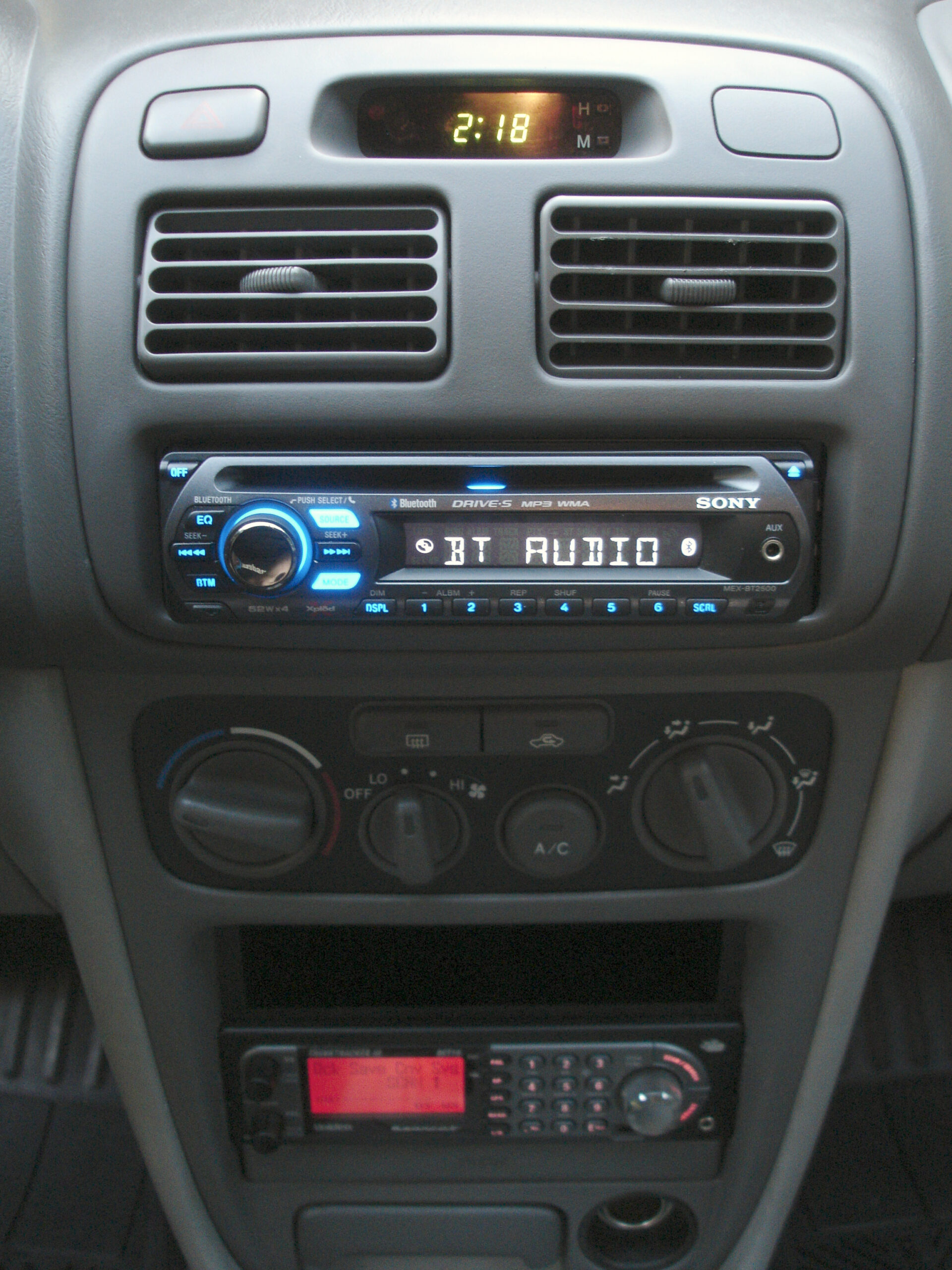
Image credit: Car dashboard with aftermarket head unit installed by Zuzu, CC BY-SA 3.0, via Wikimedia Commons
コメント