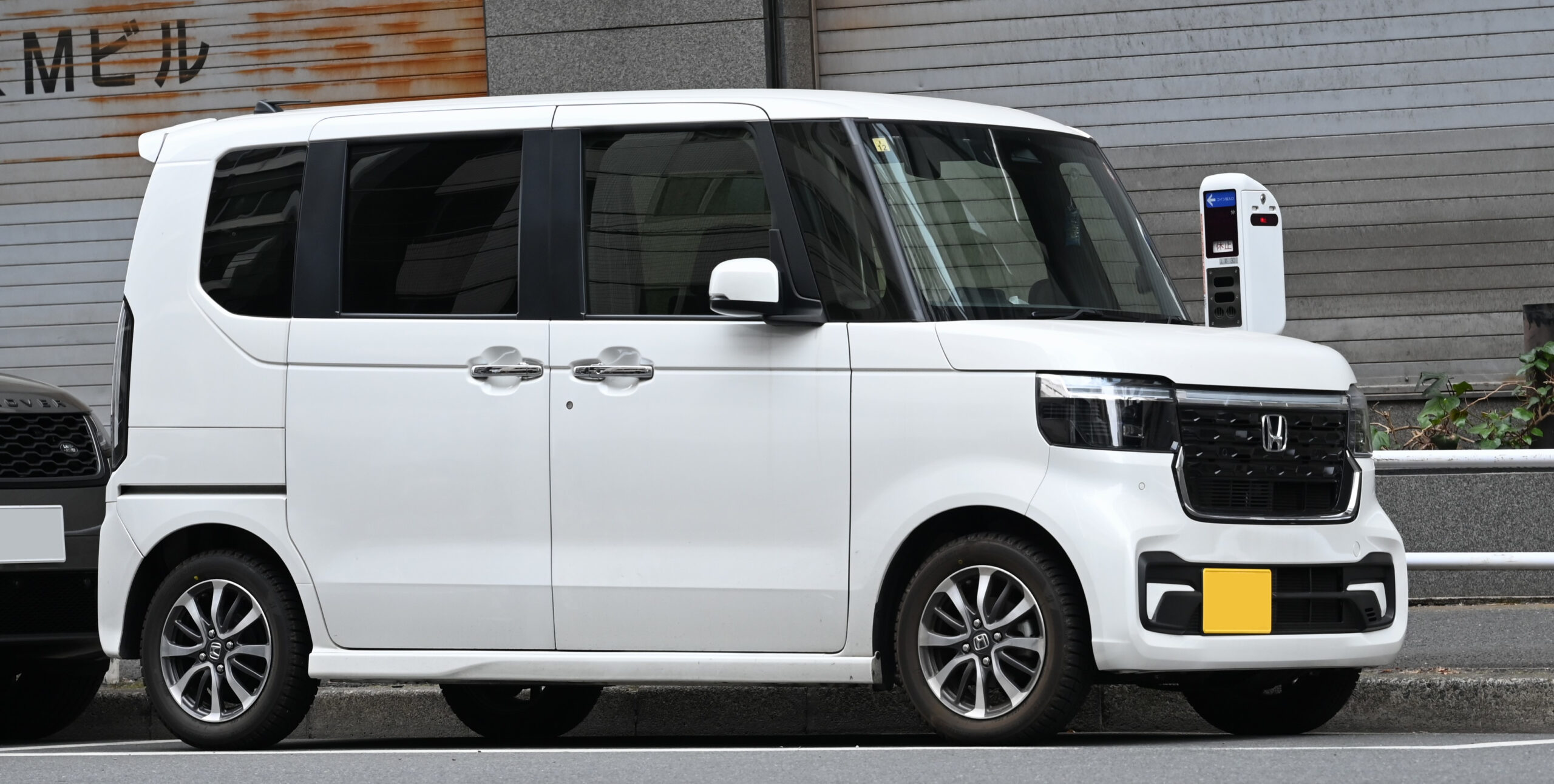
Look at Japan’s best-selling car charts in any recent year, and you’ll consistently find a tall, boxy kei van sitting at the very top — not a sedan, not an SUV, but a genuinely compact vehicle built around Japan’s strict kei-car size and engine regulations, routinely outselling every full-size vehicle in the country. The Honda N-Box has held the title of Japan’s best-selling passenger vehicle for multiple consecutive years running, with Suzuki’s Spacia and various other kei van models close behind. This guide explains why kei vans specifically, as opposed to other kei-class body styles, have become such a dominant force in Japan’s domestic auto market.
📋 What You’ll Learn in This Guide
- Why the tall-wagon kei van body style specifically dominates sales charts
- How kei regulatory advantages translate into real ownership savings
- Why interior space efficiency became the defining competitive battleground
- How sliding doors and low floors suit Japan’s specific urban and family needs
- Why this segment remains distinctly Japanese despite kei cars’ growing export popularity
- The Tall-Wagon Formula That Conquered the Charts
- The Regulatory Advantages Behind Kei Popularity
- Why Interior Space Efficiency Became the Battleground
- Sliding Doors and Low Floors: Solving Real Family Logistics
- Beyond Passenger Vans: The N-Box’s Broader Cultural Significance
- Turbo and Naturally Aspirated Variants: A Practical Choice
- The Competitive Landscape Beyond Honda and Suzuki
- Frequently Asked Questions
- Final Thoughts
The Tall-Wagon Formula That Conquered the Charts
Modern kei vans like the Honda N-Box, Suzuki Spacia, and Daihatsu Tanto represent a specific, highly refined body style within the broader kei category: a genuinely tall, boxy silhouette that prioritizes maximizing usable interior cabin space within kei-class exterior dimension limits, rather than any concession to sleek styling. This “tall wagon” approach has come to dominate kei sales specifically because it solves the fundamental engineering puzzle kei regulations present — how do you fit genuinely useful passenger and cargo space into a vehicle constrained to strict length, width, and engine displacement limits — more effectively than any other kei body style, making it the default choice for families and practical-minded buyers rather than a niche configuration.
The Regulatory Advantages Behind Kei Popularity
Kei-class vehicles, capped at 660cc engine displacement and strict exterior dimension limits, unlock a genuine package of ownership cost advantages under Japanese regulation: lower purchase and annual road taxes than standard-class vehicles, reduced compulsory insurance costs, and in many areas, exemption from having to prove access to dedicated off-street parking before registering the vehicle — a requirement that applies to standard-class vehicles in many urban areas but not to kei cars. These advantages compound meaningfully over years of ownership, and they’re a major structural reason kei vehicles broadly, and kei vans specifically as the most practical body style within the category, have captured roughly a third or more of Japan’s total new passenger car market in recent years.
💡 Tip
If you’re researching kei vans specifically for their space efficiency, pay attention to sliding door configurations and floor height specifications, not just overall passenger volume figures — these two factors together determine how genuinely practical a specific model is for real-world tasks like loading child car seats, managing strollers, or helping older family members in and out of the vehicle, which is exactly the kind of everyday usability that’s driven this segment’s popularity far more than raw interior volume numbers alone.
Why Interior Space Efficiency Became the Battleground
Japanese manufacturers have engaged in genuinely intense competitive engineering specifically around maximizing kei van interior space within the fixed exterior dimension envelope kei regulations impose — pushing wheelbases as long as possible relative to overall vehicle length, minimizing structural intrusion into the cabin, and designing genuinely flat, low floors that maximize both headroom and ease of entry. This space-efficiency arms race is a large part of why the segment has evolved so dramatically from earlier, more cramped kei van generations into today’s models, which manage to offer surprisingly generous interior room for passengers and cargo despite operating under exactly the same strict exterior size limits their predecessors did decades ago.
Sliding Doors and Low Floors: Solving Real Family Logistics
The near-universal adoption of sliding rear doors and low, flat floor designs across the modern kei van segment reflects genuine attention to the practical logistics of Japanese family life and urban parking realities — sliding doors open fully even in the tight parking spaces common in dense Japanese residential areas where a conventional swinging door might not have room to open completely, while low floors make loading groceries, securing child seats, and general passenger access genuinely easier than a taller step-up would allow. These design choices aren’t incidental features; they’re direct responses to the actual practical constraints and needs of the Japanese buyers this segment is built around, which is a large part of why the formula has proven so durably popular across multiple competing manufacturers rather than being one brand’s isolated success.
⚠️ Caution
If you’re considering importing a kei van to a country outside Japan, don’t assume the vehicle’s tax and regulatory advantages will translate at all — kei-class benefits like reduced road tax and parking exemptions are specific to Japanese regulation and generally don’t carry over to other countries’ vehicle classification systems. Evaluate an imported kei van purely on its own practical merits (size, efficiency, versatility) for your specific use case rather than assuming any of Japan’s domestic ownership cost advantages will apply.
Beyond Passenger Vans: The N-Box’s Broader Cultural Significance
The Honda N-Box’s sustained multi-year run as Japan’s single best-selling passenger vehicle — outselling every conventional sedan, SUV, and larger vehicle in the country, not just other kei models — represents a genuinely significant statement about what Japanese consumers actually prioritize in daily-use vehicle ownership: practical space efficiency, low running costs, and easy maneuverability in dense urban and suburban environments, over the styling, performance, or status considerations that drive vehicle preference more heavily in many other major auto markets. This consistent consumer preference pattern, sustained across multiple competing manufacturers’ models rather than being one brand’s isolated phenomenon, offers real insight into Japan’s distinct automotive culture compared to markets where larger vehicles dominate sales charts.
Turbo and Naturally Aspirated Variants: A Practical Choice
Most kei van model lines offer both naturally aspirated and turbocharged engine variants, and understanding the practical tradeoff between them is genuinely useful for prospective buyers rather than a purely enthusiast concern. Given kei-class vehicles’ strict 660cc displacement ceiling, a turbocharged variant offers meaningfully more usable power for merging onto highways, climbing hills, or driving with a full passenger and cargo load — genuinely relevant considerations given how much interior volume these vehicles are designed to carry relative to their tiny engine displacement. Naturally aspirated variants, in turn, typically offer a lower purchase price and often somewhat better fuel economy for buyers whose usage skips more demanding driving conditions. Neither is objectively superior; the right choice depends genuinely on your specific typical driving conditions and load.
The Competitive Landscape Beyond Honda and Suzuki
While the Honda N-Box and Suzuki Spacia frequently top sales charts, the broader kei van segment includes genuinely strong competing offerings from Daihatsu (the Tanto, among others), Nissan, and other manufacturers, each bringing slightly different specific strengths in areas like interior configuration flexibility, specific safety technology packages, or styling variations aimed at different buyer demographics within the broadly similar tall-wagon formula. This genuinely competitive, multi-manufacturer landscape — rather than one dominant model with no real competition — is part of why the segment has continued to innovate and improve over successive vehicle generations rather than stagnating once a winning formula was established.
Frequently Asked Questions
Q: Are kei vans only popular because of their tax advantages, or do people genuinely prefer them?
A: Both factors play a genuine role — the tax and regulatory advantages provide real financial incentive, but the segment’s sustained, decades-long popularity and continuous space-efficiency innovation suggest genuine consumer preference for the practical formula itself, not purely cost-driven purchasing decisions. Manufacturers wouldn’t continue investing so heavily in space-efficiency engineering if buyers were purchasing purely for tax reasons regardless of the actual product.
Q: Is there a meaningful difference between a “kei van” and a “kei wagon” in Japanese market terminology?
A: Terminology and exact category boundaries can vary somewhat by manufacturer and context, but the tall-wagon passenger-focused kei vehicles discussed in this guide (N-Box, Spacia, Tanto, and similar models) are generally what’s meant by kei van or kei wagon in casual usage, distinct from kei trucks (covered elsewhere in this guide series) or smaller, lower-roofline kei hatchbacks.
Q: Do kei vans offer genuine highway driving capability, or are they purely city cars?
A: Modern kei vans are legally capable of highway driving and many owners do use them for longer trips, though their smaller engines and lighter construction mean a genuinely different highway driving character than a larger standard-class vehicle, particularly regarding passing power and high-speed stability in strong crosswinds. They’re primarily optimized for everyday urban and suburban use rather than long-distance highway touring specifically.
Final Thoughts
Japan’s sustained love affair with kei vans reflects a genuine convergence of smart regulatory incentives, relentless space-efficiency engineering, and design choices directly responsive to real Japanese family and urban living needs — a combination that’s kept the segment at the very top of the country’s sales charts for years running. Understanding this formula offers real insight into why Japan’s automotive priorities differ so distinctly from many other major markets, and why the humble kei van has become such an enduring, dominant force in Japanese car culture.
Image credit: Honda N-BOX Custom, 3rd generation (CC0), via Wikimedia Commons

コメント