📋 Summary
- The original AW11 MR2, launched in 1984, was Toyota’s first mid-engine production car and remains one of the most fun-to-drive small sports cars of the 1980s
- Its chassis tuning benefited directly from input by Lotus engineer Roger Becker, giving the car genuine European-influenced handling character on top of Japanese reliability
- A Yamaha-co-developed twin-cam engine, available in both naturally aspirated and supercharged form, gave the AW11 real performance credibility well beyond its compact dimensions
- It is frequently overshadowed today by its second-generation successor, the SW20, despite arguably being the purer, more focused expression of the original MR2 concept
Long before the MR2 name became associated with the more dramatic, Ferrari-esque styling of the second-generation SW20, the car that started it all was a small, wedge-shaped, pop-up-headlight coupe that quietly did something no other mainstream Toyota had ever done: put the engine behind the driver. The AW11 MR2 is a genuinely important car in Toyota’s history, and one that deserves recognition well beyond its role as “the MR2 before the famous one.”
Toyota’s First Mid-Engine Production Car
The idea behind the MR2 traced back to a Toyota research project that began in the mid-1970s, exploring what a genuinely fun-to-drive car with good fuel economy might look like at a time when the global oil crisis had put efficiency at the center of automotive thinking. That research eventually led to a mid-engine, transverse layout – a configuration Toyota had never put into mass production before – and the finished car launched in June 1984 as the AW11 MR2, positioned to compete directly with other compact sports cars of the era such as the Pontiac Fiero, Fiat X1/9, and Honda’s sportier CR-X models.
What set the MR2 apart from most of that competition was the seriousness with which Toyota approached the engineering. Rather than simply relocating an existing engine behind the seats of a conventional small car, Toyota developed a dedicated platform around the mid-engine layout from the outset, and crucially, brought in outside expertise to make sure the resulting chassis actually handled the way a genuine sports car should.
The Lotus Connection
One of the most historically significant, and often underappreciated, details of the AW11’s development is that its chassis tuning benefited directly from input by Roger Becker, a Lotus engineer with deep experience refining the kind of precise, communicative handling that Lotus built its entire reputation on. That collaboration gave the MR2 a chassis character that felt genuinely different from typical Japanese sports cars of the era – sharper, more neutral, and more willing to rotate through a corner than most of its competition, while still carrying Toyota’s reputation for everyday reliability.
💡 Tip: Know the Difference Between Naturally Aspirated and Supercharged Models
The AW11 was offered with two distinct engine options, and the difference matters considerably to both driving character and value. The naturally aspirated 4A-GE, a twin-cam 1.6-liter engine co-developed with Yamaha, produced power in the range of roughly 112-128 hp depending on market and model year, and is prized for its free-revving character. From 1986, Toyota introduced a supercharged variant, the 4A-GZE, using a Roots-type supercharger and intercooler to push output to around 145 hp, arriving in the US market in 1988 paired with a strengthened transaxle to handle the additional torque. Neither is objectively “better” – the naturally aspirated car is often preferred for its purer, more classic sports-car feel, while the supercharged car offers genuinely stronger real-world performance – but you should know which one you are shopping for.
An Engine Ahead of Its Time in Some Respects
The 4A-GE engine used in naturally aspirated AW11s was also notable for being among the first Toyota engines to use T-VIS, Toyota’s variable intake system, designed to improve low-rpm torque without sacrificing high-rpm power – a genuinely sophisticated piece of engineering for a mainstream compact sports car engine of the mid-1980s. This same basic engine family would go on to power other performance Toyotas of the era, including versions of the Corolla GT-S, giving the MR2’s drivetrain a reputation for both performance and proven reliability across multiple applications.
Living in the Shadow of Its Successor
When the second-generation SW20 MR2 arrived in 1989, its far more dramatic, Ferrari 348-influenced styling captured enormous attention, and it remains the version most casual enthusiasts picture when they hear “MR2” today. That popularity has, somewhat unfairly, pushed the original AW11 into the shadows despite it being, in many ways, the purer and more focused execution of the original MR2 brief: a light, affordable, genuinely engaging mid-engine sports car built for driving enjoyment above all else, rather than outright visual drama.
For collectors specifically interested in the MR2 concept’s origins, or simply looking for a lighter, more affordable entry point into mid-engine Toyota ownership than the increasingly expensive SW20 now commands, the AW11 offers genuine appeal on its own terms.
What to Check Before Buying
- Rust in structural and suspension areas: As with any Japanese unibody car from the 1980s, corrosion is the primary long-term threat. Pay particular attention to the sills, floor pans, and rear suspension mounting points.
- Timing belt and cooling system service history: The mid-engine layout makes some routine maintenance, including timing belt service, more labor-intensive than on a front-engine car. Confirm recent, documented service history, particularly for the timing belt, water pump, and associated components.
- Supercharger condition on 4A-GZE cars: If evaluating a supercharged model, confirm the supercharger unit itself, along with the intercooler and associated plumbing, is in good working order, since these are specialized components that add complexity relative to the naturally aspirated engine.
- Electrical system condition: Pop-up headlight mechanisms and other 1980s-era electrical components can develop age-related issues. Confirm all electrical systems function correctly during any test drive or inspection.
- Overall originality versus modification: Given the car’s relatively affordable historical price point compared to more exotic classic JDM icons, many surviving AW11s have been modified over the decades, ranging from tasteful performance upgrades to more extensive, less desirable alterations. Decide what level of originality you are looking for before shopping.
⚠️ Caution: Mid-Engine Maintenance Access Can Surprise First-Time Owners
If you have only owned front-engine cars, the AW11’s mid-engine layout changes some basic maintenance realities. Certain routine service tasks that are straightforward on a conventional car can require more disassembly or specialized knowledge on a mid-engine layout, and not every general mechanic is comfortable or experienced working on this configuration. Before buying, it is worth identifying a mechanic or specialist genuinely familiar with the AW11 specifically, rather than assuming any competent Toyota mechanic will be equally comfortable with the car’s mid-engine quirks.
Why the AW11 Deserves a Second Look
The AW11 represents a moment of genuine engineering ambition from Toyota – a willingness to bring in outside expertise, take on the complexity of a mid-engine layout for the first time, and build something whose entire purpose was driving enjoyment rather than practicality or status. It may not carry the same instant recognition as the SW20 that followed it, but for anyone who actually drives one, the AW11’s combination of light weight, Lotus-influenced chassis tuning, and eager, free-revving engine options makes a compelling case that the original MR2 got the fundamentals exactly right from the very start.
Body Styles and Special Editions Worth Knowing
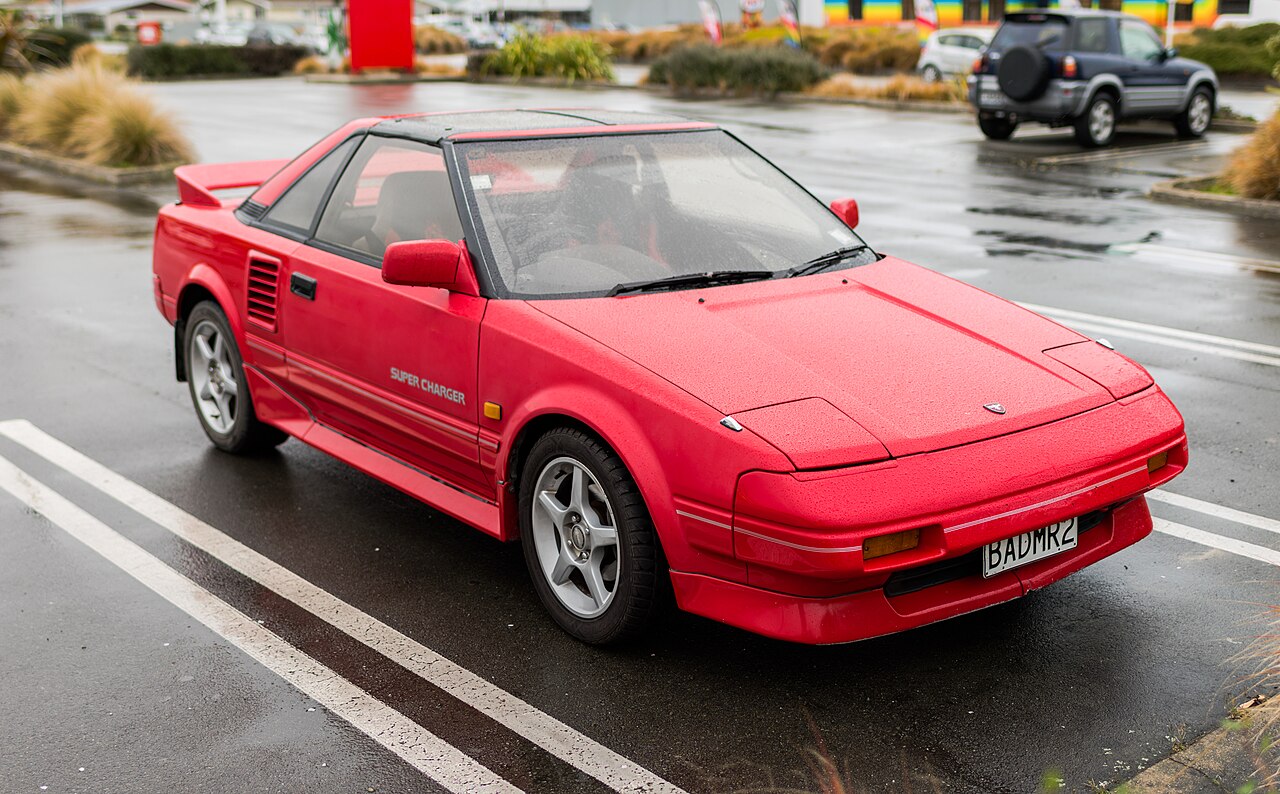
Beyond the standard hardtop coupe, Toyota also offered a T-bar roof option on many AW11s, giving owners removable glass roof panels for open-air driving without the structural compromises of a full convertible. Various regional special editions were also produced during the model’s run, sometimes with unique color schemes, wheel designs, or minor trim differences specific to individual markets. When researching a specific car, it is worth understanding exactly which market it was originally sold in, since specification details, available options, and even some mechanical components can differ between Japanese-market, European, and North American cars from the same model year.
Frequently Asked Questions
Q: What does “MR2” stand for?
A: It stands for “Midship Runabout 2-seater,” describing the car’s mid-engine layout and two-seat configuration.
Q: What is the difference between the AW11 and the later SW20 MR2?
A: The AW11 (1984-1989) is the original, first-generation MR2 with wedge-shaped, pop-up-headlight styling. The SW20 (1989-1999) that followed had much more dramatic, exotic-influenced styling and represents a distinctly different design philosophy, despite sharing the same mid-engine layout concept.
Q: Is the naturally aspirated or supercharged engine better?
A: Neither is objectively superior – they offer different driving experiences. The naturally aspirated 4A-GE is prized for its free-revving character, while the supercharged 4A-GZE, introduced in 1986, offers meaningfully stronger real-world performance thanks to forced induction.
Q: Did Toyota really work with Lotus on this car?
A: Lotus engineer Roger Becker was directly involved in tuning the AW11’s chassis, contributing genuine European sports-car handling expertise to the project alongside Toyota’s own engineering team.
Q: Is the AW11 more affordable than the SW20?
A: Generally, yes, though values for well-preserved, original examples have been rising as classic JDM interest has grown. It remains a comparatively accessible entry point into mid-engine Toyota ownership relative to the increasingly expensive SW20.
This article is for general informational purposes. Specifications and historical details are based on widely cited sources and may vary slightly between references. Always consult a qualified classic-car specialist before purchasing a collector vehicle.
Image credit: 1987 Toyota MR2 AW11 by SealyPhoto, CC BY-SA 4.0, via Wikimedia Commons
コメント