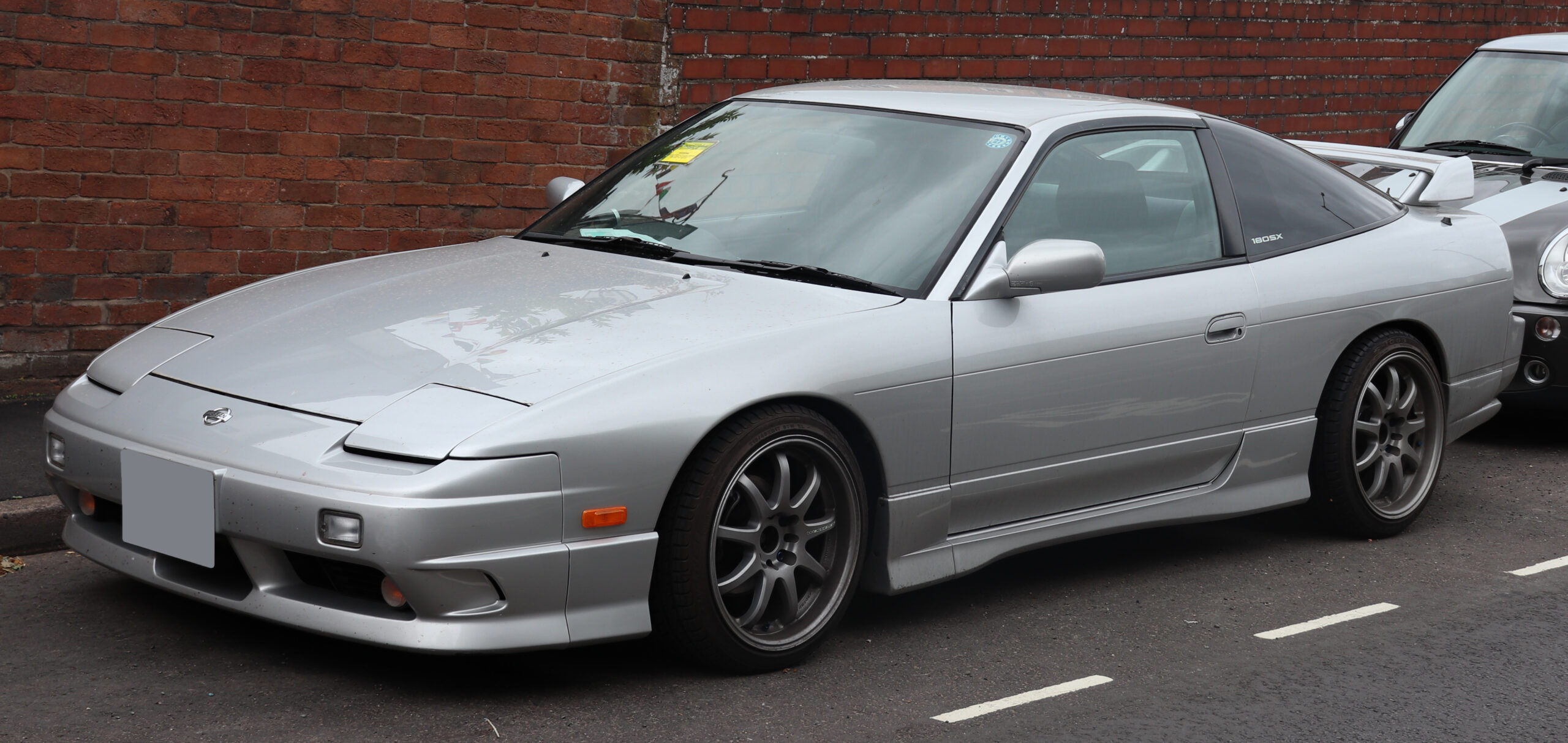
If you’ve spent any time researching JDM imports, you’ve likely run into confusion about the 180SX and 240SX — two cars that share a chassis and much of their bodywork, yet come from completely different markets with meaningfully different engines under the hood. Understanding exactly how they relate to each other, and to the Silvia covered elsewhere in this series, will save you from a common and costly import mistake. This guide clears up the confusion and helps you decide which one actually fits your goals.
📋 What You’ll Learn in This Guide
- How the 180SX and 240SX relate to the S13 Silvia chassis
- The real engine difference: SR20DET turbo vs. KA24DE naturally aspirated
- Why so many 240SX owners perform SR20DET engine swaps
- What to check for rust and structural damage on this chassis
- Which car makes more sense depending on your budget and goals
- Same Chassis, Different Markets, Different Names
- The SR20DET: Why It Defines the 180SX’s Reputation
- Why So Many 240SX Owners Do an SR20DET Swap
- Which Should You Choose: Import a 180SX, or Buy and Swap a 240SX?
- Structural Issues to Check Regardless of Which You Choose
- Don’t Forget the 200SX: A Third Naming Variant
- Parts Interchangeability and Aftermarket Support
- What Does an S13 Actually Cost to Import?
- Frequently Asked Questions
- Final Thoughts
Same Chassis, Different Markets, Different Names
The 180SX, 240SX, and S13-generation Silvia all share the fundamental S13 platform, but they were sold in different markets under different names with meaningfully different specifications. The 180SX was Nissan’s Japan-market hatchback variant, fitted from the factory with pop-up headlights and, crucially, a turbocharged engine — first the CA18DET and later the SR20DET as Nissan updated the lineup. The 240SX was the version sold in North America, sharing the same coupe and hatchback body styles as the 180SX and Silvia, but powered exclusively by Nissan’s KA24E and later KA24DE engines — naturally aspirated 2.4-liter fours with no factory turbocharged option offered in that market at any point.
💡 Tip
If you’re shopping specifically for turbocharged performance in factory form, look for a genuine 180SX rather than a 240SX — the 240SX never received a factory turbo engine option in any model year. A “240SX” advertised with a turbocharged engine has almost certainly had an engine swap, which isn’t necessarily a bad thing, but it means you’re not getting a factory-original drivetrain and should evaluate the car accordingly.
The SR20DET: Why It Defines the 180SX’s Reputation
Nissan switched Japanese-market S13 cars to the SR20DE and turbocharged SR20DET in January 1991, and the 180SX received a further updated “Blacktop” version of the SR20DET near the end of its production life in 1994, bringing revised internals for improved performance and, according to most owner and specialist accounts, somewhat improved reliability over the earlier “Redtop” version. This is the same engine family that powers the S13, S14, and S15 Silvia, which is a major reason the 180SX shares so much of the Silvia’s reputation and aftermarket support despite technically being a different model name.
Why So Many 240SX Owners Do an SR20DET Swap
Because the 240SX’s factory KA24DE lacks forced induction and generally produces less power than the turbocharged SR20DET, and because the two engines fit the same S13 chassis with well-documented swap procedures, installing an SR20DET into a 240SX has become one of the most common and well-supported engine swaps in the entire tuning world. For buyers specifically chasing turbocharged performance, this creates a genuine strategic choice: buy a 240SX at a typically lower purchase price and budget separately for an SR20DET swap, or import a genuine 180SX that already has the turbocharged engine from the factory and skip the swap entirely.
⚠️ Caution
Swap quality varies enormously in this market, from professionally executed installations with proper engine management and supporting modifications to poorly done “parts-bin” swaps with mismatched components and unreliable wiring. If you’re considering a 240SX that’s already had an SR20DET swap performed, have a specialist inspect the installation quality specifically — a bad swap can be more trouble than starting with a stock car and doing the work properly yourself.
Which Should You Choose: Import a 180SX, or Buy and Swap a 240SX?
If your priority is getting a factory-correct, turbocharged S13 with the least hassle, importing a genuine 180SX from Japan is the more straightforward path — you get the SR20DET and its supporting factory hardware without needing to source and install a swap yourself. If you’re located somewhere with an existing 240SX already available locally, or you specifically want to build a custom setup with a different engine than the factory SR20DET (some builders swap in Nissan’s larger RB or VQ engines, or even entirely different manufacturers’ engines), starting with a 240SX and controlling the swap process yourself can make more sense, particularly if importing isn’t straightforward or cost-effective in your specific location.
Structural Issues to Check Regardless of Which You Choose
- Rear subframe mounting points: A well-documented value-killer on this chassis; rust here can compromise structural integrity and is expensive to repair properly.
- Front frame rails near the tension-rod pickup points: Another commonly cited rust-prone area specific to the S13 platform, worth checking closely on any car regardless of engine configuration.
- Accident and drift-use history: As with the Silvia covered elsewhere in this series, the S13 platform (in all its market variants) has been a hugely popular drift and track car for decades, meaning front-end impact damage from hard use is a common and often poorly disclosed issue. Have a specialist check frame straightness rather than relying on cosmetic presentation.
- Engine and transmission originality: Given how common engine swaps are on this platform generally, confirm exactly what’s currently installed and whether it matches the chassis’s original specification, regardless of whether you’re looking at a 180SX or a 240SX.
Don’t Forget the 200SX: A Third Naming Variant
To add one more layer to the naming confusion, Nissan also used the “200SX” badge in some markets, including at various points in Europe and, earlier, in North America on a related but distinct predecessor model. Depending on the specific market and generation you’re researching, “200SX” may refer to a different chassis generation entirely rather than being directly interchangeable with the S13-era 180SX or 240SX discussed in this guide. If you encounter a “200SX” listing during your research, don’t assume it’s automatically the same platform — confirm the specific chassis code and model year before assuming any of the information in this guide applies directly.
Parts Interchangeability and Aftermarket Support
One practical upside of the platform’s fragmented naming is that, because the 180SX, 240SX, and S13 Silvia share so much underlying chassis architecture, a huge amount of suspension, brake, and body hardware is interchangeable or easily adapted between them — a major reason the aftermarket for this platform is so deep and well-established worldwide. Companies producing coilovers, subframes, steering angle kits, and body components for the “S13 platform” broadly are typically compatible across all three market variants with at most minor adaptation, which is a genuine practical advantage over less common JDM platforms with thinner aftermarket support. This is part of why the S13 in all its forms remains such a popular foundation for drift and time-attack builds specifically — parts are rarely the bottleneck, even if a specific badge or trim is harder to source than another.
What Does an S13 Actually Cost to Import?
Prices vary by market, condition, originality, and modification history — a genuine, unmodified, low-mileage 180SX with its factory SR20DET intact will typically command a premium over a comparable 240SX, particularly one that still needs an engine swap to reach equivalent performance. As with any JDM import, budget beyond the vehicle price for your agent’s fees, shipping, marine insurance, and your home country’s import duties and compliance costs, and get a full landed-cost estimate before committing to a specific car.
Frequently Asked Questions
Q: Is the 180SX just a Japanese-market 240SX?
A: Not exactly — while they share the same S13 chassis and much of the same body styling, the factory engine options were genuinely different (turbocharged SR20DET/CA18DET for the 180SX versus naturally aspirated KA24E/KA24DE for the 240SX), so they aren’t simply the same car with a different badge.
Q: Is the KA24DE a bad engine?
A: Not at all — it has a strong reputation for durability and is a perfectly capable engine for a naturally aspirated build or as a reliable daily driver base. It simply lacks the turbocharged power of the SR20DET in stock form, which is why so many performance-focused owners choose to swap it out.
Q: Can I import a 240SX from the United States to another country, or does it need to come from Japan?
A: Since the 240SX was sold new in North America, examples exist there without needing to go through Japan’s export process at all — your import considerations in that case depend entirely on your home country’s rules for importing a used car from North America rather than from Japan.
Q: Are 180SX and 240SX parts generally interchangeable?
A: Most suspension, brake, and body components are interchangeable or easily adapted between the two, since they share the same fundamental S13 chassis — the main non-interchangeable difference is the engine and its supporting systems, along with some market-specific trim and electrical details.
Final Thoughts
The 180SX and 240SX naming confusion trips up a lot of first-time buyers, but the underlying decision is fairly straightforward once you understand it: the 180SX gives you factory turbocharged performance from Japan, while the 240SX gives you a proven, swap-friendly platform that’s often more accessible depending on where you live. Check structural condition carefully on either one, verify engine originality if that matters to your build plans, and choose based on whether you’d rather import a finished turbocharged package or build one yourself.
Image credit: 1996 Nissan 180SX by Vauxford (CC BY-SA 4.0), via Wikimedia Commons

コメント