📋 Summary
- Japanese engine codes like 2JZ, RB26, and SR20 follow manufacturer-specific naming systems that encode real information about the engine family, generation, and configuration once you understand the pattern
- The Toyota 2JZ-GTE is a 3.0-liter twin-turbo inline-six, first appearing in 1991 in the Toyota Aristo before becoming legendary in the JZA80 Supra, prized especially for how much power its stock internals can reliably handle when built up
- The Nissan RB26DETT is a 2.6-liter twin-turbo inline-six developed specifically for the R32 Skyline GT-R’s motorsport program in the late 1980s and carried through the R33 and R34 generations largely unchanged
- The Nissan SR20DET is a smaller 2.0-liter turbocharged inline-four found across a wide range of Nissan models, prized for its light weight, compact size, and popularity as a swap engine for drift and grip builds alike
Ask any JDM enthusiast about “the 2JZ” or “an RB swap” and you’ll get instant recognition, but for newcomers, Japan’s engine naming conventions can look like a random jumble of letters and numbers. In reality, each manufacturer used a fairly consistent internal logic, and once you understand the basic pattern, engine codes actually tell you quite a lot about what you’re looking at.
How These Codes Actually Work
Toyota’s engine codes generally follow a family-plus-generation structure: “JZ” identifies the engine family, a broader inline-six lineup, while the leading number indicates which specific generation or displacement variant within that family you’re dealing with, and the trailing letters describe configuration details like fuel delivery and forced induction, with “GTE” indicating a high-performance, turbocharged variant. Nissan’s RB naming follows a similar logic: “RB” identifies the engine family, the number indicates approximate displacement in tenths of a liter, and trailing letters again describe valvetrain and induction details, with “DETT” indicating dual overhead cams, electronic fuel injection, and twin turbochargers. Nissan’s SR family follows the same general pattern at a smaller scale, with “SR20DET” indicating a 2.0-liter engine with dual overhead cams, electronic fuel injection, and a single turbocharger.
The Toyota 2JZ-GTE: Overbuilt by Design
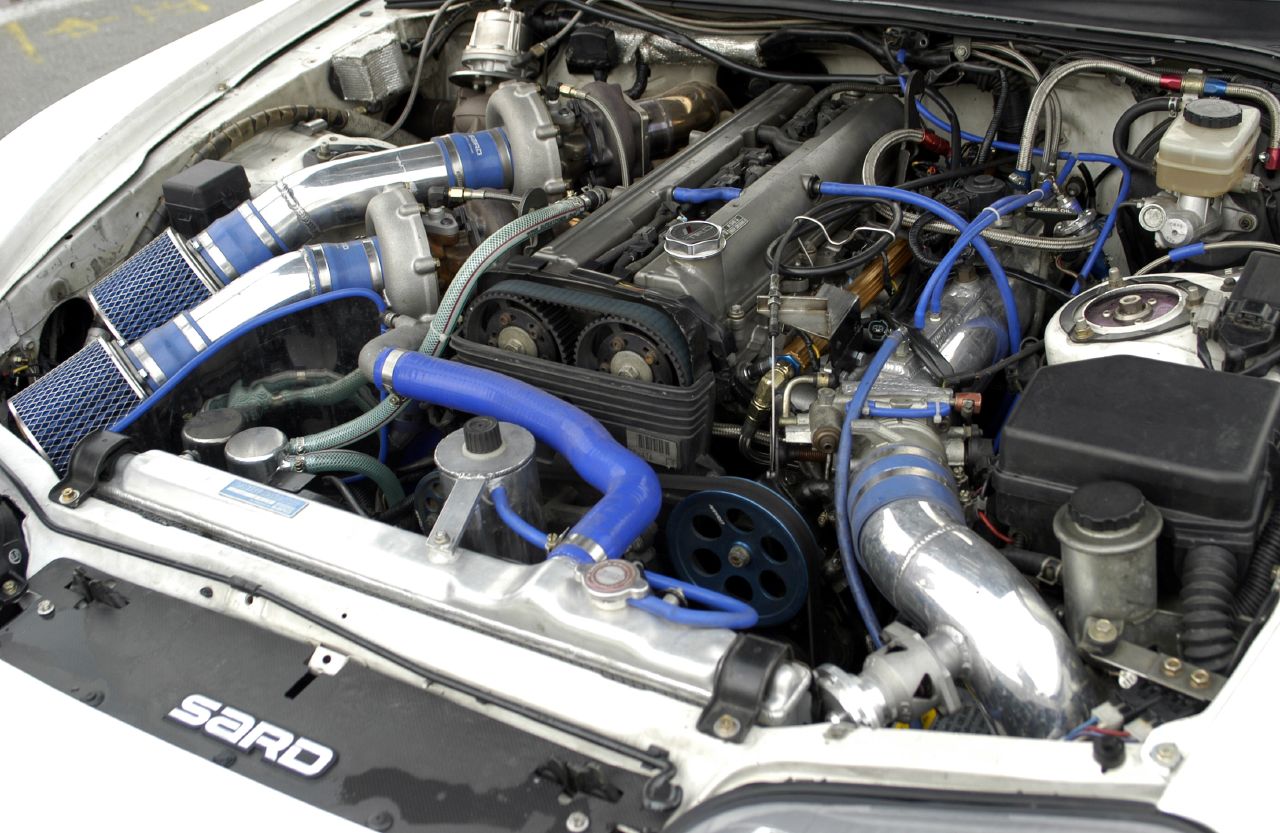
The 2JZ-GTE is a 3.0-liter, twin-turbocharged inline-six with a distinctive square bore and stroke of 86mm by 86mm. It first appeared in 1991 powering the Toyota Aristo, a Japan-market luxury sedan, before becoming genuinely legendary as the engine behind the JZA80-generation Toyota Supra Twin Turbo. In stock form, the 2JZ-GTE was rated at around 267 horsepower with substantial torque, but its real-world reputation comes almost entirely from what happens when tuners start adding power: the engine’s cast-iron block and generally conservative factory engineering give it a genuine reputation for reliably handling dramatically higher horsepower figures on its stock internals than most comparable engines of its era, a characteristic that made it an especially popular choice for serious forced-induction builds.
💡 Tip: “Stock Internals, Big Power” Claims Deserve Scrutiny
The 2JZ-GTE’s reputation for handling large power increases on stock internals is well earned but frequently exaggerated in online enthusiast discussion. The engine’s genuine strength lies in its robust cast-iron block and reasonably conservative factory tune, but real-world reliability at very high power levels still depends heavily on the supporting modifications, tuning quality, fuel system capacity, and how the car is actually driven. Treat extreme horsepower claims on stock internals with healthy skepticism, and research a specific build’s full parts list and tuning history rather than assuming the engine code alone guarantees reliability at any power level.
The Nissan RB26DETT: Built for Group A Racing
The RB26DETT is a 2.6-liter twin-turbocharged inline-six, smaller in displacement than the 2JZ-GTE but engineered specifically for motorsport from the outset. Developed with direct involvement from Nissan’s in-house motorsport division and debuting in the R32 Skyline GT-R at the end of the 1980s, the RB26DETT was built around the requirements of Group A touring car racing, contributing directly to the R32 GT-R’s dominant competition record during that era. The engine carried forward through the R33 and R34 GT-R generations with relatively modest changes, reflecting how well the original design met its performance goals.
Like many high-performance Japanese engines of its era, the RB26DETT’s factory-stated output was affected by an informal industry-wide understanding among Japanese manufacturers to cap advertised output figures around 280 metric horsepower, regardless of an engine’s true capability, meaning stated factory figures across the R32 through R34 generations should be understood as somewhat conservative relative to actual output.
The Nissan SR20DET: The Everyman’s Turbo Four
The SR20DET takes a different approach entirely: a 2.0-liter turbocharged inline-four rather than a six-cylinder, offering a genuinely different balance of weight, cost, and tuning characteristics. Nissan used the SR20DET across a remarkably wide range of models, including the Bluebird, Pulsar, Sunny, Avenir, Liberty, and most famously, the 180SX and various generations of the Silvia, including the S13, S14, and S15, giving the engine an enormous production run and correspondingly large aftermarket parts ecosystem.
The SR20DET’s smaller size and lighter weight compared to the inline-six RB and JZ engines made it a particularly popular swap choice for drift builds specifically, where reduced front-end weight meaningfully improves a car’s handling balance and rotation characteristics, a factor that matters less in straight-line or road-course performance contexts where the RB26 and 2JZ’s additional displacement and cylinder count tend to be more valued.
⚠️ Caution: Engine Codes Alone Don’t Guarantee Originality or Condition
Because engines like the 2JZ-GTE, RB26DETT, and SR20DET were used across multiple models and were also popular as standalone engine swaps into other chassis, simply seeing the correct engine code referenced in a listing does not confirm the engine is original to that specific car, in good mechanical condition, or free of significant modifications. Always request maintenance history, verify the engine’s actual condition through inspection or a qualified pre-purchase inspection, and confirm whether the engine is factory-original or a later swap, since this materially affects both the car’s authenticity and its value.
Why These Specific Codes Became So Iconic
Part of why 2JZ, RB26, and SR20 in particular achieved such lasting fame within JDM culture comes down to a combination of genuine engineering merit and cultural exposure. Each engine powered cars that became icons in their own right, the Supra, the Skyline GT-R, and the Silvia and 180SX, and each was subsequently featured prominently in media that introduced international audiences to JDM culture, from Initial D’s cast of cars to Gran Turismo’s detailed engine specifications, reinforcing brand and engine-code recognition among fans who had never seen the actual cars in person. That combination of real mechanical credibility and sustained cultural visibility is a large part of why these three specific engine codes remain instantly recognizable shorthand within JDM enthusiast circles today.
Other Engine Codes Worth Knowing
While 2JZ, RB26, and SR20 dominate JDM enthusiast conversation, several other engine codes carry similar cultural and mechanical significance and are worth understanding as part of the same broader vocabulary. Mazda’s 13B designation refers to the twin-rotor Wankel rotary engine most associated with the RX-7, an entirely different internal combustion approach from the piston engines discussed above, prized for its compact size, high-revving character, and completely different maintenance considerations. Mitsubishi’s 4G63 powered the Lancer Evolution through most of its earlier generations, a turbocharged 2.0-liter inline-four with its own dedicated tuning culture built around Evo-specific motorsport heritage. Subaru’s EJ20 and later EJ25 flat-four “boxer” engines powered the Impreza WRX and WRX STI lineup, distinguished by their horizontally opposed cylinder layout, which gives Subaru performance models their distinctively low center of gravity and, famously, their unique exhaust burble at idle.
Understanding roughly where these additional codes fit alongside 2JZ, RB26, and SR20 rounds out a genuinely useful working vocabulary for navigating JDM listings, forum discussions, and parts searches without needing to look up every unfamiliar abbreviation from scratch.
Frequently Asked Questions
Q: What does “2JZ-GTE” actually stand for?
A: “2JZ” identifies Toyota’s JZ inline-six engine family and generation, while “GTE” indicates a high-performance, turbocharged configuration. The 2JZ-GTE specifically refers to the twin-turbocharged 3.0-liter variant most associated with the Supra.
Q: Which is more powerful, the 2JZ-GTE or the RB26DETT?
A: Stock factory figures were broadly comparable, with both affected by Japan’s informal 280 PS output-declaration understanding of the era. Real-world tuning potential and characteristics differ meaningfully between the two, so “more powerful” depends heavily on the specific build rather than the base engine alone.
Q: Why is the SR20DET popular for drift builds specifically?
A: Its smaller size and lighter weight compared to the inline-six RB and JZ engines improves front-end weight balance, which benefits the rotation and handling characteristics that matter most in drifting.
Q: What cars originally used the SR20DET?
A: A wide range of Nissan models, including the Bluebird, Pulsar, Sunny, Avenir, Liberty, and most prominently the 180SX and S13, S14, and S15 generations of the Silvia.
Q: Does seeing an engine code in a listing guarantee the engine is original and stock?
A: No. All three engines were popular swap choices into other chassis, so buyers should verify an engine’s originality, condition, and modification history rather than assuming based on the code alone.
This article is for general informational purposes and reflects widely reported technical information about these engines. Specific power figures and production details may vary by market and model year.
Image credit: Tuned 2JZ-GTE engine by chen chin, CC BY 2.0, via Wikimedia Commons
コメント