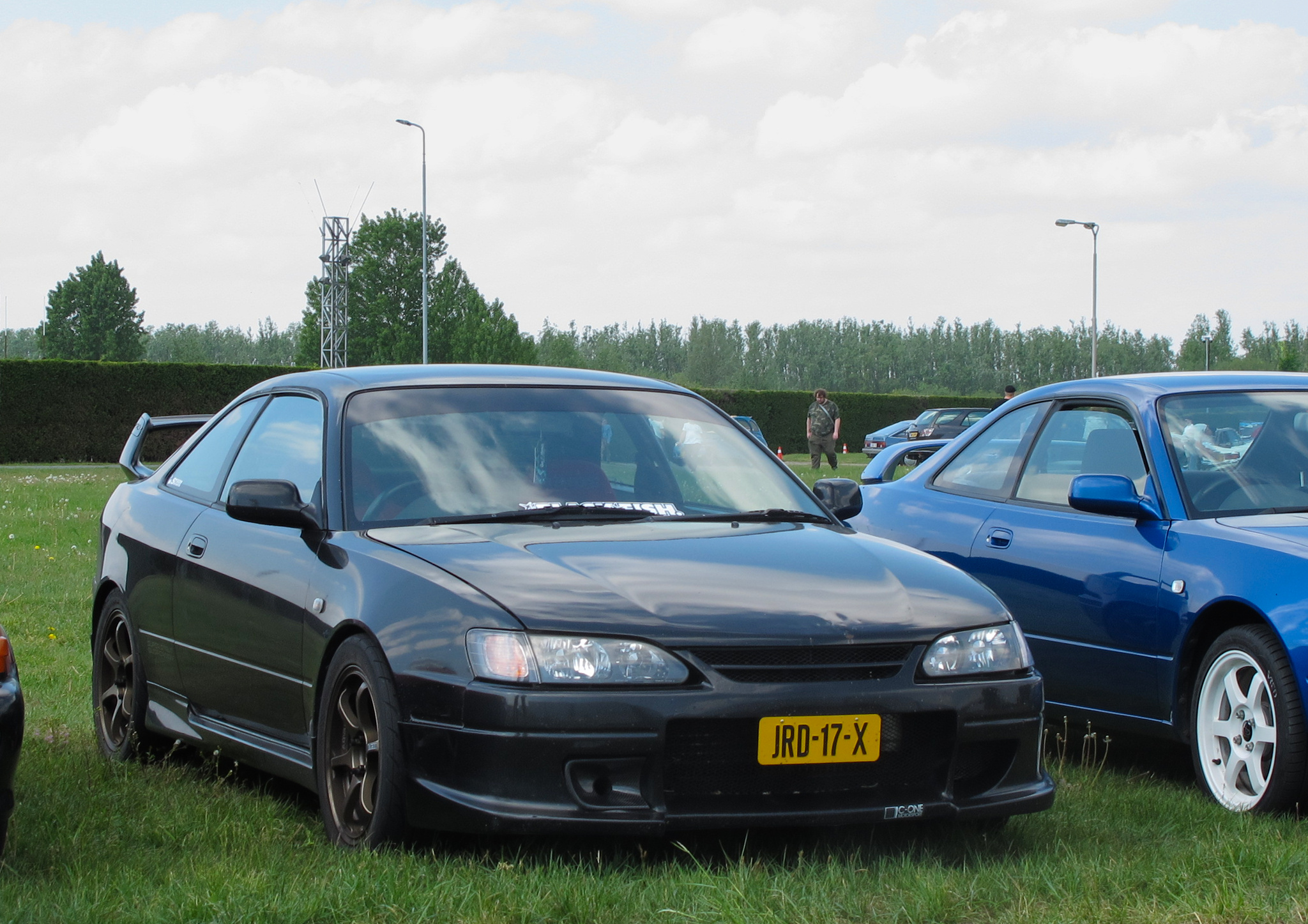
A decade after the AE86 made the Corolla Levin and Sprinter Trueno names famous, the AE111 generation (1997-2000) represented the final and most technically sophisticated evolution of the same basic formula: a lightweight, front-engine, rear-wheel-drive coupe built around Toyota’s 4A-GE engine. By this point the 4A-GE had grown to a genuinely advanced 20-valve, five-valves-per-cylinder design with variable valve timing and individual throttle bodies, producing 165 horsepower from just 1.6 liters — and from 1997 onward, every 4A-GE-equipped car received a six-speed manual gearbox. This guide covers the difference between the two distinct 20V engine variants, the specific electronic failure that affects one of them, and a suspension component scarcity issue worth knowing about before you buy.
📋 What You’ll Learn in This Guide
- Why “Silvertop” and “Blacktop” aren’t just cosmetic engine cover colors
- A specific electronic failure unique to the Blacktop variant
- A common ECU capacitor issue affecting both 20V variants
- Why big end bearing failure is the most serious concern to watch for
- Why the factory Super Strut Suspension is a genuine parts-scarcity risk
Silvertop vs. Blacktop: More Than a Paint Color
Enthusiasts commonly refer to the two 20V 4A-GE variants by their valve cover color, but the distinction reflects genuine engineering differences: the earlier “Silvertop” uses an airflow meter (AFM) to measure intake air, while the later “Blacktop” moved to a MAP sensor-based speed-density system instead. This isn’t a cosmetic difference — it affects how each engine’s ECU manages fueling and, as covered below, it’s tied directly to a specific reliability issue that only affects one of the two variants.
A Blacktop-Specific VVT Controller Failure
The 20V Blacktop (MAP-sensor) engine has a documented issue where the transistor controlling the variable valve timing system can fail catastrophically, effectively destroying itself — a problem that has not been reported on the Silvertop (AFM) variant. If you’re specifically shopping a Blacktop-equipped AE111, ask directly whether this component has been addressed or replaced, since it’s a known weak point specific to this engine variant rather than a generic 4A-GE concern.
💡 Tip
Both 20V variants share a known ECU issue: internal capacitors degrade over time and can leak, and that chemical leakage risks short-circuiting the ECU’s electronics entirely. If a car has any history of erratic running, inconsistent idle, or unexplained electrical gremlins, have the ECU specifically inspected for capacitor condition rather than assuming the issue lies elsewhere in the engine.
Big End Bearing Failure: The Most Serious Concern
The single most serious mechanical issue reported on 4A-GE 20V engines is big end bearing failure, which typically leaves engine replacement as the only realistic solution rather than a straightforward repair. Listen carefully for any unusual bottom-end knocking or rattling, particularly under load or at varying rpm, and treat any such noise as a serious red flag rather than something to diagnose casually during a brief test drive.
Super Strut Suspension: A Genuine Parts Scarcity Risk
The sportier BZ-R trim came factory-equipped with Super Strut Suspension (SSS) alongside a limited-slip differential, bigger brakes, and ABS — genuinely desirable factory upgrades. But the SSS assembly, while excellent when functioning correctly, is difficult to source replacement parts for, since few shops anywhere in the world currently manufacture the specific components it needs. A BZ-R with SSS in good working order is a genuinely appealing package, but budget for the real possibility that finding parts if something fails could take significant time and effort.
⚠️ Caution
Don’t assume a BZ-R’s factory Super Strut Suspension is a pure upside without qualification. If it’s currently functioning well, that’s a genuine asset — but verify its actual condition carefully rather than taking a clean appearance at face value, since a failed SSS component on this specific platform is a meaningfully harder repair than replacing conventional strut suspension.
What Drives Pricing Today?
BZ-R examples with documented ECU health, verified engine bottom-end condition, and functioning Super Strut Suspension command the strongest prices given the trim’s combination of desirable factory upgrades and genuine rarity today. Silvertop examples, lacking the Blacktop’s specific VVT transistor risk, appeal to buyers prioritizing simplicity, while well-sorted Blacktop cars with the known issue addressed remain fully competitive.
Frequently Asked Questions
Q: Is the Blacktop’s VVT transistor issue a dealbreaker?
A: Not if it’s been addressed — ask directly about repair or replacement history for this specific component rather than avoiding all Blacktop examples outright, since a properly sorted Blacktop is a fine engine choice.
Q: Is the BZ-R trim worth seeking out specifically?
A: If you want the factory six-speed manual, limited-slip differential, and Super Strut Suspension package, yes — but go in with realistic expectations about parts availability for the SSS system specifically, and verify its condition carefully before committing.
Final Thoughts
The AE111 represents the 4A-GE’s final and most technically advanced form, and it deserves more recognition than it typically gets standing in the AE86’s shadow. Confirm which 20V variant you’re looking at and its specific known issues, listen carefully for any sign of big end bearing trouble, and go into a BZ-R purchase with clear eyes about Super Strut Suspension parts availability. Get that right, and the AE111 offers a genuinely sophisticated, high-revving driving experience that closes out the 4A-GE’s development story on a high note.
Image credit: 1995 Toyota Sprinter Trueno BZ (AE111) 01.jpg by Rutger van der Maar, CC BY 4.0, via Wikimedia Commons
コメント