📋 Summary
- GMB Corporation is a Japanese cooling system component manufacturer, founded in 1943 in Osaka, and publicly traded on the Tokyo Stock Exchange, now headquartered in Nara Prefecture
- The company’s flagship business is water pumps, fan clutches, and broader engine cooling-system components, an independent Tier 1 supply category rather than a single-automaker-owned captive supplier
- GMB’s origins trace to proprietary bearing technology developed for universal joints, precision engineering expertise the company later applied to its current core cooling-system product focus
- GMB is genuinely distinct from Koyorad, covered in a separate article in this series: Koyorad manufactures aftermarket performance radiators sold directly to consumers, while GMB is an independent OEM supplier whose flagship products are water pumps and cooling-system components, not radiators themselves
The water pump quietly circulating coolant through your JDM vehicle’s engine, a component that fails silently until it doesn’t, may well be a GMB product, a genuinely significant independent Japanese cooling-system specialist.
From Universal Joint Bearings to a Cooling System Specialist
GMB Corporation was founded in 1943, originating in Osaka, according to the company’s own corporate history, and is now headquartered in Nara Prefecture. The company is publicly traded on the Tokyo Stock Exchange. GMB’s origins trace to proprietary bearing technology the company developed for universal joints, precision engineering expertise that the company later applied toward its current core focus on water pumps, fan clutches, and broader engine cooling-system components, alongside fuel pumps.
💡 Tip: GMB Operates as an Independent Supplier, Not a Captive Automaker Division
GMB’s status as an independent, publicly traded Tier 1 supplier, rather than a captive division owned by a single automaker, allows the company to supply cooling-system components across a genuinely broad range of vehicle brands, a meaningful business structure distinction worth understanding when researching the company’s market position.
Genuinely Distinct From Koyorad’s Aftermarket Radiator Business
It’s worth being precise about how GMB differs from Koyorad, covered in a separate article in this series: Koyorad manufactures aftermarket performance radiators, sold directly to consumers and installers looking to upgrade a vehicle’s cooling capacity beyond factory specification. GMB instead operates as an independent OEM supplier whose flagship products are water pumps, fan clutches, and cooling-system components generally, not radiators themselves. Both companies work within the broader cooling-system category, but from genuinely different positions, aftermarket performance upgrade versus OEM component supply.
Why the Shaft Seal, Specifically, Is Where Most Water Pumps Actually Fail
It’s genuinely useful to understand that when a water pump fails, the root cause is very often one specific component: the shaft seal, not the bearing, the impeller, or the housing itself. GMB and other quality manufacturers use carbon and ceramic sealing surfaces on this shaft seal specifically for their wear resistance against the coolant constantly passing across them, with silicone-based seals reserved for heavier-duty applications facing harsher coolant temperatures. The failure sequence is genuinely predictable: debris or rust contamination within the cooling system gradually wears down these sealing surfaces, which eventually allows coolant to leak past the seal; once that happens, the leaking coolant washes away the grease lubricating the pump’s bearing, and the bearing itself then fails as a secondary, downstream consequence, often producing the whining or grinding noise most owners actually notice first. Understanding this sequence, seal wear leads to bearing failure, not the reverse, is genuinely useful when a mechanic diagnoses “bearing noise” on an aging water pump: the seal was very likely the true root cause.
Why Water Pump Failure Is a Genuine Concern
A failing water pump is one of the more genuinely serious cooling-system failures a JDM owner can experience, since a complete water pump failure can lead to rapid, severe engine overheating if not caught immediately. Common warning signs include coolant leaks near the water pump location, a whining or grinding noise from the pump area, or a genuinely noticeable engine temperature increase. Understanding that a major, established specialist like GMB likely engineered the water pump in your specific vehicle provides useful context when diagnosing early warning signs before a complete failure occurs.
⚠️ Caution: Never Continue Driving With Suspected Water Pump Failure
A failing or failed water pump can cause genuinely rapid engine overheating, and continuing to drive with this condition risks serious, expensive engine damage. If you notice water pump warning signs, coolant leaks, unusual noise, or rising temperature, have the vehicle inspected and repaired before continuing to drive it, rather than risking a roadside breakdown or engine damage.
Frequently Asked Questions
Q: What does GMB Corporation make?
A: Water pumps, fan clutches, and broader engine cooling-system components, alongside fuel pumps, as its flagship business.
Q: Is GMB the same as Koyorad?
A: No, Koyorad makes aftermarket performance radiators sold directly to consumers, while GMB is an independent OEM supplier of water pumps and cooling-system components generally.
Q: When was GMB founded?
A: 1943, originating in Osaka, now headquartered in Nara Prefecture, and publicly traded on the Tokyo Stock Exchange.
Q: What are the warning signs of water pump failure?
A: Coolant leaks near the pump, whining or grinding noise, and rising engine temperature; any of these should be inspected promptly to avoid overheating.
This article is for general informational purposes based on publicly available company sources. Never continue driving with suspected water pump failure – have it inspected and repaired by a qualified professional promptly.
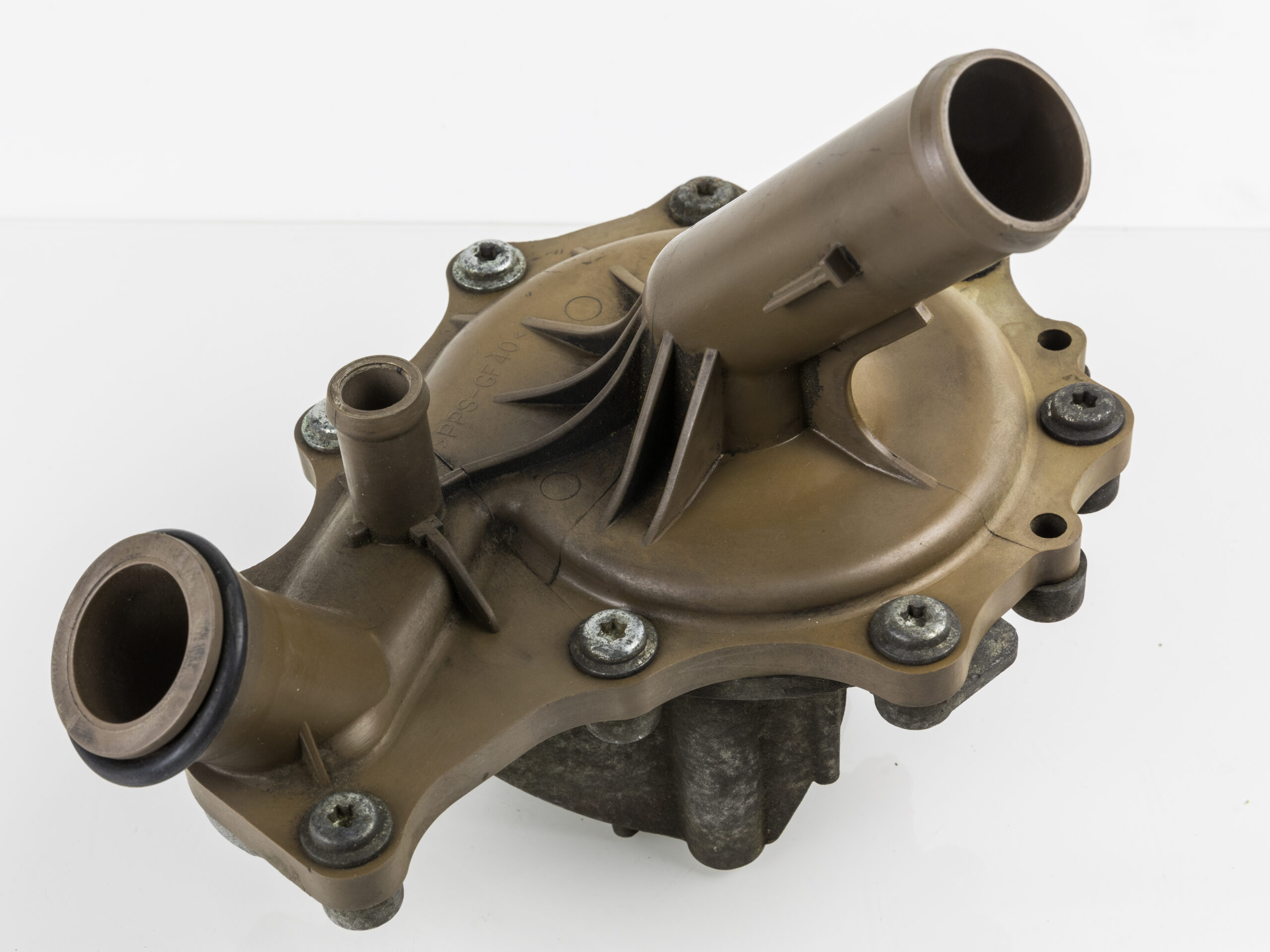
Image credit: Automotive coolant pump 6C1Q-8K500-AF by Raimond Spekking, CC BY-SA 4.0, via Wikimedia Commons
コメント