📋 Summary
- The AE86’s original 4A-GE 16-valve engine is only the starting point for most serious builds, with swaps to the later 20-valve “silvertop” (AE101) or “blacktop” (AE111) 4A-GE variants being among the most popular power upgrades within the community
- Unlike most JDM performance cars of its era, the AE86 uses a solid rear axle rather than independent rear suspension, which shapes an entirely distinct branch of chassis tuning centered on locating the axle precisely under hard cornering
- Weight reduction is treated as seriously as power in AE86 culture, reflecting the car’s original lightweight, back-to-basics engineering philosophy rather than simply chasing horsepower figures
- Because genuine, unmodified AE86s have become increasingly scarce and expensive, sourcing quality used parts and understanding which modifications are reversible has become a genuinely important consideration for the community
Beyond the AE86’s outsized cultural fame, a genuinely deep and technically distinct tuning culture has grown up specifically around this chassis, shaped heavily by the car’s particular engineering quirks. Unlike many later JDM performance icons, the AE86 predates independent rear suspension and widespread turbocharging on its factory engine, which has pushed its tuning community toward a somewhat different set of priorities than newer chassis typically demand.
- Engine Options: From Factory 16V to 20V Swaps
- The Solid Rear Axle: A Defining Chassis Quirk
- Weight Reduction: As Important as Power
- Why This Particular Chassis Rewards a Different Tuning Philosophy
- Levin vs. Trueno: A Parts Distinction Worth Understanding
- Brakes and Suspension: Common Upgrade Priorities
- Frequently Asked Questions
Engine Options: From Factory 16V to 20V Swaps
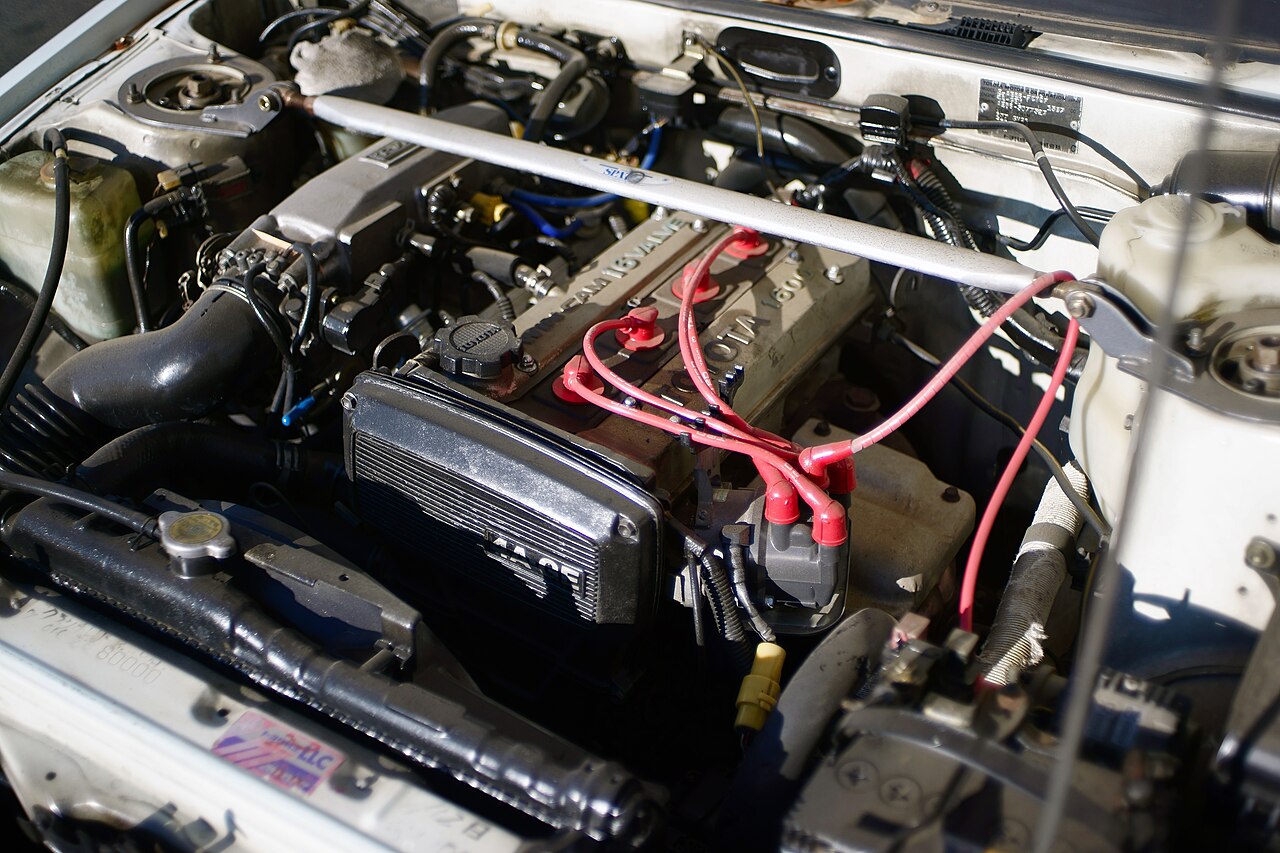
The AE86 originally came equipped with Toyota’s 4A-GE engine in its 16-valve configuration, a genuinely well-regarded naturally aspirated four-cylinder for its era, but one that later Toyota engineering would meaningfully surpass within the same broader 4A-GE family. The most popular engine upgrade path within AE86 culture involves swapping in a later 20-valve version of the same 4A-GE family, either the earlier “silvertop” variant originally found in the AE101-generation Corolla Levin and Sprinter Trueno, or the later, further-refined “blacktop” variant from the AE111 generation.
These 20-valve engines introduced individual throttle bodies, feeding each cylinder independently for sharper throttle response and a distinctive induction sound, along with variable valve timing on the intake camshaft for more consistent torque delivery through the mid-range. Builders should be aware that this swap is genuinely involved rather than a simple bolt-in job, with common complications including tight clearance between the silvertop-specific exhaust header and any side-mounted starter motor, and the fact that using a 16-valve exhaust header with a blacktop engine, while physically possible, will meaningfully reduce power due to the blacktop’s larger factory exhaust port sizing.
💡 Tip: Match Your Exhaust Header to Your Specific 4A-GE Variant
A specific, easy-to-overlook detail for anyone planning a 20V swap: exhaust headers are not universally interchangeable across 4A-GE variants without power or fitment consequences. A header designed for the 16-valve engine will physically fit a blacktop 20V but will leave meaningful power on the table due to port size mismatches, while the silvertop’s own header can create tight clearance issues with certain starter motor configurations. Research the specific header compatibility for your exact engine variant and starter setup before committing to parts, rather than assuming any 4A-GE header will work equally well across the family.
The Solid Rear Axle: A Defining Chassis Quirk
One of the AE86’s most technically distinctive characteristics, and a major factor shaping its tuning culture, is its use of a solid, or live, rear axle rather than the independent rear suspension that most later JDM performance cars, including the AE86’s own eventual successors, would adopt. This layout, while considered old-fashioned even at the AE86’s original launch, produces a particular, communicative rear-end feel that many enthusiasts specifically value for drift and touge-style driving, giving the tuning community reason to genuinely embrace rather than simply tolerate the older design.
Because a solid axle needs to be precisely located under hard cornering and acceleration loads, a significant branch of AE86-specific chassis tuning centers on upgrading and reinforcing this rear axle location system, including upgraded trailing arms, panhard rod or watts linkage setups, and reinforced axle housing components, all aimed at controlling axle movement more precisely than the factory setup allows, without abandoning the fundamental solid-axle character that many owners specifically want to preserve.
Weight Reduction: As Important as Power
AE86 tuning culture treats weight reduction with a level of seriousness that distinguishes it from many other JDM tuning communities more narrowly focused on horsepower figures. This reflects the car’s original engineering philosophy directly: the AE86 was never the most powerful car in its class even when new, and its genuine driving appeal has always rested heavily on its light weight and resulting agility rather than outright power. Common weight-reduction approaches within the community include removing unnecessary interior sound deadening and trim, fitting lightweight aftermarket seats and a roll cage in place of factory seating and structure, and selecting lightweight wheels specifically to reduce unsprung rotational mass rather than simply for appearance.
⚠️ Caution: Genuine AE86 Parts Are Increasingly Scarce and Expensive
Because the AE86 has become such a sought-after and culturally significant chassis, genuine factory replacement parts, particularly rust-free body panels and certain trim pieces, have become increasingly difficult and expensive to source, a direct consequence of both the car’s age and its now-substantial collector value. Before beginning any significant build, research realistic parts availability and pricing for your specific project scope, and consider whether certain modifications are genuinely reversible if you might want to return the car closer to factory specification in the future, particularly for anything involving irreversible body modification.
Why This Particular Chassis Rewards a Different Tuning Philosophy
What ultimately distinguishes AE86 tuning culture from many newer JDM performance platforms is a consistent community emphasis on balance and driving feel over maximum raw output. A well-executed AE86 build often prioritizes a well-sorted, lightweight, precisely handling chassis paired with a moderately upgraded engine, rather than chasing extreme horsepower figures the car’s fundamentally lightweight structure was never really designed to handle safely at a sustainable cost. This philosophy connects directly back to the same qualities, light weight, rear-wheel drive, and genuine driver engagement, that made the AE86 such a compelling and enduring cultural icon in the first place.
Levin vs. Trueno: A Parts Distinction Worth Understanding
The AE86 was sold under two different names and front-end designs depending on trim and market positioning: the Corolla Levin, featuring fixed, covered headlights, and the Sprinter Trueno, featuring distinctive pop-up headlights, the version most closely associated with the car’s Initial D fame. While the two variants share the same fundamental chassis, engine options, and mechanical underpinnings, their front body panels, headlight assemblies, and related wiring are not interchangeable without meaningful additional work, a detail that matters when sourcing front-end body parts or planning a project specifically built around one front-end style rather than the other.
Beyond this front-end distinction, both variants were also offered across multiple trim levels with differing factory equipment, meaning two seemingly similar AE86s can actually differ meaningfully in factory specification, a detail worth researching carefully before assuming parts compatibility between two cars, or before pricing a project based on another owner’s build.
Brakes and Suspension: Common Upgrade Priorities
Beyond the axle-specific chassis work already discussed, AE86 builds commonly address the car’s factory braking system, which by modern standards is relatively modest, particularly for cars receiving significant power upgrades through a 20V swap or forced induction. Upgrading to larger factory or aftermarket brake components from later Toyota models, or dedicated aftermarket big brake kits, is a common and generally sensible priority once a build moves meaningfully beyond stock power output, since braking performance has not always received the same enthusiast attention as engine and suspension work despite its obvious safety importance.
On the suspension side, coilover kits from established Japanese suspension brands remain a popular foundation for AE86 builds, typically paired with the axle-location upgrades discussed above rather than treated as a standalone solution, reflecting the community’s broader understanding that the AE86’s solid rear axle requires a genuinely integrated approach to suspension and chassis work rather than simply bolting on a generic coilover kit designed with an independent rear suspension car in mind.
Frequently Asked Questions
Q: What is the most popular engine upgrade for an AE86?
A: Swapping in a later 20-valve 4A-GE engine, either the “silvertop” variant from the AE101 generation or the further-refined “blacktop” from the AE111 generation, is among the most popular power upgrades within the community.
Q: Why does the AE86’s solid rear axle matter for tuning?
A: Unlike most later JDM performance cars with independent rear suspension, the AE86 uses a solid rear axle that must be precisely located under cornering and acceleration loads, creating a distinct branch of chassis tuning focused on trailing arm, panhard rod, and axle housing upgrades.
Q: Is a 20V engine swap a simple bolt-in modification?
A: No. It involves genuine fitment considerations, including exhaust header clearance and compatibility issues specific to each 4A-GE variant, and should be researched carefully before starting the project.
Q: Why does the AE86 community focus so heavily on weight reduction?
A: The car’s original appeal rested heavily on light weight and agility rather than outright power, and the tuning community has generally continued that philosophy rather than shifting focus purely toward horsepower.
Q: Are genuine AE86 parts easy to find today?
A: Increasingly not. Rust-free body panels and certain trim pieces have become scarce and expensive due to the car’s age and rising collector value, making parts sourcing an important planning consideration for any serious build.
This article is for general informational purposes and reflects commonly cited AE86 tuning practices. Specific parts compatibility and modification approaches vary by individual car condition and build goals – always research your specific vehicle before making significant modifications.
Image credit: Engine bay of Sprinter Trueno GT-V AE86 by haru__q, CC BY-SA 2.0, via Wikimedia Commons
コメント